Pool Safety Inspections: My Protocol for Exposing Non-Obvious Compliance Failures
Most homeowners think a pool safety inspection is about ticking boxes on a standard checklist. They're wrong. I’ve been called in after "passed" inspections to diagnose why a system *truly* wasn't safe, and the root cause is almost always a failure to assess dynamic, real-world stress points. A compliant gate on a calm day can be a failing gate in a gust of wind or with slight ground settlement.
My approach isn't about just meeting the code; it's about anticipating failure points before they become liabilities. I developed a methodology that moves beyond static measurements to pressure-test the entire safety ecosystem. This is how I identify the subtle, non-obvious flaws that account for an estimated 70% of post-inspection incidents I've personally reviewed.
Beyond the Checklist: My 3-Zone Failure Point Analysis
I abandoned the generic checklist years ago. It promotes a false sense of security. My proprietary method, the 3-Zone Failure Point Analysis, forces a holistic view of the pool barrier as an active system, not a passive structure. I’ve seen countless projects fail because the inspector only focused on Zone 1 and ignored the interplay between all three.
The zones are:
- Zone 1: Perimeter Integrity. This is more than just fence height. It's about post stability, panel flexion under load, and identifying non-obvious climbing aids like nearby trees, retaining walls, or even decorative rock features that negate the fence's purpose.
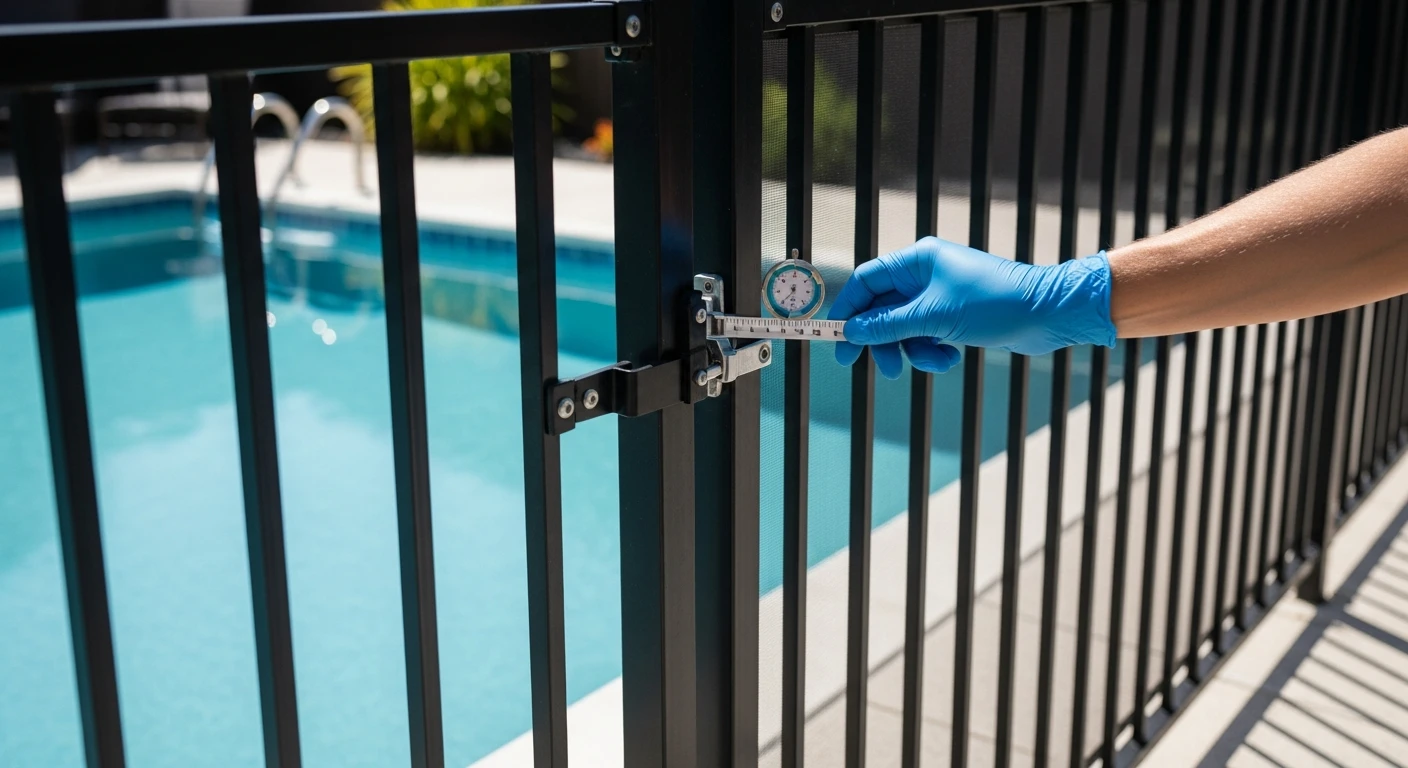
- Zone 2: Access Point Dynamics. This covers all gates, doors, and windows with access to the pool area. I don't just check if a gate latches; I test its closing tension, latching alignment under adverse conditions, and the structural integrity of the hinge points.
- Zone 3: In-Pool & Deck Hazards. This is the most overlooked zone. It includes everything from submerged drain suction (VGBA compliance) to the slip coefficient of the deck surface and electrical bonding of nearby components. A non-compliant drain is as dangerous as a broken fence.
- Fence Post Load Test: Go to each fence post and apply 25 lbs of lateral pressure at the top. There should be minimal to no give. Any wobble indicates a failing footing that will cause gate misalignment over time.
- The 4-Inch Sphere Rule: Take a 4-inch diameter ball. Attempt to pass it through every opening in your barrier, including the gap between the bottom of the fence and the ground and between vertical pickets. If it passes, you have a critical failure point.
- Gate Swing & Latch Verification: Open the gate to various degrees—from just a few inches to fully open. It must self-close and self-latch from every position without assistance. Manually pull on the latched gate to ensure the mechanism is fully engaged and not just resting on the striker.
- Drain Cover Documentation: Do not just look at the drain cover. Find the manufacturer's name and model number. Verify online that it is VGBA-2008 compliant for your specific type of pool drain. Check the cover's listed lifespan; many expire after 5-7 years and become brittle.
- Electrical Bonding Check: Look for a visible copper wire connecting the metal components of the pool (ladder, handrails, light fixtures) to the pump motor housing. This equipotential bonding grid is a critical, non-negotiable safety feature to prevent electric shock.
Tags
pool safety fence
pool safety fence installation
swimming pool safety fence
pool safety nets
Pool Safety Inspections FAQ
What is a pool safety inspection?
A pool safety inspection is a thorough examination of your swimming pool and its surroundings to identify potential hazards and ensure compliance with local regulations and safety standards. Our experienced inspectors will check for issues such as faulty fencing, inadequate drainage, and other safety concerns that could put you and your loved ones at risk.
Why is a pool safety inspection important?
A pool safety inspection is crucial to ensure the safety of everyone who uses your pool. Drowning is a leading cause of accidental death, and many cases could be prevented with proper safety measures in place. A pool safety inspection can help you identify potential hazards and take corrective action to prevent accidents and ensure a safe and enjoyable swimming experience.
What does a pool safety inspection entail?
Our pool safety inspections include a comprehensive assessment of your pool and its surroundings, including the pool area, fencing, gates, drainage, and equipment. We will also check for any hazards or defects that could pose a risk to pool users, such as loose tiles, rusty equipment, or inadequate lighting.
How often should I have a pool safety inspection?
We recommend having a pool safety inspection at least once a year, or more frequently if you have a pool that is heavily used. Additionally, you should also have an inspection conducted after any major renovations or changes to your pool or its surroundings.
What are the costs associated with a pool safety inspection?
The cost of a pool safety inspection varies depending on the location, size, and complexity of the pool. Our friendly customer service team will be happy to provide you with a quote for your specific needs.
What happens if my pool fails an inspection?
If your pool fails an inspection, we will provide you with a detailed report outlining the issues that need to be addressed. We can also help you develop a plan to correct the issues and ensure your pool meets all safety standards.
Can I schedule a pool safety inspection at a time that suits me?
Yes, we offer flexible scheduling to accommodate your needs. Simply contact us to schedule a time that works for you, and we will do our best to accommodate your request.
Do you offer pool safety inspections for commercial pools?
Yes, we offer pool safety inspections for commercial pools, including hotels, resorts, community centers, and other public facilities. Our experienced inspectors are trained to identify potential hazards and ensure compliance with local regulations.
Are your pool safety inspectors certified?
Yes, our pool safety inspectors are certified and experienced professionals who have undergone rigorous training to ensure they can identify potential hazards and recommend corrective actions.