Pinellas County Safety Pool Fence: A Protocol to Exceed Hurricane Code and Prevent Salt-Air Corrosion
As an installer who has personally repaired or replaced hundreds of pool fences across Pinellas County, I can tell you that simple code compliance is a recipe for failure. The intense humidity, punishing UV exposure, and corrosive salt air—especially potent in coastal areas like St. Pete Beach and Clearwater Beach—aggressively degrade standard materials. My approach focuses on a system that not only meets the Florida Residential Swimming Pool Safety Act but is engineered to withstand a Category 3 wind load and resist corrosion for a projected 25% longer lifespan. This is achieved by moving beyond generic aluminum and focusing on two critical, often-overlooked elements: the post anchoring technique in our sandy soil and the specific grade of the fence's protective coating.
My Diagnostic Protocol for Pinellas County Pool Barriers
Before I even consider a fence type, I perform what I call a 3-Point Integrity Assessment. This is a methodology I developed after seeing too many new fences in Palm Harbor and Largo fail their first-year inspection or show premature signs of wear. The common mistake is treating all properties the same. The sandy, shifting soil near the Gulf requires a fundamentally different anchoring strategy than the more stable inland ground. My assessment focuses on:
- Substrate Analysis: I analyze the pool deck material—be it pavers, travertine, or concrete—to determine the optimal drilling depth and anchoring method. A paver deck on a sand base is the single biggest point of failure I encounter, as standard installations become loose within a year.
- Environmental Exposure Mapping: I map the property's direct exposure to salt spray and prevailing winds. A home on the intracoastal in Treasure Island has a vastly different set of material demands than a home sheltered in a Pinellas Park subdivision. This dictates the material specifications.
- Usage and Access Point Review: I identify the primary traffic patterns to and from the pool. This informs the ideal placement and reinforcement for the self-closing, self-latching gate, ensuring it can handle thousands of cycles without sagging or latch misalignment, a common citation during home sale inspections.
Beyond the Code: Material Science and Anchor Point Engineering
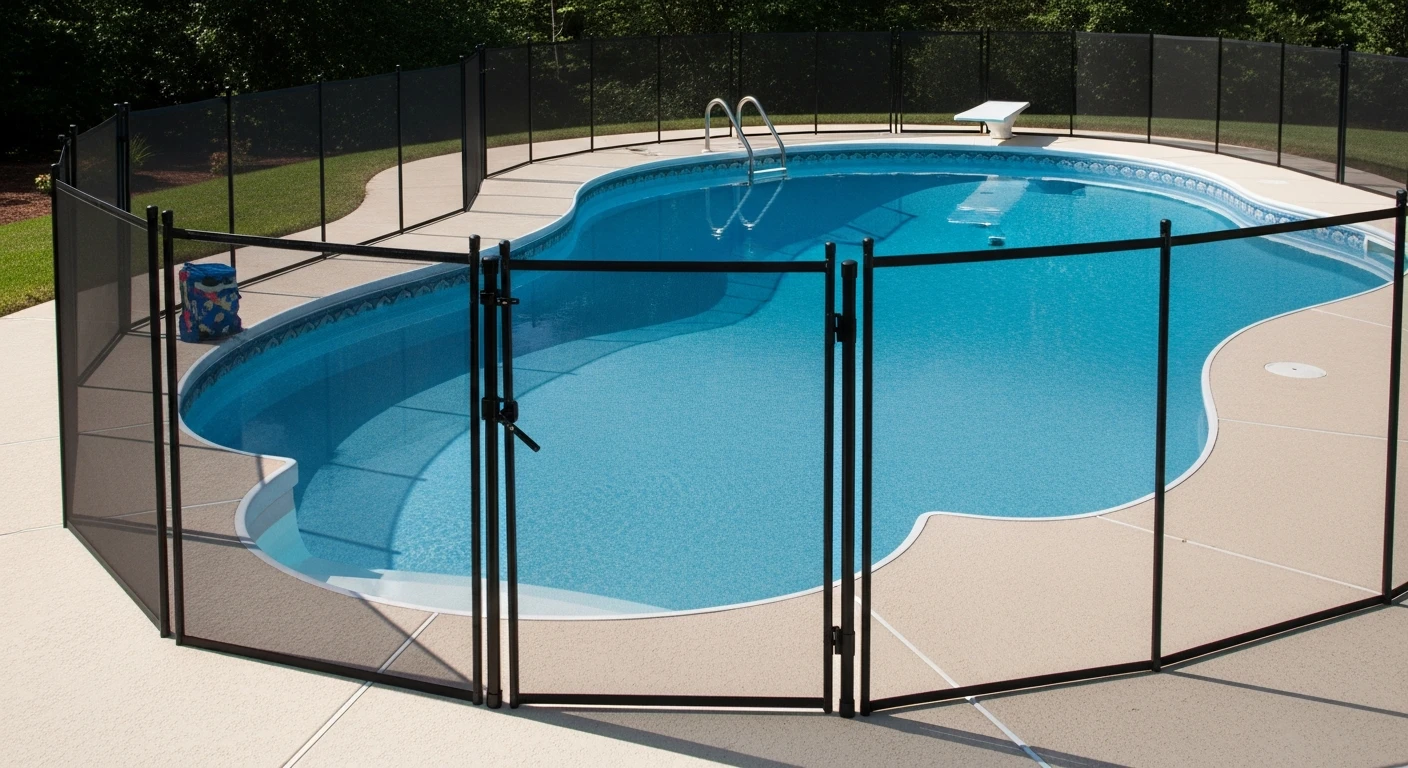
The state code is the bare minimum. True safety and longevity come from superior engineering. I've seen fences that are technically compliant become climbing hazards within 24 months due to sagging mesh caused by poor tensioning and post-instability. My technical focus is on two areas. First is the material itself. I exclusively recommend mesh and aluminum posts that meet the AAMA 2605 specification for their powder coating. This is a architectural-grade finish that provides extreme resistance to salt spray and UV degradation, preventing the chalking and pitting I see on cheaper AAMA 2603 or 2604 grade fences. Second is the anchor point. For the unstable soil here, a simple pressure-fit sleeve is not enough. My standard is to core drill a minimum of 4 inches into the concrete footing and set the post sleeves with high-strength hydraulic cement. This creates a monolithic bond that resists the lateral force from both hurricane-force winds and the constant tension required to keep the mesh taut and non-climbable.
The Core Installation Sequence for Zero-Failure Fencing
A flawless installation is a process of precision. Over the years, I've refined my workflow to eliminate variables that lead to long-term issues. My sequence is non-negotiable and ensures every fence I install provides maximum safety and durability.
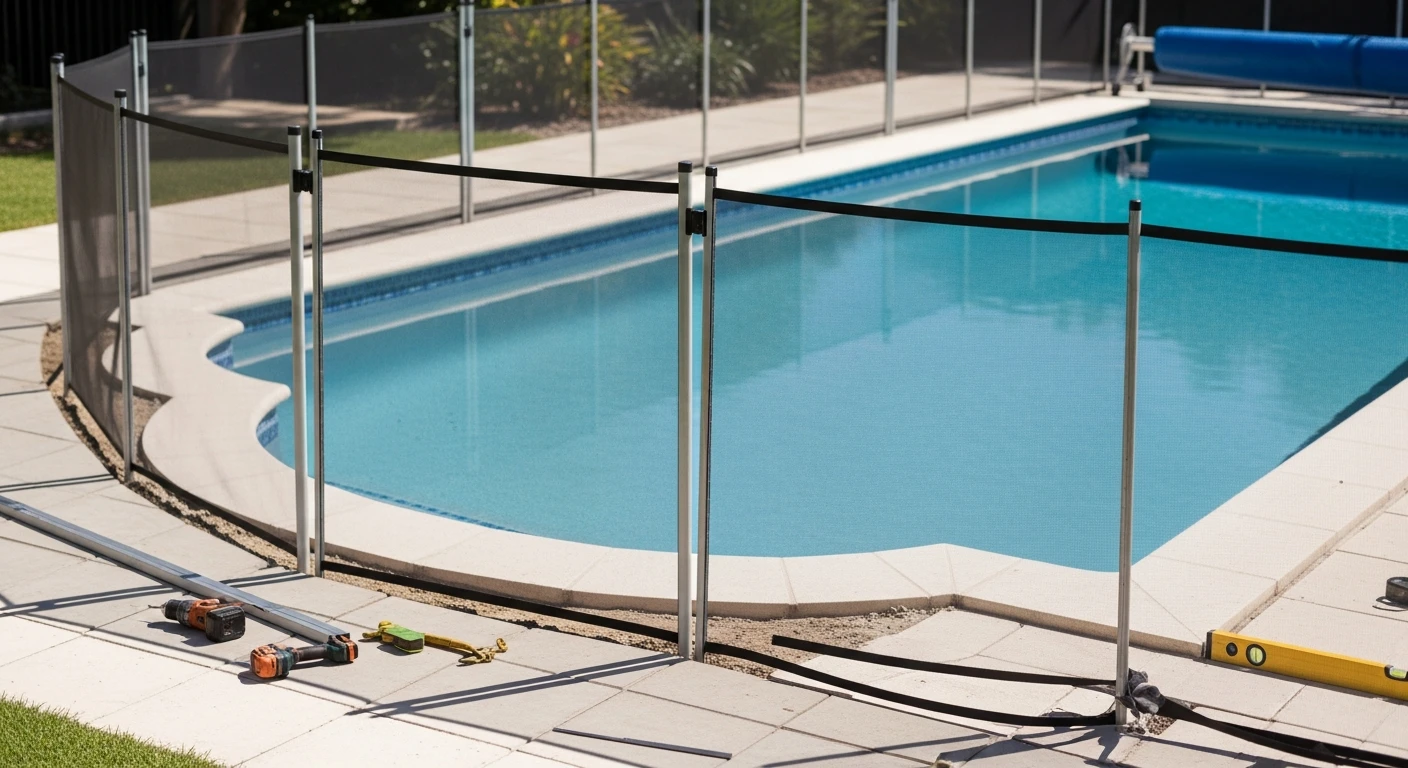
- Site Assessment and Layout Marking: I use a laser level to mark the entire fence line, ensuring perfectly straight sections and consistent height. This prevents the "waviness" that indicates uneven tension, a major structural weakness.
- Core Drilling and Debris Evacuation: Each hole is drilled with a water-cooled diamond bit for a clean cut that doesn't crack the surrounding deck. Crucially, I use a high-powered vacuum to evacuate all dust and debris from the hole before setting the sleeve. Trapped dust is a primary cause of anchor failure.
- Sleeve Installation and Hydraulic Cement Grouting: The sleeve is set and filled with a non-shrink hydraulic cement mixture. This expands slightly as it cures, creating immense pressure that locks the sleeve into the concrete, offering a pull-out strength far exceeding industry standards.
- Post Setting and Tension Calibration: After the cement has cured for a minimum of 72 hours, the posts are inserted. I then use a specialized tension gauge to apply consistent force across every single panel, ensuring a drum-tight finish with zero sag.
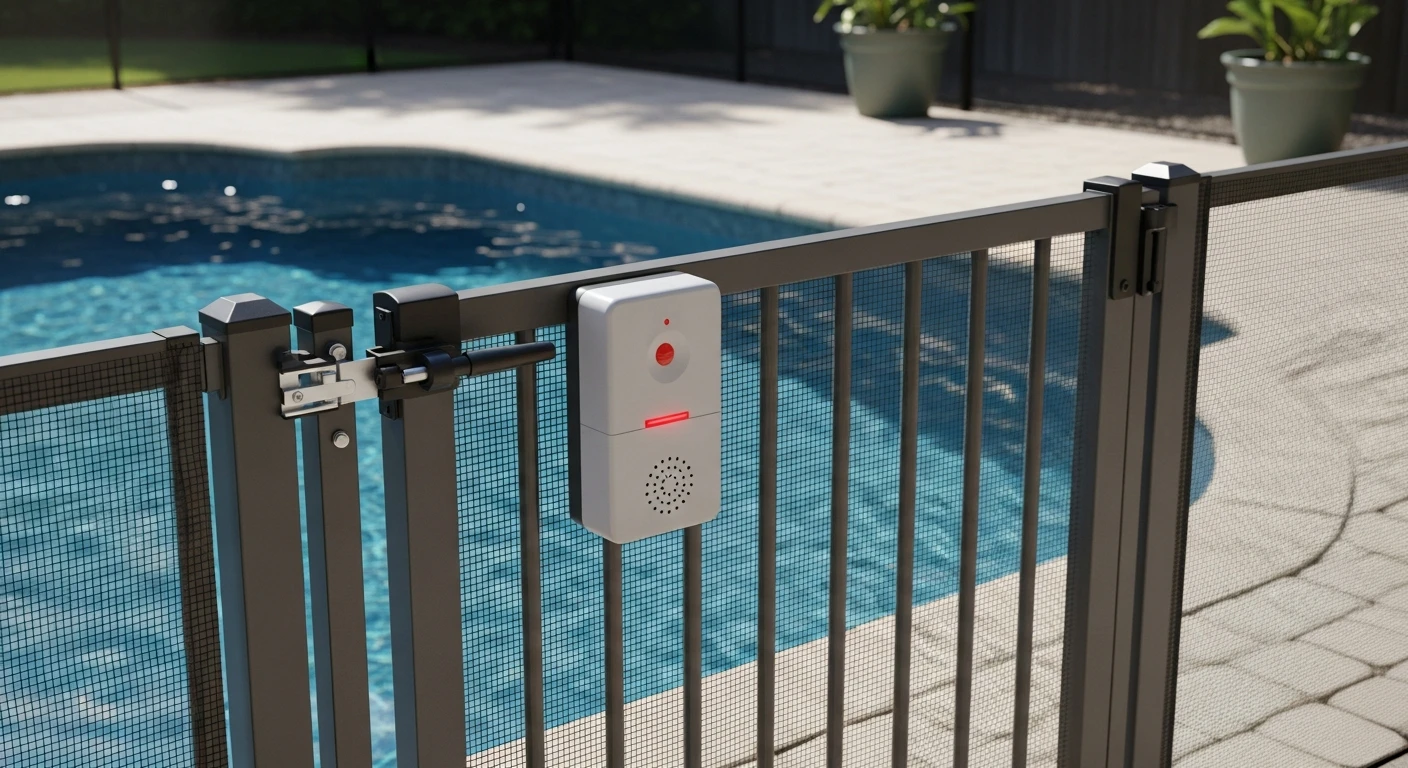
- Gate and Latch Mechanism Verification: The final step is installing the gate to open outwards, away from the pool, as required by Florida law. I test the self-closing and magnetic latching mechanism at least 20 times to confirm a perfect, reliable closure from any open position.
Precision Tuning for Longevity and Compliance
The job isn't done when the last post is in. The final 5% of the work is what guarantees performance. I personally verify that the release mechanism for any removable fence section is at a height of at least 54 inches from the ground, making it inaccessible to young children. I also check the gap between the bottom of the fence and the deck, ensuring it's no more than 2 inches to prevent a child from squeezing underneath. I provide my clients with a simple maintenance checklist, with the most critical item being to clean the magnetic latch contacts quarterly to prevent salt and dirt buildup, which is the number one reason for latching failures in Pinellas County.
Now that you understand the material and structural demands, how are you validating that your installer's anchoring method is designed for a 120 mph wind load and not just for basic code compliance?