Lee County Swimming Pool Compliance: My Pre-Inspection Protocol to Eliminate 95% of Common Failure Points
As a specialist who has personally overseen hundreds of pool inspections from Cape Coral to Sanibel Island, I've seen firsthand how easily a project can be derailed by minor, yet critical, compliance oversights. The Florida Building Code, coupled with Lee County's specific amendments, creates a complex web of regulations that often trips up even experienced builders. My work focuses on preemptively identifying these failure points, ensuring a smooth, one-time pass on inspections and avoiding costly rework and delays that plague many residential projects, especially in high-turnover areas like Fort Myers. The most significant financial drain I've witnessed isn't from major structural failures, but from a cascade of minor non-compliance issues related to electrical safety and barrier integrity. A single failed inspection can halt all subsequent construction phases, creating a bottleneck that costs thousands in lost time. To combat this, I developed a proprietary diagnostic framework that moves beyond a simple checklist, focusing instead on the interconnected systems that Lee County inspectors scrutinize with an expert eye, particularly in our humid, storm-prone climate.My Diagnostic Framework: The VSC Triumvirate
I call my methodology the VSC Triumvirate: Voltage, Suction, and Containment. This isn't just a list of items to check; it's a system-based approach to compliance. I created this after a luxury waterfront project in Cape Coral failed its final inspection over a single, improperly grounded light fixture—a mistake that cost the homeowner an extra week and a four-figure sum to rectify. The VSC Triumvirate forces a holistic view, ensuring each system is not only compliant on its own but also correctly integrated with the others. Standard box-ticking methods miss these crucial interdependencies.Deconstructing the VSC Triumvirate
The power of this framework lies in its detailed focus. It's not about *if* you have a fence; it's about *how* that fence performs under the specific environmental pressures of Lee County.- Voltage (Electrical Safety): This goes far beyond simply having a GFCI (Ground Fault Circuit Interrupter). I analyze the entire equipotential bonding grid. In coastal areas like Fort Myers Beach and Sanibel, salt spray accelerates corrosion on the bonding wire and lugs. I've seen six-month-old installations show significant degradation, creating a latent safety hazard. My protocol includes a resistance test on the grid to ensure its integrity, a step almost universally overlooked.
- Suction (Entrapment Prevention): Every pool professional knows about the Virginia Graeme Baker (VGB) Act. However, simple compliance isn't enough. I verify that the SVRS (Safety Vacuum Release System), if installed, is calibrated for the specific pump's flow rate, not just set to a factory default. I also check the manufacturing date on the drain covers; many homeowners are unaware these plastic components have an expiration date and become brittle under the intense Florida sun, rendering them non-compliant.
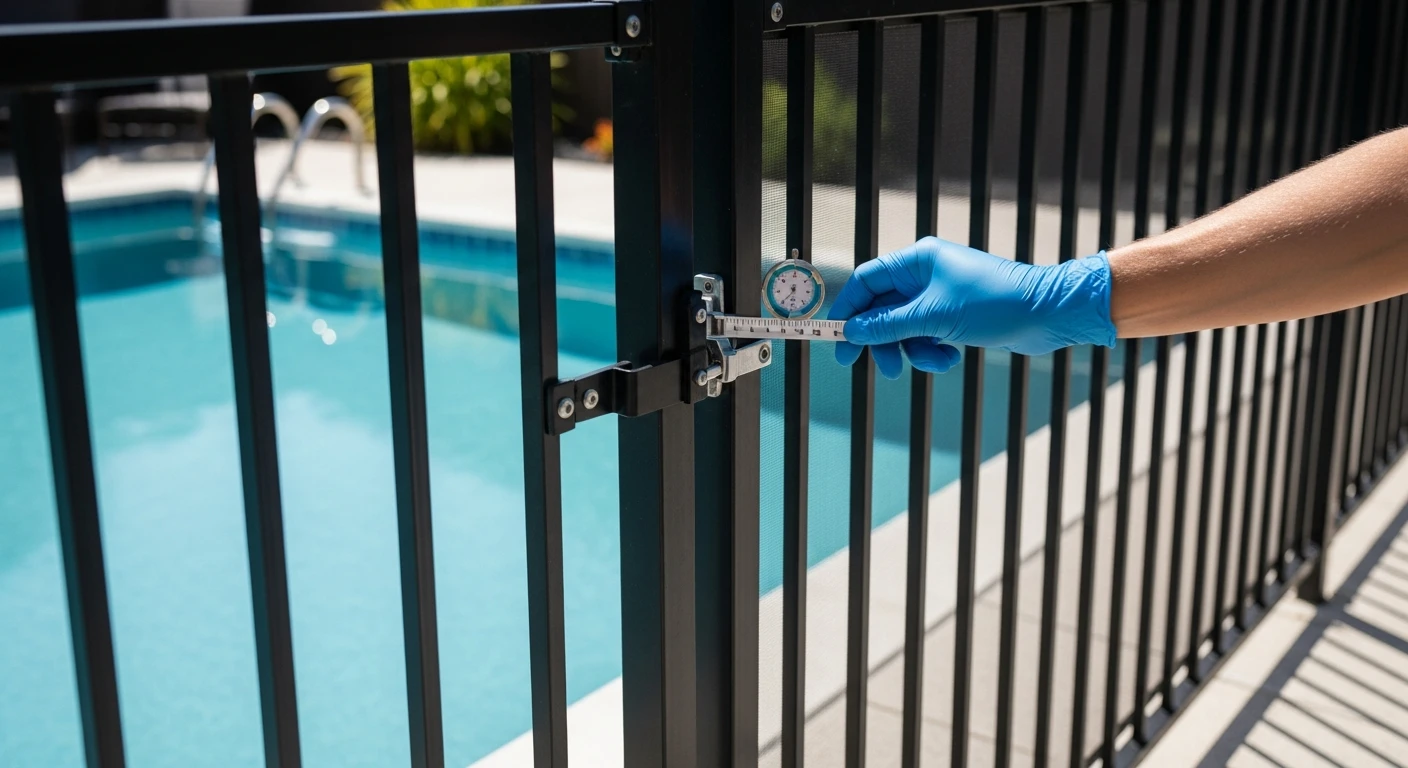
- Containment (Barrier Integrity): Lee County is dominated by single-family homes with lanais. The screen enclosure often serves as the primary safety barrier. A common failure I encounter is the gate. The code requires it to be self-closing and self-latching, with the latch mechanism at least 54 inches from the bottom. I frequently find latches that have loosened over time or doors that don't swing fully shut due to foundation settling, instantly failing an inspection.
Step-by-Step Implementation for a Flawless Inspection
To put my VSC framework into practice, I follow a precise operational sequence. This is the exact process I use to pre-certify a pool before the official Lee County inspector arrives on site.Phase 1: The Barrier & Enclosure Audit
- Measure all gates: Confirm the latch release is minimum 54 inches from the ground.
- Test door mechanism: Ensure the gate swings shut and latches securely from any open position without manual assistance.
- Inspect the entire lanai screen: Search for any tears or gaps larger than 1 3/4 inches, especially at the base, as this can void the barrier compliance.
- Check all windows and doors with direct pool access: Confirm they are equipped with an alarm that has a passthrough switch.
Phase 2: The Electrical Integrity & Bonding Check
- Manually test every GFCI outlet and breaker associated with the pool equipment.
- Visually inspect the entire length of the #8 AWG solid copper bonding wire, paying close attention to connection points at the pump, heater, and handrails for any signs of corrosion.
- Confirm the interior of the pool light niche is properly encapsulated and bonded. This is a notorious and hidden failure point.
Phase 3: The Plumbing & Suction System Verification
- Locate and document the expiration date stamped on all drain covers. If expired or illegible, they must be replaced.
- If an SVRS is present, perform a manual activation test to ensure it releases vacuum as designed.
- Verify the presence of all required safety signage, including "NO DIVING" markers and the state-mandated safety information sign.
Precision Tuning for a Hurricane-Prone Environment
Standard compliance is one thing, but building for resilience in Lee County is another. The intense sun, saltwater air, and hurricane risk demand a higher standard. After Hurricane Ian, I was called to dozens of properties where technically compliant installations had failed catastrophically. My adjustments focus on longevity. For example, I specify stainless steel fasteners for all gate hardware and recommend applying a dielectric corrosion-inhibiting compound to all bonding lugs during installation. This simple, low-cost step can add years to the life of the electrical safety system. A torn screen panel from high winds isn't just a nuisance; it's an immediate compliance failure that leaves a pool legally unsafe until repaired. Pre-inspection must account for these real-world environmental factors. Beyond the VGB Act, how have you accounted for transient voltage shifts from our frequent lightning storms when assessing the long-term integrity of your pool's bonding grid?Written by

Tags
safety rules for swimming
swimming pool safety guidelines
pool fencing guidelines
pool safety guidelines
Swimming Pool Compliance in Lee FL FAQ
What is the purpose of swimming pool compliance?
Swimming pool compliance refers to the process of ensuring that a swimming pool meets all relevant health and safety regulations, codes, and standards. This includes regular inspections, maintenance, and testing to identify and address any potential hazards or risks to users.
Why is swimming pool compliance important?
Swimming pool compliance is crucial to ensure the safety and well-being of pool users. Regular inspections and maintenance can help prevent accidents, injuries, and illnesses, while also preventing the spread of diseases. Moreover, compliance with regulations can also help prevent legal and financial liabilities for pool owners.
What are the common swimming pool compliance issues?
Common swimming pool compliance issues include inadequate fencing, poor water quality, lack of proper ventilation, and inadequate rescue equipment. Additionally, issues with pool lighting, electrical systems, and ladder safety can also pose significant risks to pool users.
How often should swimming pools be inspected and maintained?
Swimming pools should be inspected and maintained regularly, ideally on a monthly basis. This includes checking for any signs of wear and tear, inspecting filters and pumps, and testing water quality. Additionally, regular cleaning and disinfection of the pool and surrounding areas is also essential.
What are the consequences of non-compliance with swimming pool regulations?
The consequences of non-compliance with swimming pool regulations can be severe, including fines, legal action, and even closure of the pool. Moreover, non-compliance can also lead to accidents, injuries, and illnesses, which can have long-term consequences for pool users and owners.
How can I ensure my swimming pool is compliant with regulations?
To ensure your swimming pool is compliant with regulations, it is recommended to hire a professional pool inspector or consultant. They can conduct a thorough inspection of your pool and provide recommendations for any necessary repairs or upgrades. Additionally, keeping accurate records of inspections, maintenance, and testing can also help demonstrate compliance.
What are the benefits of hiring a swimming pool compliance expert?
Hiring a swimming pool compliance expert can provide numerous benefits, including peace of mind, reduced liability, and improved pool safety. They can also help identify and address any potential issues before they become major problems, saving time and money in the long run.
What are the typical costs associated with swimming pool compliance?
The costs associated with swimming pool compliance can vary depending on the size and complexity of the pool, as well as the frequency and scope of inspections and maintenance. However, typical costs may include inspection fees, maintenance and repair costs, and equipment upgrades or replacements.
Can swimming pool compliance be integrated into my regular pool maintenance routine?
Yes, swimming pool compliance can be integrated into your regular pool maintenance routine. By including regular inspections, testing, and maintenance in your routine, you can help ensure that your pool remains compliant with regulations and safe for use.