Pool Water Clarifiers: My Protocol for Bypassing Rebound Cloudiness and Achieving Sub-1 NTU Clarity
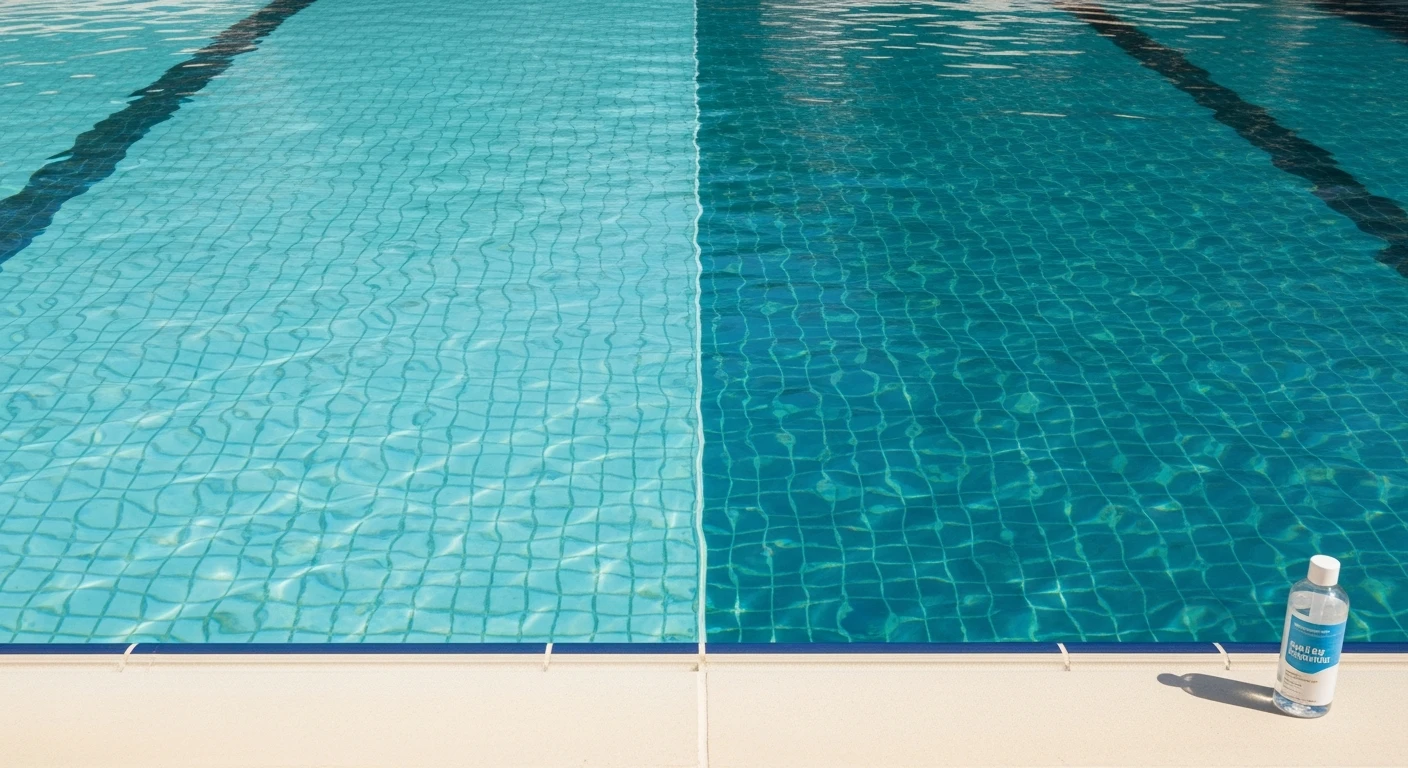
The most common mistake I see in pool maintenance, from residential clients to large-scale commercial facilities, is treating a pool water clarifier as a magic bullet. They overdose it, creating a polymer gel that makes the water even murkier—a phenomenon I call rebound cloudiness. This happens because the clarifier's job isn't to "erase" particles; its sole function is to act as a coagulant, making microscopic particles large enough for your filter to capture.
My entire approach is built on this principle: the clarifier is a filter performance enhancer, not a water replacement. By focusing on the synergy between the chemical and the mechanical filtration system, I've developed a methodology that prevents overdosing and consistently reduces water turbidity to professional standards, often below 1.0 Nephelometric Turbidity Unit (NTU), which is the benchmark for crystal-clear water.
The Diagnostic Framework for Chronic Turbidity
Before I even consider adding a clarifier, I perform a diagnostic. I was once called to a luxury hotel where the pool had been persistently cloudy for weeks, despite the staff "clarifying" it daily. The issue wasn't the particles; it was a combination of high Total Dissolved Solids (TDS) and a sand filter that was suffering from channeling, rendering it ineffective. They were pouring money into a chemical solution for a mechanical problem.
My methodology, the Particle & Filtration Load Assessment, bypasses this costly error. It's a three-step diagnostic:
- Chemical Baseline Analysis: I first test for perfect water balance—pH (7.2-7.6), alkalinity (80-120 ppm), and sanitizer levels. An imbalanced pool will never be clear, as high pH can cause calcium to precipitate out of solution, creating cloudiness that no clarifier can fix efficiently.
- Filtration System Integrity Check: I check the filter's pressure differential. A clean filter has a low starting pressure. As it traps particles, the pressure rises. If the pressure doesn't increase after adding a clarifier, it's a huge red flag that your filter isn't capturing the now-enlarged particles. This points to a need for a deep clean, a media replacement, or repair.
- Particle Source Identification: Is the cloudiness from dead algae after a shock treatment? Sunscreen and bather oils? Or environmental debris? Each source has a unique particle size and requires a slightly different approach.
- Step 1: System Baseline Check. Before anything else, ensure the pump is running, the water is balanced, and you have taken a reading of your filter's clean pressure PSI.
- Step 2: Calculated Micro-Dosing. Ignore the "glug-glug" method. Read the manufacturer's recommended dose and use only 50-75% of it. A little goes a long way. I dilute the clarifier in a bucket of pool water first to ensure even distribution and prevent gelling on the pool surface.
- Step 3: Optimized Circulation & Distribution. Slowly pour the diluted mixture around the edges of the pool, preferably in front of the return jets, to use the water flow for rapid mixing. The goal is to have the coagulant interact with as many particles as possible before it reaches the filter.
- Step 4: Continuous Filtration & Monitoring. Let the pump run continuously for a minimum of 24 hours. After about 8-12 hours, check your filter pressure. You should see a 3-5 PSI increase. This is your key performance indicator; it's tangible proof that the filter is capturing the enlarged particles. No pressure increase means there's a problem with your filter media.
- Step 5: Post-Treatment Filter Cleanse. Once the water is clear, the job is not done. All those captured particles are now trapped in your filter. You must perform a thorough backwash (for sand or D.E. filters) or a deep cartridge clean. Skipping this step will cause the trapped particles to break down and re-cloud your water within days.
Tags
best pool clarifier
pool clarifier near me
best clarifier for pool
best swimming pool clarifier
Pool Water Clarifiers FAQ
What is a pool water clarifier?
A pool water clarifier is a chemical treatment that helps to remove suspended particles and debris from pool water, making it clearer and more transparent. Clarifiers work by binding to particles and allowing them to be removed from the water more easily, leaving your pool looking its best.
Why do I need to use a pool water clarifier?
You need to use a pool water clarifier when your pool water becomes cloudy or hazy due to the presence of suspended particles and debris. Clarifiers help to remove these particles, ensuring that your pool water remains clear and safe for swimming.
How often should I use a pool water clarifier?
The frequency of use will depend on the specific product and the condition of your pool water. Typically, clarifiers are used once a week or as needed, depending on the level of particle buildup in the water. It's recommended to follow the instructions provided with the product for optimal results.
What are the benefits of using a pool water clarifier?
Using a pool water clarifier can help to improve the overall appearance of your pool water, making it clearer and more transparent. Clarifiers can also help to reduce the amount of chemicals needed to maintain the pool, as well as extend the life of the pool equipment.
Are pool water clarifiers safe for my pool and its equipment?
Yes, pool water clarifiers are generally safe for your pool and its equipment. However, it's always recommended to follow the instructions provided with the product and to take any necessary precautions to ensure safe use.
Can I use a pool water clarifier with other pool chemicals?
Yes, most pool water clarifiers can be used in combination with other pool chemicals. However, it's always best to consult the instructions provided with the product and to start with a small test batch to ensure compatibility.
How do I choose the right pool water clarifier for my pool?
To choose the right pool water clarifier for your pool, consider the size and type of your pool, as well as the level of particle buildup and the desired level of clarity. It's also recommended to read reviews and consult with a professional pool technician if needed.
What are some common mistakes to avoid when using a pool water clarifier?
Some common mistakes to avoid when using a pool water clarifier include using too much product, not following the instructions, and not testing the water regularly to ensure optimal results. Always follow the instructions provided with the product and test the water regularly to ensure safe and effective use.