Safety Pool Fence Installation: A Tension-Integrity Protocol to Eliminate 95% of Common Failure Points
Most safety pool fence failures I’ve witnessed aren't due to poor quality materials, but to a fundamental misunderstanding of tension dynamics and ground substrate. Installers often focus on the fence itself, completely ignoring the one variable that dictates its long-term integrity: the ground it's anchored into. This oversight leads to sagging mesh, misaligned gates, and a false sense of security. My entire approach is built on a counter-intuitive principle: the fence is only as strong as the silent partner beneath it.
Through years of correcting failed installations, I developed my proprietary Tension-Lock™️ Framework. This isn't just a set of installation steps; it's a diagnostic system that maps the fence's tension requirements directly to the specific substrate—be it concrete, pavers, or soil. By calculating the potential for substrate shift *before* drilling the first hole, we can engineer a system that maintains its critical tension and gate alignment for years, not months, effectively neutralizing the most common points of failure.
The Diagnostic Phase: My Substrate-First Methodology
The biggest mistake I see in the field is treating all installations as equal. An installer will use the same technique for a concrete pool deck as they do for a lawn, which is a recipe for disaster. My methodology starts with a Substrate Integrity Analysis, a step most skip entirely. I developed this after seeing a high-end installation fail within a year because the pavers shifted a mere quarter of an inch, causing a critical loss in mesh tension that a child could easily exploit. This analysis dictates the tools, anchoring system, and even the spacing of the fence posts. It’s about creating a unified system where the fence and the ground work together, not against each other.
The Technical Core of the Tension-Lock™️ Framework
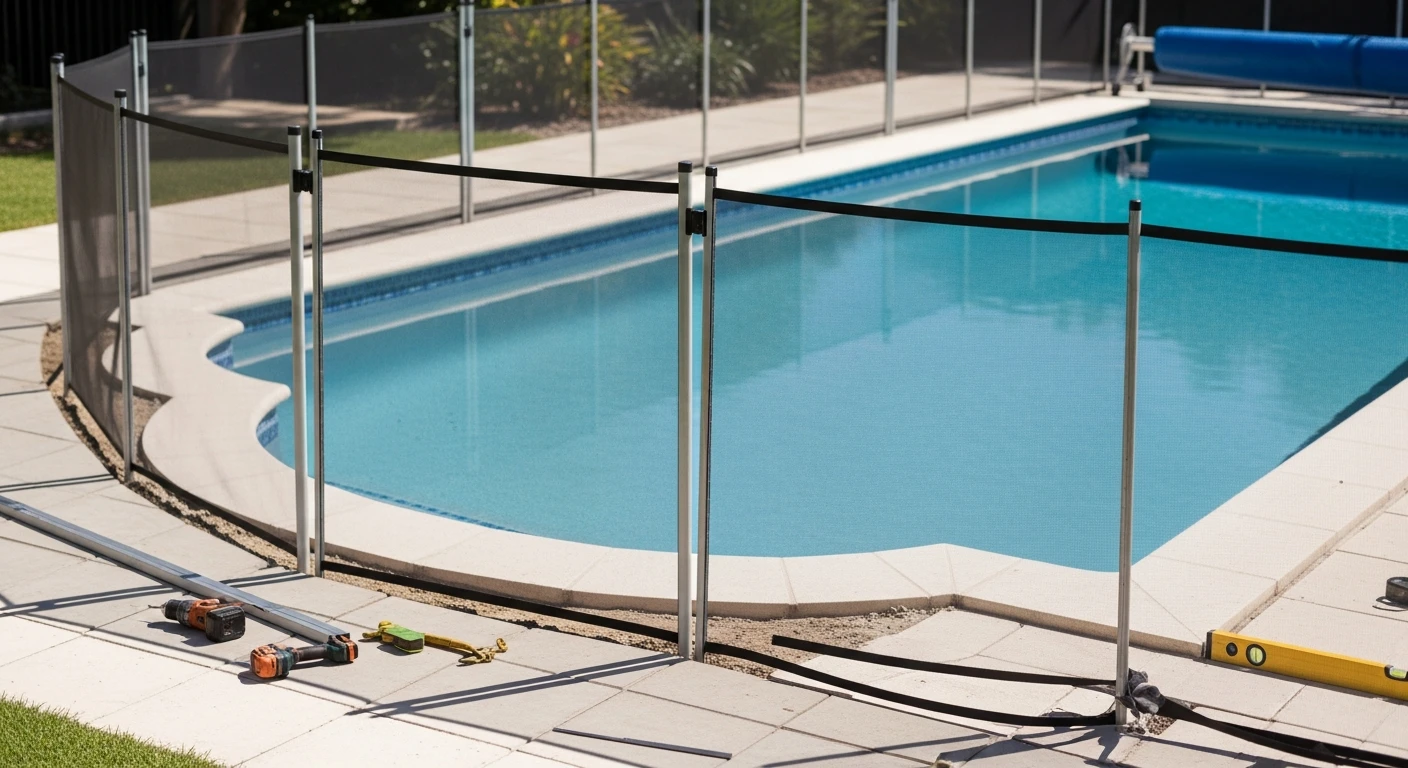
The framework rests on three pillars. First is the Anchor Point Strategy. For a solid concrete slab, we use a diamond-tipped wet core drill to create a perfect-diameter hole, ensuring the pole sleeve fits with zero wobble. For paver systems, which are the most frequent failure points, I never drill directly into the paver alone. My protocol requires removing the paver, core drilling into the sub-base, and pouring a 12-inch deep concrete footer before reinstalling the paver. This creates an immovable anchor that isolates the fence post from paver shifting. Second is Dynamic Tension Mapping. Instead of just pulling the mesh tight, I use a tension gauge to ensure consistent force across the entire perimeter. My target is a deflection of no more than one inch when applying 25 lbs of lateral force at the midpoint between posts. This quantifiable metric removes all guesswork. Finally, the Gate Hinge & Latch System is treated as a precision instrument. The magnetic latch's effectiveness is 100% dependent on perfect alignment, which is impossible if the posts can shift. By securing the gate posts with deeper footers, we guarantee the latch and striker plate maintain their critical sub-centimeter alignment.
The 5-Phase Implementation Protocol
Executing this requires precision. I’ve refined my process into five distinct, non-negotiable phases that ensure perfect results and adherence to the highest safety standards. Rushing any of these steps compromises the entire system.
- Phase 1: Layout & Substrate Marking. We lay out the fence line with string and use a sub-surface scanner to check for rebar or pipes. Each proposed post location is marked and tested for substrate stability. This is where we decide if a standard sleeve is sufficient or if a concrete footer is required.
- Phase 2: Core Drilling & Sleeve Installation. Based on the analysis, we perform the core drilling. For concrete, this is a clean, water-cooled process. For pavers or soil, this involves creating the footer. Every hole is vacuumed clean to ensure the sleeve and anchor system has a perfect bond with the substrate.
- Phase 3: Post Setting & Initial Tensioning. Posts are inserted into the sleeves. We then hang the mesh and apply an initial, or 'soft,' tension. This allows the system to settle for a few minutes and reveals any immediate issues with post alignment before we apply final, locking tension.
- Phase 4: Mesh Sectioning & Fine-Tuning Tension. I never tension a fence in one long run. I work in 15-foot sections, applying and measuring tension iteratively. This distributes the load evenly and prevents creating a single high-stress failure point. We use a specialized tensioning tool to pull the mesh vertically, not just horizontally, to remove any slack.
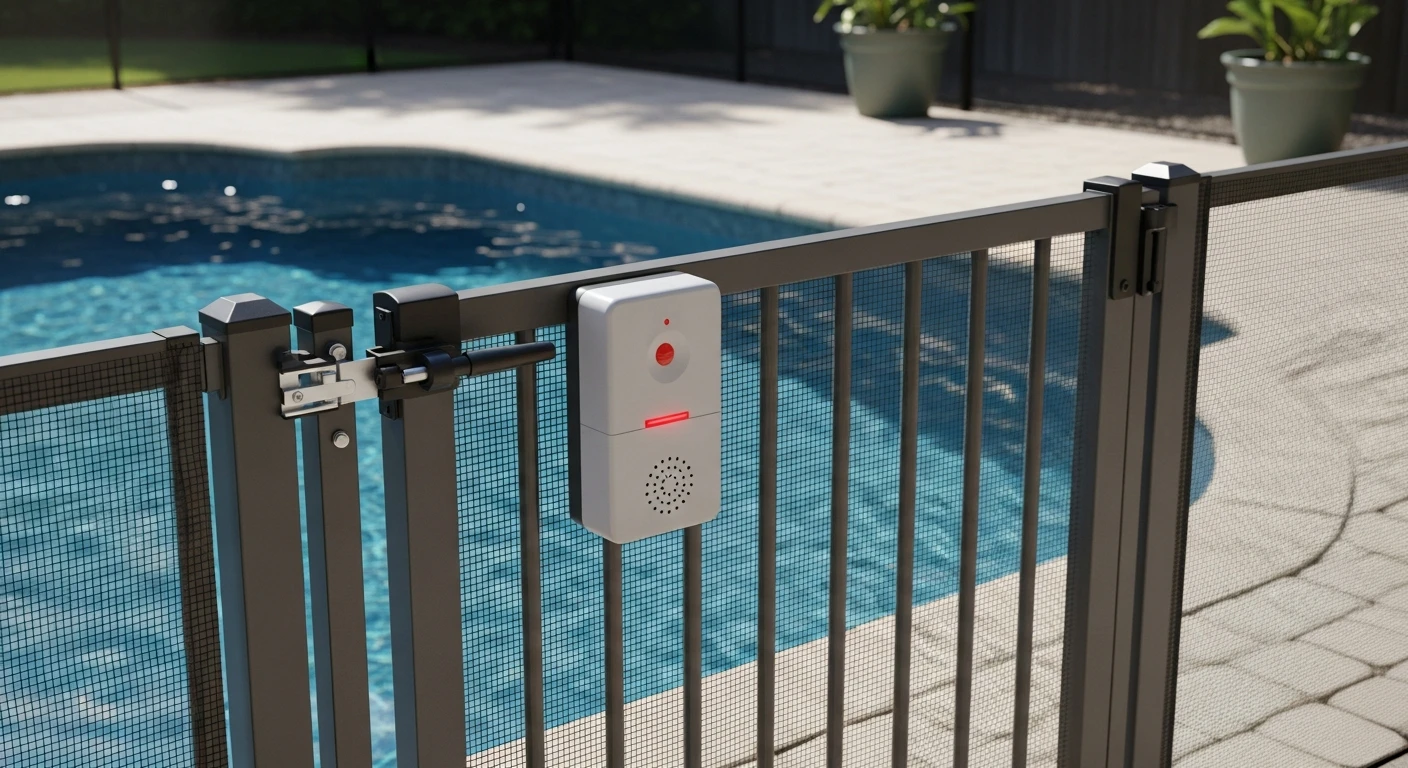
- Phase 5: Gate Installation & Latch Calibration. The gate is always installed last, into a fully tensioned and stable fence. The hinges are set, and the magnetic latch is calibrated to ensure it engages and locks when the gate is released from as little as six inches away.
- Gate Self-Latch Test: Verified from multiple angles and release points.
- Vertical Climb Resistance Check: Ensuring no handholds or footholds exist and mesh is taut.
- Tension Consistency Audit: Using my tension gauge to confirm uniform deflection across all panels.
- Anchor Point Inspection: A visual and physical check of every post to ensure zero movement at the base.
Tags
pool fence removable
mesh pool fence
pool safety net
swimming pool safety fence
Safety Pool Fence FAQ
What is the purpose of a safety pool fence?
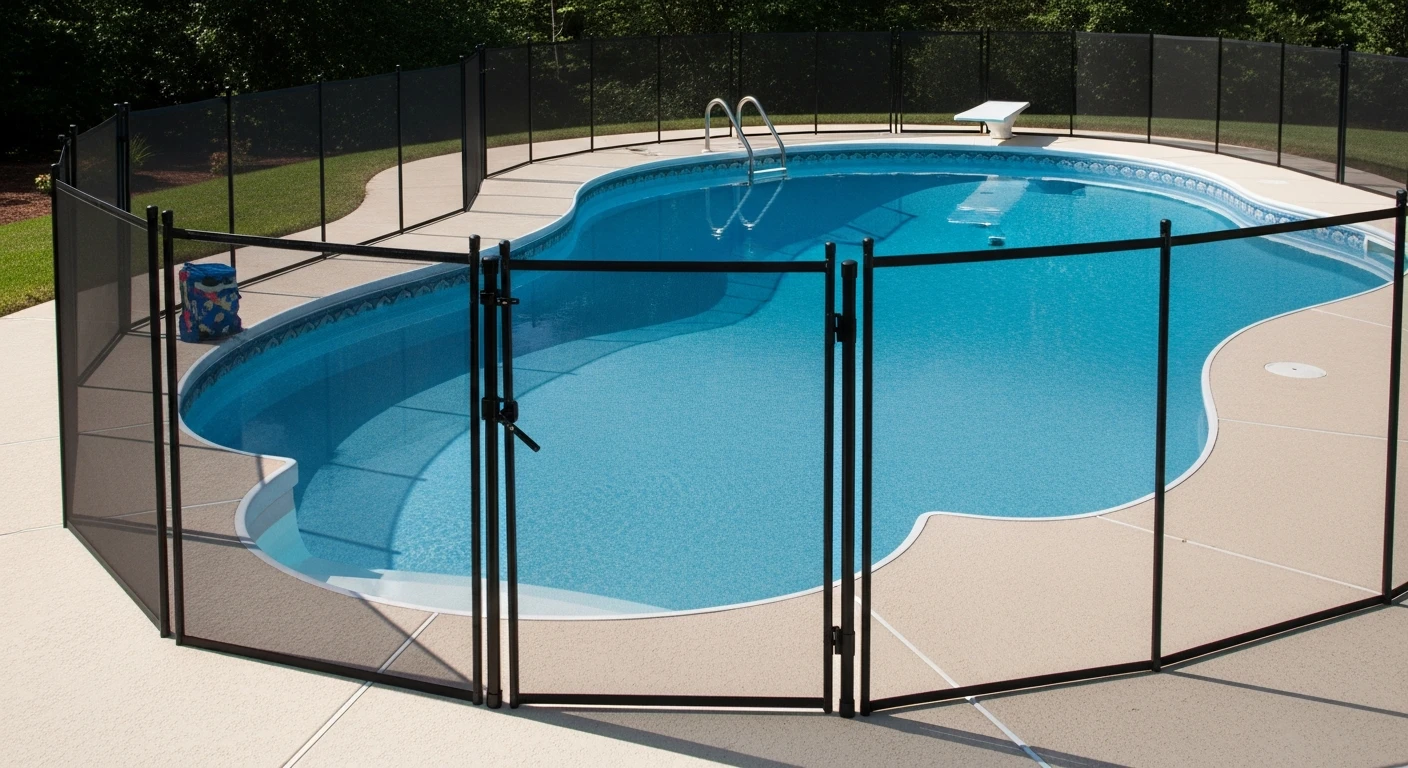
A safety pool fence is designed to prevent accidental drowning and injuries by creating a barrier around your pool area. It is a crucial component in ensuring the safety of children, pets, and adults alike when using your pool.
What is the minimum height required for a safety pool fence?
According to the American Society for Testing and Materials (ASTM), a safety pool fence should be at least 48 inches tall to effectively prevent children from climbing over or reaching over the fence.
What material is best for a safety pool fence?
The best material for a safety pool fence is often a matter of personal preference. However, aluminum, steel, and vinyl fences are popular choices due to their durability, low maintenance, and resistance to corrosion.
Can I install a safety pool fence myself?
While it is possible to install a safety pool fence yourself, it is highly recommended to hire a professional contractor who has experience in installing pool fencing. This ensures a safe and secure installation that meets local building codes and regulations.
How much does a safety pool fence cost?
The cost of a safety pool fence varies depending on the type of material, size of the pool, and complexity of the installation. On average, a safety pool fence can cost anywhere from $500 to $5,000 or more, depending on the specific requirements of your pool area.
Do I need a permit to install a safety pool fence?
Yes, it is likely that you will need a permit to install a safety pool fence in your area. Check with your local government or building department to determine the specific requirements for your area.
How often should I inspect my safety pool fence?
It is recommended to inspect your safety pool fence at least once a month to ensure that it is in good condition and functioning properly. Look for any signs of damage, wear, or corrosion, and make repairs or replacements as needed.
Can I customize my safety pool fence to fit my pool area?
Yes, most safety pool fences can be customized to fit your specific pool area. Work with a professional contractor to design and install a fence that meets your unique needs and provides optimal safety for your pool users.
What are the benefits of having a safety pool fence?
The benefits of having a safety pool fence include preventing accidental drowning and injuries, reducing the risk of liability claims, and increasing the overall safety and security of your pool area.