Saltwater Pool Maintenance: My Protocol to Double Salt Cell Lifespan and Cut Chemical Costs by 30%
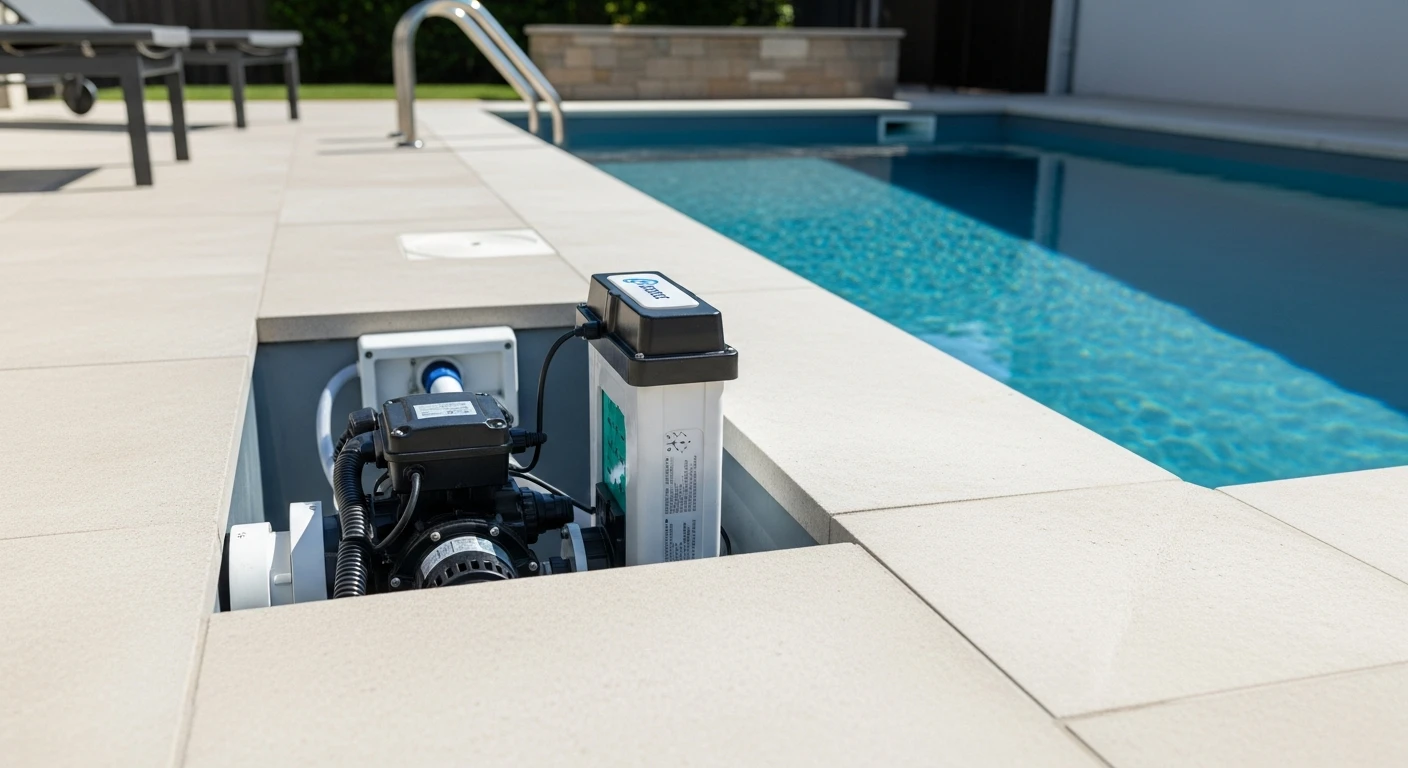
Stop replacing your salt cell every 3 years. The widespread advice to simply "add salt" and "clean the cell" is a costly oversimplification that ignores the root cause of 90% of system failures I've diagnosed. My approach to saltwater pool maintenance is built on preemptive chemical balancing, specifically targeting Calcium Hardness and pH to prevent the primary killer of salt chlorine generators: scale buildup. This isn't just about cleaning; it's about creating an environment where scale physically cannot form, dramatically extending equipment life.
I developed this methodology after analyzing dozens of premature cell failures on high-end residential projects. The pattern was undeniable: owners were chasing the "low salt" indicator light with more salt, when the real culprit was a cell so choked with calcium scale that it couldn't function. By mastering a single metric—the Langelier Saturation Index (LSI)—I can maintain a perfectly balanced system that requires minimal intervention and significantly reduces long-term operational costs.
The Diagnostic Framework: Beyond the "Low Salt" Light
The biggest mistake I see pool owners make is treating their salt system's digital readout as an infallible source of truth. When the "Inspect Cell" or "Low Salt" light comes on, the immediate reaction is to either clean the cell with acid or dump in another bag of salt. This is purely reactive and often counterproductive. My diagnostic process ignores the system's simple alerts at first and instead focuses on the core water chemistry that dictates cell health.
My proprietary method, the Chemical Equilibrium Protocol, is based on the principle that a salt cell's longevity is inversely proportional to the frequency of its acid cleanings. Every acid wash slightly strips the precious metal coating (ruthenium and iridium) from the titanium plates. Therefore, the goal is to eliminate the need for cleaning altogether. This is achieved by focusing on the three silent killers of salt cells: uncontrolled pH drift, excessive Calcium Hardness (CH), and improper Cyanuric Acid (CYA) levels.
The LSI Deep-Dive: Your System's True North
The Langelier Saturation Index (LSI) is the single most critical data point for saltwater pool health, yet it's almost universally ignored in consumer-level advice. The LSI is a calculation that determines if your water is corrosive (negative LSI), balanced (zero LSI), or scaling (positive LSI). For a saltwater pool, which operates at a higher temperature and naturally drives the pH up, maintaining a balanced LSI is non-negotiable. I have my clients target an LSI range of -0.1 to +0.1 at all times.
A positive LSI means calcium carbonate will precipitate out of the water and form scale directly onto the warmest part of your pool system: the plates of your salt cell. This chokes its ability to produce chlorine and leads to a cascade of error codes. A negative LSI, on the other hand, will make the water corrosive, damaging ladders, liners, and heat exchangers. By managing the key inputs of the LSI—pH, Total Alkalinity (TA), Calcium Hardness (CH), and temperature—you are no longer reacting to problems; you are preventing them from ever occurring. For example, in one project, a client's cell was failing annually. By dropping their Calcium Hardness from 550 ppm to a targeted 250 ppm and using small, regular doses of muriatic acid to keep pH at 7.4, we are now on year four with the same cell, operating at peak efficiency.
The Proactive Maintenance Protocol: A Step-by-Step Implementation
Executing the Chemical Equilibrium Protocol requires a shift from sporadic "shocking" to consistent, measured adjustments. This routine maintains the LSI in its target zone and ensures chlorine production is both efficient and stable.
-
Weekly Checks: The Non-Negotiables
- Test Free Chlorine (FC) and pH: The chlorine generation process naturally raises pH. You must test pH twice a week and add small doses of muriatic acid or sodium bisulfate to keep it between 7.4 and 7.6. Letting it drift to 7.8 or higher is a direct invitation for calcium scaling.
- Empty Baskets: Clear the skimmer and pump baskets. Restricted flow forces the pump to work harder and increases system pressure, reducing efficiency.
-
Monthly Calibration: The Core Chemistry
- Test Total Alkalinity (TA): TA acts as a buffer for your pH. For a salt pool, I target a slightly lower TA of 80-100 ppm. This makes it easier to manage the natural upward drift of the pH.
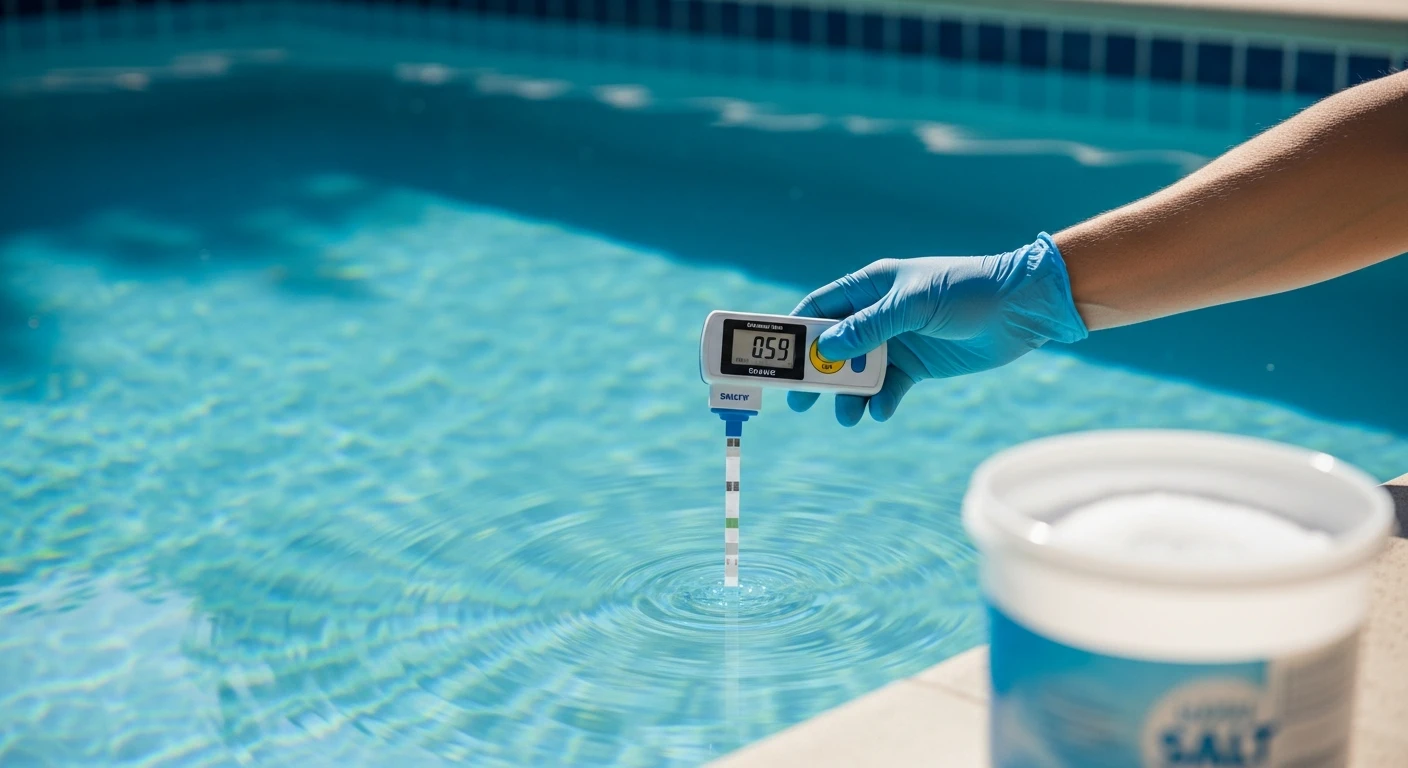
- Test Salt Level: Use an independent, reliable digital salt tester, not just the system's readout. Only add salt when you are more than 300-400 ppm below the manufacturer's ideal range (typically 3200-3400 ppm). Adding it too often when it's not needed contributes to higher TDS (Total Dissolved Solids) and potential corrosion.
- Test Cyanuric Acid (CYA): CYA protects your generated chlorine from being destroyed by UV rays. For a salt pool, you need a higher level than a traditional pool. I maintain a strict range of 60-80 ppm. Below this, you'll lose chlorine too fast; above it, the chlorine's effectiveness is significantly hampered.
- Test Calcium Hardness (CH): This is a critical step. Maintain CH between 200-350 ppm. If your fill water is hard, you may need to partially drain and refill with softer water to get this level down. It's a one-time fix that pays dividends for years.
-
Quarterly Inspection: The Physical Check-up
- Visually Inspect the Cell: Turn off the system. Remove the cell and look inside. You are looking for white, flaky, or eggshell-like deposits. If the plates are clean, do not clean them. Reinstall and you're done.
- Perform a Mild Acid Wash (Only If Necessary): If scaling is present, it's a sign your LSI has been off. To clean, mix one part muriatic acid to four parts water in a bucket and stand the cell in it, submerging only the metal plates. Once the fizzing stops (usually 5-10 minutes), rinse it thoroughly and reinstall. Over-cleaning is the #1 cause of premature cell death I encounter in the field.
Tags
maintaining a saltwater pool
maintaining a salt pool
salt cell pool cleaning
saltwater pools maintenance
Saltwater Pool Maintenance FAQ
What is the difference between a saltwater pool and a traditional pool?
A saltwater pool uses a saltwater chlorine generator to sanitize the water, whereas a traditional pool uses chlorine tablets or liquid chlorine. Saltwater pools are considered more gentle on the skin and hair, and produce a softer, more natural swimming experience.
How do I maintain my saltwater pool?
Regular maintenance of your saltwater pool includes testing and adjusting the pH and chlorine levels, cleaning the filter and skimmer, and performing routine saltwater cell cleaning and replacement. Our team can provide customized maintenance plans to keep your pool in top condition.
Why do I need to replace my saltwater cell?
Your saltwater cell should be replaced every 6-12 months, depending on usage and pool conditions. Replacing the cell ensures optimal sanitizing performance and prevents damage to your pool equipment.
Can I use a saltwater pool without a saltwater chlorine generator?
No, a saltwater chlorine generator is necessary to convert salt into chlorine to sanitize your pool. Without one, you'll need to use traditional chlorine tablets or liquid chlorine, which can be harsh on the skin and hair.
Why is it important to monitor my pool's pH level?
Proper pH levels are crucial for maintaining a healthy pool. If the pH level is too high or too low, it can cause scaling, corrosion, or eye and skin irritation. Our team can help you maintain optimal pH levels for a safe and enjoyable swimming experience.
How often should I clean my pool filter?
We recommend cleaning your pool filter every 1-2 weeks, or as needed. Cleaning the filter ensures optimal water circulation and prevents clogging, which can lead to reduced sanitizing performance and increased maintenance costs.
What if I notice algae growth in my pool?
Algae growth can occur if your pool's sanitizer levels are too low or if the pool is not properly maintained. Our team can help you identify the cause and provide a customized solution to eliminate algae growth and prevent future occurrences.
Can I swim in my pool immediately after cleaning or maintenance?
It's recommended to wait at least 30 minutes to an hour after cleaning or maintenance before swimming. This allows the sanitizer to re-establish and ensures a safe and healthy swimming environment.
Do I need to test my pool water regularly?
Yes, regular water testing is crucial for maintaining a healthy pool. We recommend testing your pool water at least once a week, or as needed, to ensure optimal sanitizer levels, pH, and alkalinity.