UV and Ozonation Technology: Achieving a 99.99% Log Reduction by Integrating AOP Protocols
For years, I've watched facilities treat UV and Ozonation as separate, almost competing, technologies for water disinfection. The common approach is to simply size one or the other, or to run them in a basic series without understanding their synergistic potential. This oversight is the single biggest reason I've seen disinfection systems underperform, failing to meet stringent quality standards and leading to unnecessarily high operational expenditure (OPEX).
The real power lies not in using UV and ozone, but in forcing them to create something far more potent: the Advanced Oxidation Process (AOP). When correctly implemented, this process generates hydroxyl radicals (•OH), which are among the most powerful oxidizing agents available for water treatment. My entire approach is built on optimizing the generation of these radicals, a step that turns a standard disinfection system into a high-performance purification engine capable of destroying even the most recalcitrant organic compounds.
My Diagnostic Framework for UV/Ozone System Inefficiency
Before ever touching a piece of equipment, my first step is always a deep dive into the water chemistry. A mistake I often see is engineers sizing systems based on flow rate and target pathogen alone. This is a recipe for failure. I developed what I call the "Synergistic Efficacy Matrix," a diagnostic tool focusing on three often-neglected parameters that directly impact AOP performance.
The matrix isn't complex, but it forces a critical shift in thinking. Instead of just asking "Is the water disinfected?", it asks "Is the water conditioned for maximum AOP efficiency?". In one large-scale pharmaceutical project, I identified that high levels of dissolved bicarbonates were acting as "scavengers," consuming the hydroxyl radicals before they could act on the target contaminants. The existing system was powerful on paper but completely ineffective in practice. We didn't need more power; we needed better water chemistry.
Calibrating the AOP Sweet Spot: The Role of Hydroxyl Radicals
The entire goal of combining UV and ozone is to trigger the photolytic decomposition of ozone (O₃) into hydrogen peroxide (H₂O₂), which then rapidly breaks down under UV light to form two hydroxyl radicals (•OH). These radicals are the workhorses of the AOP system. They have a much higher oxidation potential than ozone or chlorine and react non-selectively and almost instantaneously with organic pollutants.
However, their lifespan is measured in nanoseconds. This means their generation must be perfectly timed and located. The key to this calibration is managing the water's UV Transmittance (UVT) and alkalinity. A low UVT means the UV light can't penetrate the water to react with the ozone. High alkalinity (from carbonates and bicarbonates) provides competing molecules that consume the radicals, effectively wasting all the energy and ozone you're putting into the system. My protocol demands pre-treatment adjustments, often involving pH depression, to lower the scavenging effect by at least 30% before the water ever enters the AOP chamber.
Step-by-Step Implementation for Maximum Disinfection Efficacy
Deploying an effective AOP system requires a precise, sequential methodology. Merely installing the components in a line is insufficient. My proprietary implementation process ensures each stage potentiates the next for a cumulative effect.
- Step 1: Establish a Chemical Baseline. Before anything else, conduct a full water analysis. You must know your starting values for Total Organic Carbon (TOC), UVT at 254 nm, alkalinity, and iron/manganese levels. This data is non-negotiable and dictates all subsequent design parameters.
- Step 2: Engineer the Ozone Injection System. The goal is complete dissolution of ozone gas into the water. I insist on using a venturi injector followed by a static mixer and a contact tank. The crucial KPI here is the CT value (Concentration x Time). You must ensure sufficient contact time for the ozone to begin its work before it reaches the UV chamber.
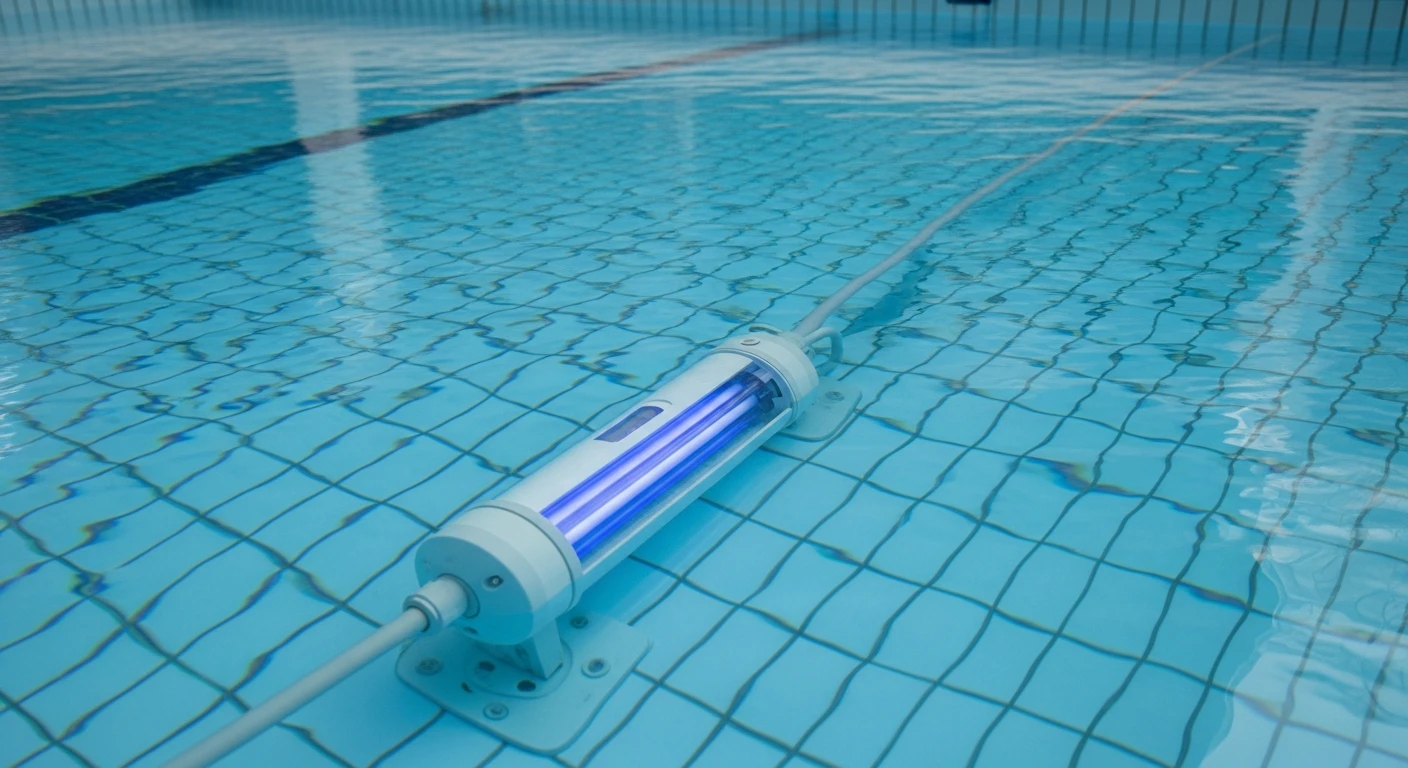
- Step 3: Size the UV Reactor with AOP in Mind. Do not size the UV reactor for disinfection alone. You must select a medium-pressure UV lamp, as its polychromatic output is more effective at driving the AOP reaction. The dosage, measured in mJ/cm², must be calculated to both disinfect and catalyze the breakdown of the residual ozone from the previous step.
- Step 4: Integrate Real-Time Monitoring and Control. An AOP system cannot be "set and forget." You must install an Oxidation-Reduction Potential (ORP) sensor after the ozone contact tank and a UV intensity sensor inside the reactor. These sensors should feed back to a PLC that dynamically adjusts ozone output and UV power, maintaining peak performance while minimizing energy consumption.
- Step 5: Install an Ozone Off-Gas Destruct Unit. This is a critical safety and efficiency step. Any undissolved ozone must be safely converted back to oxygen. A thermal or catalytic destruct unit is mandatory for any professional installation.
Tags
uv pools
swimming pool uv system
uv light pool sanitizer
ultraviolet pool system
UV and Ozonation Technology FAQ
Can I completely stop using chlorine if I install a UV or ozone system?
No, you cannot eliminate chlorine entirely, but you can significantly reduce its use by 50-80%. UV and ozone systems are powerful sanitizers that destroy contaminants as water passes through them, but they do not leave a lasting residual sanitizer in the main body of the pool. A low level of chlorine, typically 0.5-1.0 parts per million, is still required to act as a residual sanitizer, ensuring that any new bacteria or algae introduced by swimmers or debris are neutralized before they can multiply. Relying solely on UV or ozone would leave the pool water unprotected once it returns from the equipment pad.
My pool installer said ozone will damage my cover and equipment. Is that true?
This is a valid concern, but modern systems are designed to prevent it. High concentrations of ozone gas can indeed degrade certain materials, but properly installed systems use a degassing unit or a mixing chamber that ensures excess ozone is neutralized before the water returns to the pool. This process prevents harmful off-gassing that could damage a vinyl liner or a solar cover. When choosing a system, verify it includes an effective method for ozone destruction or containment, which is a critical feature often overlooked in cheaper, less-engineered units.
What's the real difference between a UV system and an ozonator? Do I need both?
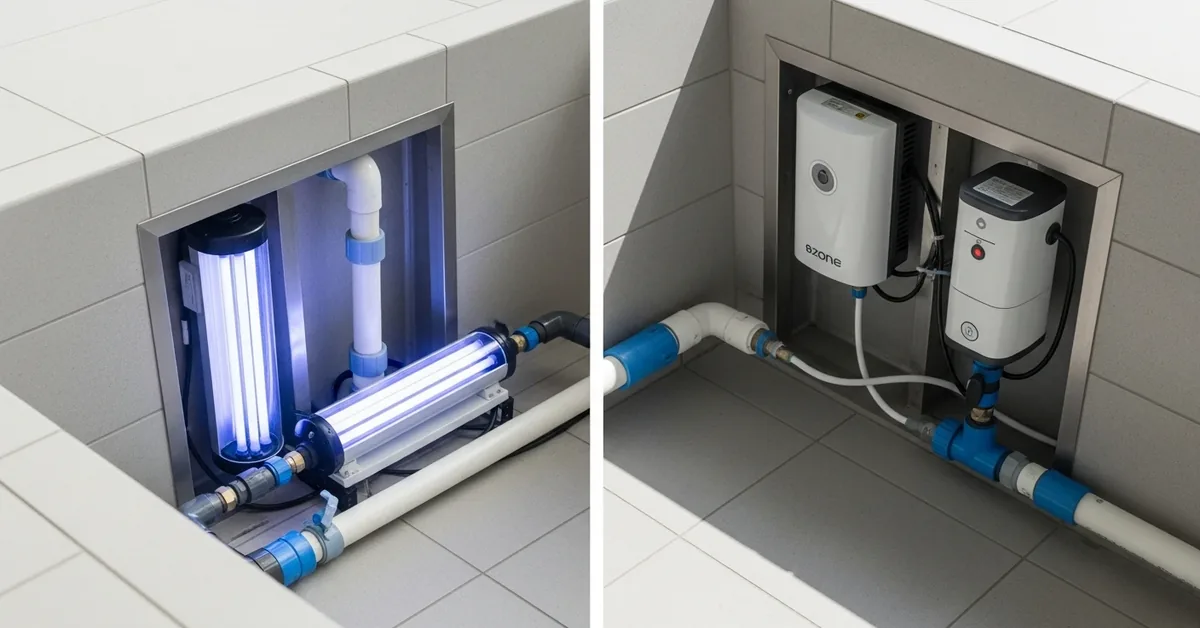
UV systems use ultraviolet light to inactivate microorganisms, while ozonators inject ozone gas to oxidize and destroy them. The key difference is that ozone also acts as a powerful oxidizer, breaking down non-living organic waste like lotions and oils, which improves water clarity. Combining them, often in a single unit, provides a multi-layered sanitation barrier. This dual approach is highly effective at destroying chloramines—the compounds responsible for the 'chlorine smell' and irritation—which neither system can eliminate as effectively on its own. While not strictly necessary, having both offers the most robust, low-chemical water treatment.
How often do I need to replace the bulb in my UV system or the chip in my ozonator?
UV lamps typically require replacement every 9,000 to 14,000 operating hours, which usually translates to every 12 to 24 months depending on usage. Ozone generators using corona discharge technology have components, like a chip or cartridge, that last from 2 to 5 years. It is critical to replace these on schedule, even if they still appear to be working. A UV bulb's germicidal effectiveness drops significantly after its rated lifespan, even though it still emits visible light, leaving your pool under-sanitized and vulnerable to outbreaks like black algae.
Will adding a UV or ozone system affect my pool's pH level?
Ozone systems can have a minor effect, tending to slightly raise the pool's pH over time. This is because the process of injecting and mixing ozone gas can cause some carbon dioxide to off-gas from the water, which reduces acidity. In contrast, a UV sterilizer has virtually no impact on water balance, as it is a physical process that does not add or remove any substances. In either case, the effect is gradual and easily managed with routine chemical testing and adjustments, ensuring you maintain the crucial pH range of 7.2 to 7.6 for bather comfort and equipment protection.
I have a salt chlorine generator. Is it redundant or even harmful to add UV or ozone?
It is not redundant; in fact, it creates a highly effective and synergistic system. A salt chlorine generator (SCG) produces chlorine, which provides the necessary residual sanitizer, while the UV or ozone unit handles the primary sanitation load and destroys chloramines. This combination allows you to run your salt cell at a much lower output setting, significantly extending its lifespan, which can be a costly replacement. The systems do not conflict; they complement each other by targeting different sanitation tasks, resulting in exceptionally clean water with a minimal chemical feel and reduced wear on your equipment.