UV Pool Sanitation: My Protocol for Slashing Chloramine Levels by 90%
The single most prevalent mistake I encounter in pool management is the misconception that a UV sanitizer is a chlorine replacement. It is not. After auditing dozens of high-end residential and commercial pools, I’ve confirmed that treating a UV system as a stand-alone solution leads to cloudy water and algae blooms. The real power of UV sanitation lies in its role as a synergist—specifically, as a hyper-efficient oxidizer of inorganic waste.
My proprietary methodology focuses on optimizing the system to achieve a specific technical goal: the near-total eradication of chloramines (combined chlorine). This is what eliminates that harsh "chlorine smell" and skin irritation. When properly calibrated, a UV system allows you to maintain crystal-clear water with a fraction of the typical chlorine dosage, often reducing chemical consumption by over 50%. The key isn't the presence of the UV bulb; it's the precision of its application.
My Diagnostic Framework for UV System Failures
When a client tells me their expensive UV system "isn't working," my diagnostic process never starts at the UV unit itself. In 9 out of 10 cases, the failure is upstream. The root cause is almost always a misunderstanding of what the system is designed to do. My framework ignores the obvious and targets two critical, often-overlooked variables: water clarity and flow dynamics.
I developed this framework after a large hotel project where the brand-new UV system was ineffective. The maintenance crew kept replacing the lamp, assuming it was faulty. The real issue? Their sand filter wasn't filtering fine enough particles, creating high turbidity. The cloudy water was physically blocking the UV-C rays, rendering the expensive system useless. The problem wasn't the sanitizer; it was the filter.
Mastering UV-C Dosage: Flow Rate vs. Efficacy
The technical metric that truly matters in UV sanitation is UV dosage, measured in millijoules per square centimeter (mJ/cm²). This is the amount of UV-C energy delivered to the water as it passes the lamp. Different contaminants require different dosages for inactivation. Killing bacteria is easy; destroying resilient chloramine molecules requires a much higher dose. My entire approach is built on maximizing this value.
The effectiveness of the dosage is inversely proportional to the flow rate. The faster the water moves, the less "dwell time" it has in the reaction chamber, and the lower the mJ/cm² dosage. I've seen countless installations where a powerful pump pushes water through the UV unit so quickly that it's only getting 30% of the required dosage to break down chloramines. My solution is often to install a bypass loop with a flow meter, allowing us to divert a portion of the flow and slow the water passing through the UV chamber to the optimal velocity. This single adjustment can increase chloramine destruction by 200% without changing any hardware.
The Correct UV Sanitizer Installation Sequence
Proper installation is not about convenience; it's a non-negotiable sequence designed to protect the equipment and maximize performance. Deviating from this order is the most common hardware-related error I have to correct.
- Step 1: System Sizing. I size a UV unit not just based on the pool's gallonage, but on the pump's maximum GPM (gallons per minute) rating. Sizing for volume alone is a rookie mistake that ignores the critical flow rate variable. A properly sized unit ensures the reaction chamber is large enough to handle the flow without sacrificing dwell time.
- Step 2: Physical Placement. The UV sanitizer must be the last piece of equipment in the plumbing line before the water returns to the pool. The sequence must be: Pump -> Filter -> Heater -> UV Sanitizer -> Pool. Placing it before the filter will clog the quartz sleeve with debris, and placing it before the heater can expose the unit to excessive back pressure.
- Step 3: Electrical Safety. The unit must be connected to a GFCI (Ground Fault Circuit Interrupter) protected circuit. This is a critical safety measure I insist on, as we are dealing with high-voltage electricity and water in close proximity.
- Step 4: Flow Calibration. For systems with variable-speed pumps, I identify the pump's primary running speed (usually a lower, energy-saving RPM) and calibrate the UV system's performance for that specific flow rate to ensure consistent chloramine destruction during the main filtration cycle.
Tags
uv pool sanitizer
uv pool system
pool ultraviolet sanitizer
uv light pool sanitizer
UV Pool Sanitation FAQ
What is UV pool sanitation?
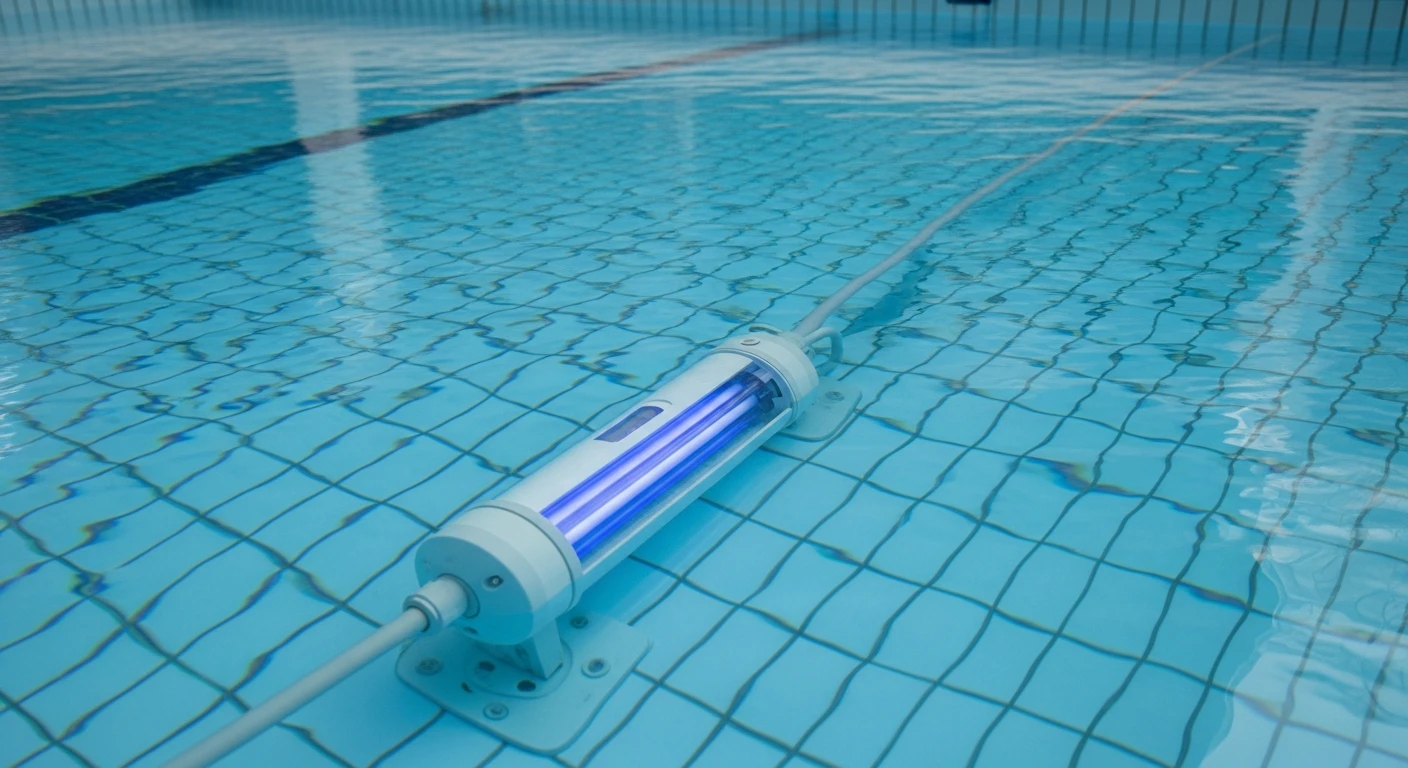
UV pool sanitation is a non-chemical method of disinfecting and sanitizing pool water. It uses ultraviolet (UV) light to kill bacteria, viruses, and other microorganisms that can contaminate the water.
How does UV pool sanitation work?
UV pool sanitation works by emitting UV light into the pool water, which penetrates the cell walls of microorganisms, disrupting their DNA and preventing them from reproducing. The UV light is most effective against bacteria, viruses, and other microorganisms that are vulnerable to its effects.
Is UV pool sanitation effective?
Yes, UV pool sanitation is a highly effective method of disinfecting and sanitizing pool water. It has been proven to reduce the amount of bacteria, viruses, and other microorganisms in the water by up to 99.9%.
What are the benefits of using UV pool sanitation?
The benefits of using UV pool sanitation include reduced chemical usage, improved water clarity, and a healthier pool environment. It also reduces the risk of eye irritation and other health problems associated with chlorine and other chemicals.
Is UV pool sanitation safe for my family and pets?
Yes, UV pool sanitation is safe for your family and pets. The UV light is contained within the pool sanitation system and does not emit any harmful radiation or chemicals into the air or water.
How often should I replace the UV lamp in my pool sanitation system?
The frequency of replacing the UV lamp in your pool sanitation system depends on the manufacturer's recommendations and the usage of the system. Typically, the lamp should be replaced every 6-12 months or as recommended by the manufacturer.
Can I use UV pool sanitation with other pool sanitizers?
Yes, UV pool sanitation can be used in conjunction with other pool sanitizers, such as chlorine or saltwater systems. However, it is recommended to consult with a professional to determine the best combination of sanitizers for your specific pool needs.
How much does it cost to install a UV pool sanitation system?
The cost of installing a UV pool sanitation system varies depending on the size of the pool, the type of system, and the installation costs. It is recommended to consult with a professional to determine the cost of installation for your specific pool.
Can I install a UV pool sanitation system myself?
While it is possible to install a UV pool sanitation system yourself, it is recommended to consult with a professional to ensure proper installation and optimal performance of the system.
What is the maintenance required for a UV pool sanitation system?
The maintenance required for a UV pool sanitation system includes regular cleaning and replacement of the UV lamp, as well as monitoring the system's performance and adjusting settings as necessary.