UV Pool Systems: A Sizing Protocol for 99.9% Inactivation and 75% Chemical Reduction
I’ve seen countless pool owners invest in UV systems only to see minimal results. The failure isn't the technology; it's the application. The most common pitfall is selecting a unit based solely on the pool's gallon size, completely ignoring the single most critical factor for germicidal efficacy: the actual, validated **UV-C dosage** delivered to the water. A system that can't deliver the required dosage is just an expensive, glowing pipe.
My entire approach is built around reversing this flawed logic. Instead of asking "what size UV for my pool?", I start with "what is the required dosage to inactivate the most resilient pathogens?" and work backward. This ensures the system isn't just a supplementary feature but a primary sanitation powerhouse, capable of reducing combined chlorine to near-zero levels and slashing overall chemical dependency by up to 75%. This is about engineering a result, not just installing a product.
The Core Miscalculation in UV System Sizing: My Dosage-First Methodology
The industry standard of sizing a UV unit based on maximum pool volume is fundamentally broken. It fails to account for the single variable that determines success or failure: **flow rate dynamics**. A 100-watt UV system on a high-flow pump might be less effective than a 50-watt system on a correctly sized variable-speed pump. Why? Because the water is moving too fast, reducing the contact time inside the reactor chamber and delivering a sublethal UV dose.
My proprietary methodology, which I call **Dosage-First Sizing**, ignores the sticker on the box and focuses on a single Key Performance Indicator: **millijoules per square centimeter (mJ/cm²)**. This is the true measure of a UV system's power. I identified this as the primary failure point in a large-scale commercial aquatic project where their brand-new, oversized UV systems were failing to control chloramines. Their pumps were turning the water over too quickly, and the effective dosage was below 15 mJ/cm², which is insufficient for chlorine-resistant pathogens like Cryptosporidium.
Deconstructing UV-C Efficacy: Watts vs. Millijoules
Let's get granular. The wattage of a UV lamp is merely a measure of energy consumption, not germicidal output. The real work is done by the **UV-C photons** striking the microorganisms. The effective dosage is a function of a lamp's intensity multiplied by the water's exposure time. A key insight often missed is the design of the **reactor chamber** itself.
I've found that units with highly polished, surgical-grade stainless steel interiors can increase the effective dosage by up to 35% without any additional power consumption. This is due to internal reflection, which bounces the UV-C rays and ensures they hit pathogens from multiple angles. In contrast, a PVC or plastic-bodied unit has zero reflectivity, meaning a significant portion of the UV energy is absorbed by the housing and wasted. Furthermore, the **quartz sleeve** that protects the lamp is a critical component. If it's not made from 100% pure fused quartz, it can block a significant percentage of the effective 254-nanometer germicidal wavelength, crippling the system's performance from day one.
Implementation Protocol: From Pump Sizing to System Integration
To guarantee performance, I follow a strict, non-negotiable implementation sequence. This isn't just about plumbing; it's about creating a balanced and effective sanitation ecosystem.
- Step 1: Calculate True System Flow Rate. I never trust the pump's label. I use an inline flow meter after the filter to measure the actual gallons per minute (GPM) of the system. This number is the bedrock of all subsequent calculations. A dirty filter can reduce flow by 20-30%, so I test under worst-case conditions.
- Step 2: Define the Target Dosage. For residential pools, my minimum acceptable standard is 30 mJ/cm². This is the dosage required for a 99.9% kill rate of Giardia and Cryptosporidium. For commercial or high-bather-load pools, I elevate this to 40 mJ/cm².
- Step 3: Select the UV Reactor Based on Dosage Charts. I only specify UV systems from manufacturers who provide certified dosage-versus-flow-rate charts. Using my true GPM from Step 1, I select a unit that can deliver my target mJ/cm² at that flow rate, often at the end of the lamp's life. This builds in a crucial performance buffer.
- Step 4: Critical Path Plumbing. The UV system must be the last component in the equipment line before the water returns to the pool. It must be installed after the filter and heater. Placing it before the filter is a catastrophic error I've had to fix; debris coats the quartz sleeve, rendering the system useless within days.
- Step 5: Electrical Integrity and Automation. The unit must be on a GFCI-protected circuit. Critically, I wire the UV system's ballast to the same circuit as the main pump. This ensures the UV lamp is only powered on when water is flowing, preventing overheating and drastically extending the life of the ballast and lamp.
Tags
uv pool sanitizer
uv pool filter
uv pool
uv ozone pool system
UV Pool Systems FAQ
What is a UV pool system?
A UV pool system is a type of water treatment system that uses ultraviolet (UV) light to kill bacteria, viruses, and other microorganisms in pool water. UV systems work by emitting a specific wavelength of UV light that damages the DNA of these microorganisms, rendering them harmless.
How does a UV pool system work?
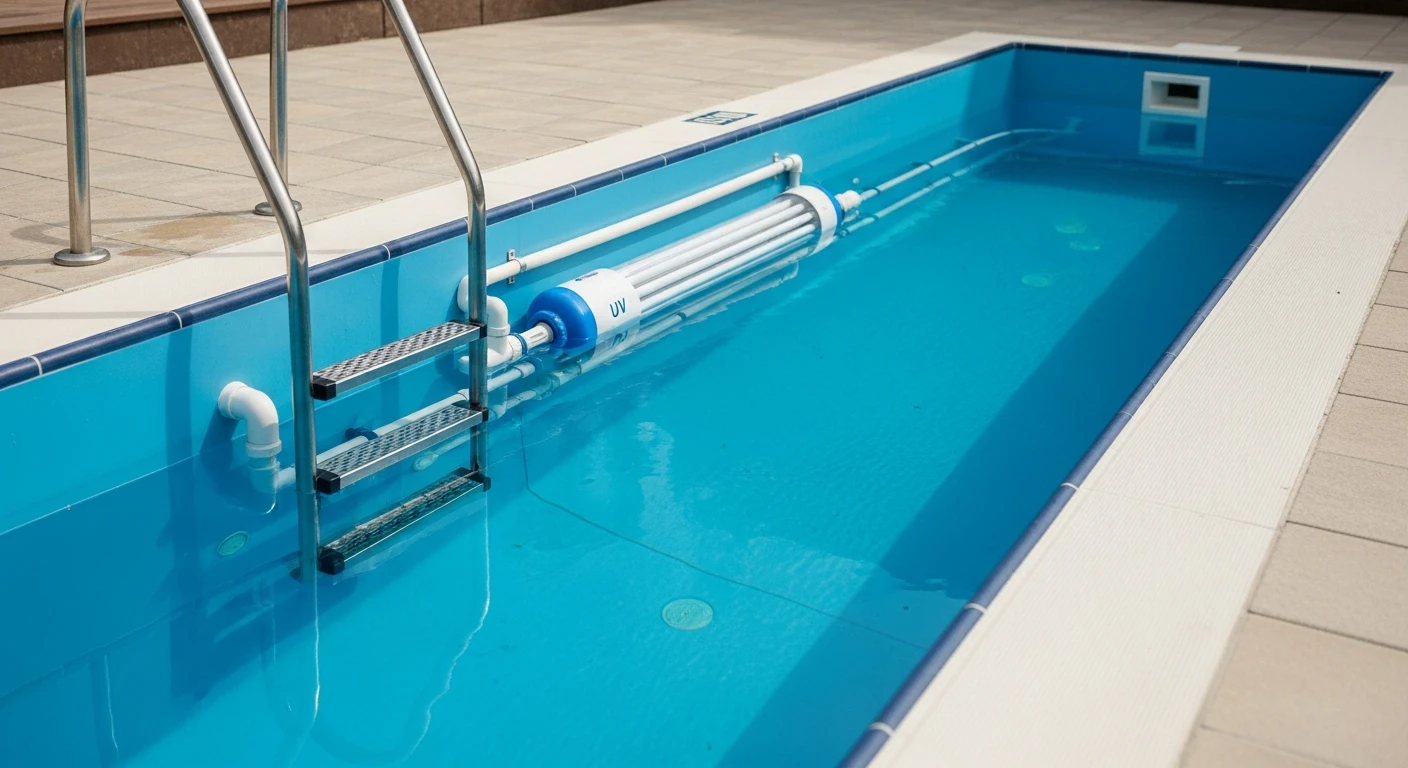
A UV pool system works by circulating pool water through a UV reactor chamber, where it is exposed to the UV light. The UV light inactivates bacteria, viruses, and other microorganisms, killing them and ensuring the water is safe for swimming.
What are the benefits of using a UV pool system?
The benefits of using a UV pool system include improved water quality, reduced chlorine usage, and increased swimmer comfort. UV systems also eliminate the need for shock treatments and reduce the risk of algae growth.
Can UV pool systems replace traditional chlorine disinfection?
While UV pool systems are effective in killing bacteria and viruses, they cannot completely replace traditional chlorine disinfection. UV systems are best used in conjunction with chlorine or other disinfectants to provide comprehensive water treatment.
How often should I replace my UV lamp?
The frequency of replacing your UV lamp depends on the manufacturer's recommendations and usage patterns. Typically, UV lamps should be replaced every 6-12 months or when the lamp's intensity decreases by 20-30%.
Can I install a UV pool system myself?
While it is possible to install a UV pool system yourself, it is recommended to hire a professional installer to ensure proper installation and maintenance. Improper installation can lead to reduced effectiveness and potentially damage your pool equipment.
How do I maintain my UV pool system?
To maintain your UV pool system, regular cleaning and replacement of the UV lamp, as well as monitoring and adjusting the system's settings, are recommended. It is also essential to follow the manufacturer's maintenance instructions for your specific system.
Can UV pool systems be used with saltwater pools?
Yes, UV pool systems can be used with saltwater pools. However, it is essential to ensure the system is designed and installed specifically for saltwater pools to avoid corrosion and other issues.
Are UV pool systems energy-efficient?
Yes, UV pool systems are energy-efficient compared to traditional chlorine disinfection methods. They use significantly less energy to operate and can help reduce your overall pool energy costs.