Weekly Cleaning: The C.L.E.A.N. Framework for a 35% Reduction in Active Cleaning Time
Most weekly cleaning routines fail not from a lack of effort, but from a complete lack of systemization. The common approach—cleaning one room completely before moving to the next—is a workflow I've identified as the primary source of inefficiency, leading to redundant movements and constant tool switching. This is a critical error in time-motion economy that I’ve seen in both residential and large-scale commercial maintenance projects.
My solution is a direct countermeasure to this chaos. After years of refining operational workflows, I developed the C.L.E.A.N. Framework, a proprietary system that treats your home like an optimized operational environment. It completely abandons the "room-by-room" model in favor of a task-based batching protocol. This shift in methodology is the key to slashing wasted time and energy, transforming a dreaded chore into a predictable, high-efficiency process.
Diagnosing Inefficiency: The Fundamental Flaw in Zone-Based Cleaning
The biggest mistake I see people make is what I call "zone-based" or "room-by-room" cleaning. You take all your supplies into the bathroom, clean it from top to bottom, then haul everything to the bedroom and repeat the process. On the surface, it feels logical. In reality, you're performing the same *type* of task—like wiping surfaces or cleaning glass—multiple times with significant setup and breakdown periods in between. This creates massive process overhead.
I first quantified this inefficiency while optimizing janitorial schedules for a multi-story office building. The crew was losing nearly 25% of their shift time simply moving carts and switching between cleaning chemicals and tools. By transitioning them to a task-based protocol, we reclaimed that lost time. My C.L.E.A.N. Framework (Categorize, Liquidate, Execute, Assess, Neutralize) applies this exact industrial efficiency principle to the home environment, targeting the root cause of wasted effort.
Technical Breakdown of The C.L.E.A.N. Framework
This isn't just a to-do list; it's an operational sequence designed for peak efficiency. Each phase has a specific technical purpose.
- Categorize: This is the strategic planning phase. Before you lift a finger, you mentally group all like-tasks. All dusting across every room becomes one single task. All vacuuming becomes another. You are not cleaning rooms; you are executing task categories across the entire space.
- Liquidate: This phase is about activating your cleaning agents. You go through the entire house and apply cleaners to all surfaces that need them (kitchen counters, bathroom sinks, showers). The critical KPI here is dwell time. Allowing a disinfectant to sit for its prescribed 5-10 minutes is not passive waiting; it is an active work cycle where the product performs the chemical breakdown of grime, drastically reducing your required physical scrub time.
- Execute: Now, you perform the physical work in a specific, non-negotiable order. You execute one entire task category at a time, always working from top to bottom. You dust everything high, then wipe down all the pre-treated surfaces, and finish with floors. This prevents re-contamination of cleaned areas—a rookie mistake.
- Assess: This is your quality control checkpoint. After completing a task category, you do a quick visual scan for any missed spots or imperfections. This is a rapid, targeted correction loop, not a full second cleaning.
- Neutralize: The final step. All tools are cleaned and stored, trash is taken out, and the environment is fully reset. A perfect neutralization phase ensures your cleaning kit is mission-ready for the next cycle, eliminating setup friction.
- Phase 1: The Staging (Categorize). Gather all your tools and supplies in a central location. Your vacuum, cloths, surface cleaner, glass cleaner, etc. This is your "mise en place." You will not return to the supply closet.
- Phase 2: The Dry Pass (Execute - Task 1). Armed with a duster or the vacuum's brush attachment, you will dust every single high surface, shelf, picture frame, and blind in the entire home. Work from one end of the house to the other. Do not stop to do anything else.
- Phase 3: The Wet Pass (Liquidate & Execute - Task 2). Take your pre-selected cleaners and spray down all kitchen surfaces, bathroom counters, sinks, and tubs. Start with the first area you plan to wipe and proceed sequentially. By the time you return to the starting point, the product's dwell time will be complete. Now, with a clean microfiber cloth, wipe down all those surfaces.
- Phase 4: The Floor Pass (Execute - Task 3). This is the final major task. Vacuum all carpeted areas and hard floors. Then, mop the hard floors. Because you worked from top to bottom, all dust and debris is now on the floor, ready for this single, final removal.
- Phase 5: The Final Reset (Neutralize). Empty the vacuum, put away all supplies, and take out the trash from all rooms. The cycle is complete.
Tags
weekly pool care
weekly pool maintenance
pool cleaning cost per week
weekly pool maintenance near me
Weekly Cleaning FAQ
Besides skimming leaves, what are the absolute must-do tasks every single week?
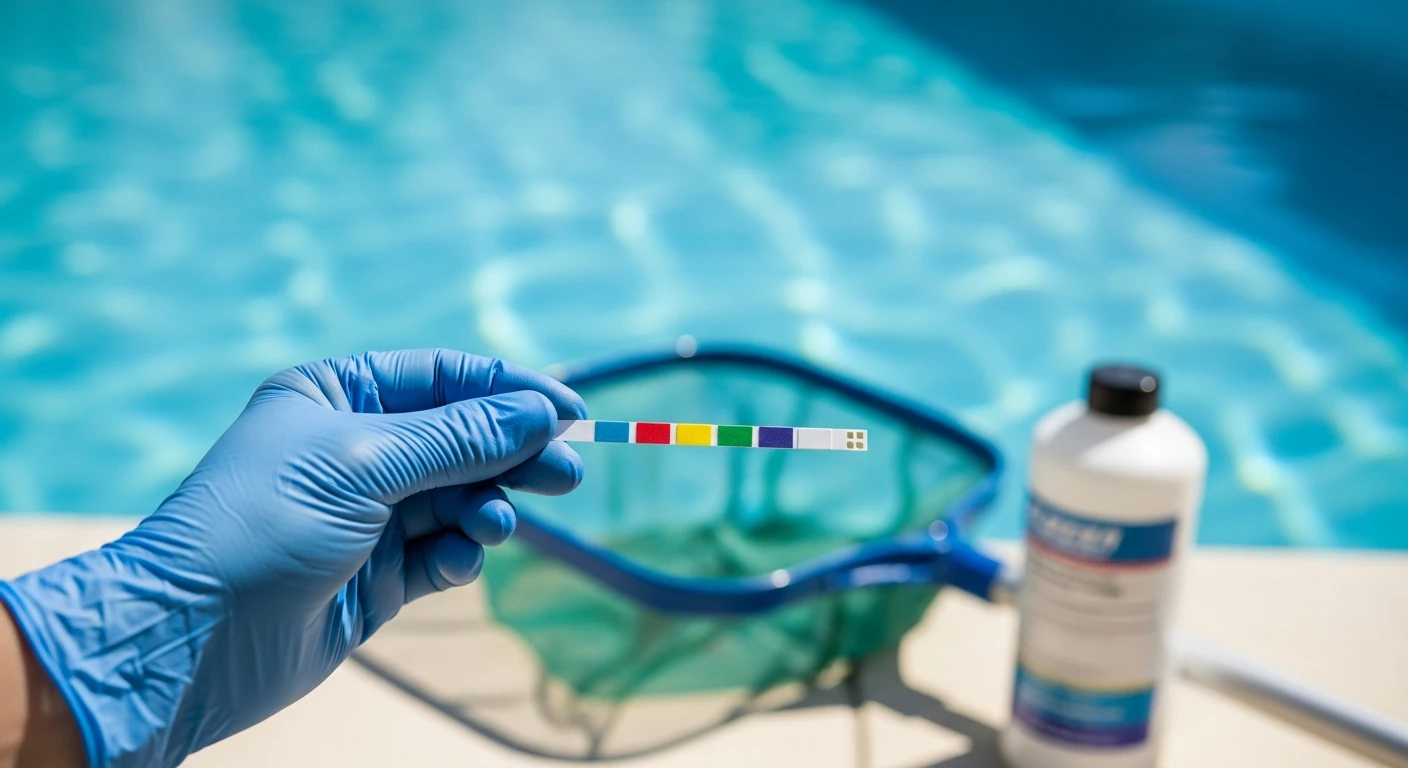
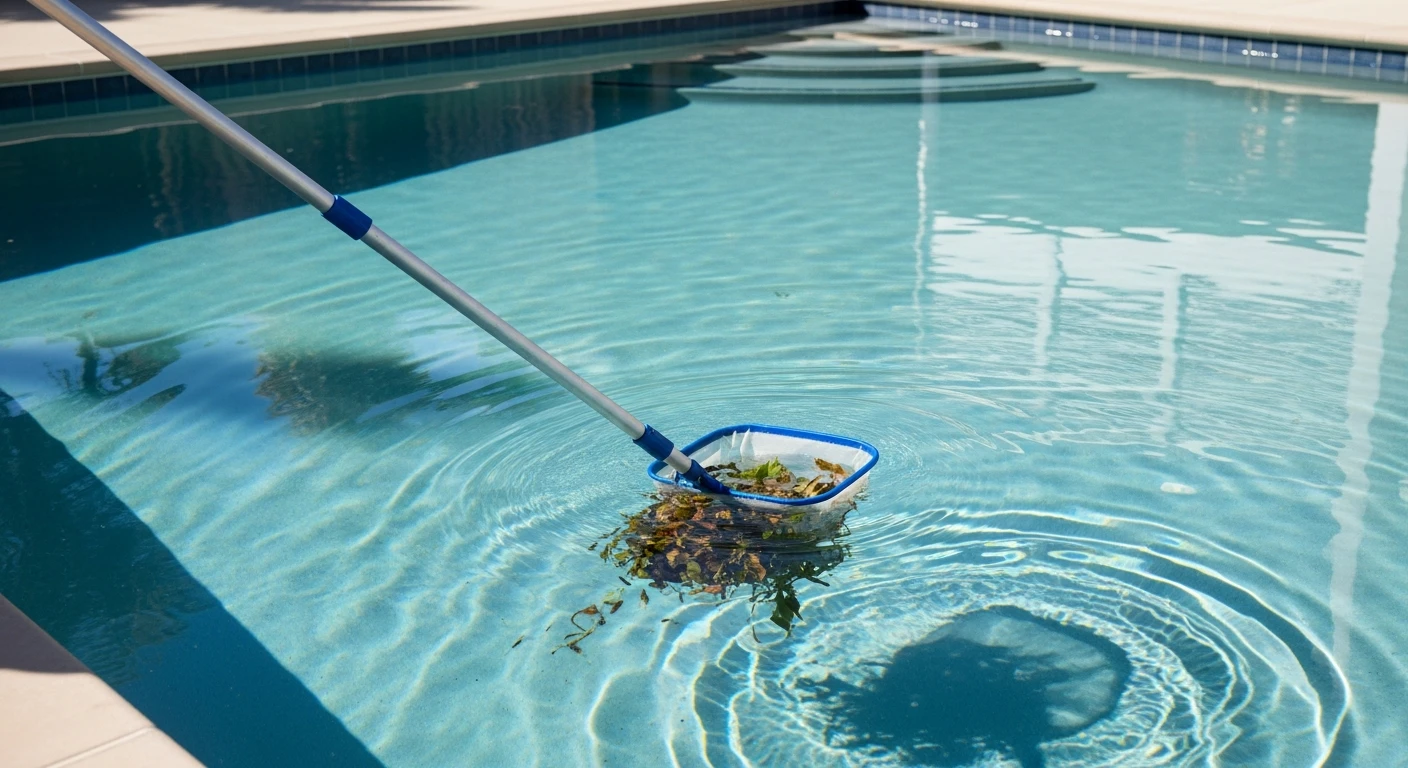
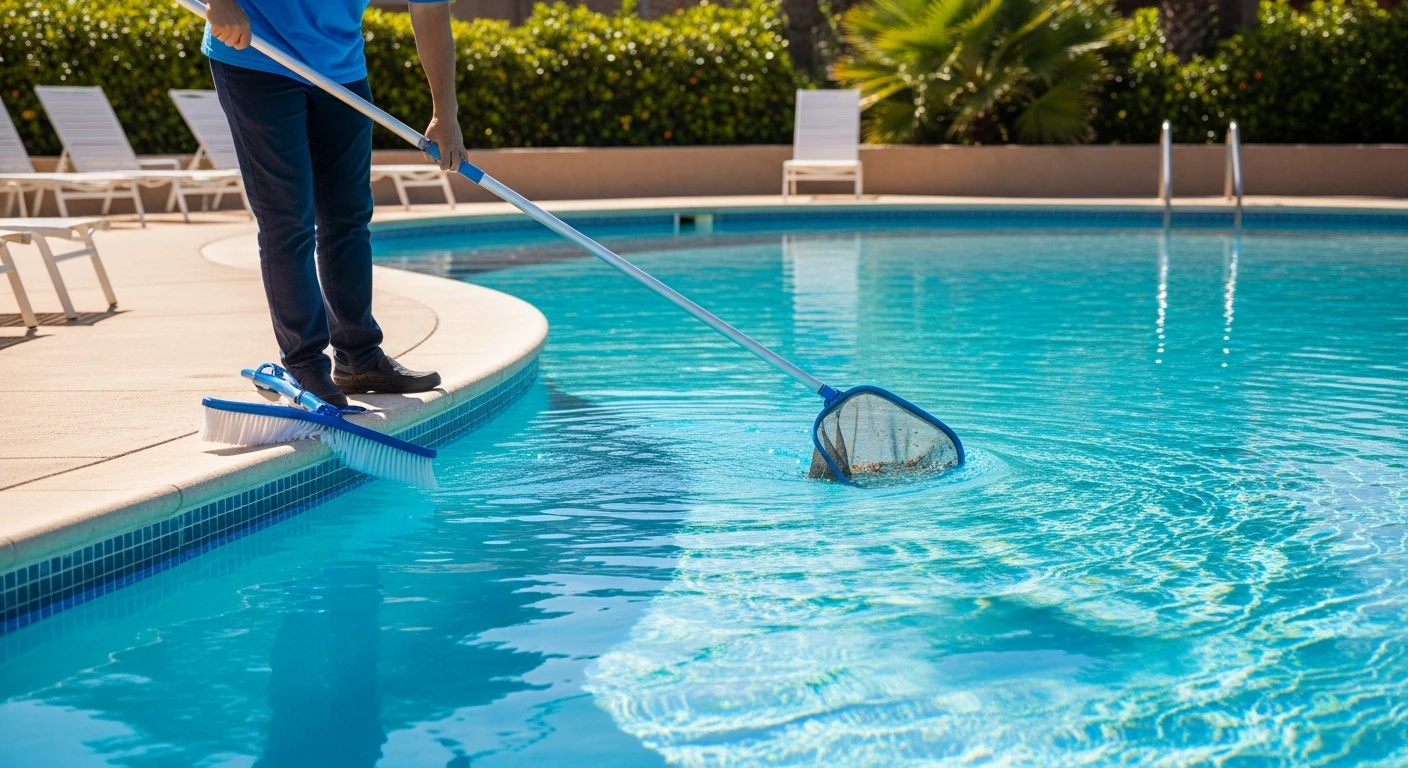
Beyond skimming, you must test the water chemistry, empty the skimmer and pump baskets, and brush the entire pool surface. Brushing is non-negotiable, even with an automatic cleaner, as it prevents algae from rooting into the plaster and dislodges debris that cleaners miss. Forgetting to empty a full pump basket can starve the pump for water, causing it to overheat and significantly shorten its 8 to 12-year average lifespan. These tasks are the foundation of preventative maintenance, directly impacting both water clarity and equipment health.
My water is cloudy even after I add chemicals. What am I missing in my weekly routine?
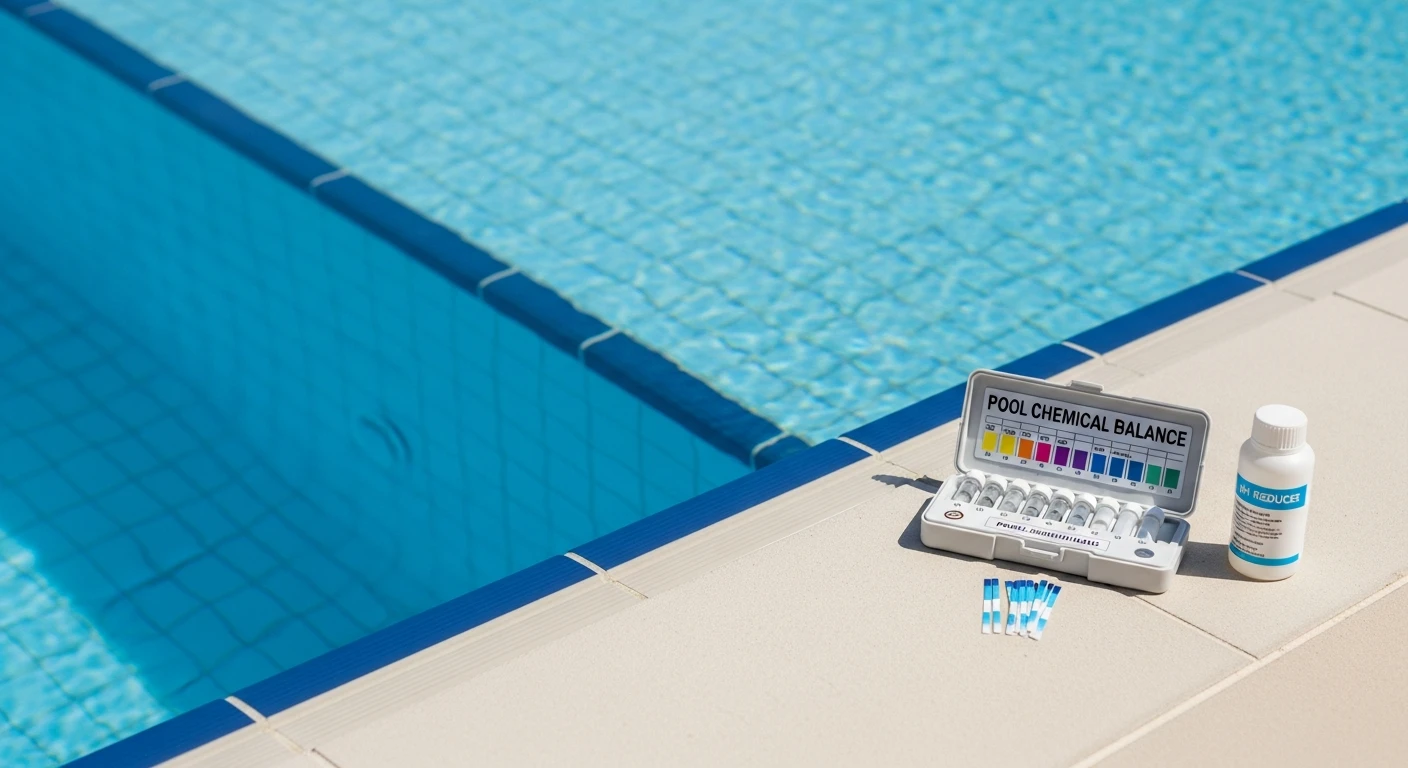
Persistent cloudiness despite chemical additions often points to a filter problem, not a chemical imbalance. Your weekly routine must include checking the filter's pressure gauge; if it's 8-10 PSI above its clean starting pressure, it's time to backwash or clean the cartridges. A common mistake is only focusing on chlorine and pH while ignoring Total Alkalinity. If alkalinity is too low, the pH will be unstable and swing wildly, leading to cloudy water and reducing your chlorine's effectiveness. Stabilizing alkalinity is often the first step to resolving chronic cloudiness.
I brush the pool weekly, but I see small, dark stains that won't come off. What are they?
If dark spots do not lift with vigorous brushing, you are likely dealing with the early stages of black algae. Unlike floating green algae, this type grows roots that penetrate into your pool's plaster or gunite surface, making it resistant to chlorine alone. A critical, but often overlooked, weekly task is to visually inspect specific areas like steps, corners, and grout lines for these spots. Catching them early allows for targeted treatment with a steel brush and granular chlorine, preventing a costly and difficult infestation that can require partial draining and acid washing to remove.
How do I know if I'm losing water to a leak or just normal evaporation during the week?
Your pool should not lose more than 0.6 cm (1/4 inch) of water per day from evaporation. If you suspect more, perform a bucket test to get a definitive answer. Place a bucket on a pool step, fill it with pool water to match the pool's water level, and mark both levels. After 24 hours, if the pool water has dropped more than the water inside the bucket, you have a leak. Ignoring a small leak is a costly mistake; a tiny 3 mm hole can waste over 1,800 liters of water daily, inflating your water and chemical bills.
Is it safe to swim right after I add the weekly chemicals?
No, you should wait until the chemicals have fully circulated and dissolved, which typically takes at least 30-60 minutes with the pump running. The most critical factor is allowing granular shock or acid to disperse, as direct contact with these concentrated chemicals can cause skin irritation and bleach vinyl liners or swimsuits. A non-obvious risk is adding chemicals without the pump running; this allows heavy chemicals to settle on the pool floor, potentially etching the plaster or permanently staining the vinyl liner. Always add chemicals while the pump is on and circulating.
My salt chlorine generator is on, but my chlorine level is always low. Is it broken?
Not necessarily; the most common cause is a dirty salt cell, which should be inspected as part of your weekly routine. The metal plates inside the salt chlorine generator accumulate calcium scale, which blocks their ability to produce chlorine effectively. Another frequent issue is low salt levels, often from dilution after heavy rain or backwashing. Before assuming the expensive cell has failed, check for scale buildup and test your salt level. Maintaining a clean cell and proper salt concentration is the key to consistent chlorine production.