Weekly Pool Maintenance: My Protocol for Preventing 90% of Common Algae & Scale Issues
Forget the generic advice you've read. Effective weekly pool maintenance isn't a random checklist of chores; it's a precise chemical sequence. For years, I've seen countless pool owners battling cloudy water and stubborn algae because they treat symptoms, not the root cause. My entire approach is built on a single, non-negotiable principle: chemical stability is a cascade, and if you don't master the first step, everything that follows is a waste of time and money.
The secret isn't a magic chemical; it's the *order of operations*. Most pool test kits give you a range of readings, but they don't tell you which one acts as the foundation for all others. I’ve refined a protocol that prioritizes the chemical buffer first, ensuring your sanitizer can actually do its job. This method stabilizes the water chemistry, dramatically increasing the efficiency of your chlorine and preventing the wild pH swings that invite problems.
Beyond the Test Strip: My 3-Pillar Chemical Integrity Protocol
My methodology, which I’ve implemented on everything from small residential pools to large commercial facilities, is called the **3-Pillar Chemical Integrity Protocol**. It moves away from the "test and dump" mentality. Instead, it’s a diagnostic flow. The common error I see is someone noticing low chlorine and immediately adding more, without ever checking the water's receptiveness. This is like trying to plant a garden in concrete. The three pillars, in order of importance, are: Total Alkalinity (TA), pH, and Sanitizer (Free Chlorine). Get the first one right, and the other two become exponentially easier to manage.
The Cascade Effect: Why Alkalinity Dictates Everything
This is the technical insight that changes the game. Total Alkalinity is the buffer for your pH. Think of it as the water's ability to resist drastic changes in pH. Without a stable TA level, your pH will swing wildly with every rainstorm, bather load, or chemical addition. When pH is unstable, the effectiveness of your chlorine—its **Oxidation-Reduction Potential (ORP)**—plummets. You could have a high chlorine reading, but if the pH is off, that chlorine is dormant and ineffective. I insist that my clients never adjust pH or chlorine until their TA is stable within the 80-120 ppm range. This single step prevents at least 50% of common water clarity issues.
The Non-Negotiable Weekly Action Plan
This is the exact operational sequence I use. Perform these steps in this specific order to guarantee results and avoid wasting chemicals. It's a system, not a suggestion.
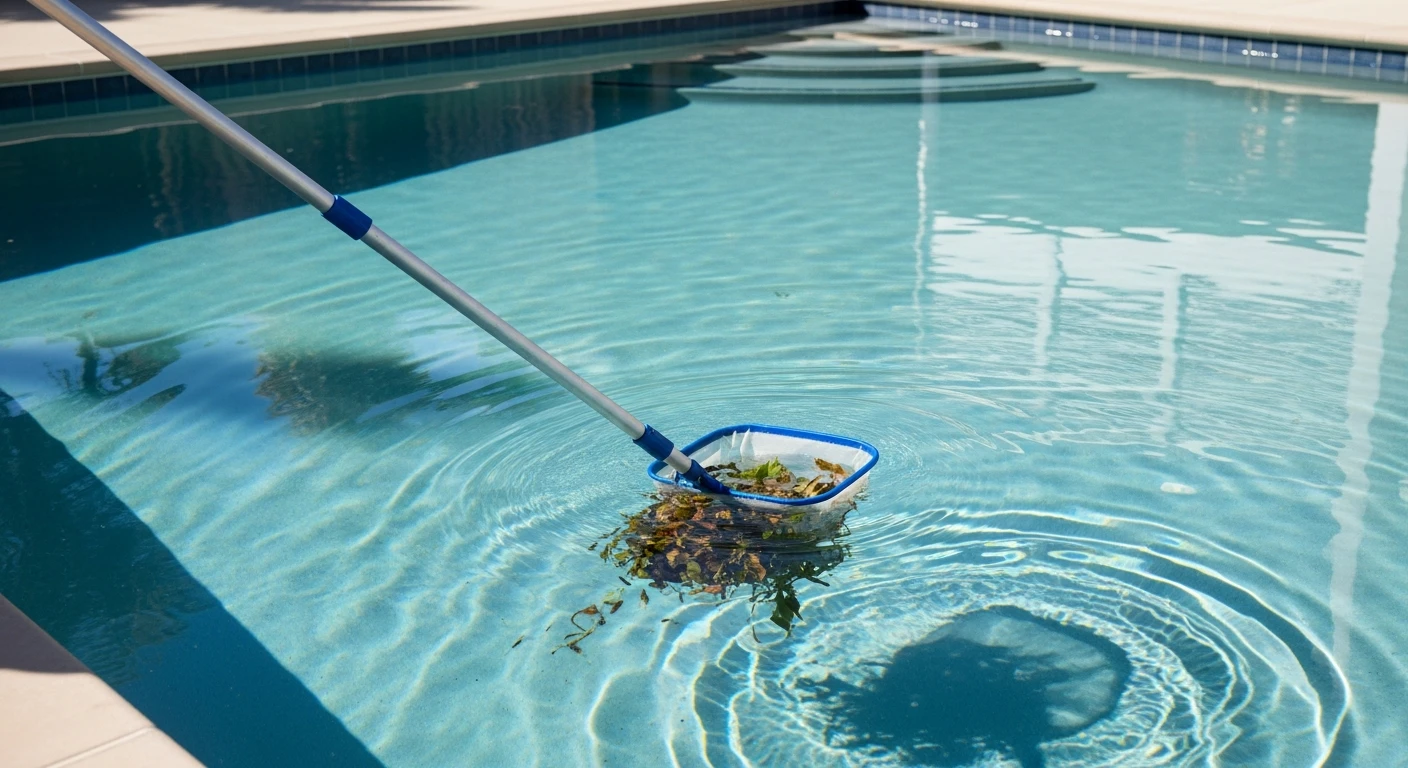
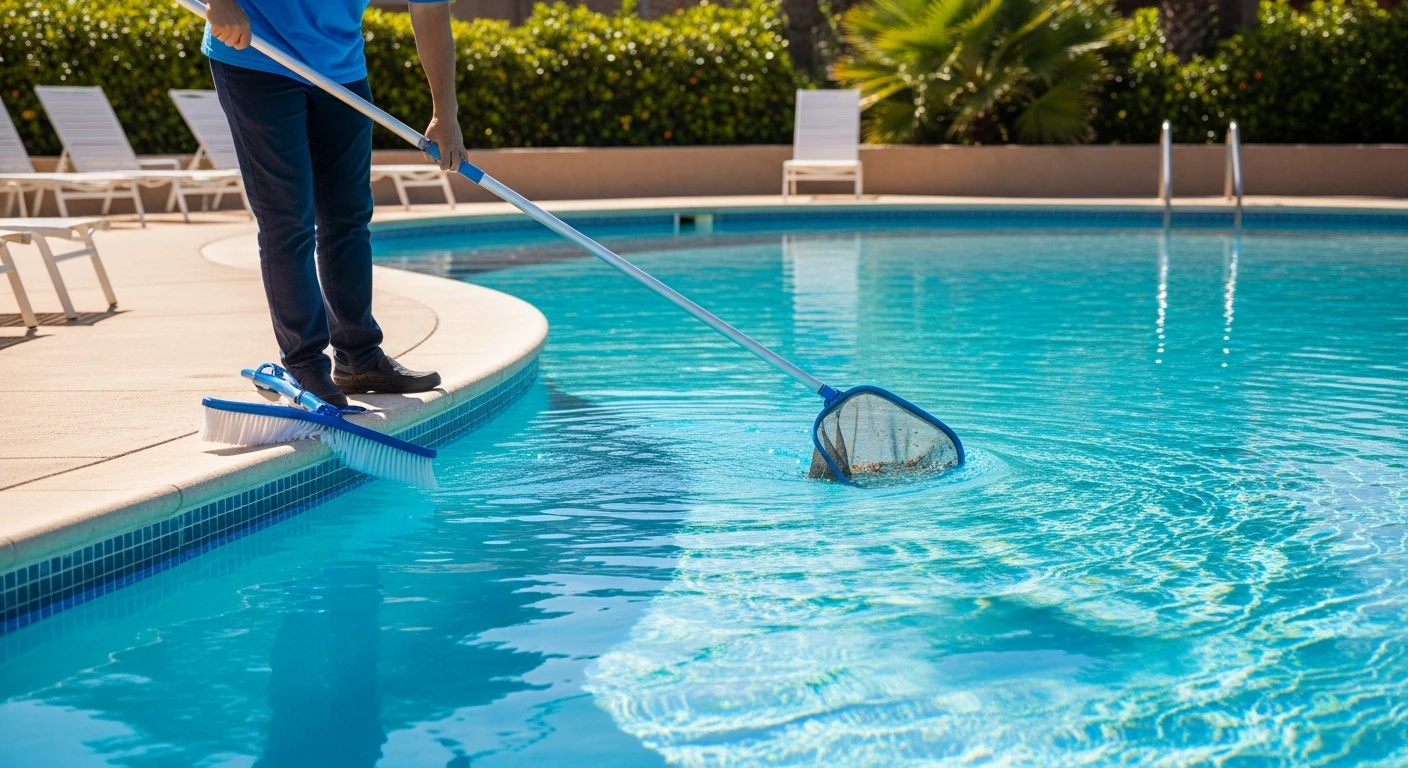
- Step 1: Physical System Check & Cleaning. Before any chemical test, you must remove the variables. This means skimming all surface debris, brushing the pool walls and floor to dislodge latent algae, and emptying the skimmer and pump baskets. Critically, check the filter's pressure gauge. A rise of 8-10 PSI above its clean baseline pressure indicates it's time for a backwash or cartridge cleaning.
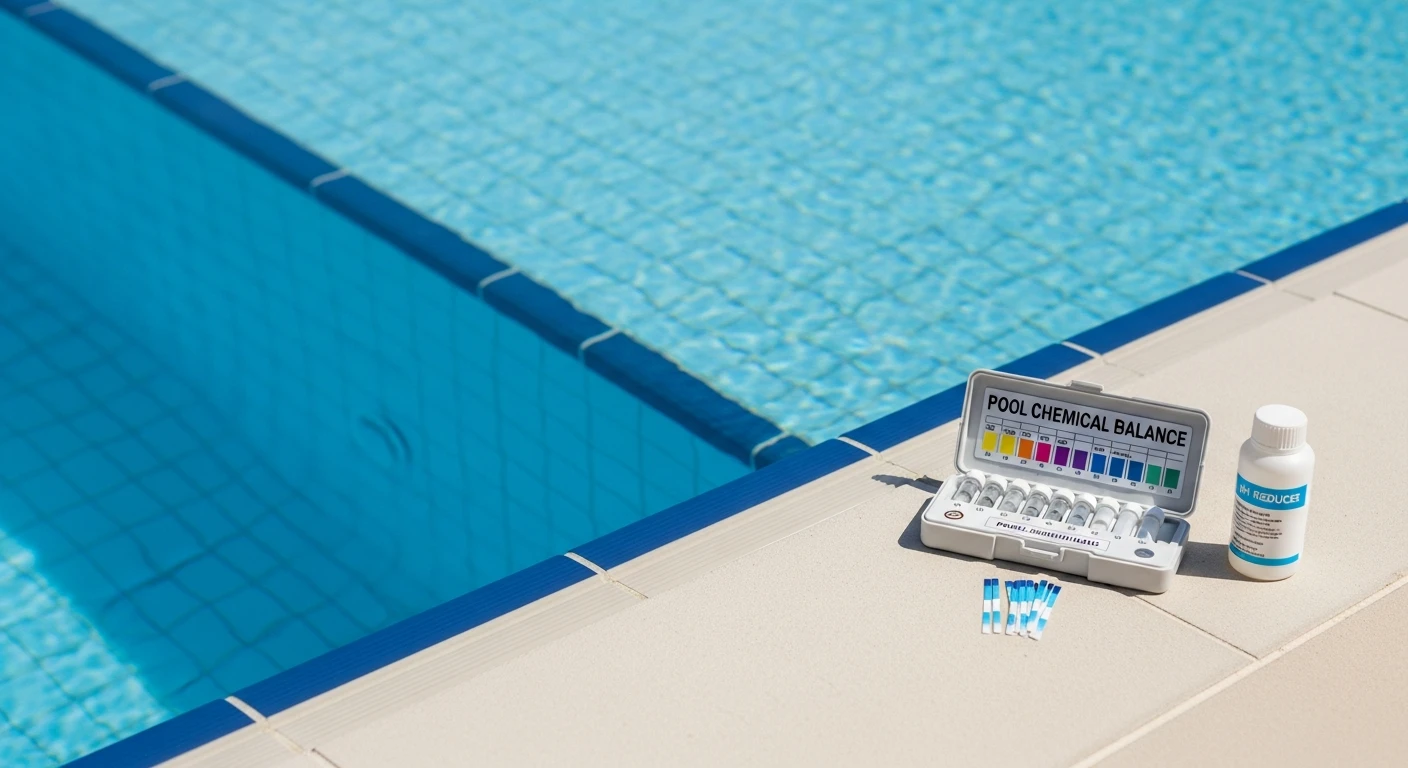
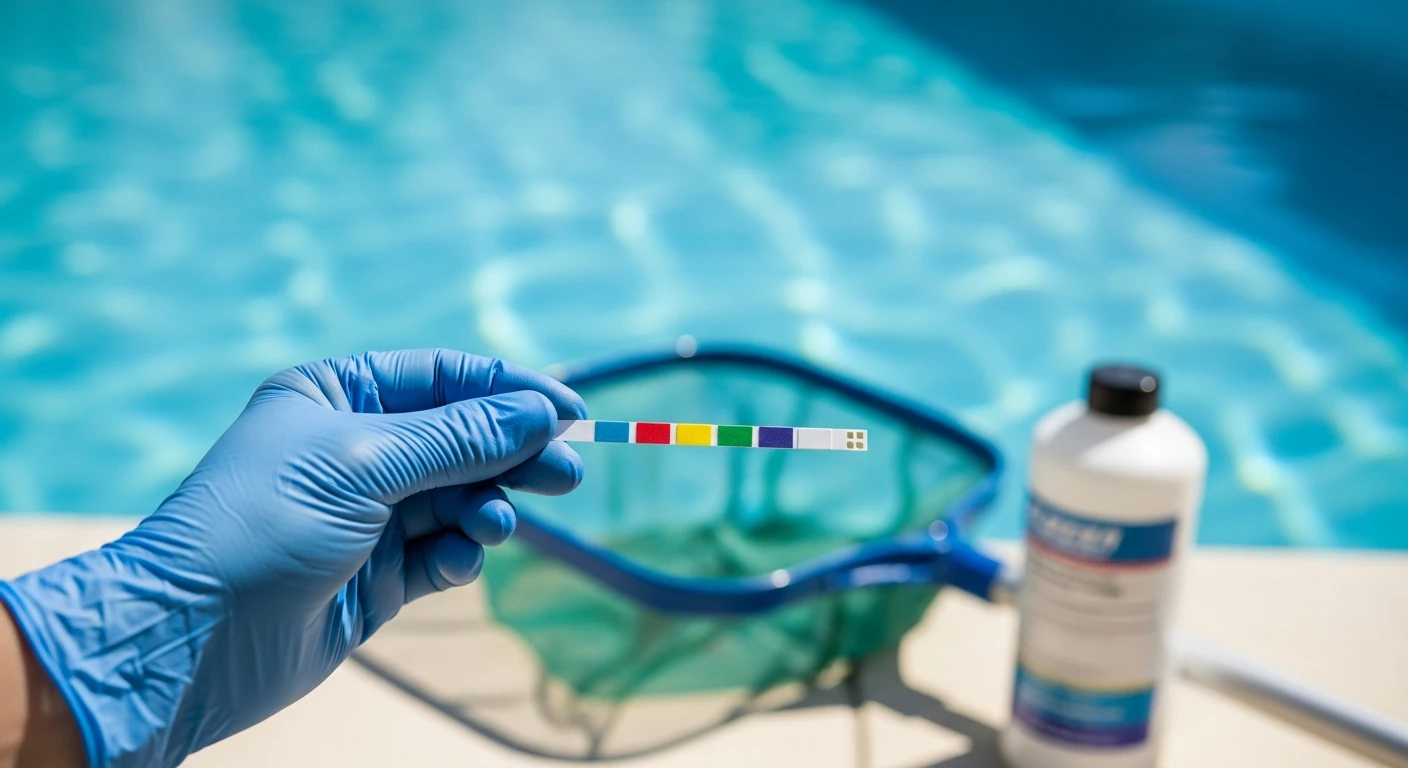
- Step 2: The Chemical Integrity Test Sequence. Using a reliable test kit—I personally prefer a Taylor K-2000 FAS-DPD kit for precision—test the water in the following order.
- Test and adjust Total Alkalinity first. Target: 80-120 ppm. Use sodium bicarbonate to raise it or muriatic acid to lower it (with the pump off in a single spot).
- Test and adjust pH second. With TA stable, your pH will be much easier to lock in. Target: 7.4-7.6. Use soda ash to raise it or muriatic acid/dry acid to lower it.
- Test and adjust Free Chlorine (FC) last. Now that the water is balanced, your chlorine will be highly effective. Target: 1-3 ppm.
- Step 3: Shock Treatment (As Needed). I don't recommend weekly shocking unless necessary. Shock the pool only after heavy use, a significant weather event, or if your Combined Chlorine (CC) level exceeds 0.5 ppm.
Tags
weekly pool service near me
weekly pool cleaning service near me
weekly pool service
swimming pool weekly service
Weekly Pool Maintenance FAQ
What is the importance of regular pool maintenance?
Regular pool maintenance is crucial to ensure the health and safety of swimmers. It helps to prevent the growth of algae, bacteria, and other contaminants that can cause eye irritation, skin rashes, and other health issues. Additionally, regular maintenance can extend the lifespan of your pool and its equipment, reducing the need for costly repairs and replacements.
How often should I clean my pool?
It is recommended to clean your pool at least once a week, or more often depending on usage and weather conditions. This can include skimming the surface, vacuuming the floor and walls, and testing the water chemistry.
What is the best way to clean my pool?
The best way to clean your pool depends on its size, type, and condition. Our team of professionals can assess your pool and recommend the most effective cleaning methods and products for your specific needs.
What should I check when testing my pool water?
When testing your pool water, it is important to check the levels of pH, alkalinity, calcium hardness, and chlorine. Our experts can help you understand what these levels mean and how to adjust them to ensure safe and healthy swimming conditions.
How can I prevent algae growth in my pool?
To prevent algae growth, it is important to maintain proper water chemistry, ensure adequate filtration, and reduce the amount of nutrients that can fuel algae growth. Our team can provide guidance on how to implement these measures and prevent algae blooms in your pool.
What is the best way to store pool chemicals?
It is important to store pool chemicals in a well-ventilated area, away from heat sources and children. Our experts can provide guidance on the proper storage and handling of pool chemicals to ensure safe and effective use.
Can I perform pool maintenance myself, or do I need a professional?
While it is possible to perform some pool maintenance tasks yourself, it is generally recommended to hire a professional for regular maintenance and repairs. Our team has the training, expertise, and equipment to ensure your pool is properly maintained and safe for swimmers.
What are the benefits of hiring a professional pool maintenance service?
Hiring a professional pool maintenance service can provide peace of mind, ensure safe and healthy swimming conditions, and extend the lifespan of your pool and its equipment. Our team can provide regular maintenance, repairs, and upgrades to keep your pool in top condition.