Backyard Kitchen Island in Lee County: My Protocol for a Corrosion-Proof Frame and a 30% Longer Lifespan
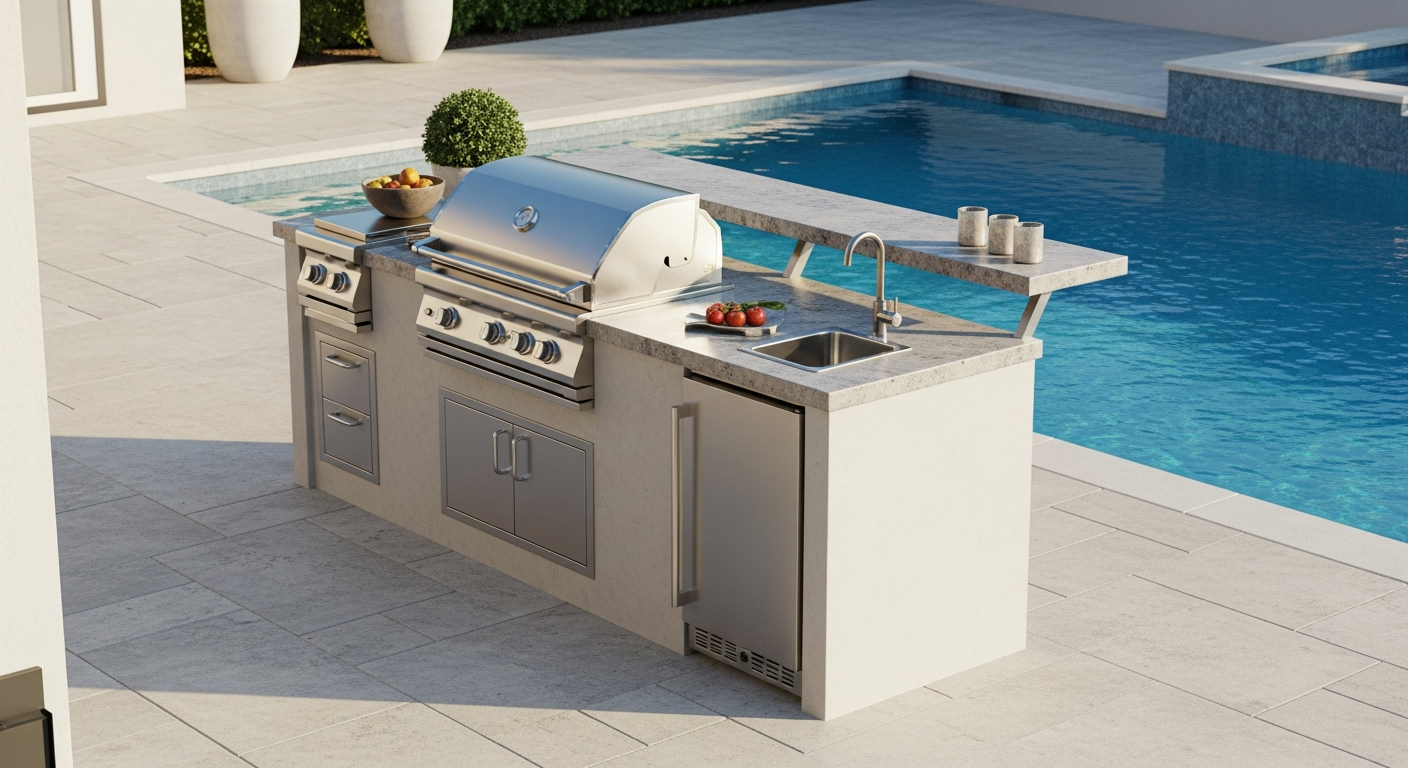
Building a backyard kitchen island in Lee County isn't about aesthetics alone; it's a battle against the elements. I’ve seen far too many gorgeous setups in waterfront homes from Cape Coral to Sanibel degrade in less than three years because they were built using standard "outdoor" methods. The combination of intense UV exposure, high humidity, and salt in the air creates a uniquely corrosive environment that typical galvanized steel studs and porous stone simply cannot withstand. My entire approach is built around preempting this failure from the structural frame outward. The core mistake I repeatedly diagnose is focusing on the countertop and appliance brands while completely ignoring the island's skeleton. A standard galvanized steel frame, even when clad in cement board, will rust from the inside out due to condensation and ambient humidity. My methodology bypasses this planned obsolescence by mandating a marine-grade structural system. This isn't an upgrade; for the Lee County climate, it is the only viable starting point for a long-term investment.The Coastal Durability Diagnosis: Why 90% of Outdoor Kitchens Here Fail Prematurely
My process begins not with a design, but with a material audit. Years ago, I was called to a stunning Fort Myers property overlooking the Caloosahatchee River. The owner had spent a fortune on a two-year-old outdoor kitchen, and the travertine cladding was already cracking. The problem wasn't the stone; it was the frame. The galvanized studs had swollen with rust, expanding and fracturing the finish material from within. This experience solidified my proprietary diagnostic framework, which I apply to every project. It's based on identifying and neutralizing the three primary failure vectors in our specific coastal environment: galvanic corrosion, moisture wicking, and UV degradation.Technical Deep Dive: Frame, Substrate, and Surface Specification
The solution requires a multi-layered approach where each component is chosen for its resilience in a humid, salt-laden climate. I don't compromise on these three core areas:- The Frame: Forget galvanized steel. The only two options I specify are 1.5-inch structural aluminum tubing (6061-T6 alloy) or, for maximum durability, 316L stainless steel studs. The aluminum provides an excellent strength-to-weight ratio and is inherently corrosion-resistant. All connections must be welded or fastened with 316 stainless steel hardware to prevent galvanic corrosion where dissimilar metals might touch.
- The Substrate: Standard cement board is a sponge. It holds moisture against the frame, accelerating corrosion and becoming a breeding ground for mold inside your island. I exclusively use closed-cell PVC board (like Azek) or a high-density composite panel. These materials are completely impervious to water. They cannot rot, mold, or wick moisture to the structural components.
- The Countertop: Granite is porous. Even when sealed, the intense Florida sun bakes off sealants, allowing moisture and stains to penetrate. My go-to recommendation is sintered stone (e.g., Dekton or Neolith). It has near-zero porosity, is completely UV-stable (so colors won't fade), and can handle extreme thermal shock from a hot pan or a sudden downpour.
Implementation Protocol: A Non-Negotiable Assembly Sequence
Executing this correctly is about precision and the right sequence. Deviating from this order invites failure. This is the exact build-out process I personally oversee.- Foundation and Leveling: Begin with a perfectly level concrete pad. I ensure the pad has a subtle 1/8-inch per foot slope away from the house or lanai to prevent water pooling.
- Frame Assembly: Construct the aluminum or stainless frame on the pad. Secure all joints with 316 stainless steel self-tapping screws. If welding aluminum, use a TIG welder with the appropriate filler rod to maintain corrosion resistance at the seams.
- Utility Rough-In: Run all electrical in waterproof conduit with weatherproof boxes. All outlets must be GFCI-protected. Gas lines must be professionally installed with a dedicated shut-off valve located on the exterior of the island for immediate access.
- Cladding Installation: Cut and mount the PVC or composite board to the frame, again using 316 stainless fasteners. The key here is to leave a 1/8-inch gap between panels to allow for thermal expansion and to seal these gaps with a high-performance polyurethane sealant, not silicone.
- Appliance and Venting Installation: This is a critical safety step. I mandate the installation of at least two stainless steel vent panels (one high, one low on opposite sides) for any propane grill enclosure to prevent dangerous gas accumulation.
- Countertop Templating and Setting: Once all appliances are in place, a professional template is made. The sintered stone is then installed over the substrate using a flexible, exterior-grade thin-set mortar designed to accommodate expansion and contraction.
Precision Tuning for a Zero-Failure Installation
The final 10% of the work is what guarantees a 20+ year lifespan. This is where I see most contractors cut corners. My final quality check focuses on the smallest details that cause the biggest problems. I personally inspect every screw head to ensure it's the correct 316 stainless grade. I check the appliance cutouts to ensure they have proper drip edges to channel water away from the island's interior. The most critical final step is the sealant. I specify a marine-grade, UV-stable polyurethane sealant for all countertop seams, backsplash joints, and around the appliance perimeters. This is the final barrier that keeps the relentless Lee County humidity out of the island's core. Have you properly calculated the ventilation requirements (in square inches) based on your grill's specific BTU output, or are you just assuming standard vent panels are sufficient?Written by

Tags
kitchen outdoor grill
outdoor kitchen propane grill
prefabricated outdoor grill islands
prefab grill island
outdoor grill with sink