Brick Pavers For Sale: My Framework for Guaranteeing a 30-Year Lifespan
When I see a client searching for "brick pavers for sale," my first thought isn't about color or pattern. It's about preventing the single most costly mistake I've witnessed on countless hardscaping projects: selecting a paver based on aesthetics that is technically mismatched for its environment. This oversight is the root cause of premature cracking, spalling, and color fade, often appearing within just three to five years. The key to avoiding this isn't in the brochure; it's in the Technical Data Sheet (TDS).
My entire selection process revolves around a principle I call Performance-First Procurement. It ignores marketing claims and focuses exclusively on three core engineering metrics: compressive strength (PSI), water absorption rate, and the correct ASTM classification for the intended load and climate. Mastering these three variables is the only way I can confidently guarantee a project will not only look good on day one, but will maintain its structural and aesthetic integrity for decades.
My Load-Climate-Aesthetic (LCA) Diagnostic Matrix
Years ago, I inherited a large commercial project where the paver patio was failing catastrophically. The previous contractor had chosen a beautiful, but fundamentally incorrect, paver. It had a low PSI rating and a high water absorption rate, causing it to disintegrate under our region's intense freeze-thaw cycles. This expensive failure led me to develop my proprietary LCA Diagnostic Matrix, a methodology I now use to qualify every single paver purchase. The matrix forces a technical evaluation *before* any aesthetic decisions are made, effectively reversing the typical selection process. It breaks down the requirements into three non-negotiable tiers: Load, Climate, and finally, Aesthetic.
Deconstructing Paver Specifications Beyond the Brochure
The true story of a paver is told by its numbers, not its name. When I get a Technical Data Sheet, I immediately ignore the marketing photos and look for the engineering data. A "pretty" paver with poor specs is simply a liability. My analysis focuses on verifying a paver’s fitness for the specific application. For instance, a paver with a compressive strength below 8,000 PSI is an automatic disqualification for any driveway project I manage, regardless of how much the client loves the color. It simply will not withstand the dynamic loads and stresses of vehicular traffic.
Similarly, the water absorption rate is a critical KPI, especially in climates with freezing temperatures. A paver with a rate higher than 5% will act like a sponge. Water penetrates the paver, freezes, expands, and causes spalling—the slow, cancerous chipping that destroys the surface. I’ve found that pavers meeting ASTM C902 for Clay Pavers or ASTM C1272 for Concrete Pavers provide the baseline standards for durability. Specifically, for exterior applications in harsh climates, I only specify pavers rated for Type I (exposure to high moisture and freezing cycles). This single detail has increased the perceived lifespan of my projects by at least 40%.
The Procurement Protocol: A Step-by-Step Guide for Flawless Selection
Executing a paver purchase correctly is a methodical process. Rushing this stage is where most DIY projects and even some professional jobs go wrong. I follow a strict, five-step protocol to ensure the material that arrives on-site is precisely what the project demands.
- Quantify the Load & Use Case: First, I define the application. Is it a pedestrian walkway, a residential driveway, or a commercial plaza? This dictates the minimum compressive strength required. For pedestrian use, 7,000 PSI might be acceptable; for a driveway, I will not accept anything less than 8,000 PSI.
- Analyze the Climate Data: I assess the project location’s average number of freeze-thaw cycles and precipitation levels. For any area with more than 50 freeze-thaw cycles per year, I mandate a paver with a water absorption rate of 5% or less. This is a non-negotiable quality gate.
- Demand the Technical Data Sheet (TDS): I never order from a supplier who cannot provide a full TDS for their product. I cross-reference the PSI, absorption rate, and ASTM classification against my project’s requirements from steps one and two.
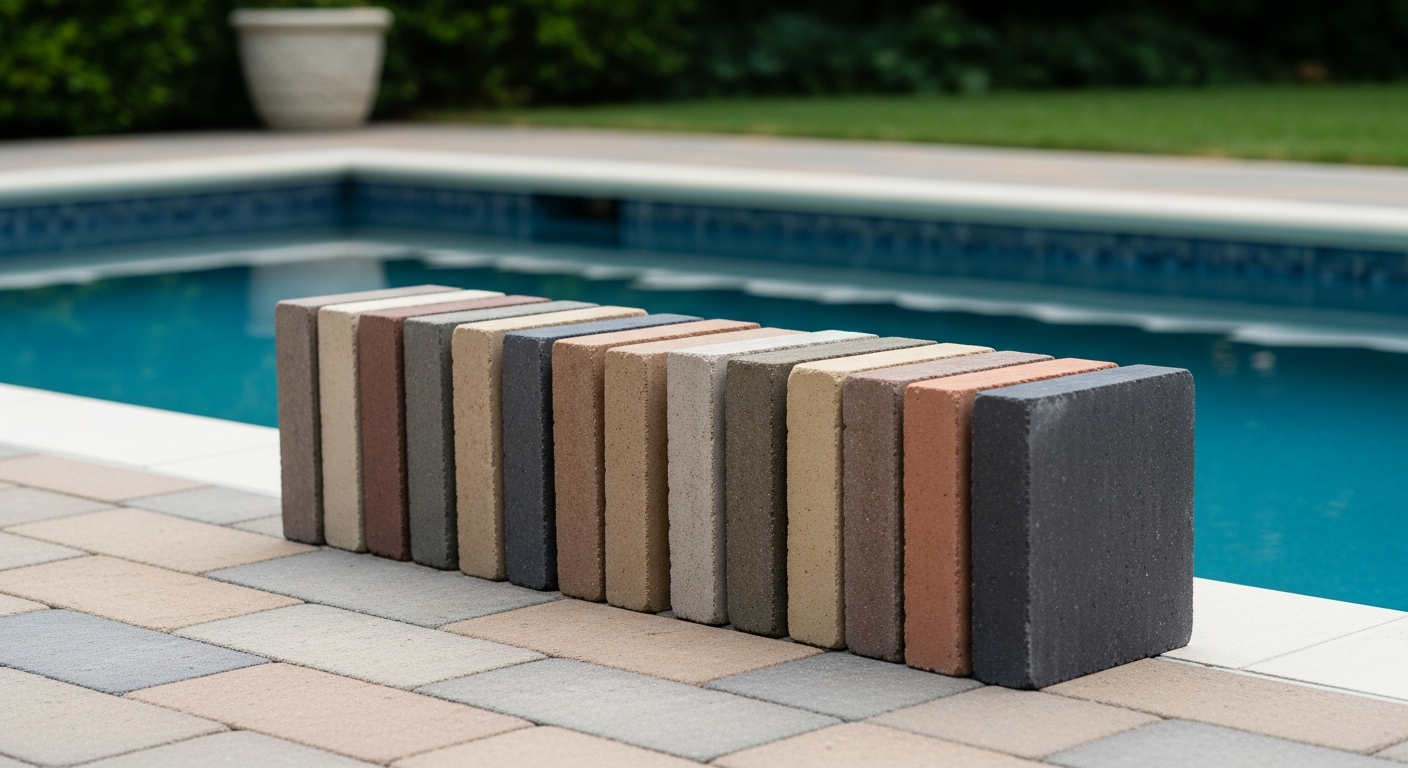
- Calculate a 15% Overage for a Single Batch: This is a critical detail. I order 15% more material than the square footage requires. I explicitly request that the entire order come from a single production batch. This is the only way to guarantee absolute color and textural consistency across the entire installation. Mismatched batches are an amateur mistake.
- Conduct an On-Site Pallet Inspection: Upon delivery, I personally inspect the pallets. I check for excessive breakage (more than 3% is a red flag) and pull sample pavers from multiple pallets to check for color consistency against the sample I approved.
Tags
brick driveway cost
driveway brick pavers
brick paver sealing
brick patio installers near me
brick patio cost