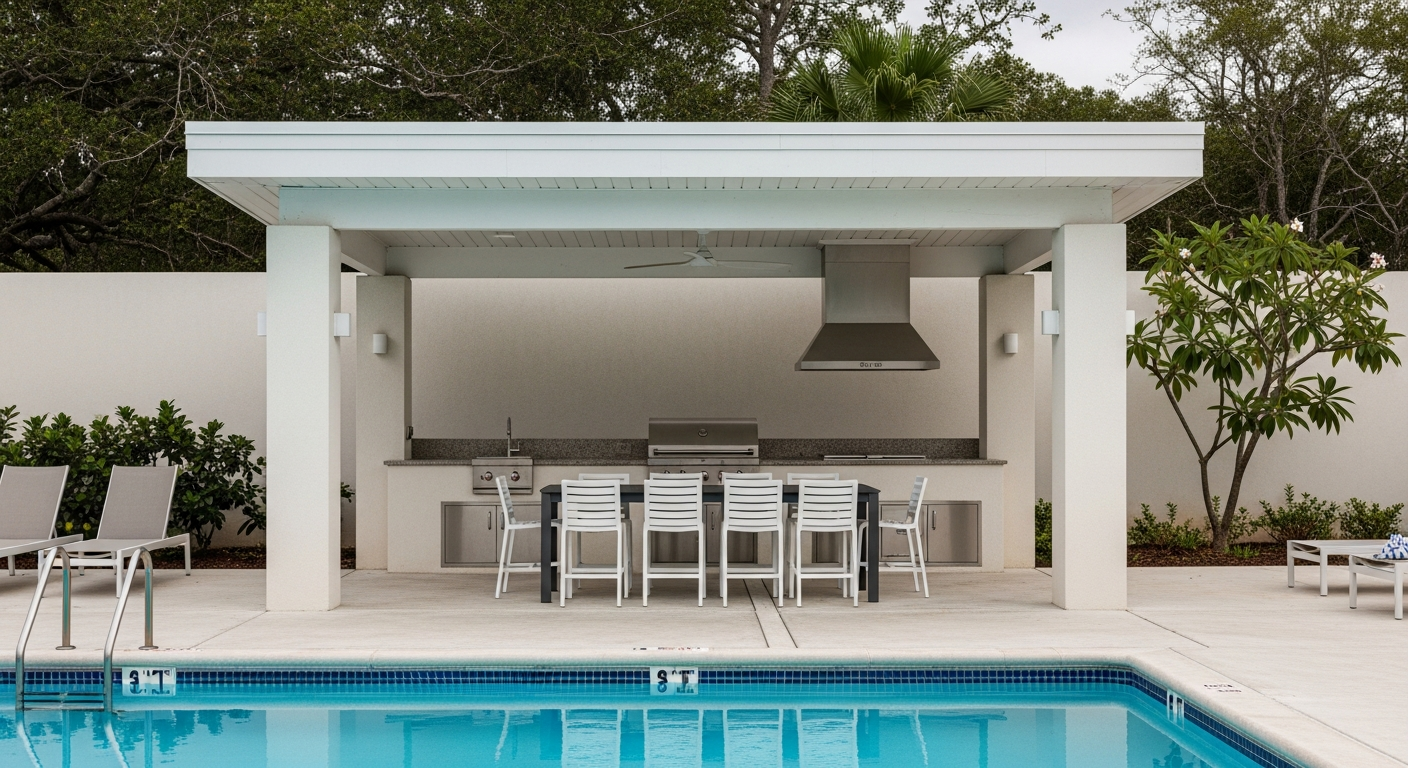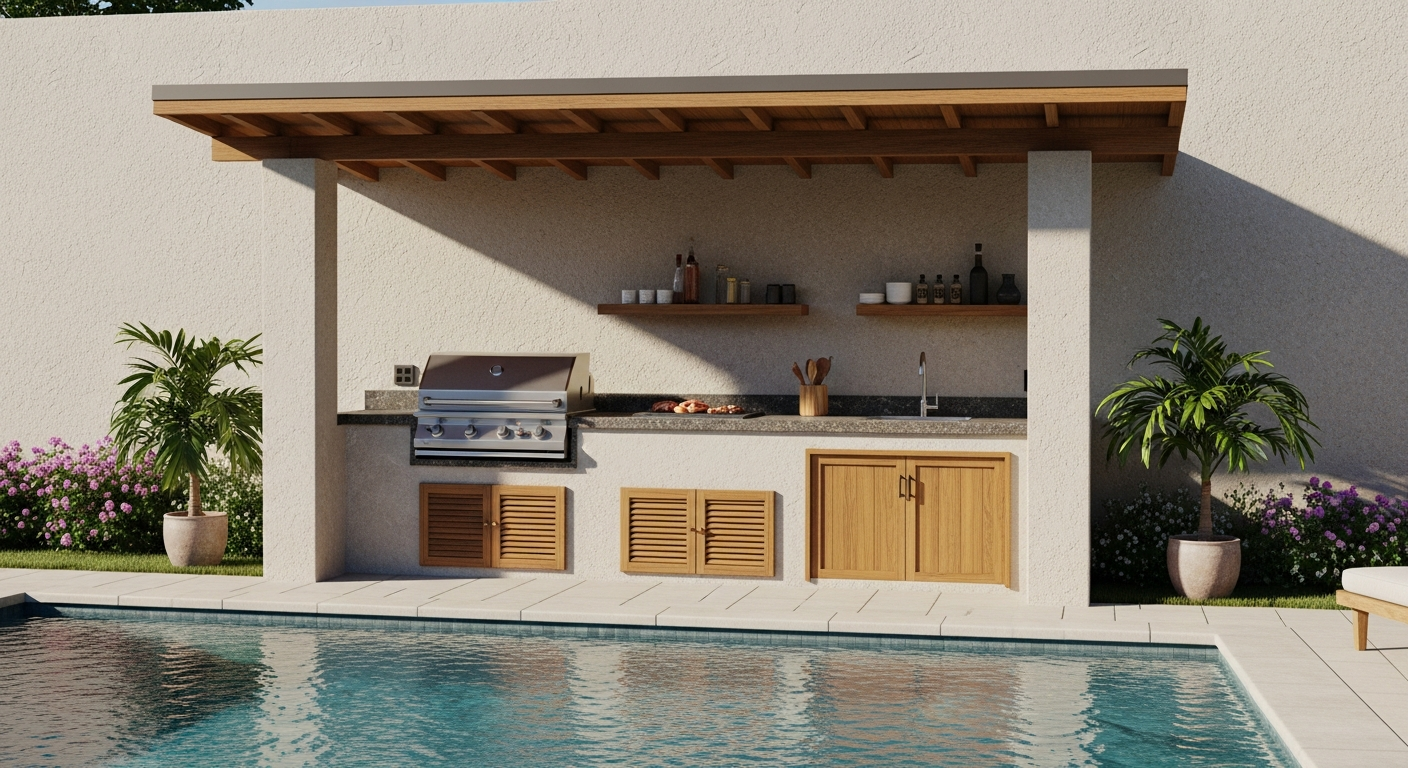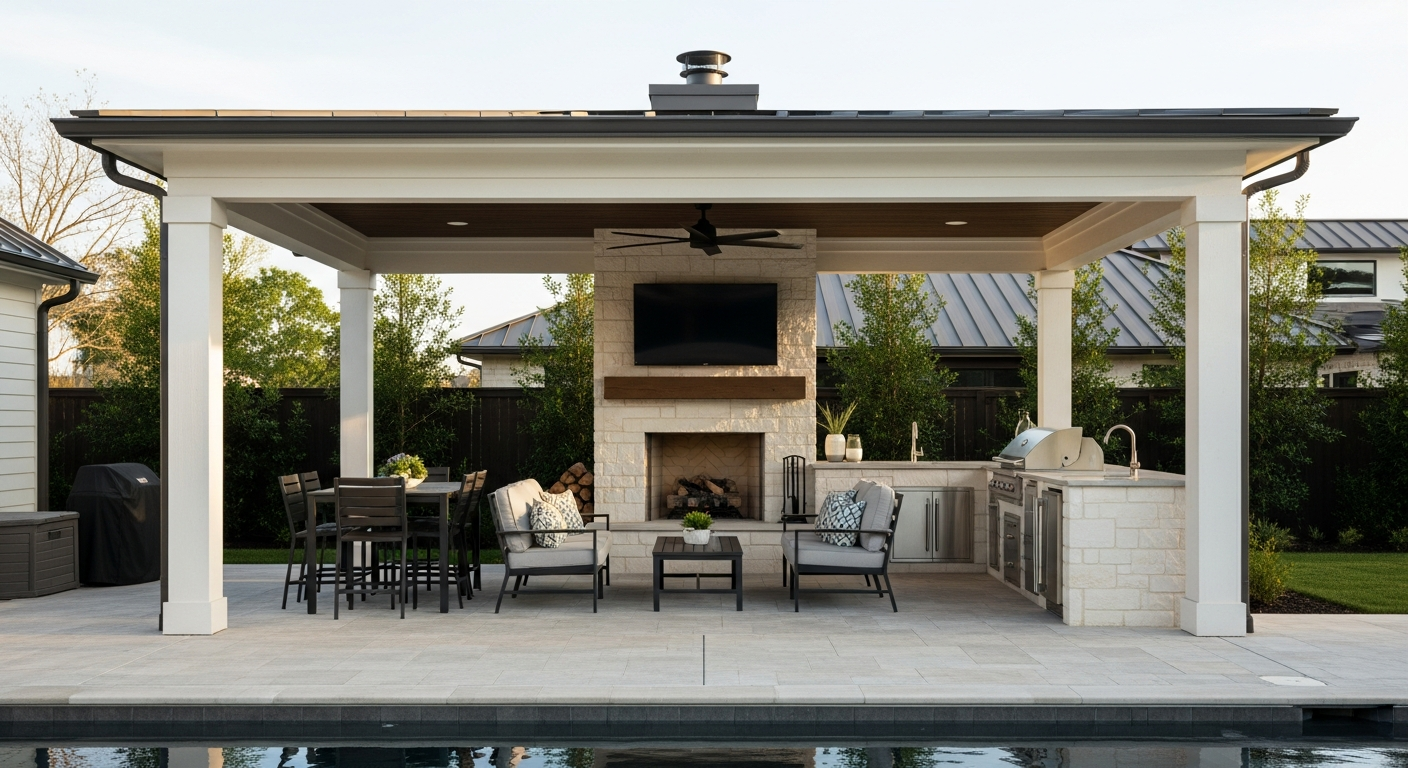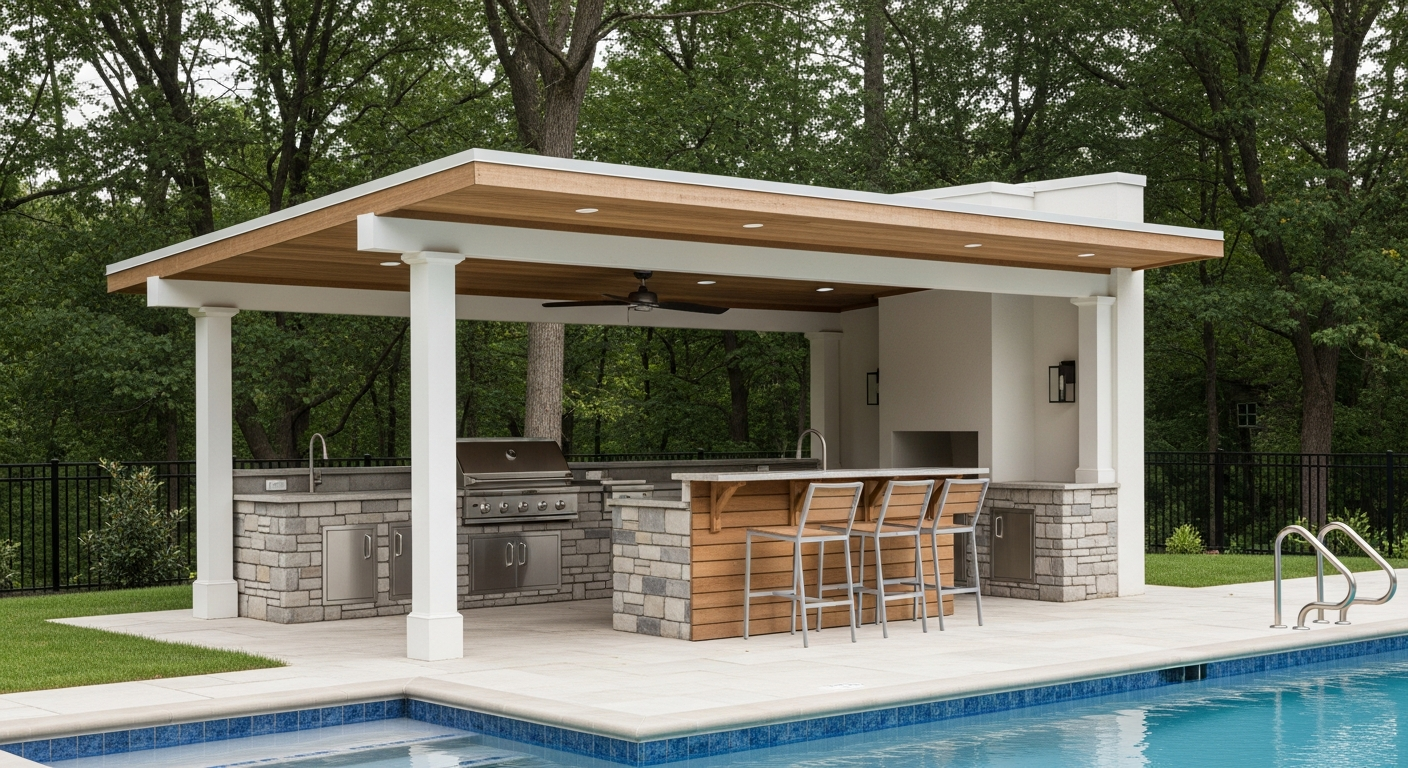
Covered Outdoor Kitchen Designs Pinellas County: My Protocol for Eliminating Salt-Air Corrosion and Heat Trapping
I've seen too many outdoor kitchens in Pinellas County fail within three years. The core issue isn't a bad grill or cheap stone; it's a fundamental misunderstanding of our coastal environment. From the salt spray in Clearwater Beach to the intense humidity in Largo, standard designs simply don't last. My approach is built on a non-negotiable material and engineering baseline that prevents the two most common failures: premature material corrosion and ineffective heat and smoke ventilation. This isn't about simply picking pretty finishes. It's about engineering a permanent outdoor structure that performs like a commercial kitchen while withstanding hurricane-season realities. I’ve refined my process after remediating projects where trapped grill smoke stained the ceiling and 304-grade stainless steel cabinets developed rust blooms after one season. My methodology focuses on a 25% increase in material lifespan and ensures your covered space is comfortable, not a smoke-filled heat trap.My Diagnostic Framework for Coastal Kitchen Longevity
Before I even sketch a design, I run every project through what I call my Pinellas Salt-Air Protocol. It's a diagnostic methodology I developed after seeing a high-end project on Snell Isle fail because the builder overlooked the impact of constant moisture on the framing hardware. The protocol targets three critical failure points specific to our area. First is Material Mismatch. A designer specifies beautiful quartzite countertops but pairs them with cabinets made from 304-grade stainless steel. While "outdoor rated," 304 steel has a lower nickel and chromium content and, crucially, lacks molybdenum, making it highly susceptible to pitting corrosion from the chloride in salt air. Second is Ventilation Miscalculation. A powerful grill is installed under a beautiful tongue-and-groove ceiling, but the vent hood’s CFM (Cubic Feet per Minute) rating is insufficient for the grill’s BTU output, creating a hazardous buildup of grease and smoke. The third is Structural Integration Flaw, where the covered structure isn't properly anchored or flashed against the main home, allowing water intrusion during our heavy summer downpours.The Technical Deep Dive: Marine-Grade Steel and Airflow Engineering
Let's get specific. The single most important material decision I make is specifying 316L marine-grade stainless steel for all cabinets, access doors, and hardware. The "L" signifies low carbon content, which improves weldability and reduces corrosion risk, while the added molybdenum is the key to resisting salt spray. I’ve seen 304-grade components show surface rust in under 12 months in a Pass-a-Grille home, whereas my 316L installations remain pristine after five years. It's a non-negotiable spec. For ventilation, I don’t guess. The calculation is straightforward: you need at least 1 CFM for every 100 BTUs of your grill's output. A common 60,000 BTU grill requires a minimum 600 CFM vent hood. But in a covered patio with limited cross-breeze, like many of the lanai setups in Palm Harbor, I increase that by 20% to account for static pressure and ensure aggressive smoke capture. I also insist on a vent hood that is 6 inches wider than the cooking surface (3 inches on each side) to create an effective capture area. This is a technical detail most contractors miss, and it's the difference between a functional kitchen and a smokey patio.The Implementation Blueprint: From Footings to Final Sealant
Building an outdoor kitchen that lasts in Pinellas requires a precise sequence. My process is standardized to mitigate environmental risks at every stage.- Phase 1: Site & Structural Analysis. I assess the prevailing wind direction and sun exposure. This dictates the placement of the grill to prevent smoke from blowing back into the seating area. We then pour 3500 PSI concrete footings reinforced with fiber mesh, which is critical for stability in our often sandy soil.
- Phase 2: Framing and Utilities. The structure is framed using powder-coated aluminum studs, not wood or standard steel. It's lightweight, strong, and completely impervious to moisture and termites. All electrical runs are made with marine-grade wire in sealed conduits to weatherproof GFCI outlets.
- Phase 3: Cabinet and Appliance Installation. This is where the 316L stainless steel components are installed. Every fastener used is also 316L grade; a common mistake is using cheaper zinc-plated screws that will bleed rust down a brand-new cabinet face. Appliances are spaced with proper clearance for heat dissipation, a critical factor in our year-round warm climate.
- Phase 4: Countertop and Cladding. I template for countertops only after the cabinets are fully installed and leveled. All stone is sealed with a silane-based impregnating sealer, which penetrates the stone to repel water and oil, preventing stains and mildew growth in our high humidity.
Precision Tuning for the Pinellas Climate
The final 10% of the work is what ensures decades of performance. I mandate automotive-grade rubber gaskets on all cabinet doors to create a seal against blowing rain and humidity, protecting what's inside. Countertops are installed with a subtle 1/8-inch per foot slope away from the wall to ensure water from our torrential downpours drains immediately and doesn't pool. Every plumbing penetration through the structure is sealed with marine-grade silicone sealant, not standard caulk, which will shrink and crack under the intense Florida sun. These small details collectively form a defense against the constant environmental assault our outdoor spaces face. Have you specified the corrosion resistance rating for the fasteners in your design, or are you assuming your builder will choose the right ones for a salt-air environment?Written by

Tags
outdoor kitchen with roof
covering for outdoor kitchen
outdoor kitchen under covered patio
covered outdoor kitchen plans
covered outdoor kitchen