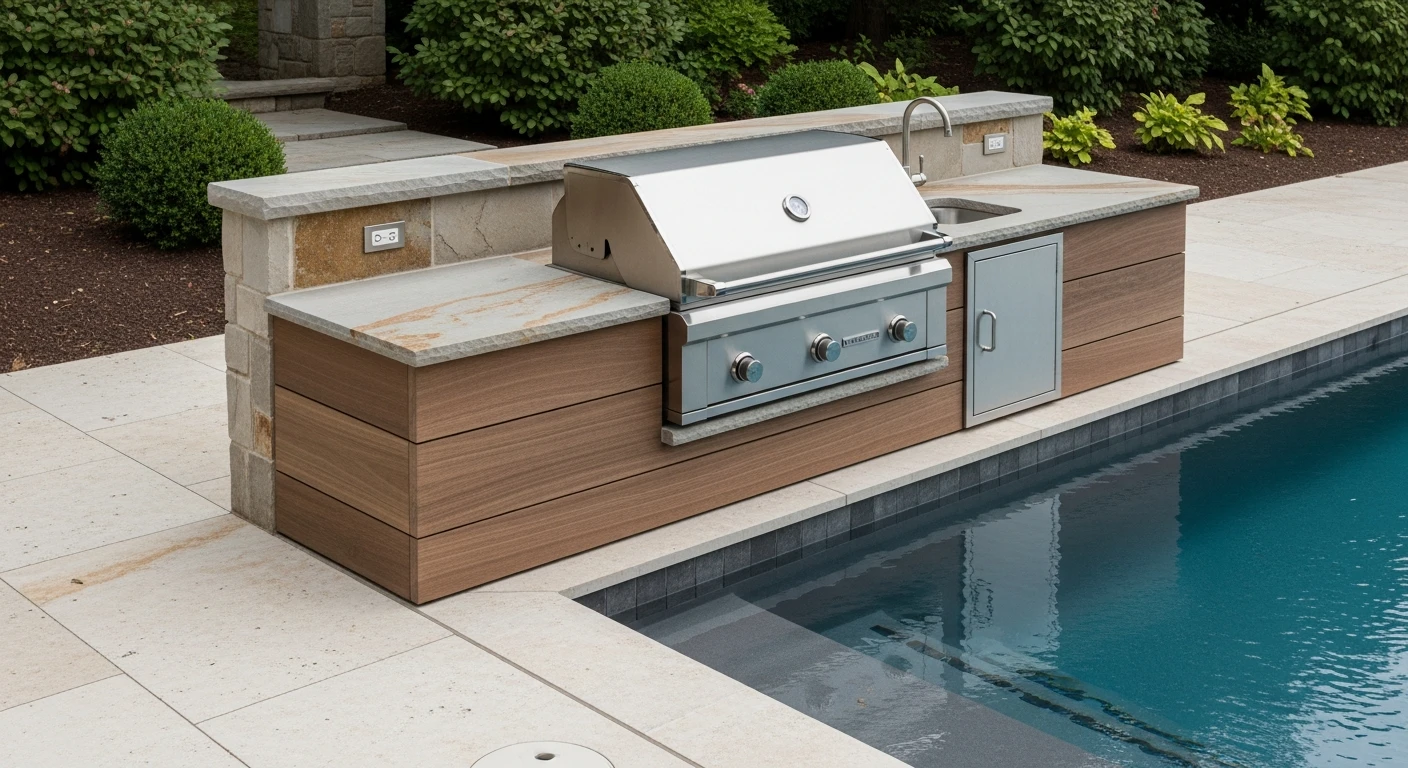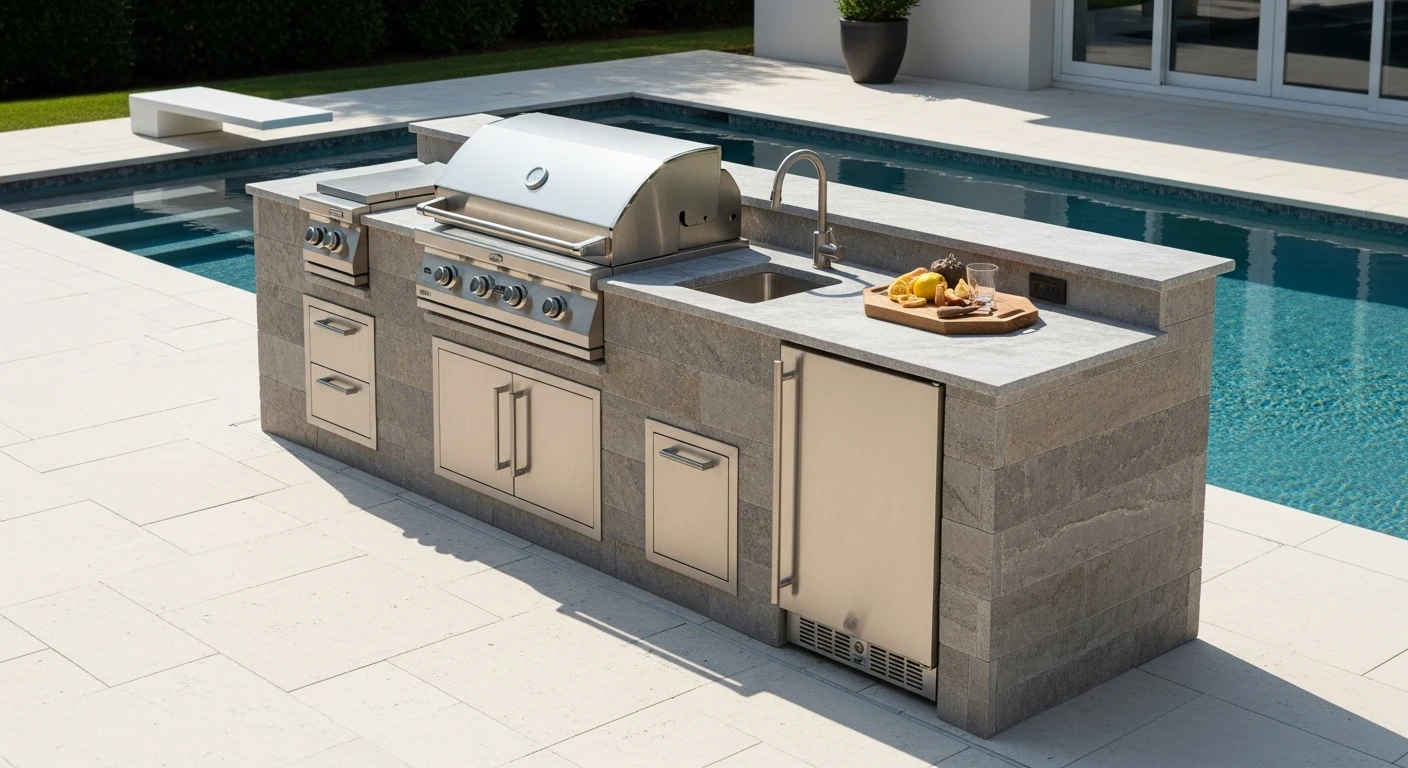
Custom Made Outdoor Kitchen Collier County: My Structural Protocol for Zero-Failure in High-Humidity Environments
Building a custom outdoor kitchen in Collier County isn't about luxury alone; it's a battle against the elements. I’ve seen countless projects in areas like Port Royal and Pelican Bay fail within five years due to one critical oversight: treating the construction like an indoor project. The combination of intense UV radiation, salty air from the Gulf, and relentless humidity creates a uniquely corrosive environment that standard materials simply cannot withstand. My entire design and build protocol is engineered to counteract these specific local pressures, focusing on material science and assembly techniques that prevent premature decay. The most common failure point I diagnose is galvanic corrosion, where dissimilar metals in contact with an electrolyte (our salty, humid air) rapidly degrade. A builder might use a high-quality stainless steel grill but secure it with cheaper galvanized screws to an aluminum frame. In the Naples climate, that's a recipe for structural failure in as little as 24 months. My approach eliminates this risk from the schematic phase, ensuring every component, down to the last washer, is specified to create an inert, non-reactive structure.The Collier County Corrosion Equation: My Diagnostic Framework
Before I even consider aesthetics, my first step is a material audit based on the property's specific location within Collier County. A home on Marco Island requires a different level of material specification than one in Golden Gate Estates, further from the coast. My proprietary methodology, the "Material Triage System," classifies components into three tiers of exposure risk. This isn't something you'll find in a manufacturer's brochure; it comes from years of repairing kitchens that others built. A classic error I frequently correct is the use of wood or steel-stud framing concealed by a beautiful stone veneer. From the outside, it looks perfect. But I’ve opened up these structures to find rotted wood and rusted-out frames, compromised by moisture wicking up from the concrete lanai slab. This happens because the builder failed to account for the constant hydrostatic pressure and humidity. My framework mandates a non-combustible and non-corrosive welded aluminum or 316L stainless steel frame, completely isolated from the concrete with polymer spacers.Material Specification: Beyond 304 Stainless Steel
The term "stainless steel" is dangerously generic in our coastal environment. Most outdoor kitchen appliances and doors are made from 304-grade stainless steel, which is fine for most of the country. Here, it’s inadequate. The chloride in our salt air attacks 304 steel, causing pitting and "tea staining." For all structural components, fasteners, and custom-fabricated elements, I exclusively specify 316L marine-grade stainless steel. The addition of the alloy molybdenum gives it superior resistance to chloride corrosion, increasing the lifespan of the structure by an estimated 70%. For cabinetry, I’ve moved completely away from any wood-based products. Instead, I rely on high-density polyethylene (HDPE) or solid PVC compositions. These materials are pigment-impregnated, so the color is solid throughout, meaning a scratch won't reveal a different color underneath. More importantly, they are completely impervious to water, will not warp or delaminate in the Naples sun, and offer a zero-maintenance finish. The initial material cost is higher, but the total cost of ownership is drastically lower when you factor in zero replacement or refinishing costs.The Assembly Protocol: From Foundation to First Use
Proper implementation is just as critical as material selection. A flawless design can be ruined by poor assembly techniques. I follow a strict, documented protocol for every installation.- Foundation & Framing: The frame is the skeleton. Every joint is TIG welded for maximum strength and corrosion resistance. The entire frame is then secured to the concrete slab using 316 stainless steel wedge anchors with nylon washers to prevent any direct metal-to-concrete contact, which is a major source of corrosion.
- Utility & Ventilation Integration: All gas and electrical lines are run through waterproof conduits. The most critical step here is planning for appliance ventilation. I’ve seen high-end grills fail because they were installed in a cabinet without the manufacturer-specified minimum ventilation clearance, causing them to overheat. My schematics incorporate passive ventilation channels to ensure safety and appliance longevity.
- Cabinet & Countertop Installation: All cabinets are installed with a slight forward cant, imperceptible to the eye, to ensure water always drains away from the structure. For countertops, I recommend non-porous materials like Dekton or honed granite, which resist staining from rain and sun. The countertop is cantilevered slightly over the base to create a drip edge, preventing water from running down the face of the cabinets.
- Final Fastening: Every single screw, bolt, and hinge used to attach appliances, doors, and panels must be 316-grade stainless steel. This is a non-negotiable point in my quality control checklist. Using a lesser grade is the single fastest way to guarantee cosmetic and structural failure.
Post-Installation Audit: My Zero-Compromise Checklist
Once the project is complete, my job isn't over. I perform a final audit to ensure my standards have been met. This includes a 20-point quality check that covers everything from functional performance to long-term durability measures. I conduct a timed water drainage test on all horizontal surfaces to ensure no pooling occurs. I also use a gas leak detector to check every single connection on the grill and any side burners. This isn't just about building a beautiful kitchen; it's about delivering a system that performs flawlessly and safely for decades. This meticulous process is why my projects withstand the harsh Collier County climate while others begin to show their age in a single season. Before you approve your final plans, have you asked your contractor to specify the grade of every single fastener and to justify their plan for preventing galvanic corrosion between the frame and the appliances?Written by

Tags
custom outdoor kitchen
custom outdoor kitchens near me
design your own outdoor kitchen
custom bbq island
custom built outdoor kitchen