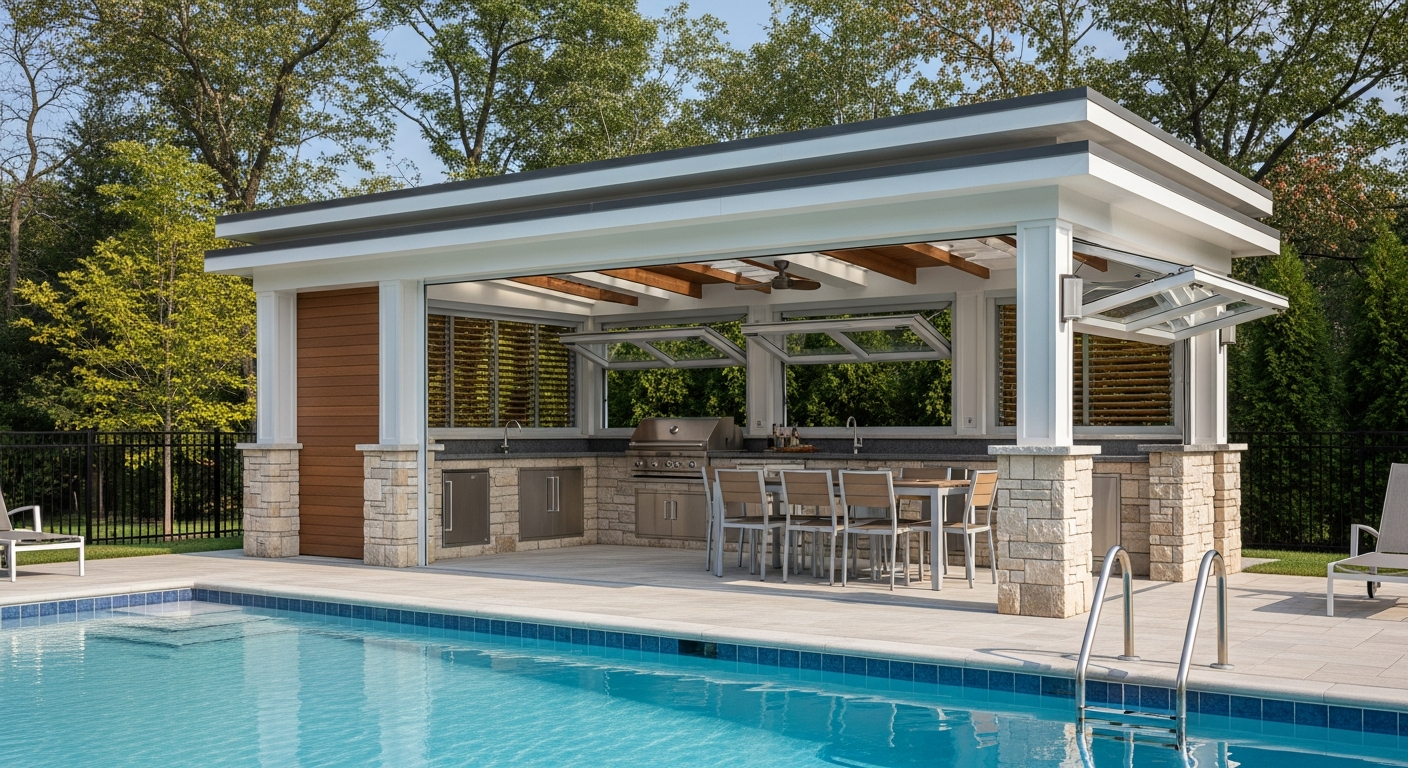
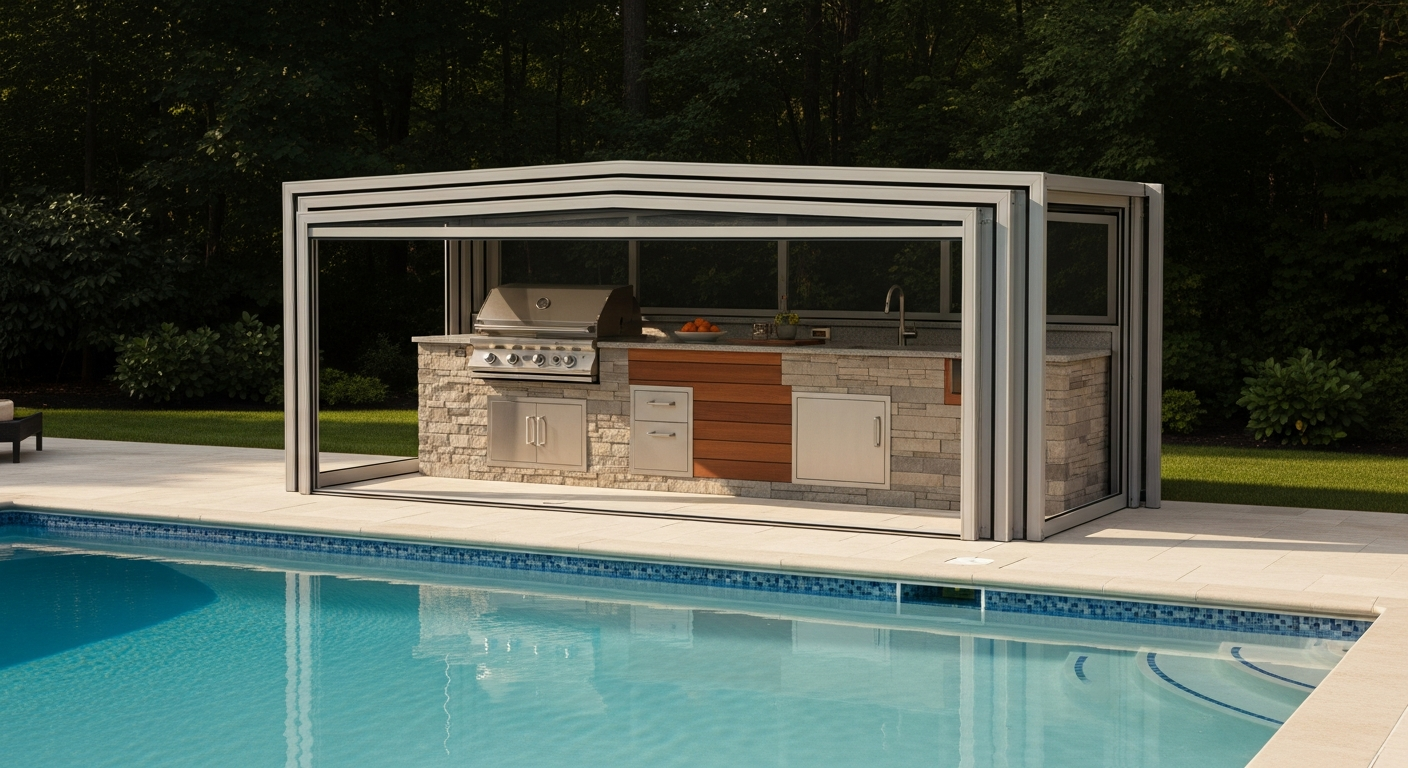
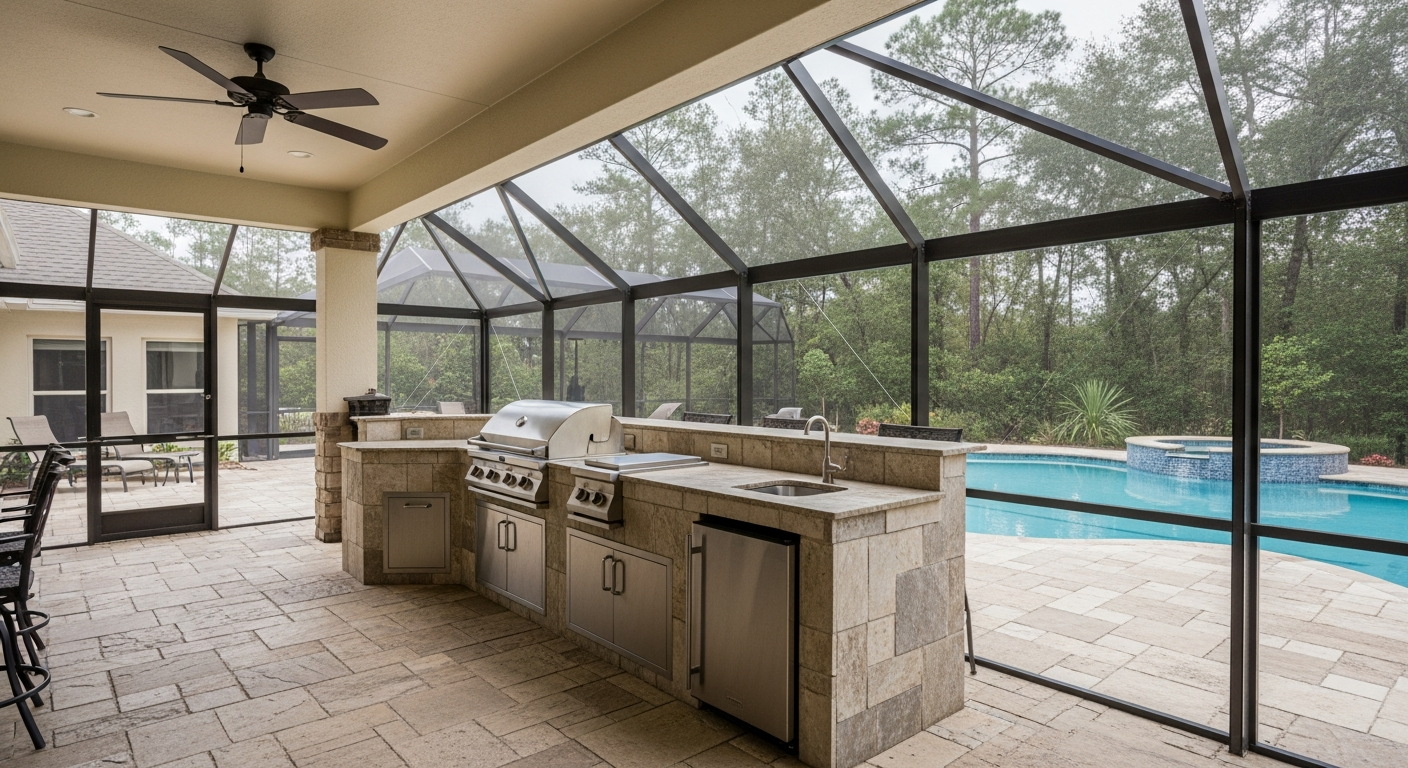
Enclosed Outdoor Kitchen Designs for Pinellas County: A Framework for 30-Year Durability Against Salt & Humidity
Designing an enclosed outdoor kitchen in Pinellas County isn't about picking pretty cabinets; it's a technical battle against constant humidity, corrosive salt air, and intense UV exposure. I've personally seen beautiful, expensive projects in waterfront homes from Treasure Island to Clearwater Beach begin to fail in under five years because they used "outdoor-rated" materials that simply can't handle our specific coastal environment. The most common failure point I diagnose is material specification—a contractor installs a standard 304-grade stainless steel grill, and within 24 months, it's covered in rust spots from the salt spray. My approach is built on a principle I call **Environmental Material Matching**. This isn't just about choosing weather-resistant products; it's about creating a sealed, ventilated system where every component is selected specifically to counteract the high dew points and saline conditions of the Gulf Coast. This methodology ensures your investment not only survives but thrives, adding functional value to your home for decades, not just a few seasons.My Diagnostic Framework for Pinellas County's Climate Challenges
Before any design sketches are made, my first step is a site-specific environmental audit. A property in the Old Northeast of St. Pete has different airflow and salt exposure than a home directly on the Intracoastal in Dunedin. The core of my diagnostic focuses on three failure vectors: **moisture ingress**, **material corrosion**, and **inefficient ventilation**. Standard designs often treat the enclosure as a simple roof and walls, which is a critical mistake here. I treat it as a building envelope that must be actively managed.Material Selection Forensics: Beyond Standard "Outdoor-Rated"
The term "outdoor-rated" is dangerously vague in our climate. My material forensics process goes deeper, specifying grades and compositions that I've proven to last.- Cabinetry and Structure: Forget wood, even treated teak. I've seen it warp and mold too many times. My go-to is powder-coated aluminum or, for higher-end projects, cabinets made from **HDPE (High-Density Polyethylene)**. It's a marine-grade polymer that is impervious to moisture and will not delaminate or rot.
- Appliances: This is non-negotiable. All metallic components, especially the grill, must be **316L marine-grade stainless steel**. The 'L' stands for low carbon, which drastically increases its resistance to salt-induced corrosion. This simple specification change alone can increase the appliance's cosmetic lifespan by over 50%.
- Countertops: Granite is porous. In our humid climate, it can harbor mold and mildew if not sealed religiously. I specify **sintered stone (like Dekton)** or properly sealed, non-porous concrete. These materials offer zero water absorption and are completely UV stable, so the intense Florida sun won't fade them. I once had to replace a beautiful granite countertop in a Gulfport home because moisture had seeped into micro-fissures, causing discoloration that was impossible to remove.
Blueprint for Implementation: The Critical Path to a Flawless Enclosed Kitchen
Once the materials are specified, the construction sequence is paramount to creating a truly sealed and functional space. Following this order prevents the common installation errors I often have to correct.- Foundation and Drainage: The concrete slab must be graded with a subtle slope away from the house and integrated with a proper drainage system. **Standing water** is the number one enemy of any outdoor structure.
- Framing and Envelope Sealing: Whether using block or metal studs, every seam and joint must be sealed. I use a liquid-applied flashing and weather barrier membrane before any cladding is installed. This creates a monolithic, waterproof shell.
- Ventilation System Installation: The ventilation hood is the most important appliance. It must be installed *before* the ceiling goes in. I calculate the required **CFM (Cubic Feet per Minute)** based on the grill's BTU output and the volume of the space. For Pinellas, I always recommend a minimum of 1200 CFM and ensure the ducting is solid, welded stainless steel, not flexible tubing which can trap grease and moisture.
- Appliance and Cabinet Placement: Install cabinets with a slight air gap from the wall to promote airflow and prevent moisture trapping. All electrical outlets must be in **weatherproof enclosures** with "in-use" covers.
- Window and Door Installation: In Pinellas County, this means using **hurricane-rated impact glass** and ensuring every frame is meticulously sealed with a high-performance polyurethane sealant. This is both for storm protection and to prevent air and moisture leaks that compromise the controlled environment.
Precision Tuning: Ventilation and Sealing Protocols
The job isn't done after installation. The final step is commissioning the space. This involves testing the ventilation system to ensure it creates negative pressure, effectively pulling smoke and grease out without pulling humid, salty air in from unsealed gaps. I use a smoke pencil test around all windows, doors, and electrical outlets to identify and seal any air leaks. This precision tuning is what separates a functional outdoor kitchen from a high-performance one that feels comfortable year-round. Given the intense afternoon thunderstorms we experience from June to September, is your current plan for managing airflow also designed to handle rapid changes in barometric pressure without compromising the integrity of your enclosure's seals?Written by

Tags
outdoor kitchen
outdoor kitchen grill
outdoor kitchen bbq grill
outdoor kitchen cabinets
outdoor kitchen and grill