
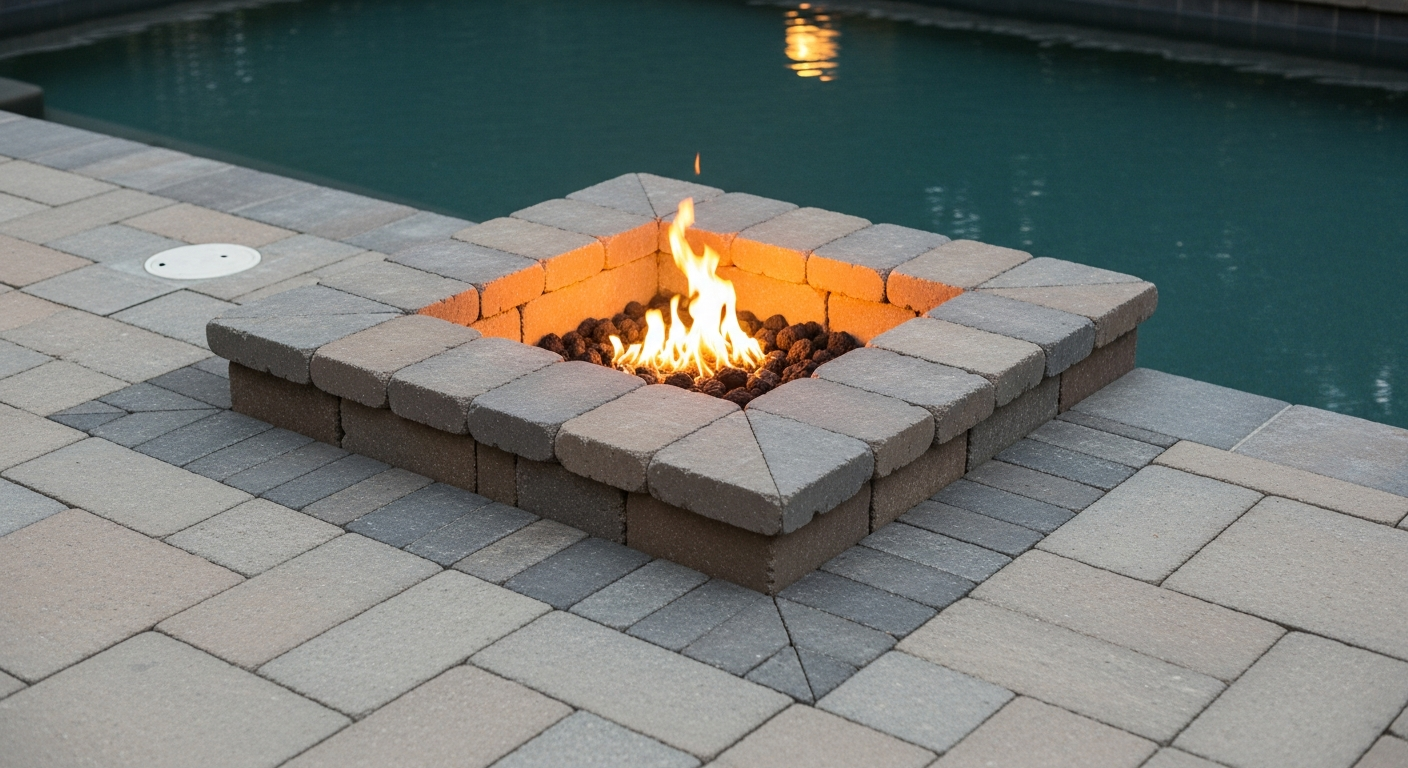
Fire Pit With Paving Stones: My Lee County Protocol for Preventing Thermal Spalling and Base Failure
Building a paver fire pit in Lee County that doesn't fail is a different game than anywhere else. I’ve seen too many projects from Cape Coral to Lehigh Acres sink, crack, or have pavers literally explode after just a few seasons. The issue isn't the pavers; it's a fundamental misunderstanding of our sandy soil, high water table, and intense humidity. Most online tutorials are designed for stable, clay-based soils and will lead you to a costly rebuild here. My entire approach is built on two core principles ignored by 90% of DIY and even some professional builds: a sub-base engineered for water displacement and a thermally-isolated core. Forget simply digging a circle and stacking blocks. I'm going to detail the exact methodology I developed after having to tear out and rebuild a sunken fire pit on a waterfront property in Fort Myers, a mistake that cost my client both time and money, but which led to my current bulletproof system.The Unspoken Failure Point: Diagnosing Fire Pit Subsidence in Sandy Florida Soil
The single biggest mistake I see is treating our ground like it's solid. It's not. The sandy soil that defines our landscape from Sanibel to Estero is highly permeable and prone to shifting, especially during the rainy season from June to September. When you build a heavy paver structure on an inadequate base, water saturation turns the ground beneath it into a slurry. The result is almost always subsidence—a sinking or tilting of the entire structure. I identified this as the primary failure point in a large community project in Bonita Springs where several fire pits, all under two years old, had dropped by more than three inches. My methodology, therefore, starts below the ground. I approach the fire pit base not as a simple foundation, but as a miniature roadbed designed for maximum load distribution and water drainage. This involves creating a multi-layered, mechanically compacted system that isolates the structure from the instability of the native soil. Simply digging and filling with paver sand is a guaranteed recipe for failure within 24 months in our climate. My system is designed for a 15-year minimum structural lifespan.Deconstructing the Base: The Tri-Layer Compaction Method
This is the technical core of the project. Getting the base right ensures everything built on top of it remains stable. After much trial and error, I've standardized my process into a three-layer system that specifically counters the challenges of Lee County’s terrain.- Excavation and Geotextile Barrier: I mandate a minimum excavation depth of 10 inches. This is non-negotiable. At the bottom of the excavation, I lay a commercial-grade geotextile stabilization fabric. This is my secret weapon. It acts as a separator, preventing the dense aggregate of my sub-base from slowly sinking into the softer, sandy soil below. I saw a project fail specifically because this layer was skipped; over time, the base and sand mixed, losing all structural integrity.
- The Sub-Base Layer (#57 Stone): On top of the fabric, I install a 4-inch layer of #57 stone or recycled concrete aggregate. This is then machine-tamped until absolutely no further compression is possible. This angular stone locks together to form a highly stable, load-bearing platform that provides excellent drainage—a critical function to handle our sudden, heavy downpours.
- The Bedding Layer (ASTM C33 Sand): The final layer of the base is a precisely-leveled 1-inch bed of washed screed sand conforming to ASTM C33 specifications. Using "play sand" or all-purpose sand is a common error; it contains fine silts that retain moisture, compromising the structure from the inside out. This layer is for fine-tuning the level of the first course of blocks, not for structural support.
Implementation and Paver Assembly: A Protocol for Heat Management
Once the base is perfect, the focus shifts to managing extreme heat. Standard concrete paving stones are not rated for direct flame; they contain trapped moisture that, when superheated, turns to steam and can cause the paver to spall or violently fracture. I witnessed this firsthand at a client's home where a paver from the top course shattered and shot across their lanai. My assembly process builds in a thermal break to prevent this.- Install the Inner Shield (Fire Brick): The first ring you build is the most important. It must be constructed from ASTM C27 medium-duty fire brick. These are specifically designed to withstand temperatures up to 2500°F. I lay these bricks on the sand bed and mortar the joints with refractory cement, not standard mortar which would crack under the heat.
- Build the Outer Wall (Paving Stones): Now, build the decorative paver wall around the fire brick core. The most critical detail here is to leave a 1-inch air gap between the fire brick wall and the inner side of the paving stones. This gap acts as an insulator, drastically reducing the amount of heat transferred to the outer pavers and preventing them from failing.
- Secure Each Course: For each layer of paving stones you add, apply a zigzag bead of high-temperature construction adhesive (e.g., Loctite PL Premium 3X) to secure it to the course below. This ensures the structure is a single, unified unit and resists shifting.
- Set the Capstone: The final top course, or capstone, is secured with the same construction adhesive. I use a long level to ensure the cap is perfectly flat across the entire circumference. A level cap is the hallmark of a professional job.
Precision Finishing: Jointing Sand and Curing for Durability
The final step is what locks the entire paver structure together and protects it from the elements. Using the wrong jointing material will lead to weed growth and ant hills, and will allow water to penetrate and weaken the bedding layer. I exclusively use a high-quality polymeric sand for all joints. The application is a precision process. I sweep the sand into the joints until they are completely full, then use a hand tamper to vibrate the pavers, which settles the sand deep into the joints. I repeat this process until the joints are packed. Then, using a leaf blower on a low setting, I remove every grain of excess sand from the surface of the pavers. This step is crucial; any remaining sand will turn into a permanent haze when activated. Finally, I mist the area with a hose on a "shower" setting to activate the polymers, which harden to lock the pavers in place and create a watertight seal. I then insist on a 72-hour no-fire curing period, which is essential for the refractory cement and polymeric sand to reach maximum hardness, especially in our humid air. With the structure now fortified against both ground subsidence and thermal shock, have you considered how the grading of the surrounding patio will channel water away from, not toward, the base you've so carefully constructed?Written by

Tags
pavers around fire pit
pavers around a firepit
paver patio designs with fire pit
building a fire pit with pavers
making a fire pit with pavers


