
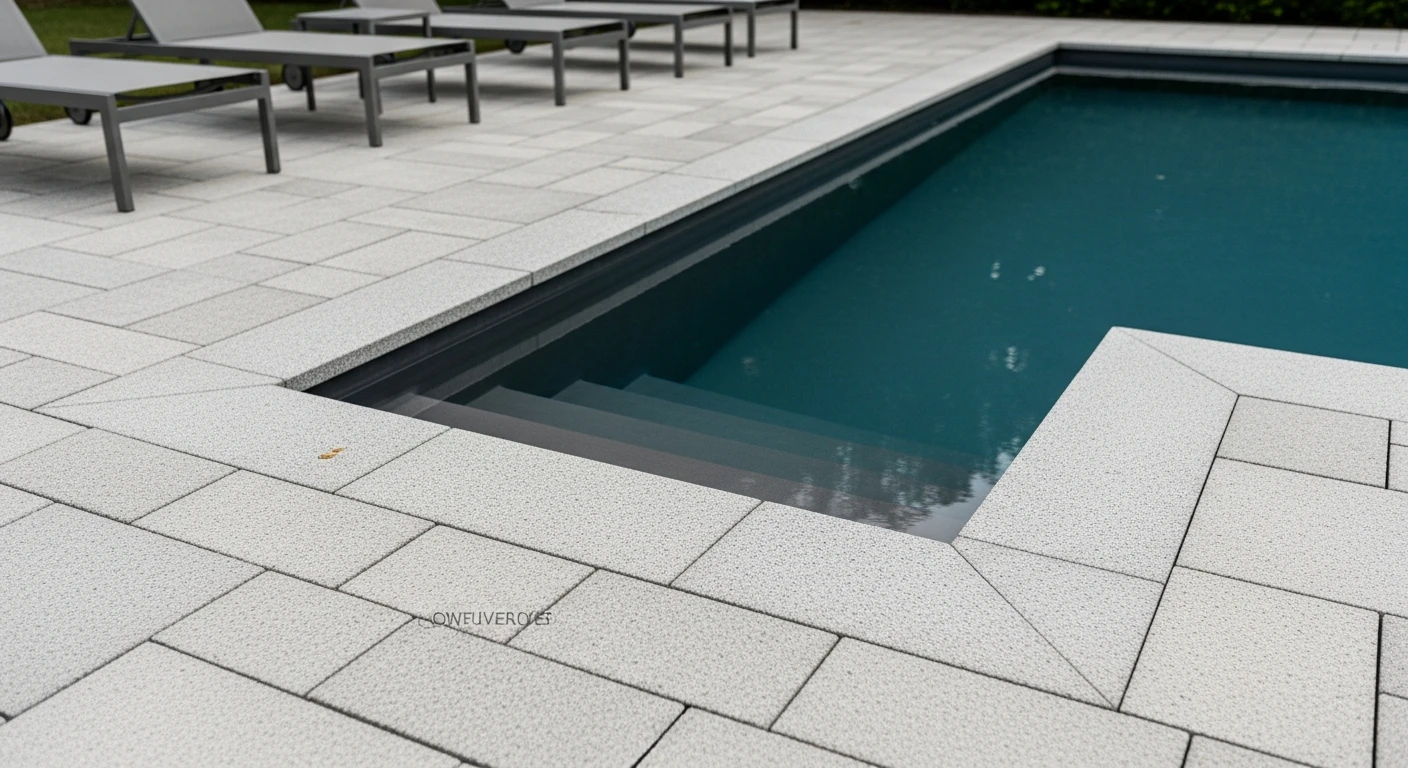
Granite Driveway Pavers: The Technical Framework for Zero-Subsidence Installation
Most granite driveway failures I’ve witnessed over the last 15 years have nothing to do with the quality of the stone itself. The catastrophic error—uneven surfaces, paver shifting, and water pooling—originates in a poorly engineered sub-base. Homeowners and even some contractors focus on the surface beauty of the granite, completely underestimating that the driveway's 30+ year lifespan is determined by the unseen layers beneath.
I developed my proprietary installation methodology after being called in to fix a high-end residential project where a driveway, less than two years old, had already subsided by over two inches in the main tire tracks. The problem wasn't the premium granite; it was a sub-base built for a pedestrian patio, not a 5,000-pound vehicle. My framework focuses on creating a monolithic, load-distributing foundation that makes the granite surface virtually indestructible.
The A.C.E. Sub-Base Diagnostic: My Protocol for Granite Paver Longevity
Before a single paver is laid, I run what I call the A.C.E. Diagnostic (Assess, Compact, Engineer). This front-loaded process prevents 90% of future structural issues. The core principle is that a granite paver driveway is a flexible pavement system; its strength comes from the interlock of the pavers and the stability of the layers below them transferring the load to the native soil.
The "Assess" phase is the most critical and most often skipped. I perform a soil analysis to understand its composition—clay, sand, or loam. Heavy clay soils, for instance, retain water and are highly susceptible to expansion during freeze-thaw cycles. On a project with expansive clay, I mandated an additional 6 inches of sub-base excavation and the integration of a geogrid stabilization mesh, a specification that the original contractor had dismissed as "overkill." That driveway is now a decade old and hasn't moved a millimeter.
Granite Selection & Compressive Strength: Beyond Aesthetics
While the sub-base is foundational, paver selection is not just about color. I insist on granite pavers with a minimum compressive strength of 19,000 PSI (pounds per square inch). While many suppliers offer stone at 12,000 PSI, the higher rating provides a significant performance buffer against the dynamic loads of turning and braking vehicles. For the surface finish, a flamed or thermal finish is non-negotiable for driveways. It creates a rough, non-slip texture essential for wet or icy conditions. A honed or polished paver might look beautiful, but in my view, it’s a liability lawsuit waiting to happen on a sloped driveway.
The paver's thickness is another critical data point. For standard passenger vehicles, a 60mm (2 3/8 inches) thick paver is sufficient, provided the sub-base is perfect. However, for any client with heavy SUVs, delivery trucks, or RVs, I specify an 80mm (3 1/8 inches) paver. This increases the load-bearing capacity by approximately 25% and enhances the rotational stability (interlock) of the entire surface.
Step-by-Step Implementation: The Zero-Subsidence Build
My installation process is rigid and prioritizes precision at every stage. A small deviation in one layer will be magnified at the surface over time. Here is my core checklist for a driveway designed to last a lifetime.
- Excavation: I mandate excavation to a minimum depth of 12-14 inches below the final grade for vehicular applications in climates with a frost line. This is deeper than many standard guides suggest, but it's my insurance against frost heave.
- Geotextile Separation: A heavy-duty, non-woven geotextile fabric is the first thing to go in. This is a critical step I've seen amateurs skip. It separates the native soil from your aggregate base, preventing them from mixing over time and compromising the foundation.
- Sub-Base Compaction: The aggregate base (typically ¾-inch crushed stone) is installed in 4-inch lifts (layers). Each lift is individually compacted with a heavy-duty plate compactor until it reaches 98% Standard Proctor Density. Checking the density with a dynamic cone penetrometer is a quality control step I use on major projects.
- Bedding Layer Precision: The bedding layer of 1-inch of coarse concrete sand (ASTM C33) is screeded to be perfectly uniform. This layer is for bedding the pavers, not for leveling them. Trying to correct sub-base errors here is the most common mistake I fix.
- Paver Installation & Jointing: Pavers are laid in a herringbone pattern for maximum interlock on a driveway. After setting, the joints are filled with high-grade polymeric sand. This sand contains a binder that hardens when activated with water, locking the pavers together and preventing weed growth and insect infestation.
Tags
walkway pavers
block paving granite
black granite cobblestone pavers
granite pavers for sale near me
cheap granite pavers


