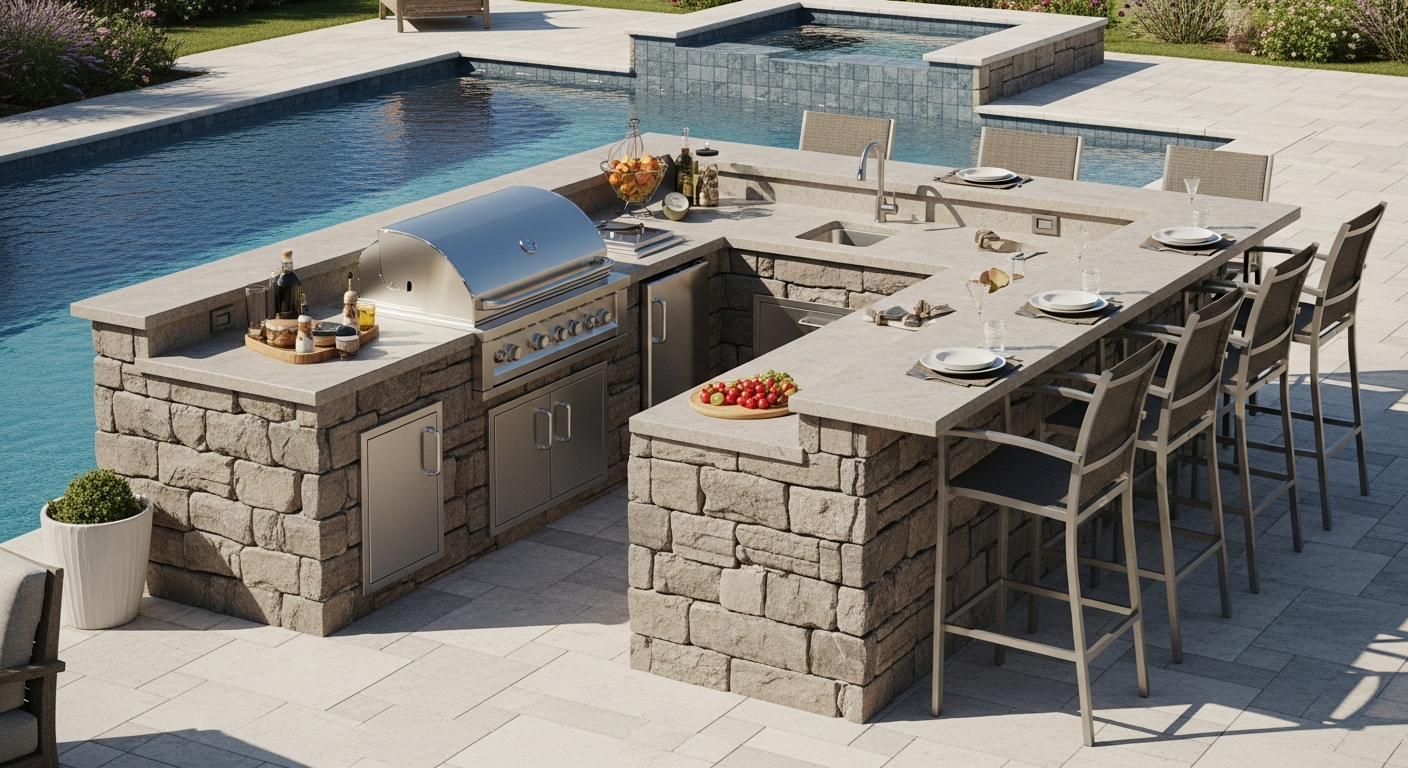
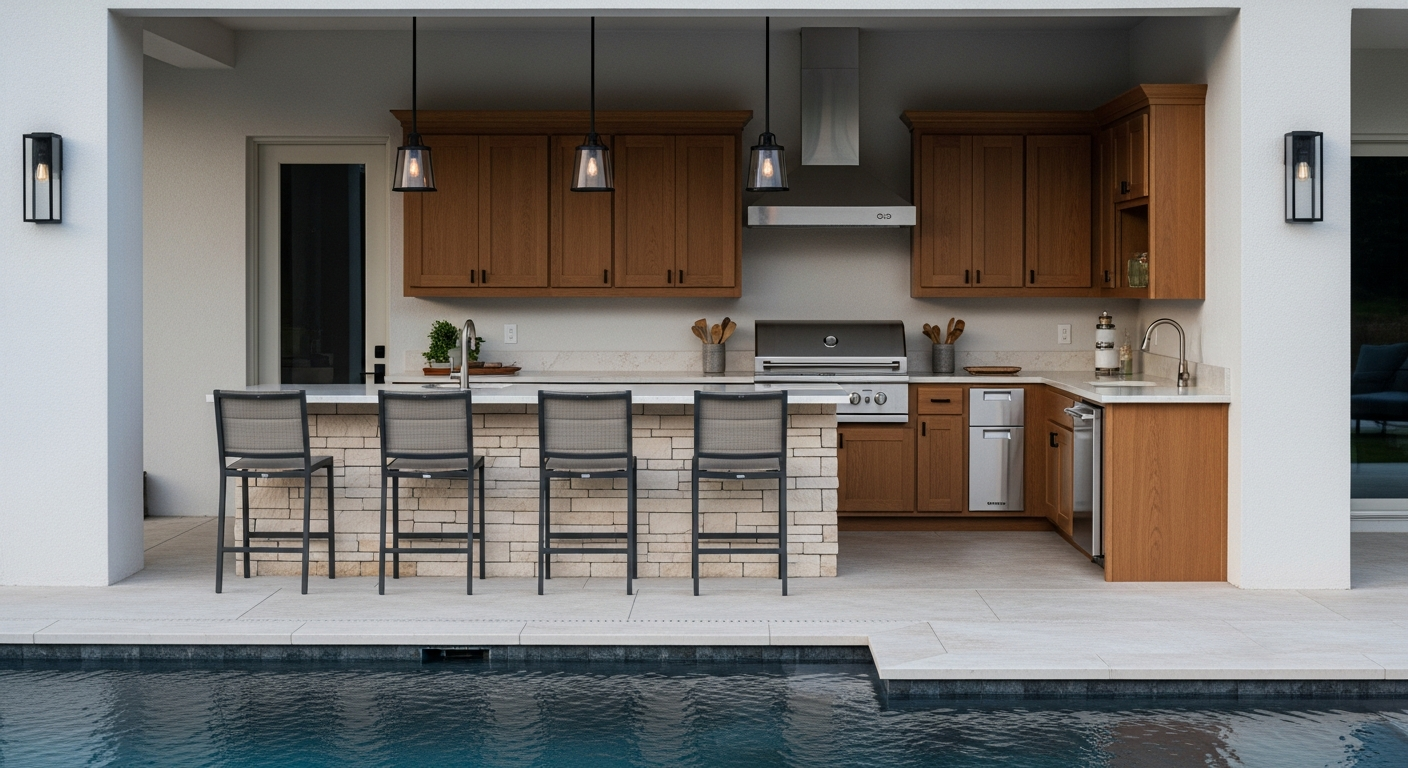
Grill Island with Bar Pinellas County: A Build Protocol to Eliminate Salt-Air Corrosion and Warping
Building a grill island with a bar in Pinellas County isn't about choosing the fanciest grill; it's a battle against the elements. I've been called to far too many homes in St. Pete and Clearwater Beach to repair or completely rebuild outdoor kitchens that failed in under three years. The primary culprit is almost always the same: a fundamental misunderstanding of how our coastal salt air, intense humidity, and sandy soil substrate attack standard construction materials. A beautiful project quickly becomes a crumbling, rust-stained liability. My approach isn't a design guide; it's a structural and material protocol. The goal is to shift the investment focus from flashy, short-lived aesthetics to a core build that guarantees a minimum 15-year functional lifespan with minimal maintenance. The real ROI isn't just in the property value increase, but in avoiding a costly tear-down and rebuild.My Diagnostic Framework for Coastal Grill Islands
Before any design is drawn, I perform a mandatory three-point site and material diagnosis. I developed this methodology after a large-scale project in a Snell Isle waterfront home failed prematurely due to galvanic corrosion between the stainless steel frame and the galvanized fasteners—a subtle but catastrophic error. My framework preemptively eliminates these failure points.The Technical Nuances of Pinellas County Builds
The three critical failure vectors I assess are: Substrate Integrity, Material Reactivity, and Utility Ingress. In our specific environment, overlooking one of these guarantees a problem. For substrate, many contractors will build directly on existing pavers. Given Pinellas' sandy soil, this leads to uneven settling and cracks in the countertop within the first two rainy seasons. A proper build requires a dedicated monolithic concrete slab footer, isolated from the main patio, to ensure absolute stability. For material reactivity, the air itself is corrosive. I prohibit the use of standard galvanized steel studs for framing. They will rust from the inside out. The only acceptable options are welded aluminum C-channel framing or concrete masonry units (CMU). For all hardware—screws, hinges, and drawer pulls—I specify 316-grade stainless steel. Standard 304-grade, often sold as "outdoor grade," will still show surface rust here. For countertops, porous materials like travertine are a mistake; they harbor mold in our humidity. I mandate quartz, sealed granite, or Dekton for their non-porous, UV-stable properties.Step-by-Step Implementation for Maximum Durability
Once the diagnosis is complete, the implementation follows a strict sequence. Deviating from this order invites compromised integrity. Each step is a quality control checkpoint.- Site Prep and Foundation: Excavate the area and pour a 4-inch reinforced concrete slab. Critically, this slab must have a slight pitch (1/8" per foot) to ensure water runoff and prevent pooling at the base of the island.
- Framing Assembly: Construct the frame using either CMU blocks or a welded aluminum structure. All joints in the aluminum must be TIG welded for strength and corrosion resistance. Never use self-tapping screws as the primary fasteners for the frame.
- Utility Rough-In: All electrical wiring must be run in a waterproof conduit. I insist on installing marine-grade GFCI outlets with in-use weatherproof covers. For gas lines, use only flexible stainless steel tubing with brass fittings to prevent corrosion at the connection points.
- Cladding and Countertop Templating: Attach the cement board to the frame using fasteners specifically rated for that material. Once clad, a precise template for the countertop is made. This is a critical step; a countertop cut from measurements alone often results in uneven overhangs.
- Appliance Installation and Final Sealing: Install all appliances using only the 316-grade stainless steel hardware specified. The final, most overlooked step is to seal every penetration point—where the grill meets the counter, where the outlet boxes are—with a high-grade, UV-resistant, mold-inhibiting silicone sealant.
Precision Tuning for a Flawless Finish
The difference between a good build and an exceptional one lies in the final adjustments. For bar seating, the countertop overhang must be a minimum of 10 inches for comfortable knee space, but no more than 14 inches to avoid excessive stress on the substrate without additional bracing. I also incorporate a subtle drip edge on the underside of the bar counter, a small groove that prevents rainwater from running back and staining the island's facade. Finally, I consider the orientation. In areas like Dunedin or Tarpon Springs, aligning the bar so guests aren't facing directly into the intense afternoon sun can make a huge difference in usability. Before you finalize your design, have you calculated the long-term cost of replacing rusted components versus the upfront investment in marine-grade materials?Written by

Tags
exterior kitchen
outdoor kitchen and bbq
outdoor kitchen bbq area
outdoor grill and bar island
complete outdoor kitchen