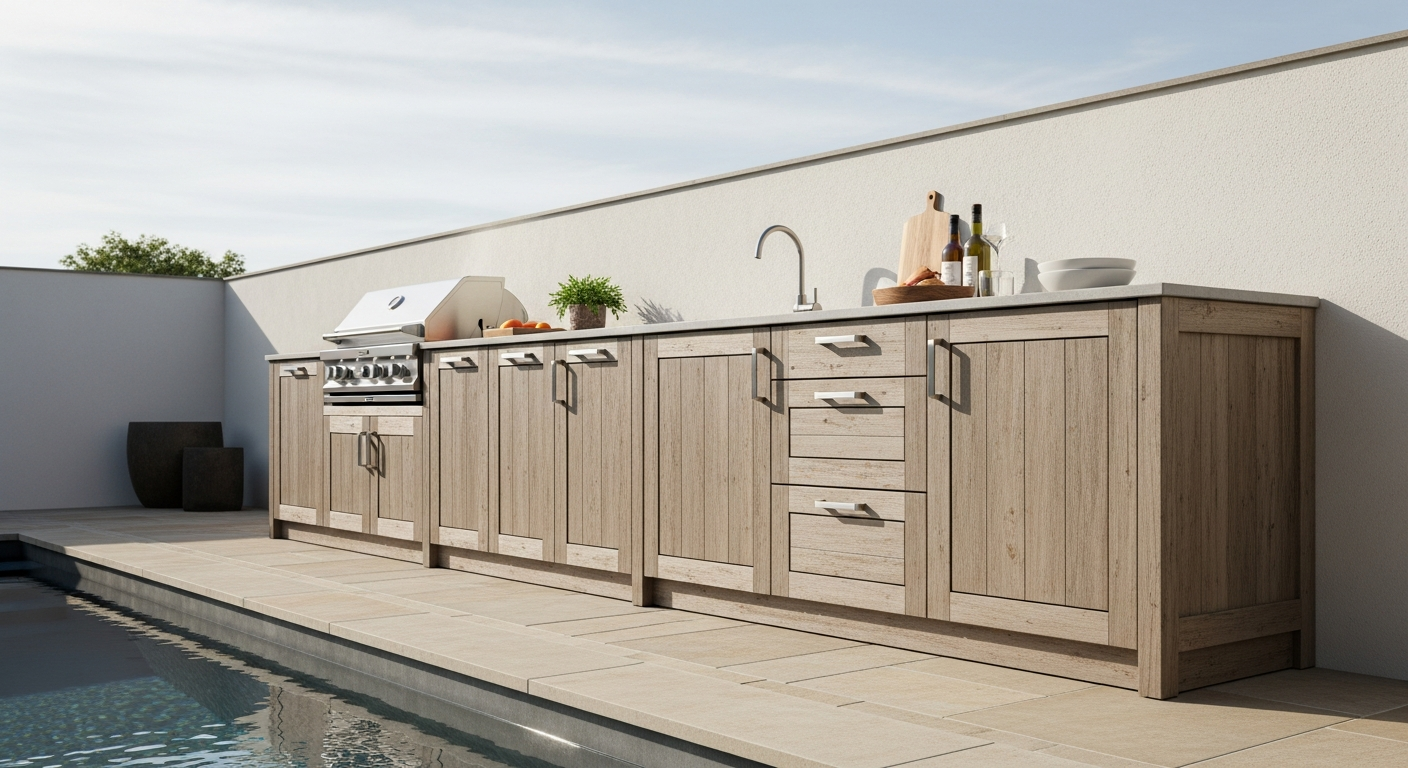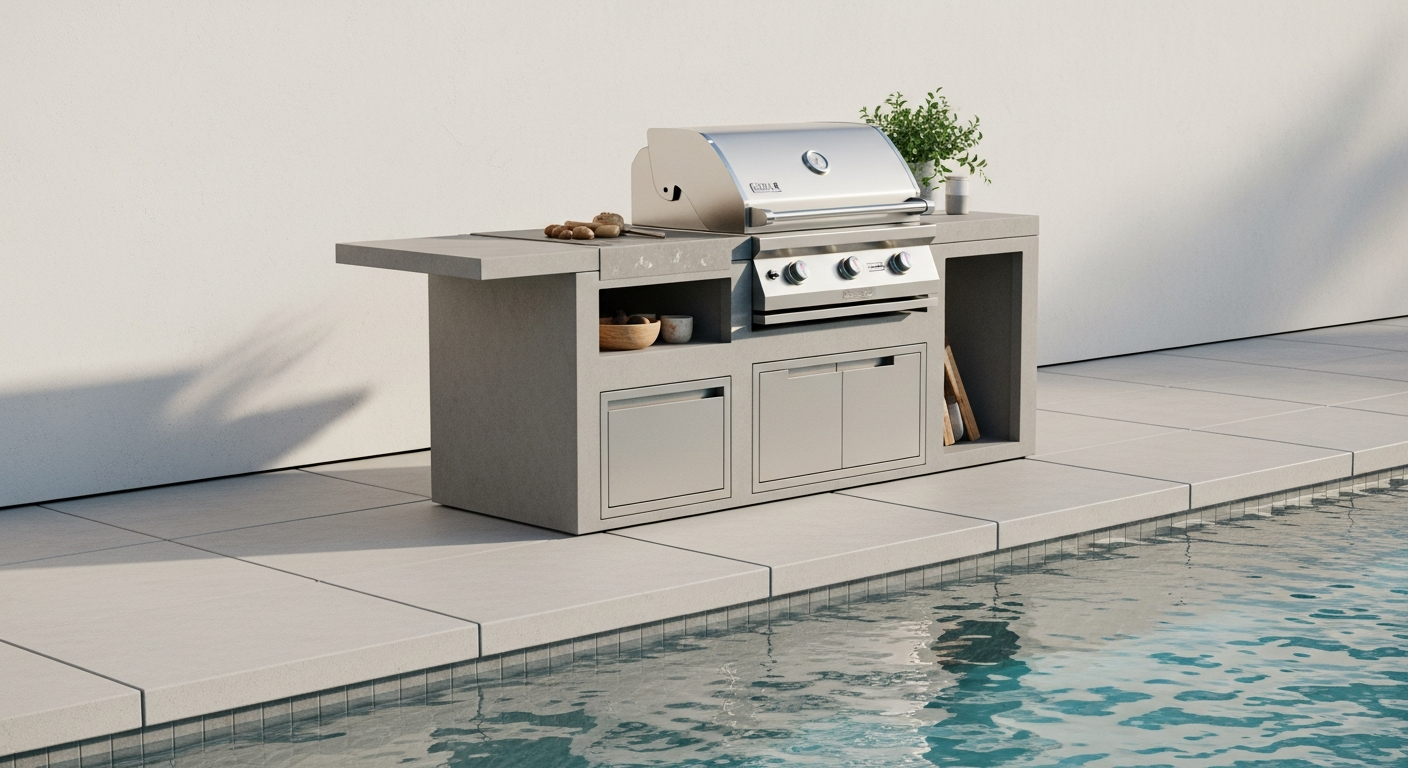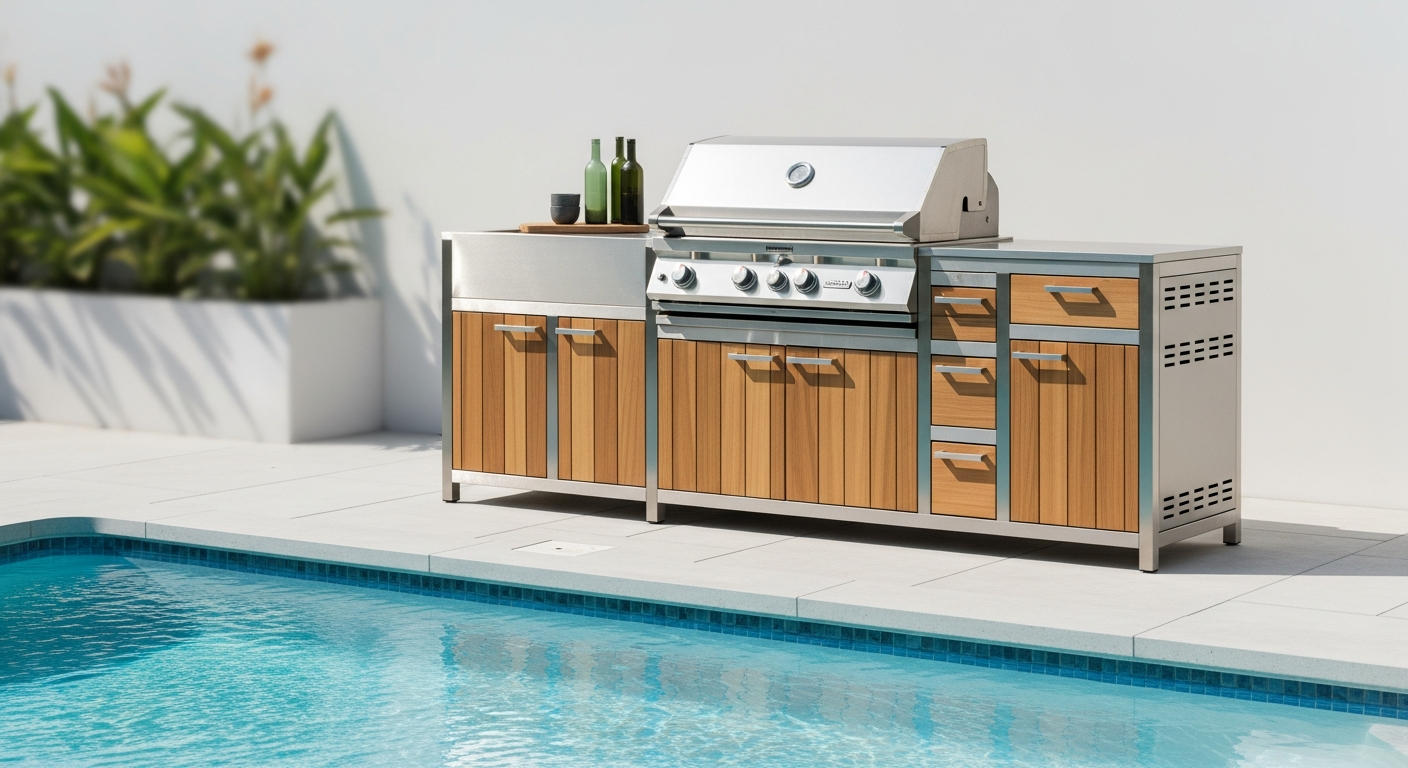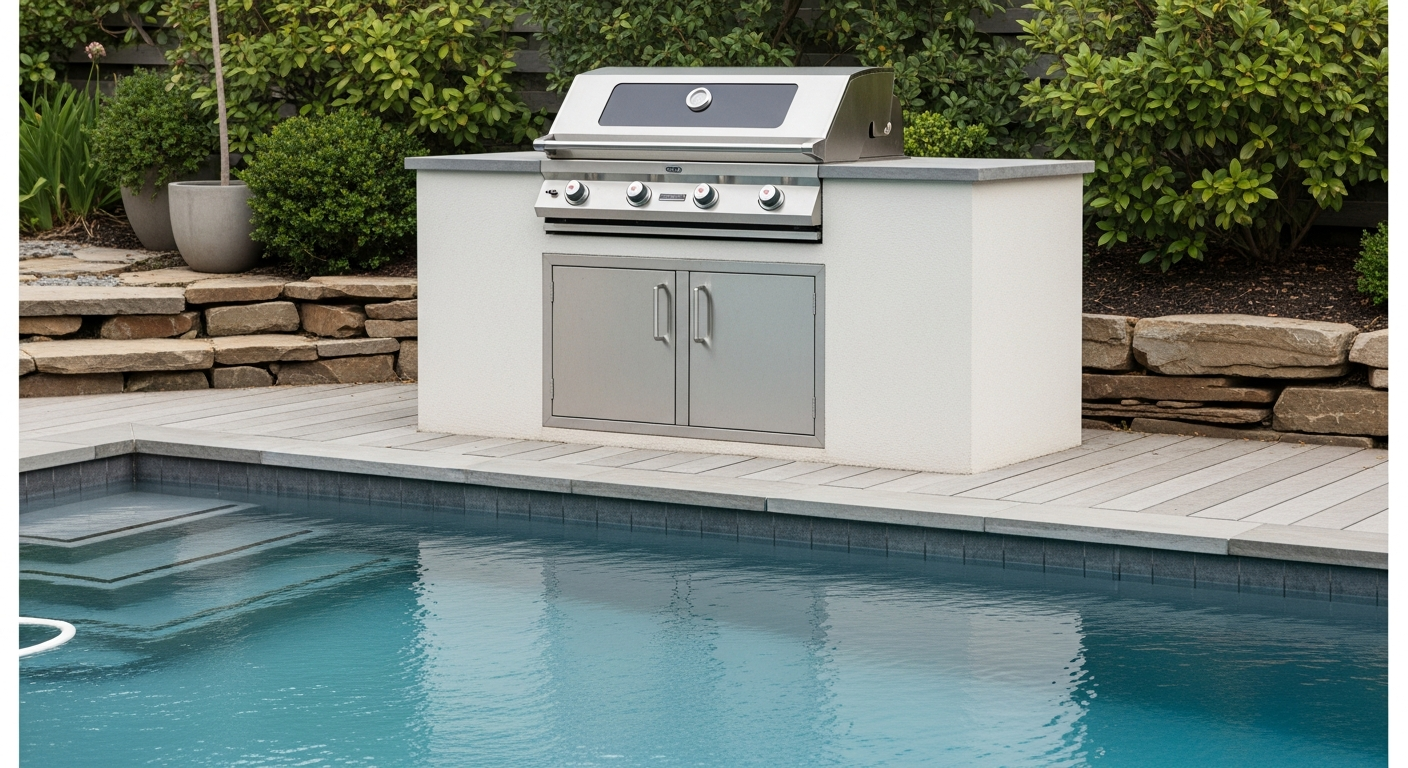
Most outdoor barbecue cabinet installations I'm called to fix fail not because of a single catastrophic event, but from a slow death by a thousand cuts: moisture ingress, material fatigue, and structural warping. The common advice to simply "buy 304 stainless steel" is dangerously incomplete. Through years of designing and rescuing outdoor kitchen projects, I've seen this exact advice lead to premature rusting and corrosion, especially in coastal or high-humidity environments.
My entire approach is built on a system that preempts these failures. It’s not about choosing a single "best" material, but about engineering a holistic, climate-specific enclosure. The goal is to create a sealed system that manages moisture, thermal expansion, and UV degradation, extending the cabinet's functional lifespan by a projected 50% or more compared to standard installations.
My C-M-S Framework: A Diagnostic Approach to Cabinet Material SelectionEarly in my career, I specified a high-end 304 stainless steel cabinet system for a beachfront property. Within 18 months, the client reported surface pitting and rust along the welds—a classic case of chloride-induced corrosion from the salt air. That expensive mistake forced me to develop what I now call the C-M-S (Climate-Material-Structure) Framework. It's a diagnostic methodology I use on every project to guarantee material and structural integrity before a single screw is turned.
The framework is my proprietary process for de-risking an outdoor kitchen investment. It moves beyond generic recommendations and forces a granular analysis of the three vectors that determine longevity. Climate dictates the environmental stressors (salt, humidity, UV index, temperature swings). Material is the selection of the appropriate polymer or metal alloy to resist those specific stressors. Structure ensures the cabinet's assembly and installation method actively prevents water intrusion and supports the intended load without shifting or warping over time.
Material Science Deep Dive: Beyond 304 Stainless SteelThe "Material" component of my C-M-S framework is where most projects go wrong. The choice is far more nuanced than steel versus polymer. My analysis always starts with the specific chromium and molybdenum content of the steel, or the density and UV inhibitor package of the polymer. For example, for that coastal project, the correct specification would have been 316L marine-grade stainless steel, which contains molybdenum specifically to resist chloride corrosion. For a project in a hot, humid region like Florida, I often recommend marine-grade HDPE (High-Density Polyethylene). It’s impervious to moisture, won't delaminate, and modern variants have excellent UV stability. The critical error I see people make with powder-coated aluminum is failing to account for its primary weakness: a deep scratch that compromises the coating becomes a direct entry point for oxidation. The material itself isn't the problem; it's the misapplication for the environment.
Implementation Protocol: From Foundation to Final SealA superior material can still fail if the installation is flawed. My implementation protocol is a non-negotiable checklist focused on creating a completely sealed and stable cabinet system. I’ve seen beautiful, expensive cabinets ruined because they were placed on an uneven paver patio that shifted, breaking the seals and torquing the doors out of alignment.
- Foundation Lock-In: The process begins with a perfectly level and stable concrete base. I mandate a compressive strength of at least 3,000 PSI and insist on a cure time of no less than 7 days before cabinet installation. We anchor the cabinet legs directly, not just rest them on the surface.
- Creating a Positive Drainage Plane: The cabinet box must be slightly shimmed to create a subtle slope away from the interior. This ensures any incidental moisture that gets past the countertop seal is directed outward, not inward. A 1-2 degree slope is my standard.
- Sealing All Penetrations: Every single hole for gas lines, water lines, or electrical conduit is a potential point of failure. I use high-grade, UV-resistant marine sealant to create a waterproof gasket around every penetration. This is a step I've seen other installers skip, leading to water damage and pest intrusion within the first year.
- Vapor Barrier Application: For wood-framed islands, I mandate the application of a self-adhering vapor barrier to the interior of the framing before the cabinets are installed. This prevents moisture from the structure itself from being trapped within the cabinet boxes.
- Door and Drawer Gasket Calibration: The final step is to meticulously check the fit and seal of every door and drawer. I use a feeler gauge to ensure the gasket makes consistent contact all the way around, achieving a near-airtight seal when closed.
After installation, my team performs a series of quality assurance checks that go beyond just a visual inspection. The goal is to simulate a driving rain event to test the integrity of our seals. We use a low-pressure hose to systematically spray the countertop seams, backsplash, and appliance cutouts while inspecting the cabinet interiors for any sign of water. Our internal benchmark for success is a zero-percent moisture ingress rate. We also verify that all cabinet hardware—hinges, slides, and handles—is specified as 316 stainless steel, as this is often an overlooked detail where manufacturers cut corners, leading to the first spots of rust on an otherwise robust system.
Have you calculated the thermal expansion differential between your cabinet material and the countertop substrate?