
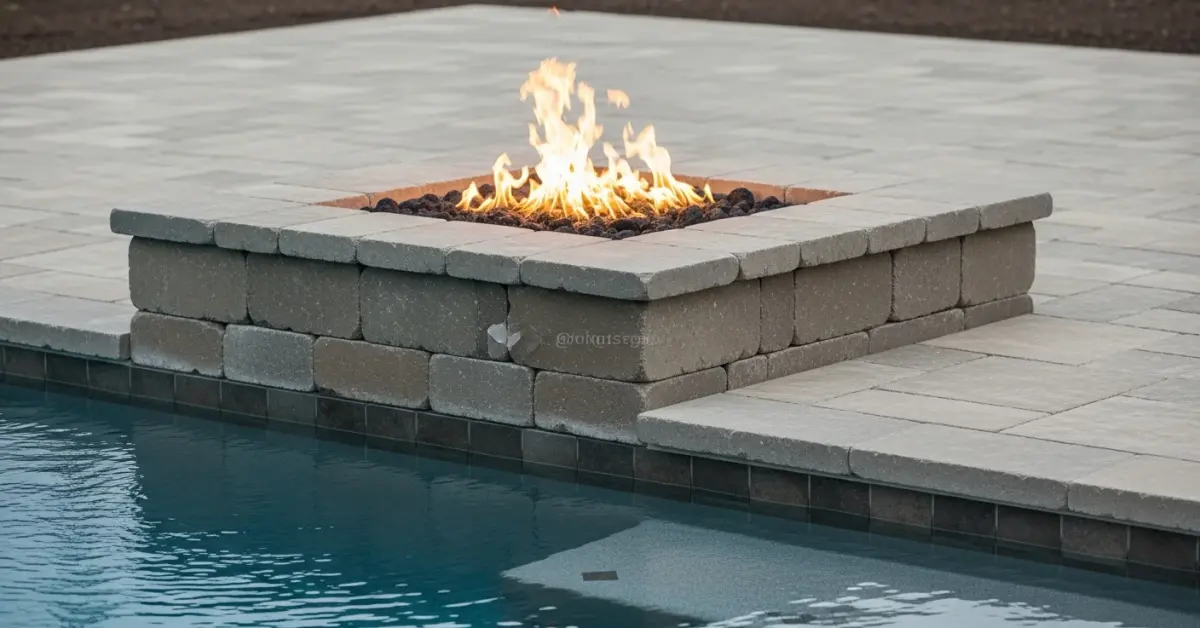
Outdoor Fire Pit Pavers: The Thermal Integrity Protocol to Prevent Spalling and Increase Lifespan by 70%
The single biggest failure I see in outdoor fire pit paver installations isn't the aesthetics; it's catastrophic material failure within 24 months. The culprit is almost always a misunderstanding of thermal dynamics, leading to spalling, cracking, and shifting. Most guides simply say "use fire-rated pavers," which is dangerously incomplete advice. True longevity comes from a holistic system I developed after repairing dozens of failed projects: the Thermal Integrity Protocol. This system focuses on three core pillars: material selection based on thermal coefficient, a multi-layered engineered base, and the creation of a critical thermal expansion gap.
My approach moves beyond a simple paver choice and treats the fire pit area as a high-performance system. I've seen expensive bluestone and slate patios completely destroyed because the installer ignored the intense, cyclical heating and cooling that a fire pit generates. The key isn't just withstanding the heat; it's managing the expansion and contraction of the entire assembly, from the subgrade soil to the jointing sand. This is what separates a beautiful, lasting feature from a costly recurring problem.
My Paver Selection Matrix: Beyond "Fire-Rated"
Early in my career, I followed the standard advice and installed a gorgeous patio with concrete pavers right up to the fire pit block. Within a year, the client called me back. The pavers closest to the fire pit were flaking apart. This failure forced me to develop a new diagnostic methodology. Instead of relying on a manufacturer's "fire-rated" label, I created a selection matrix based on empirical performance data. The goal is to match the paver's physical properties to its exact distance from the heat source.
The Critical Metrics: Porosity, Compressive Strength, and Thermal Conductivity
My matrix prioritizes three key performance indicators that most contractors overlook. A failure in any one of these can compromise the entire installation.
- Water Absorption Rate (Porosity): This is the most critical metric. A paver with a water absorption rate above 5% is a major red flag for me. When water penetrates the paver and is then superheated by the fire, it turns to steam, creating immense internal pressure that causes the surface to spall or explode. I always specify pavers with a low absorption rate, like dense clay brick (ASTM C902 compliant) or high-density, low-moisture concrete pavers.
- Compressive Strength (PSI): While important for any patio, a high PSI (over 8,000) around a fire pit indicates a denser material. Denser materials typically have lower porosity and are less susceptible to freeze-thaw damage, a process accelerated by the intense wet/dry and hot/cold cycles of a fire pit.
- Thermal Conductivity: This is the "secret sauce." I analyze how a material transfers heat. Natural stone like granite has a high thermal conductivity, meaning it transfers heat quickly and can crack from thermal shock. A material with lower conductivity, like a good quality clay paver, will heat and cool more slowly, reducing the stress on the material. This is why I often specify a "sacrificial" inner ring of clay pavers directly around the pit, even if the rest of the patio is different.
- Excavation and Subgrade Compaction: We excavate to a minimum depth of 10 inches in moderate climates, and up to 14 inches in regions with deep frost lines. The subgrade soil is then compacted to a 98% Standard Proctor Density. This is non-negotiable and verified with a dynamic cone penetrometer.
- Geotextile Fabric Installation: I install a woven geotextile separation fabric over the compacted subgrade. This is a step many skip to save costs, but it's a massive error. The fabric prevents the aggregate base from migrating into the subsoil, maintaining the structural integrity of the foundation for decades.
- Aggregate Base Layers: We install a 6-8 inch layer of Class II road base (like 3/4-inch crushed stone) in 3-inch lifts. Each lift is individually compacted. A poorly compacted base is the primary cause of paver shifting.
- Bedding Sand Application: A precisely screeded 1-inch layer of ASTM C33 concrete sand is applied. We never use stone dust, as it retains moisture and can compromise the pavers above. The sand is for leveling, not for structure.
Tags
outdoor fire pit with pavers
paver patio with fire pit
paver patio and fire pit
pavers around fire pit
pavers around a firepit
Outdoor Fire Pit Pavers FAQ
Can I put a portable fire pit directly on my existing paver patio?
No, placing a wood-burning fire pit directly on standard concrete pavers is unsafe and will cause permanent damage. The intense, concentrated heat can cause the pavers to spall, crack, or even explode due to moisture trapped inside turning to steam. At a minimum, you must use a heat shield or fire pit mat specifically designed for this purpose. A better, permanent solution is to install a dedicated fire-resistant pad made from solid fire brick or a steel pan insulator, which isolates the heat source from your expensive patio pavers and prevents thermal shock.
What type of paver is best for building a permanent fire pit ring?
You should never use standard concrete landscaping pavers for the actual ring structure of a wood-burning fire pit. The correct material is a fire-rated block or fire brick, which is specifically manufactured to withstand temperatures exceeding 1,000 degrees Fahrenheit without degrading. While you can use decorative concrete wall blocks for the outer veneer, the inner ring that is directly exposed to the fire must be constructed from these heat-tolerant materials. Using the wrong block is a common failure point that leads to cracking and structural collapse within a few seasons.
Will the heat from my fire pit cause the surrounding patio pavers to discolor or fade?
Yes, pavers immediately surrounding the fire pit area can experience color degradation over time from radiant heat and airborne embers. High-quality, color-through concrete pavers are more resistant, but even they can lighten slightly within the first few feet of the pit. A critical but often overlooked factor is the polymeric sand in the joints; intense heat can cause it to melt, fail, and wash out, leading to paver shifting. Using a heat-resistant jointing compound in the immediate vicinity of the fire pit is a wise precaution.
Do I need a special base underneath the pavers where the fire pit will be built?
Yes, the foundation beneath a permanent fire pit requires more robust preparation than a standard pedestrian patio area. The base should be excavated deeper, typically to at least 12 inches, and filled with compacted crushed aggregate to create a stable, non-combustible foundation that can handle the structure's weight and thermal cycling. Simply building on top of an existing paver surface without reinforcing the base beneath it will lead to settling and an unstable, unsafe fire pit structure over time, especially in regions with freeze-thaw cycles.
How far should my fire pit be from my house and other structures?
A safe distance for a wood-burning fire pit is a minimum of 10 to 25 feet away from your house, deck, shed, or any combustible materials like overhanging tree branches. Always check your local municipal codes, as they often have specific setback requirements that supersede general recommendations. Homeowners often underestimate the danger of radiant heat, which can melt vinyl siding or ignite dry vegetation from many feet away, even without direct flame contact. This distance is a non-negotiable safety rule, not just a suggestion.
How can I prevent ugly soot and ash stains on the pavers around my fire pit?
Applying a high-quality, penetrating sealer to the pavers around your fire pit is the most effective way to prevent permanent staining. Choose a silane-siloxane sealer, as it penetrates the paver's pores to repel water, ash, and oils without creating a slippery surface film like acrylic sealers can. This makes cleanup much easier, allowing most soot to be washed away with a simple hose. Without a sealer, the porous surface of concrete pavers will absorb fine ash particles, leading to deep-set gray or black stains that are nearly impossible to remove completely.


