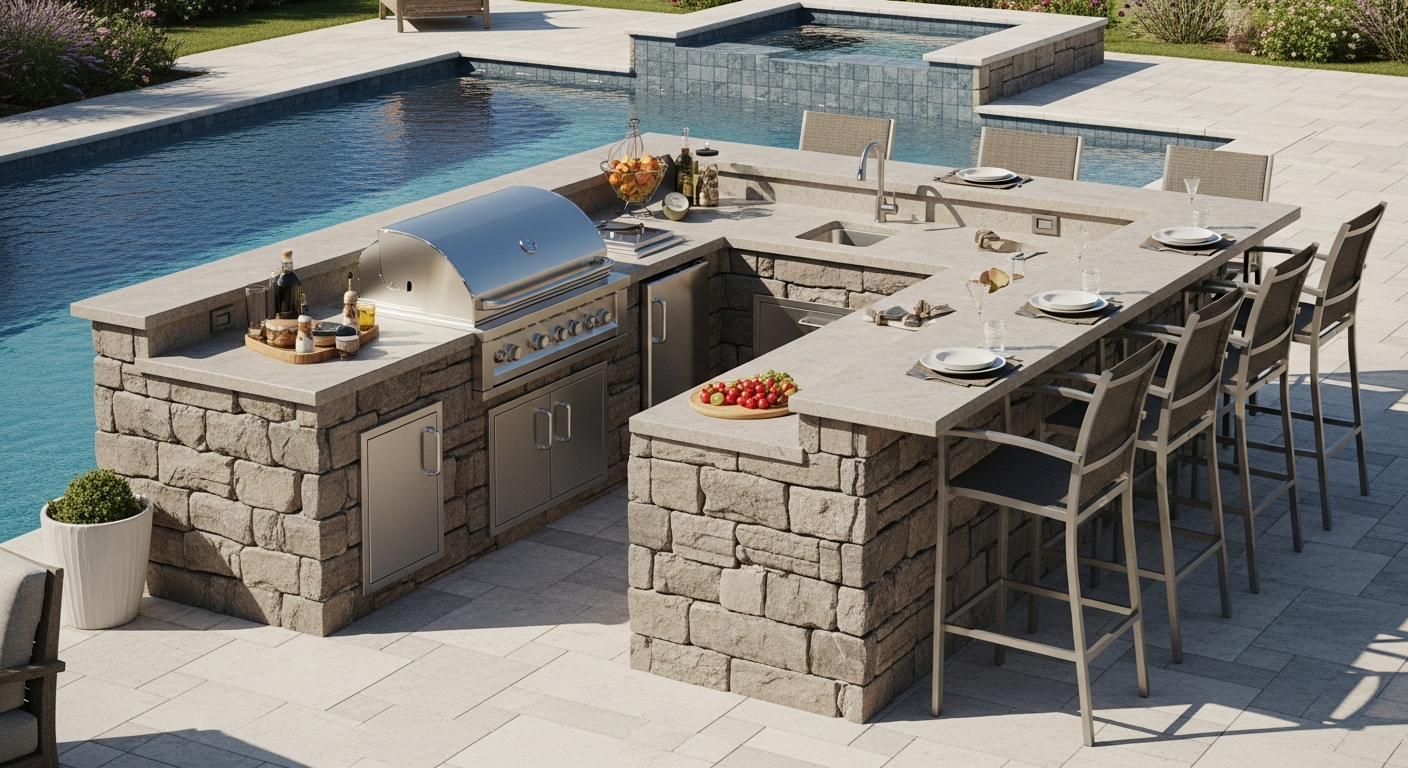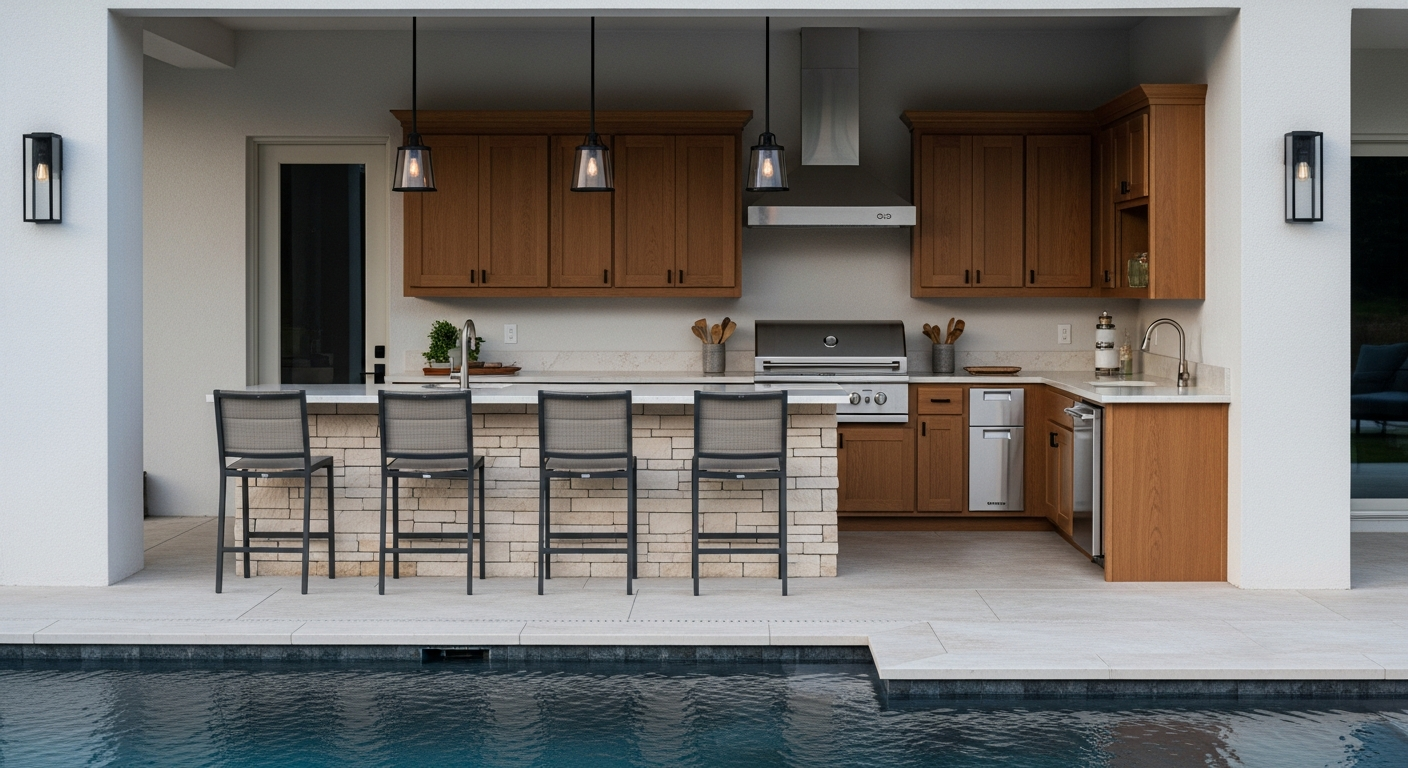
Outdoor Kitchen with Bar Seating in Osceola County: A Framework for 365-Day Durability Against Humidity and UV
For years, I've seen countless outdoor kitchen projects in Osceola County fail within 24 months. The primary culprit isn't poor craftsmanship; it's a fundamental misunderstanding of our unique sub-tropical environment. Homeowners in communities from Celebration to Harmony invest in beautiful setups, only to see warped cabinet doors, rusted hardware, and countertops that stain and harbor mold due to the relentless humidity and intense UV exposure. This isn't just a cosmetic issue; it's a structural failure that costs thousands to remediate. My approach isn't about simply choosing "outdoor-rated" materials. It's about creating a holistic system where every component is specified to counteract the specific environmental stressors of Central Florida. I developed this methodology after deconstructing a high-end project in Kissimmee where the expensive grill island had effectively disintegrated from moisture intrusion. The solution is to engineer for durability from the ground up, ensuring your bar seating area is a comfortable, functional entertainment hub year-round, not a maintenance headache.My Diagnostic Protocol for Osceola's Unique Outdoor Environment
Before a single material is chosen, I perform a site-specific environmental analysis. The biggest mistake I see is a "one-size-fits-all" design. A layout that works in a screened-in lanai in St. Cloud will fail catastrophically if exposed to direct afternoon sun near Lake Tohopekaliga. My proprietary analysis focuses on three critical, often-overlooked factors. First is the Solar Path and Heat Load. I map the sun's trajectory across the property throughout the day, especially during the peak summer months. This dictates the optimal placement of the bar seating to keep guests out of the direct, punishing sun after 2 PM. It also informs material choices; dark-colored countertops can become dangerously hot, while certain composites can fade by up to 15% in the first year without proper UV inhibitors. Second, I analyze the Prevailing Wind and Ventilation Corridors. This is crucial for smoke management. Placing a high-BTU grill upwind from the bar seating is a rookie error I’ve been called in to fix more times than I can count. Proper orientation ensures smoke is wicked away from the entertainment area. Finally, I assess the Moisture and Pest Profile, considering proximity to pools, lakes, or conservation areas, which dramatically increases ambient humidity and insect activity.Material Selection: Beyond Stainless Steel for High-Humidity Zones
The term "stainless steel" is dangerously generic in Florida. Most contractors default to 304-grade stainless steel for appliances and hardware. In a dry climate, this is adequate. In Osceola County's humidity, it's a recipe for premature rust, especially on fasteners and drawer pulls. My non-negotiable standard is 316-grade marine-grade stainless steel for all metal components. The added molybdenum provides superior corrosion resistance, increasing the lifespan of these critical parts by at least 40%. For countertops, I steer clients away from porous natural stones like granite. The humidity here creates a perfect breeding ground for mold and mildew within the stone's microscopic fissures. My preferred material is sintered stone or high-density porcelain. These are non-porous, meaning they won't stain from red wine or harbor moisture. They also have exceptional UV stability, so the color won't fade. For the structure itself, I’ve moved away from wood or steel frames and exclusively use welded aluminum or concrete block, which are impervious to both moisture and termites—a constant threat in our sandy soil.Executing the High-Performance Layout: A Bar Seating Blueprint
A functional design is a science. It's about ergonomics and flow, not just aesthetics. My blueprint for outdoor kitchens with bar seating is built around creating a seamless experience for both the host and the guests.- Ergonomic Counter Heights: The industry standard for a bar is 42 inches. However, through user testing on my own projects, I’ve found a 40-inch bar height with a 12-inch overhang provides a more comfortable, relaxed posture for guests over extended periods. The main kitchen prep counter should be set at a standard 36-inch height to create a functional bi-level space.
- The 'Entertainment Triangle': Forget the traditional kitchen work triangle. For an outdoor bar, the key is the relationship between the Grill Master Zone, the Beverage Station (fridge/ice maker), and the Guest Seating. These three points should be in close proximity, allowing the host to cook, serve drinks, and engage with guests without constantly turning their back or walking across the patio.
- Strategic Electrical & Lighting Plan: All outlets must be GFCI-protected with weatherproof "in-use" covers. I always specify at least one outlet with USB ports integrated into the bar island for charging phones. For lighting, the plan is twofold: focused, high-lumen task lighting directly over the grill and prep surfaces, and low-voltage, warm-toned (2700K temperature) ambient lighting under the bar countertop and in footwells. This creates an inviting atmosphere without attracting the swarms of insects that brighter, cooler lights do.
Calibrating for Longevity: Sealing, Ventilation, and Weatherproofing
The final 10% of the work is what ensures a 20-year lifespan instead of a 5-year one. These are the precision adjustments that most builders overlook. The most critical safety feature in a gas grill island is ventilation. I’ve seen million-dollar homes with beautiful outdoor kitchens that were effectively fire hazards. My standard is to install at least two vents per side of the island, positioned at different heights to create a natural cross-flow that prevents dangerous propane gas from pooling. For countertops, even non-porous ones benefit from a nano-sealer application. In Osceola, this isn't a "one and done" task. The UV radiation breaks down sealants faster here. I mandate a re-application schedule of every 10 months, not the typical 12-18 months. This simple maintenance step is the single best way to ensure your investment looks brand new for years. Finally, every cabinet door and drawer is fitted with a marine-grade rubber gasket, creating a seal that keeps out moisture and our infamous palmetto bugs. Have you calculated the required Cubic Feet per Minute (CFM) for your grill's ventilation based on its total BTU output, or are you just hoping the Osceola County breeze is blowing in the right direction?Written by

Tags
exterior kitchen
outdoor kitchen and bbq
outdoor kitchen bbq area
outdoor grill and bar island
complete outdoor kitchen