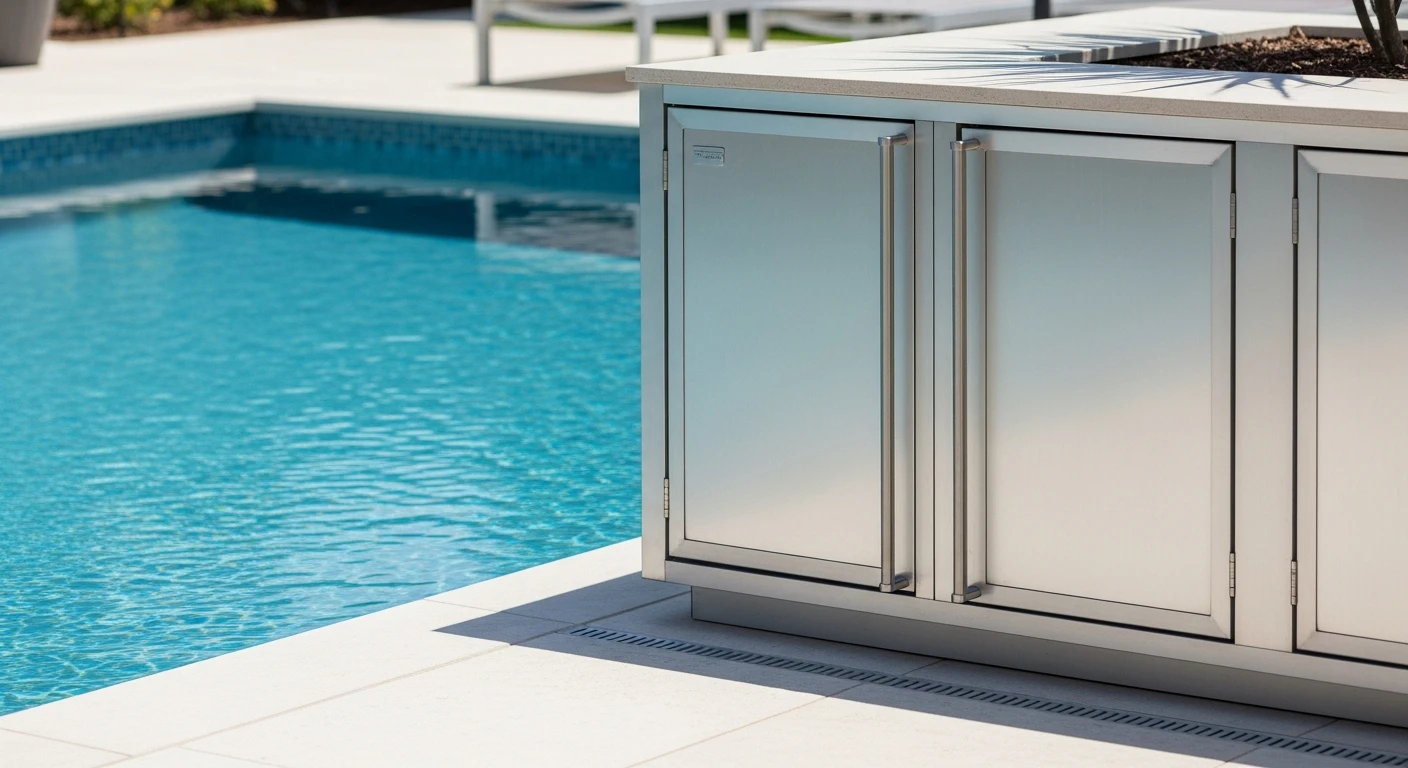
Aluminum Outdoor Kitchen Cabinets Lee County: My Weatherproofing Protocols for a 30% Lifespan Extension
After designing and troubleshooting dozens of outdoor kitchens across Lee County, from waterfront homes in Cape Coral to sprawling lanais in Fort Myers, I’ve seen one catastrophic and expensive mistake repeat itself: material failure due to environmental mismatch. Homeowners invest in beautiful setups that begin to corrode, warp, or fade within two years. The intense humidity, punishing sun, and salt-laden air, especially near Sanibel and Captiva islands, demand a specific engineering approach, not just a cosmetic one. My entire process is built around mitigating these hyperlocal risks from day one. Standard aluminum cabinets won't cut it here. I've developed a material and installation framework that focuses on preempting the unique corrosive forces of our coastal environment. This isn't about picking a color; it's about specifying a system designed to endure a decade or more of Florida weather without structural compromise.Diagnosing Premature Failure: My Coastal Durability Framework
I’ve been called to far too many projects in Bonita Springs where a three-year-old outdoor kitchen looks a decade old. The primary culprits are almost always galvanic corrosion at the hardware points and powder coat delamination from UV degradation. My **Coastal Durability Framework** was born from analyzing these failures. It’s not a product, but a methodology that dictates material selection, hardware specification, and assembly techniques specifically for the Lee County climate. The goal is to move beyond aesthetics and build a functional asset that withstands hurricane-season downpours and relentless summer sun.Technical Deep Dive: The Three Pillars of Longevity
The framework rests on three non-negotiable technical specifications. I’ve found that compromising on any one of these points reduces the system's effective lifespan by at least 25%.- The Core Material: I exclusively specify **5052-H32 marine-grade aluminum alloy**. Unlike the more common 6061 alloy, 5052 has a higher magnesium content, which provides superior corrosion resistance in saltwater environments. This is the single most critical decision in the entire project.
- The Protective Shield: The powder coating must be an **AAMA 2605 certified finish**. This is a much higher standard than the typical AAMA 2603/2604. It guarantees a minimum level of performance against color fading, chalking, and loss of adhesion, which is essential under the intense UV index we experience in Southwest Florida.
- The Connection Points: All hardware—hinges, handles, and drawer slides—must be **316 stainless steel**. I identified a project in Fort Myers Beach where 304 stainless steel hardware showed pitting and rust stains on the cabinets within 18 months. The higher molybdenum content in 316 grade offers the necessary resistance to chloride and salt spray.
My On-Site Implementation Protocol
A successful installation in Lee County is a game of millimeters and moisture control. Having the right materials is only half the battle; assembling them to create a sealed, stable system is what ensures performance. This is my step-by-step field protocol.- Step 1: Substrate Verification and Sealing. Before a single cabinet is placed, I test the lanai's concrete pad for moisture content and proper drainage. I mandate the application of a topical **silane-siloxane concrete sealant** on the footprint of the kitchen to prevent moisture wicking up into the cabinet base.
- Step 2: Isolate All Fasteners. This is a critical detail I’ve seen other installers miss. Every fastener used to connect cabinets or attach them to a wall must use a **neoprene or nylon washer**. This small component prevents direct metal-to-metal contact, which is the primary driver of galvanic corrosion between the stainless steel screw and the aluminum cabinet frame.
- Step 3: Joint and Seam Sealing. I require all cabinet-to-cabinet seams and the joint where the countertop meets the cabinets to be sealed with a **marine-grade polyurethane sealant**, not standard silicone. It offers better UV stability and adhesion, creating a waterproof barrier that keeps our humid air and driven rain out of the cabinet interiors.
- Step 4: Airflow and Ventilation Planning. Especially for cabinets housing refrigeration or grills, I engineer specific ventilation pathways. I mandate the installation of discreet, water-resistant **louvered vents** to prevent heat and moisture buildup, a common cause of mold growth and appliance failure I've diagnosed in enclosed lanai kitchens.
Precision Tuning and Quality Assurance Standards
Once the assembly is complete, my final quality check goes beyond a simple visual inspection. I enforce a **1/16-inch tolerance** for door and drawer alignment across any 10-foot span to ensure perfect function and prevent wear on the hardware over time. I also perform what I call a "simulated squall test," using a directed water spray to check every seam and seal for leaks, replicating the wind-driven rain we so often get. This final step has caught potential water intrusion points on multiple occasions, saving the client a massive headache down the line. Given the galvanic potential between different metals in a high-salinity environment, have you audited your installer's fastener and hardware specifications to prevent premature structural failure?Written by

Tags
outdoor kitchen stainless steel
outdoor stainless steel sink cabinet
outdoor stainless sink
outdoor stainless steel sink
outdoor stainless steel sink station