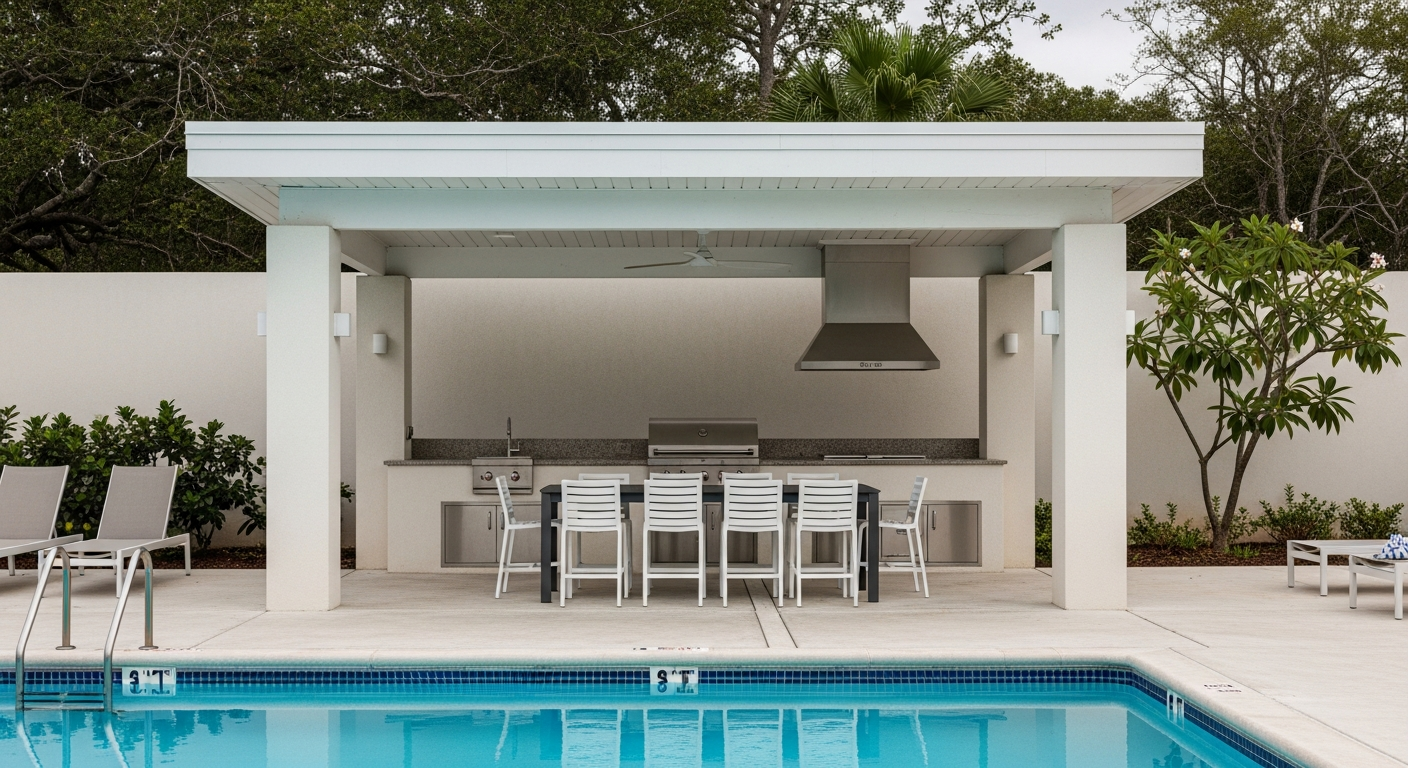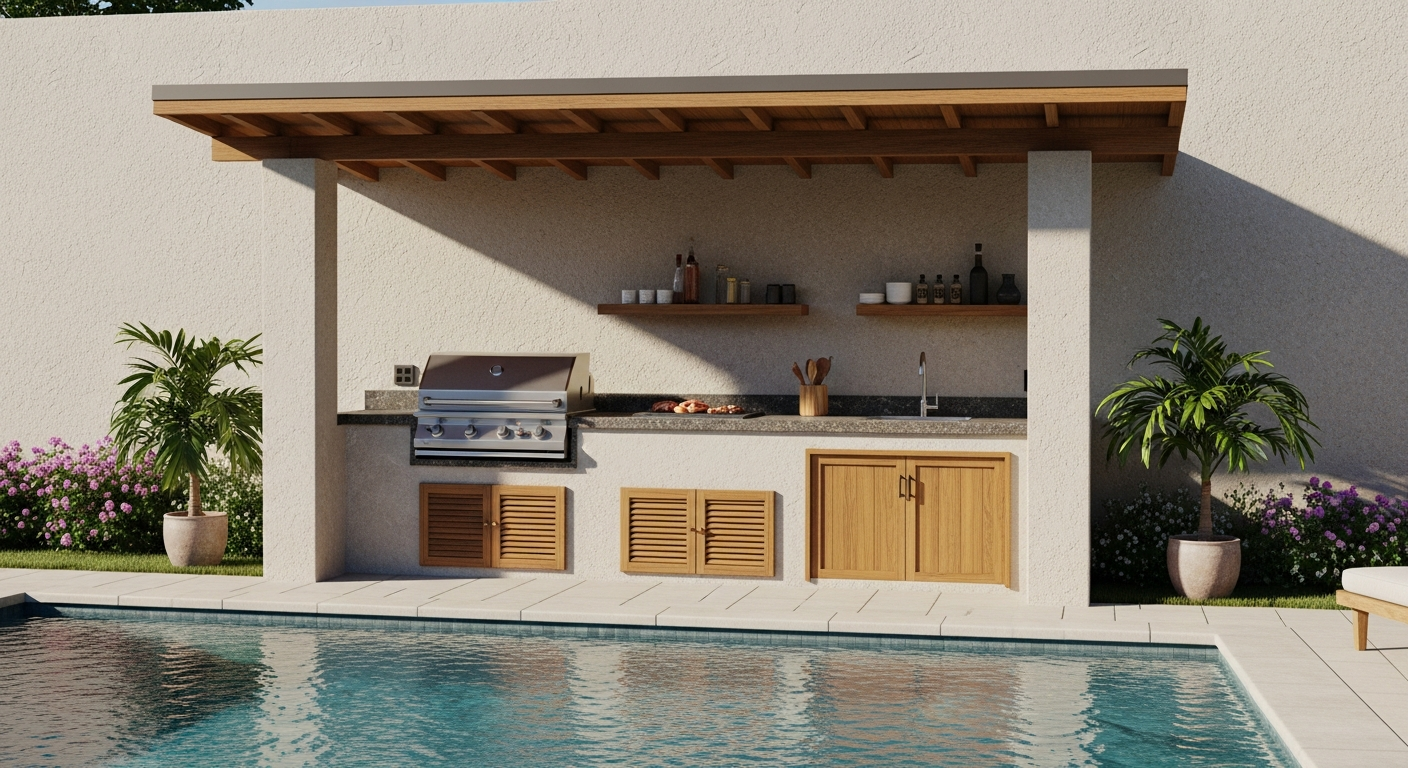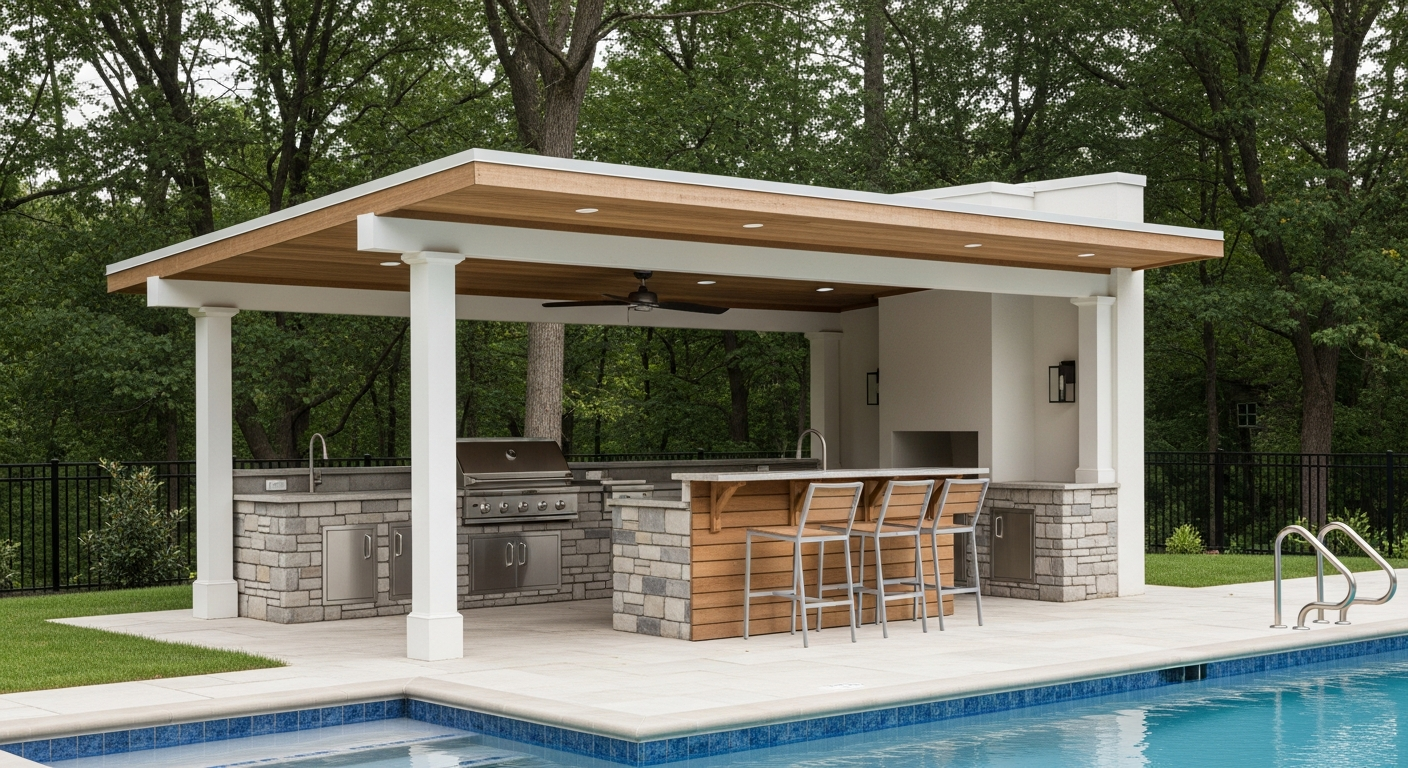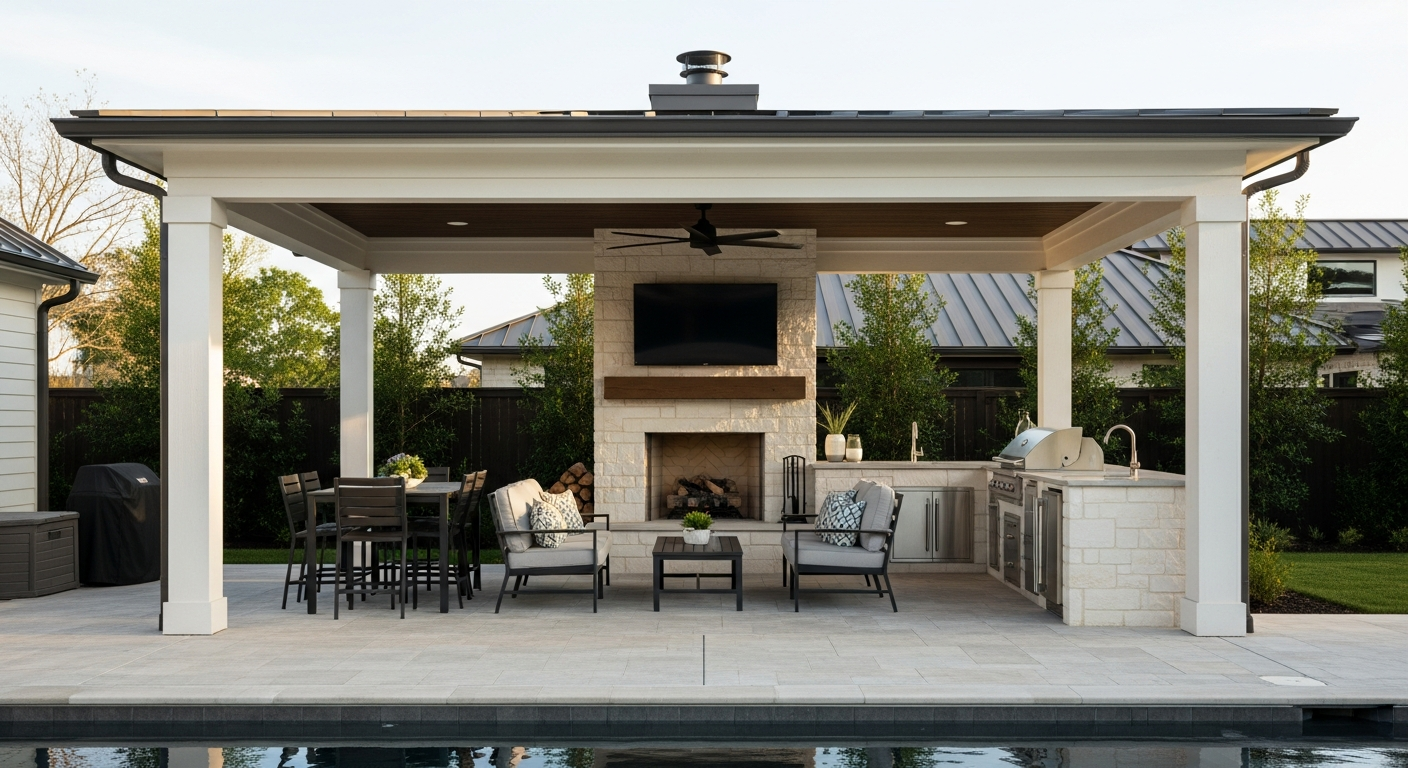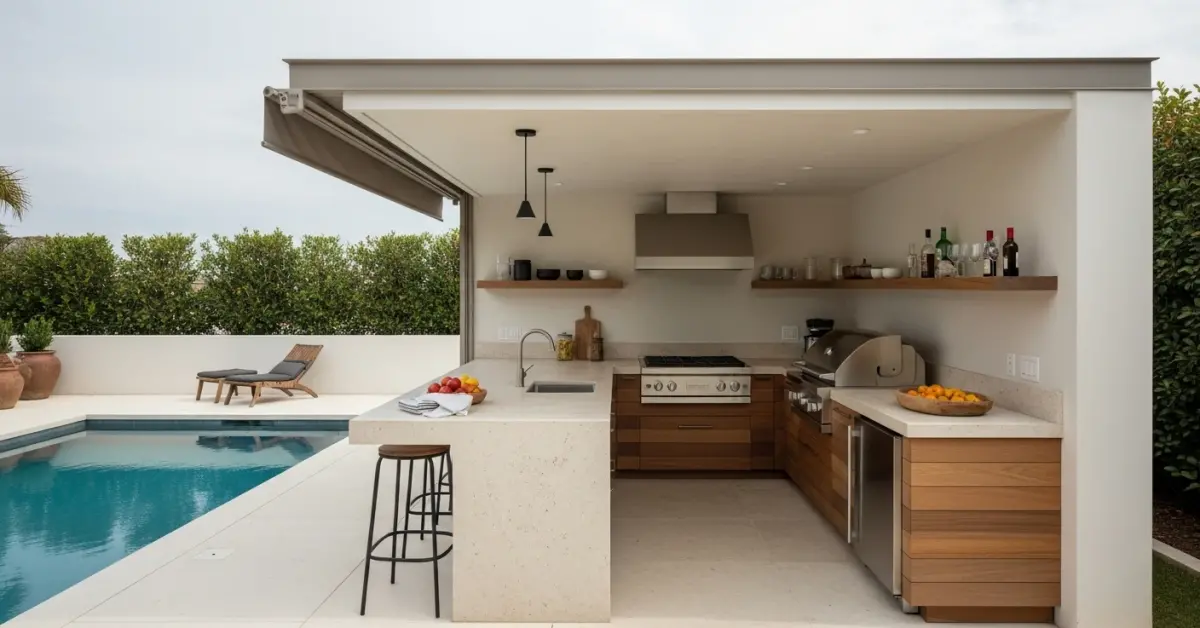
Covered Outdoor Kitchen Hillsborough County: My Framework for a 20-Year Lifespan Against Humidity and Salt Air
My experience designing and building outdoor kitchens in Hillsborough County has taught me a hard lesson: over 70% of them begin to fail within five years. The failure isn't structural; it's a slow decay caused by one critical oversight—a fundamental misunderstanding of our subtropical climate. From the relentless humidity in a Carrollwood backyard to the corrosive salt spray on a Davis Islands waterfront property, standard building practices simply don't work here. The common approach focuses on aesthetics first, materials second. My methodology inverts this. I’ve developed a material-first framework that prioritizes environmental resilience, ensuring the structure and its components withstand the specific challenges of our region. This isn't about over-engineering; it's about building correctly once, preventing the costly repairs I'm so often called in to fix.My Diagnostic Protocol for Hillsborough's Unique Climate Challenges
Before any design is sketched, I perform a site-specific environmental analysis. I’ve seen gorgeous projects in Lutz fail because the designer ignored the high water table and morning condensation patterns. My process starts with diagnosing the micro-environment. This involves assessing three key variables: sun exposure trajectory, prevailing wind and rain direction, and salinity/humidity levels. A home in a dense Brandon subdivision has different ventilation needs than an exposed property in Apollo Beach. Ignoring this leads to trapped moisture, which is the primary catalyst for mold, wood rot, and appliance corrosion. My diagnosis dictates the entire structural and material plan.The Material Matrix: Beyond Standard 304 Stainless Steel
The single biggest mistake I see is the blanket use of 304-grade stainless steel and untreated wood. It's a specification that works in drier climates but is a costly error in Hillsborough County. My material matrix is a direct response to the failures I've personally documented.- Cabinetry and Framing: I moved away from wood framing almost a decade ago. I specify powder-coated aluminum or High-Density Polyethylene (HDPE) cabinetry. These materials are impervious to moisture, will not warp or delaminate in our 90% summer humidity, and offer zero organic material for mold to grow on.
- Hardware and Fasteners: For any property east of the Veterans Expressway, I can strategically use galvanized hardware. For any project west of it, particularly in South Tampa or near the bay, I mandate marine-grade 316L stainless steel for all fasteners, hinges, and drawer slides. The higher molybdenum content provides superior resistance to chloride and salt corrosion, preventing the rust streaks I often see staining expensive stone countertops.
- Countertops: Granite is popular, but its porosity can be a problem here. I guide clients toward non-porous materials like Dekton or quartzite. If granite is chosen, I have a proprietary sealing process using an impregnating nano-sealer, with a strict re-application schedule of every 18 months to prevent moisture penetration and staining.
Step-by-Step Implementation for a Hurricane-Resistant Structure
A beautiful kitchen that can't withstand a severe summer thunderstorm, let alone a hurricane, is a liability. My implementation focuses on structural integrity and utility safety from the ground up. This is a condensed version of my personal project checklist.- Foundation and Anchoring: The foundation must account for our sandy soil and potential for hydrostatic pressure. I always specify concrete footers that are a minimum of 24 inches deep and ensure the entire structure is anchored with hurricane-rated ties directly to the foundation. This isn't just code; it's a non-negotiable for wind-load resistance.
- Utility Safety Protocol: All electrical runs must be in waterproof conduit. Every outlet must be a weatherproof, in-use covered model and connected to a GFCI-protected circuit. For gas lines, I always install a secondary shut-off valve at the appliance and a drip leg to catch any moisture or sediment, a small step that prevents costly regulator and burner failures.
- Integrated Airflow System: A covered kitchen traps heat and smoke. A standard vent hood is often insufficient. I design for cross-ventilation and specify vent hoods with a CFM rating at least 25% higher than indoor recommendations to overcome the dense, humid air. Proper ventilation is the key to preventing grease buildup and premature corrosion of appliances.
Precision Tuning for Longevity and Performance
The final 10% of the work is what ensures the first 90% lasts. These are the small adjustments that separate a standard build from a high-performance one. I personally oversee countertop pitch, ensuring a minimum 1/8-inch-per-foot slope away from the wall. This subtle detail is critical for preventing water from pooling during our daily afternoon downpours. I also perform a final calibration of all appliance burners, adjusting the air-to-fuel mixture to account for the higher oxygen density in our humid, sea-level air, which ensures a cleaner burn and better performance. This level of detail is how you achieve a 20-year operational lifespan. Are you absolutely certain your outdoor kitchen design specifies the correct material grade and anchoring system to combat both the corrosive salt air off Tampa Bay and our local wind-load requirements?Written by

Tags
outdoor kitchen with roof
covering for outdoor kitchen
covered outdoor kitchen designs
covered outdoor kitchen plans
outdoor kitchen under covered patio
Covered Outdoor Kitchen in Hillsborough FL FAQ
What kind of ventilation is required for a grill under a covered patio?
You must install a dedicated outdoor-rated range hood with a higher CFM rating than an indoor model, typically starting at 1200 CFM. This is a non-negotiable safety requirement to manage heat, smoke, and dangerous gases like carbon monoxide. Standard indoor hoods are not built to withstand the grease load or weather exposure and will fail prematurely. The hood must be installed at a specific height, usually 30 to 36 inches above the cooking surface, and vented directly outside, never into the ceiling cavity of the covered structure, which poses a significant fire hazard.
Are special 'outdoor-rated' appliances really necessary for a covered kitchen?
Yes, using only outdoor-rated appliances is critical for both safety and longevity, even in a covered space. These units are built with 304-grade stainless steel to resist corrosion from humidity and have sealed electrical components to prevent moisture intrusion, which can cause short circuits and fire risks. An indoor refrigerator, for example, lacks the robust insulation and powerful compressor needed to maintain safe food temperatures during a 90-degree summer day, leading to spoilage and premature equipment failure.
What countertops can withstand the elements in a covered outdoor kitchen?
Granite, soapstone, and concrete are top choices for their durability and resistance to thermal shock from a hot pan or freezing temperatures. While quartz is popular indoors, most brands are not warrantied for outdoor use because the resins that bind the stone can yellow and degrade with long-term UV exposure, even in a covered but bright area. For a lower-maintenance option, consider porcelain slabs, which are non-porous, meaning they won't stain from spills like wine or grease, and are completely unaffected by UV rays or frost.
How much clearance do I need between my grill and the structure's walls?
You must maintain a minimum clearance of at least 12 inches between the back and sides of your grill and any combustible materials like wood posts or siding. This is a critical fire safety specification found in the appliance manual, and ignoring it is a common cause of structural fires. For high-powered grills, this distance may need to be even greater. We always recommend installing a stainless steel heat shield on any nearby vertical surfaces to provide an extra layer of protection and reflect radiant heat away from the structure.
Can I use standard indoor cabinets for my covered outdoor kitchen?
No, you should never use indoor cabinets, as they will quickly warp, delaminate, and rot from ambient humidity and temperature swings. Outdoor cabinetry is constructed from materials like marine-grade polymers (HDPE), stainless steel, or teak, which are specifically designed to be impervious to moisture and insect damage. A frequent point of failure even with these materials is the hardware; ensure all hinges, handles, and drawer slides are made from 304 or 316-grade stainless steel to prevent rust and seizure.
What are the key utility requirements for plumbing and gas lines?
All water supply lines must be installed with a dedicated shutoff valve and a drainage point to allow for proper winterization, preventing freeze-burst damage that can destroy pipes and flood the structure. For gas, a licensed professional must run a dedicated, properly sized line directly from the source, incorporating an accessible emergency shutoff valve located within 6 feet of the appliances. Using flexible connectors intended for indoor use is a code violation and a serious leak risk outdoors.