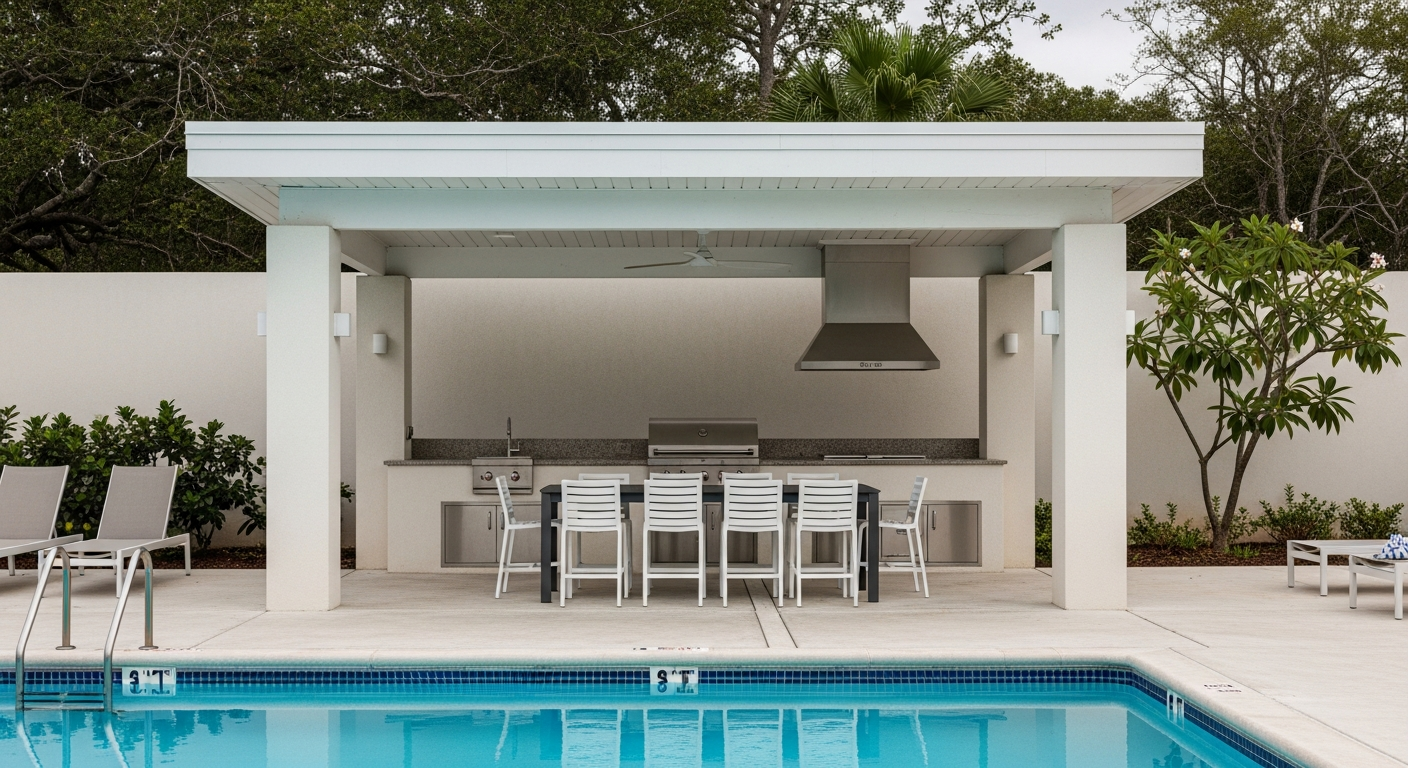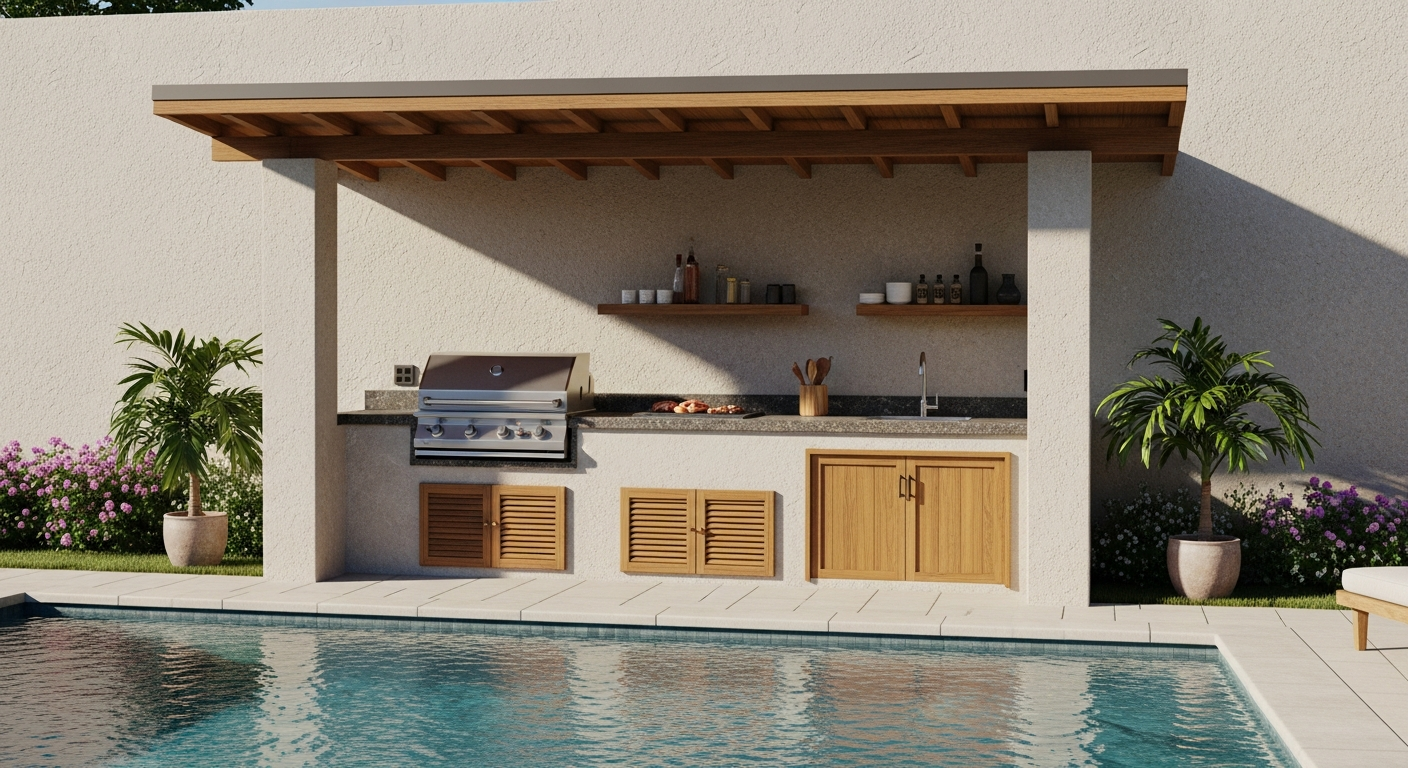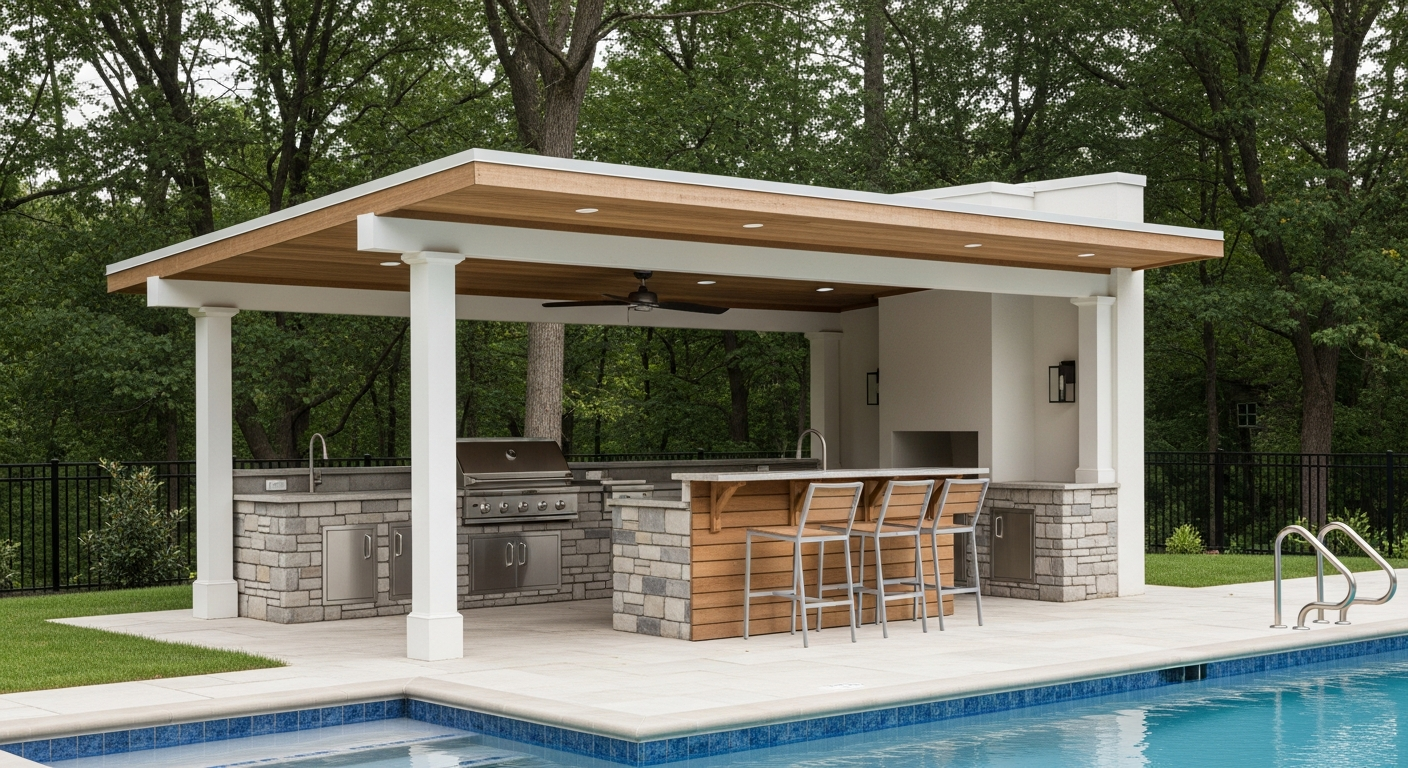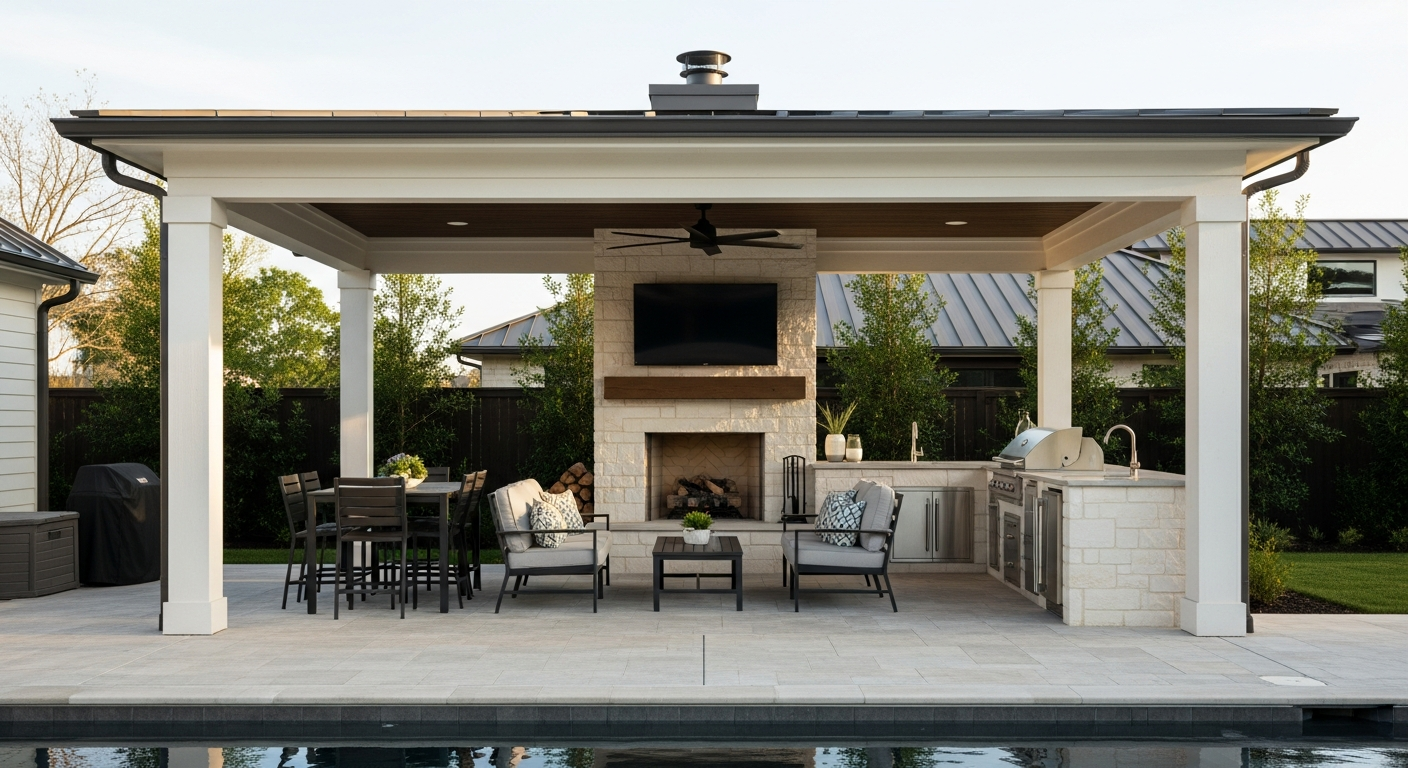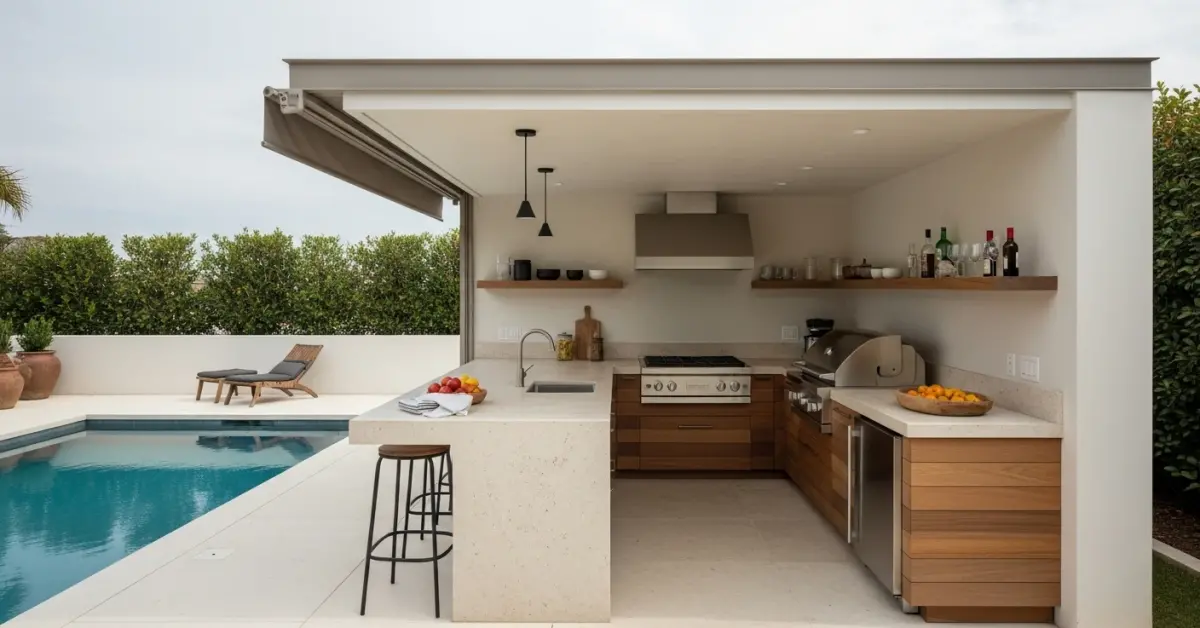
Covered Outdoor Kitchen Design: My Protocol for 316L Stainless and Hurricane-Rated Framing in Lee County
Designing a covered outdoor kitchen in Lee County isn't about aesthetics alone; it's a battle against two relentless forces: salt-air corrosion and extreme humidity. My entire approach is built on a single observation from a high-end project in Cape Coral: a gorgeous, six-figure outdoor kitchen showed significant rust staining and cabinet warping in under 18 months because the builder used standard 304-grade stainless steel and wood-composite cabinetry. That costly mistake taught me that longevity here is dictated by material science, not just craftsmanship. This is why I abandoned "builder-grade" specifications entirely. The core of my projects, from Fort Myers Beach to Sanibel Island, is a material and structural protocol designed to prevent premature failure. It's about ensuring your investment withstands not just the afternoon sun, but the corrosive sea breeze and the intense moisture that defines our local climate, ultimately doubling the functional lifespan of the installation.My Salt-Air Corrosion Audit: The Failure Point of 90% of Coastal Kitchens
Before I even sketch a layout, I perform what I call a **Salt-Air Corrosion Audit**. It’s a methodology I developed after seeing too many projects fail. Most designers focus on the "work triangle," but in our environment, the primary concern is the "exposure triangle": proximity to saltwater, direct sun hours, and vulnerability to wind-driven rain. A home on a canal in Cape Coral has a fundamentally different material need than a more inland property in Estero. My audit quantifies this risk to create a non-negotiable materials list. It’s the difference between a kitchen that looks great for a year and one that performs for a decade.Material Specification: Beyond Builder-Grade
The audit directly informs the material selection. Standard choices simply don't work here.- Stainless Steel Components: I exclusively specify 316L marine-grade stainless steel for all appliances, access doors, and hardware. The "L" signifies low carbon, which provides superior resistance to weld decay and sensitization. The common 304-grade stainless steel will develop unsightly "tea staining" and pitting when exposed to the salt spray we get, even miles from the coast. -
- Cabinetry Construction: Wood or wood composites are a non-starter due to humidity-induced swelling and mold. My standard is High-Density Polyethylene (HDPE) polymer board. It's impervious to water, will never rot or delaminate, and is UV-stabilized to prevent fading from the intense Florida sun. For clients wanting a different aesthetic, powder-coated aluminum is the only other viable option. -
- Countertop Surfaces: While granite is popular, its porosity makes it susceptible to staining from mildew in our damp climate. I guide my clients toward sintered stone or high-density porcelain slabs. These materials are non-porous, meaning they offer zero purchase for mold growth and are completely UV-stable, so their color won't bleach out over time.
The Fort Myers Framework: Structural Integrity and Ventilation Protocol
A covered kitchen structure must be engineered for hurricane season. My framework goes beyond minimum code requirements, treating the structure as a permanent home addition. This is particularly critical for homes with large lanais or pool enclosures where wind forces can be amplified.- Foundation and Anchoring: We begin with deep-set concrete footings reinforced with rebar, far exceeding the depth required for a simple deck. All structural posts are secured with heavy-gauge J-bolt anchors embedded directly into the concrete, not surface-mounted expansion bolts which can fail under shear stress.
- Structural Framing: I use 6061-T6 structural grade aluminum for the entire frame. It’s lightweight, incredibly strong, and features a factory-applied powder coat that provides a primary barrier against corrosion. This system is vastly superior to pressure-treated wood, which will eventually warp and rot in our humidity.
- Ventilation System Integration: A covered roof traps grill smoke and heat, a major comfort and safety issue. My protocol requires a commercial-grade vent hood with a minimum rating of 1200 CFM (Cubic Feet per Minute). Crucially, I insist on baffle filters, not mesh, as they are more effective at capturing grease and are far more durable in a humid environment.
- Electrical Safety: All electrical runs are housed in conduit, and every single outlet is a weather-resistant GFCI receptacle protected by an "in-use" cover. This isn't just code; it's a critical safety measure in an environment where surfaces are frequently damp.
Post-Installation Commissioning for the Lee County Climate
My job isn't done when the last screw is turned. I conduct a final commissioning process tailored to our local challenges. This includes my proprietary **"Monsoon Test,"** where I use high-pressure water to simulate wind-driven rain, checking for any potential water intrusion points in the roofing, flashing, and around the appliance seals. We also perform a smoke test on the ventilation system to ensure it creates enough negative pressure to capture all emissions, even on a still, humid evening in Bonita Springs. This final quality check ensures the system performs perfectly from day one. Have you calculated the specific vapor-permeance rating needed for your backsplash and grout to prevent moisture buildup and black mold growth behind your grill?Written by

Tags
outdoor kitchen with roof
covering for outdoor kitchen
covered outdoor kitchen designs
covered outdoor kitchen plans
outdoor kitchen under covered patio
Covered Outdoor Kitchen in Lee FL FAQ
What kind of ventilation is required for a grill under a covered patio?
You must install a dedicated outdoor-rated range hood with a higher CFM rating than an indoor model, typically starting at 1200 CFM. This is a non-negotiable safety requirement to manage heat, smoke, and dangerous gases like carbon monoxide. Standard indoor hoods are not built to withstand the grease load or weather exposure and will fail prematurely. The hood must be installed at a specific height, usually 30 to 36 inches above the cooking surface, and vented directly outside, never into the ceiling cavity of the covered structure, which poses a significant fire hazard.
Are special 'outdoor-rated' appliances really necessary for a covered kitchen?
Yes, using only outdoor-rated appliances is critical for both safety and longevity, even in a covered space. These units are built with 304-grade stainless steel to resist corrosion from humidity and have sealed electrical components to prevent moisture intrusion, which can cause short circuits and fire risks. An indoor refrigerator, for example, lacks the robust insulation and powerful compressor needed to maintain safe food temperatures during a 90-degree summer day, leading to spoilage and premature equipment failure.
What countertops can withstand the elements in a covered outdoor kitchen?
Granite, soapstone, and concrete are top choices for their durability and resistance to thermal shock from a hot pan or freezing temperatures. While quartz is popular indoors, most brands are not warrantied for outdoor use because the resins that bind the stone can yellow and degrade with long-term UV exposure, even in a covered but bright area. For a lower-maintenance option, consider porcelain slabs, which are non-porous, meaning they won't stain from spills like wine or grease, and are completely unaffected by UV rays or frost.
How much clearance do I need between my grill and the structure's walls?
You must maintain a minimum clearance of at least 12 inches between the back and sides of your grill and any combustible materials like wood posts or siding. This is a critical fire safety specification found in the appliance manual, and ignoring it is a common cause of structural fires. For high-powered grills, this distance may need to be even greater. We always recommend installing a stainless steel heat shield on any nearby vertical surfaces to provide an extra layer of protection and reflect radiant heat away from the structure.
Can I use standard indoor cabinets for my covered outdoor kitchen?
No, you should never use indoor cabinets, as they will quickly warp, delaminate, and rot from ambient humidity and temperature swings. Outdoor cabinetry is constructed from materials like marine-grade polymers (HDPE), stainless steel, or teak, which are specifically designed to be impervious to moisture and insect damage. A frequent point of failure even with these materials is the hardware; ensure all hinges, handles, and drawer slides are made from 304 or 316-grade stainless steel to prevent rust and seizure.
What are the key utility requirements for plumbing and gas lines?
All water supply lines must be installed with a dedicated shutoff valve and a drainage point to allow for proper winterization, preventing freeze-burst damage that can destroy pipes and flood the structure. For gas, a licensed professional must run a dedicated, properly sized line directly from the source, incorporating an accessible emergency shutoff valve located within 6 feet of the appliances. Using flexible connectors intended for indoor use is a code violation and a serious leak risk outdoors.