Custom Grill Island Construction: A Framework for 30-Year Durability in Lee County's Climate
My experience designing and building custom grill islands across Lee County, from the salt-sprayed canals of Cape Coral to the expansive lanais in Fort Myers, has shown me one undeniable truth: a standard approach guarantees failure here. The combination of intense humidity, UV radiation, and saline air creates a uniquely corrosive environment. I’ve personally been called to replace islands less than five years old that were literally crumbling because the builder used interior-grade materials or, worse, a wood frame. My entire methodology is built to counteract these specific local pressures, ensuring structural integrity that lasts for decades, not just a few seasons.My Diagnostic Protocol for Lee County Outdoor Kitchens
Before any design is sketched, I perform what I call a site-specific environmental assessment. The needs for a waterfront property on Sanibel Island, with direct exposure to salt mist, are fundamentally different from a home in Lehigh Acres, which deals more with intense, sustained heat and humidity. I’ve seen projects fail because this initial step was skipped. A beautiful granite countertop, for example, can become pitted and stained from acid rain and salt if not sealed with the correct marine-grade impregnating sealer, a detail often overlooked. My protocol focuses on three core variables: proximity to saltwater, direct sun exposure hours, and lanai ventilation dynamics. This data directly dictates the material selection and structural requirements, preventing the costly premature failures I'm so often hired to fix.The CMU-Reinforced Core vs. Wood Framing Failure
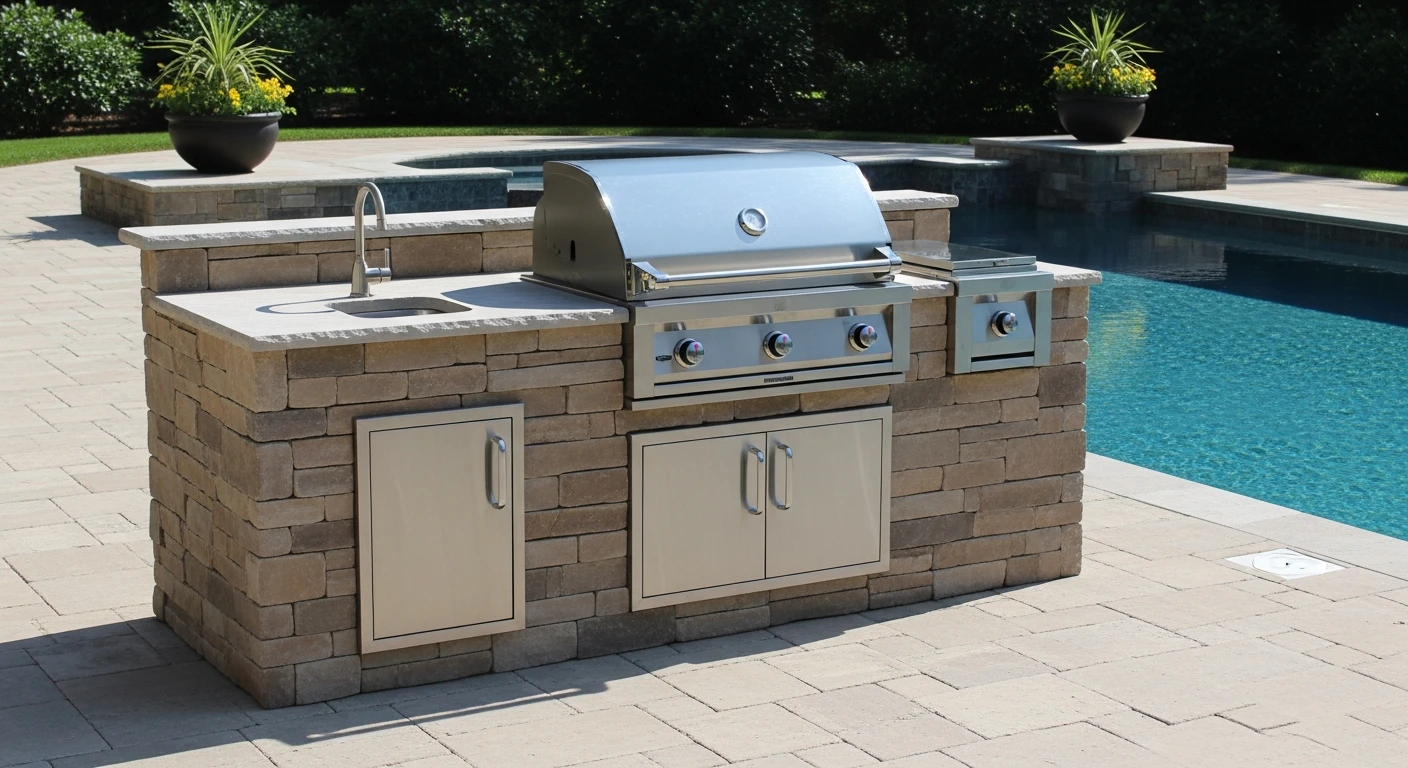
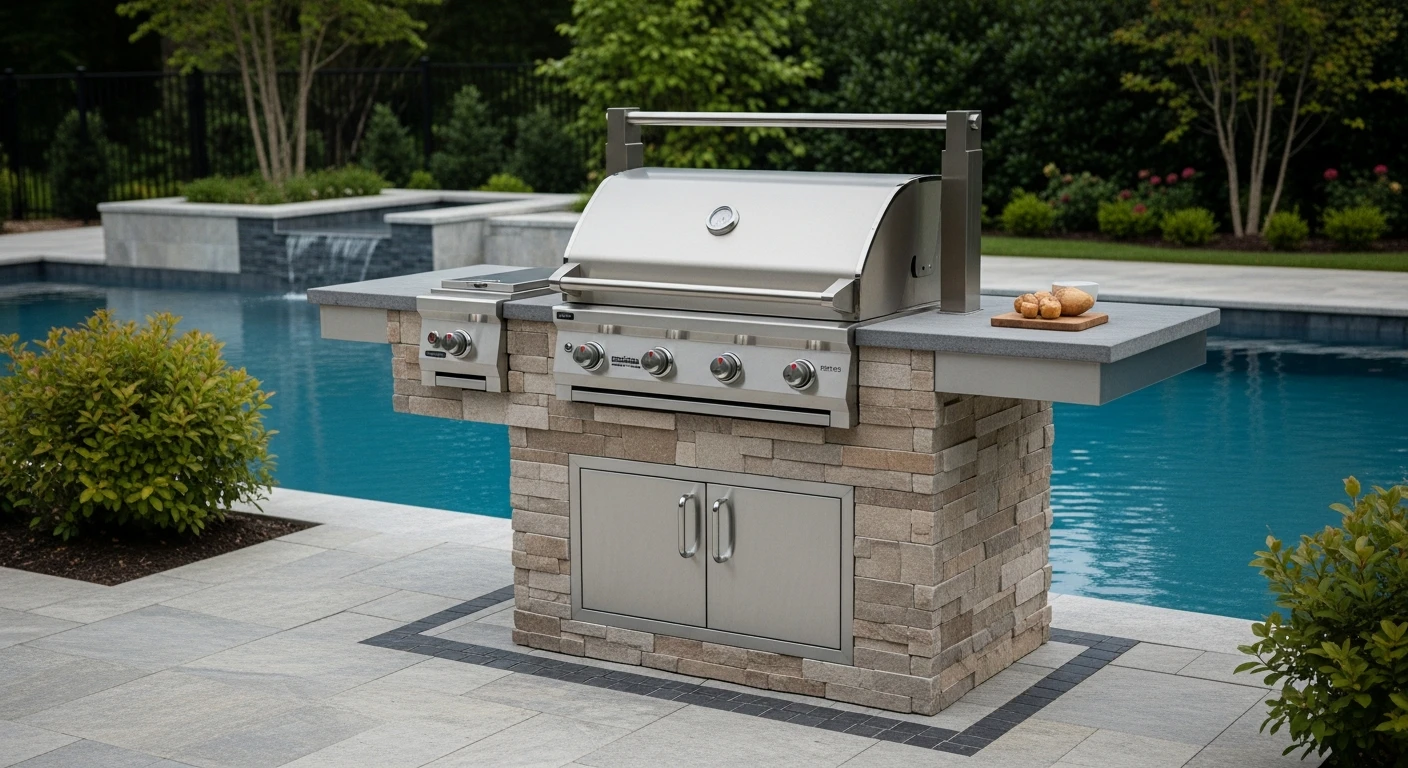
The single most catastrophic error I encounter in Lee County is the use of wood or light-gauge steel framing for the island's core structure. I once dismantled an island in a beautiful Bonita Springs home where the wood frame had completely rotted from moisture wicking up from the paver patio, causing the entire countertop to sag by two inches. My proprietary method, the CMU-Reinforced Core, eliminates this risk entirely. It involves building the island's base with Concrete Masonry Units (CMUs), interlocking them with vertical rebar reinforcement that is tied directly into a monolithic concrete footer. This creates a single, immovable structure that is impervious to moisture, rot, and termites, and provides the necessary mass to remain stable during hurricane-force winds. It’s not the fastest method, but it’s the only one I trust for our local conditions.Step-by-Step Implementation: From Footing to First Sear
Executing a project that withstands the Florida climate requires a meticulous process. I’ve refined my installation workflow over dozens of projects to eliminate common points of failure. This isn’t just about assembly; it's about building a permanent outdoor appliance.- Site Preparation and Footing: I always begin by pouring a 4-inch monolithic concrete slab with rebar to serve as the island's foundation. Placing an island directly on pavers is a mistake; they can shift and settle, compromising the structure.
- CMU Core Construction: The blocks are laid, and the rebar is set. Every second course of block has horizontal reinforcement wire (truss-mesh) to prevent shear cracking. This is a step many competitors skip to save a few dollars.
- Utility Rough-In: All electrical conduits and gas lines are run through the block core *before* the facing is applied. I insist on using schedule 80 PVC for electrical, as the thinner schedule 40 can become brittle under constant UV exposure.
- Ventilation Installation: This is a non-negotiable safety step. I install a minimum of two stainless steel ventilation panels (316L grade for coastal installs) on opposing sides of the cabinet where the gas grill sits. This creates critical cross-flow to prevent dangerous propane gas accumulation.
- Cladding and Countertop: The selected stone or stucco finish is applied over a cement board substrate, never directly onto the block. For countertops, a flexible, UV-stable silicone adhesive is used instead of a rigid mortar, allowing for thermal expansion and contraction without cracking.
- Appliance Installation and Testing: Finally, the grill and components are installed. I perform a full 20-minute gas leak and pressure test before the client ever touches the ignition.
Precision Adjustments and Padrões de Qualidade
The final 10% of the job is what separates a good result from a great one. For countertops, I’ve moved almost exclusively to recommending sintered stone or high-grade quartzite for my Lee County clients. Unlike many popular granites, they are non-porous and will not harbor mold or mildew in our humid climate. Furthermore, their color is baked-in, making them completely UV-stable, so a patio in Estero with all-day sun exposure won't see any fading. Every door and drawer I install is 316L marine-grade stainless steel. The common 304 grade, while cheaper, will invariably show surface rust (tea-staining) within 18 months on a Cape Coral canal property. This level of material specification is the ultimate key to longevity. Have you factored in the typical summer wind patterns on your lanai to determine the optimal placement of your grill's smoke vent, ensuring it doesn't draft back into your sliding glass doors?Written by

Tags
pre made outdoor grill island
custom built bbq islands
custom backyard bbq
custom barbecue islands
custom barbeque islands