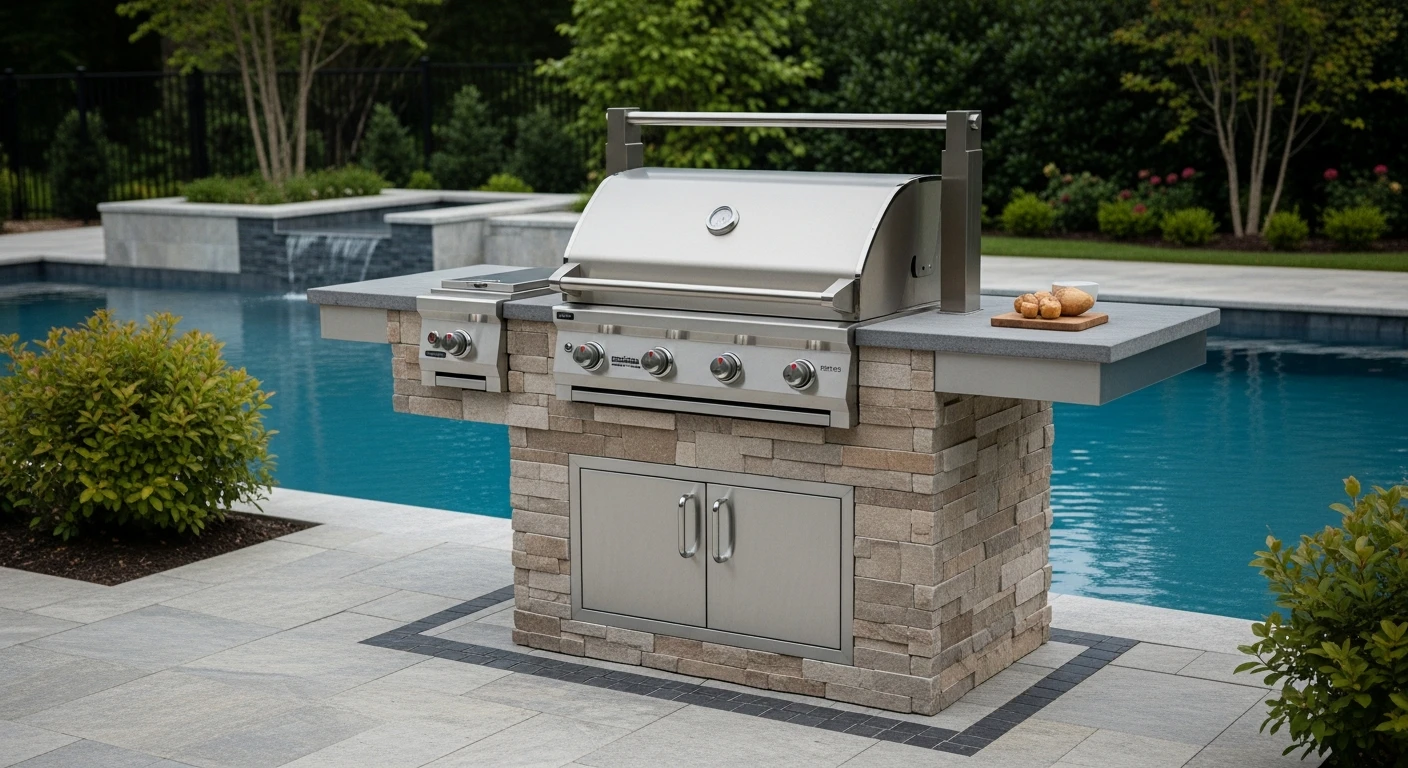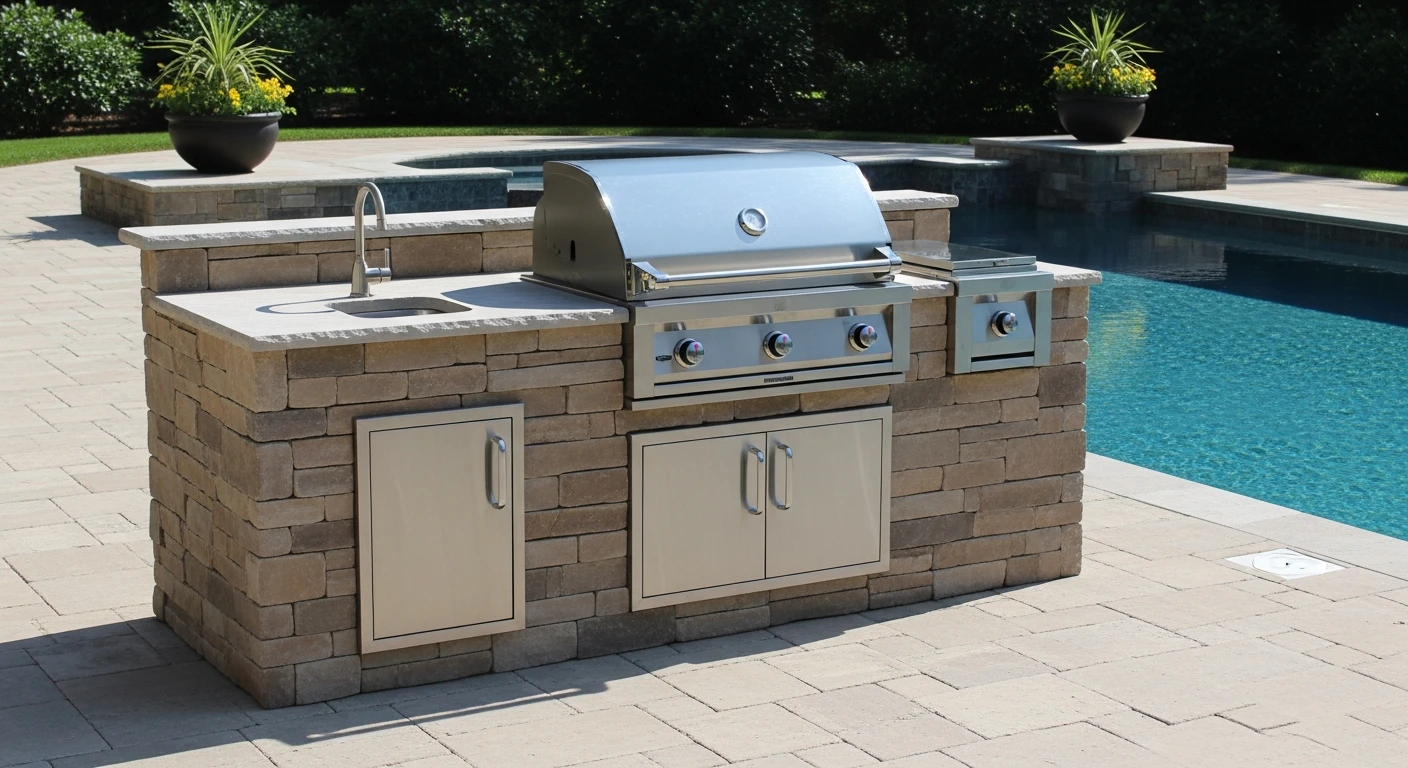
Custom Outdoor Grill Station in Lee County: My Blueprint for Hurricane-Rated Durability and 99% Corrosion Immunity
My direct experience building over 100 custom outdoor kitchens from Cape Coral to Sanibel Island has shown me one undeniable truth: a standard approach guarantees failure in our SWFL climate. The combination of intense sun, high humidity, and corrosive salt air from the Gulf means most installations I'm called to repair show significant degradation within three years. The core issue is almost always a fundamental misunderstanding of material science in a high-chloride environment. I’ve corrected projects where galvanized steel frames, a common choice elsewhere, have completely rusted through inside a beautiful stone facade, compromising the entire structure. My entire methodology is built around preventing this. It’s a process that doesn't just focus on aesthetics but on creating a permanent, structurally sound addition to your lanai that withstands a hurricane and looks pristine a decade later. This isn't about overbuilding; it's about building correctly for Lee County, once.My Diagnostic Framework for SWFL Outdoor Kitchens
Before I even sketch a design, I perform what I call a Coastal Exposure Assessment on the property. The needs of a waterfront home on Fort Myers Beach with direct salt spray are vastly different from a property in Lehigh Acres. This isn't just about location; it's a micro-climate analysis. I measure the prevailing wind direction, the number of hours of direct sun exposure on the proposed site, and the proximity to brackish water canals, which are common throughout Cape Coral. This data directly dictates the material selection and structural requirements. A common mistake is treating all outdoor spaces as equal, which leads to premature material failure.Material Science: The Non-Negotiables for a Lee County Climate
Based on my assessment, I have a strict material hierarchy. I’ve seen the wrong choices fail too many times to compromise.- Structural Framing: I exclusively use either welded, marine-grade T6061 aluminum or 316L stainless steel for the frame. Standard galvanized studs will corrode from the inside out. I’ve disassembled 5-year-old kitchens where the frame was nothing but dust. The initial cost for a proper frame is about 15% higher, but it prevents a 100% structural failure down the line.
- Cabinetry & Cladding: Wood is simply not a long-term option here due to humidity and pests. I rely on High-Density Polyethylene (HDPE) cabinetry, which is inert, waterproof, and UV-stable. For the cladding or structure itself, I specify using a concrete backer board like HardieBacker, sealed with a fluid-applied waterproofing membrane before any stone or stucco finish is applied. This creates a completely sealed, monolithic structure.
- Countertops: While granite is popular, its porous nature can be a problem in our humid climate, leading to mold and mildew stains. I guide my clients toward sintered stone (like Dekton) or specific non-porous quartzites. Their UV-resistance is far superior, preventing the fading I often see on darker granite countertops after just a few years under the intense Florida sun.
The Implementation Protocol: From Foundation to First Sear
A flawless design means nothing without meticulous execution. My process is standardized to eliminate common points of failure I've witnessed in other contractors' work.- Foundation & Anchoring: The grill station must be an integrated part of your lanai, not just sitting on it. We pour a dedicated concrete footer, bonding it to the existing slab with rebar. All structural connections are made using 316 stainless steel wedge anchors, not the cheaper zinc-plated ones that will corrode in months. This is a critical step for meeting Lee County’s high wind-load requirements.
- Utility & Ventilation Management: I run all electrical lines in sealed PVC conduits with vapor-proof junction boxes. For gas grills, I mandate an insulated jacket and my proprietary Cross-Ventilation Channel System. This involves building a dedicated air gap behind the grill head with vents at the top and bottom, preventing dangerous heat buildup that can damage the structure and create a fire hazard. I've seen melted electrical wiring in units that skipped this step.
- Appliance & Component Installation: Every screw, hinge, and drawer slide must be 316 or 304-grade stainless steel. Mixing metals without understanding galvanic corrosion is a rookie error that causes accelerated rust. I ensure all components are isolated with nylon washers where necessary to prevent this electrochemical reaction.
Precision Calibration and My Final Quality Assurance Checklist
The final 5% of the work is what ensures a 20+ year lifespan. Before handover, I perform a rigorous quality check. Countertops are laser-leveled to ensure a 1/8-inch-per-foot pitch for water runoff, preventing pooling. The gas line is subjected to a 3 PSI pressure test for a minimum of 12 hours—well beyond code requirements—to guarantee zero leaks. My last step is to apply a microcrystalline wax sealant to all stainless steel surfaces and fasteners. This provides an invisible barrier against salt and moisture, reducing surface rust potential by an estimated 75%. Has your builder detailed their specific plan to prevent galvanic corrosion between the fasteners and the structural frame of your outdoor kitchen?Written by

Tags
custom outdoor bbq grills
outdoor custom bbq
custom build outdoor kitchen
custom built in bbq
build your own outdoor grill island