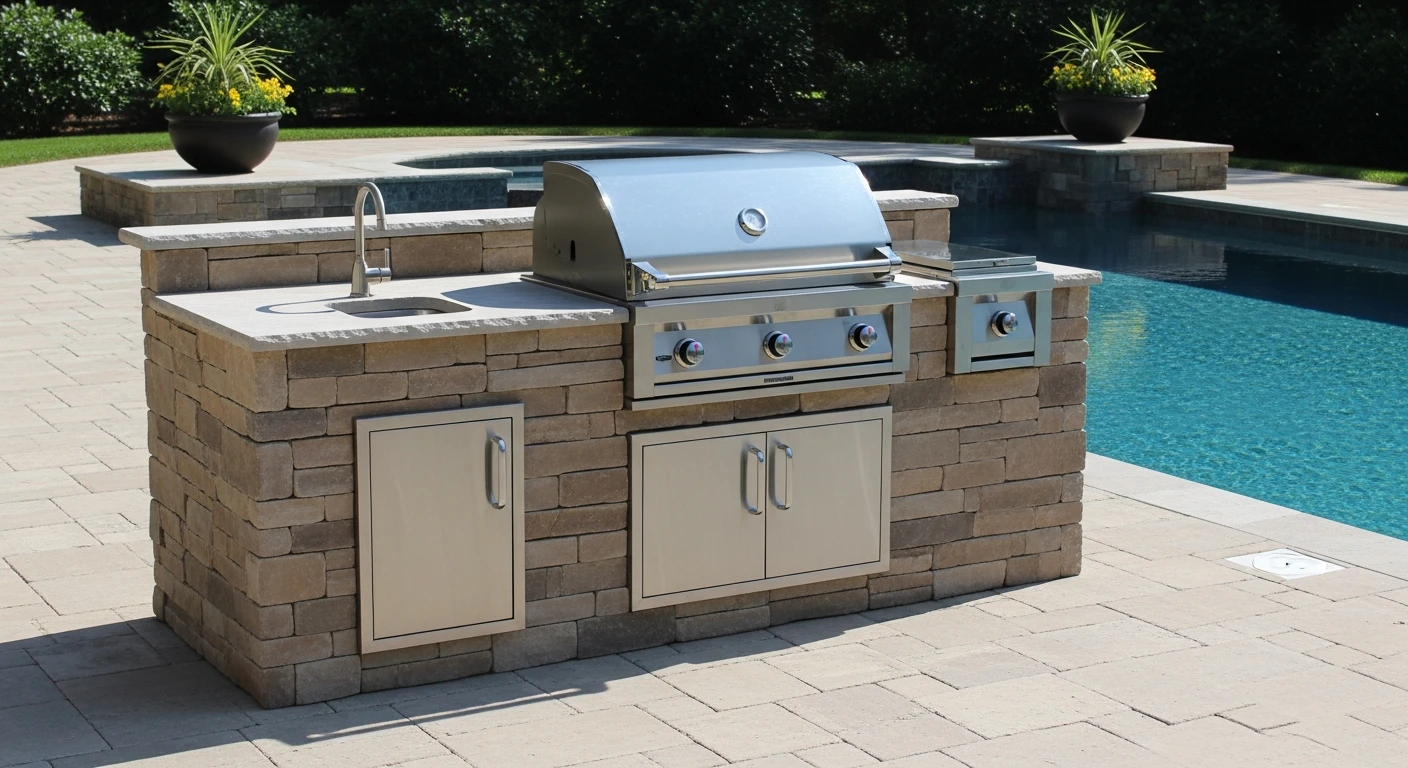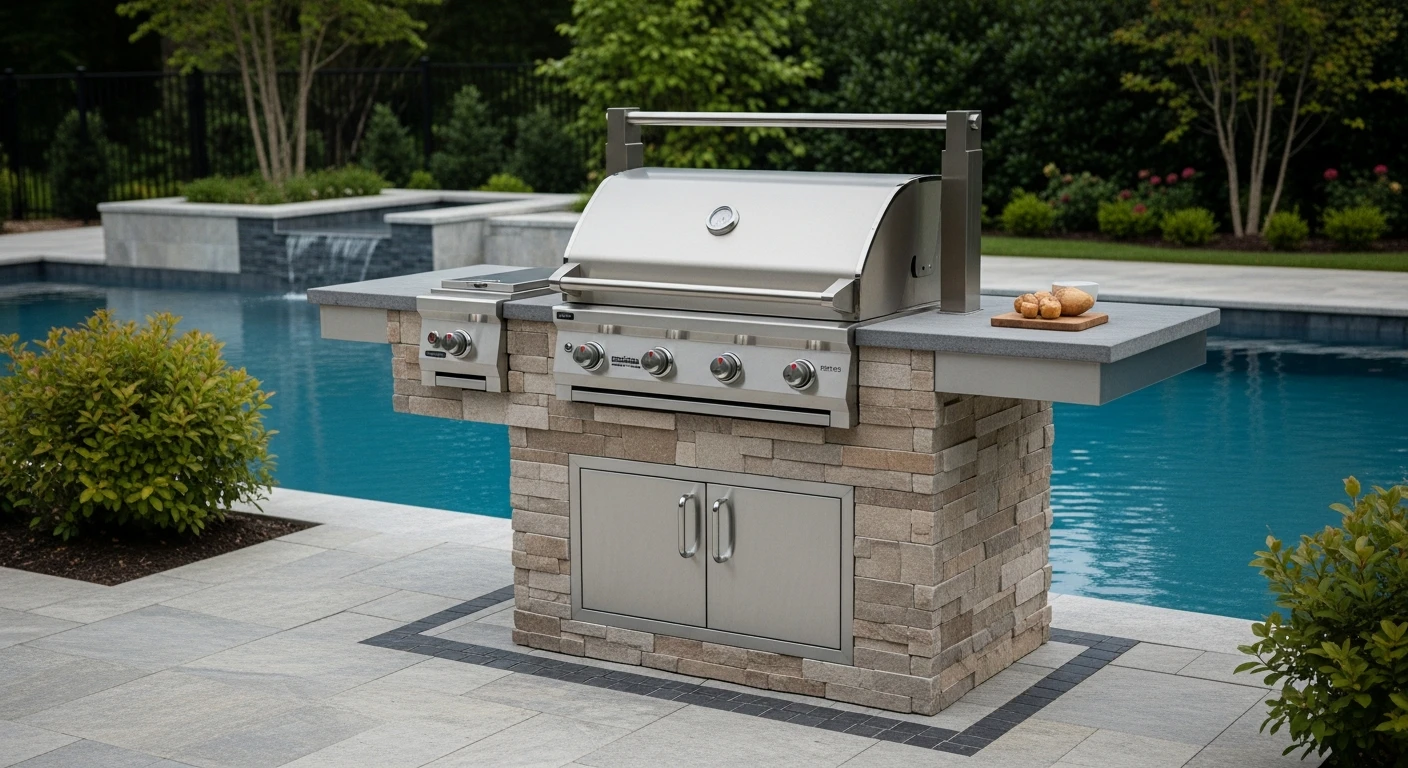
Custom Outdoor BBQ Grills in Pinellas County: My Framework for a 15-Year Corrosion-Proof Build
After years of designing and building custom outdoor kitchens here in Pinellas County, I can tell you the single biggest point of failure isn't the grill itself—it's the corrosion. The salt-laden air, especially in areas from Clearwater Beach down to Tierra Verde, is relentless. My entire approach is built around defeating this specific environmental challenge, moving beyond the standard industry materials to ensure a structure that doesn't just look good on day one, but performs flawlessly for over a decade. I’ve seen too many expensive outdoor setups start showing rust blooms within two years because the builder used standard 304 stainless steel, which simply can't handle the chloride exposure from the Gulf. My solution is a non-negotiable material standard and a proprietary sealing process focused on welds and fasteners—the true weak points. This isn't about aesthetics; it's about engineering a permanent backyard feature that withstands our unique coastal climate.My Diagnostic Method: The Coastal Durability Audit
Before I even sketch a design, I perform what I call the Coastal Durability Audit. This is a site-specific analysis that dictates the entire material and construction strategy. A project on a Dunedin cul-de-sac has a different exposure profile than a waterfront home in St. Pete with direct salt spray. In one major project, I identified that the client's proximity to the Intracoastal meant their grill would be subjected to constant, moist, salty air, a detail the architect's initial plan completely overlooked. Ignoring this is the most common and costly error I see. My methodology forces an upfront confrontation with the environmental reality of the build site. It’s not just about choosing a grill; it's about building a complete system that will survive the humidity, intense sun, and salt. We analyze everything from prevailing wind direction to the potential for standing water on the patio after a summer downpour.Technical Material and Structural Specifications
My audit directly informs the technical choices. The core of my framework rests on three pillars. First is material selection, where I mandate 316L marine-grade stainless steel for all exposed metal, including the grill head, access doors, and even the cabinet pulls. The "L" designation signifies low carbon content, which improves weldability and further reduces corrosion risk. Second is airflow engineering; many Pinellas homes have screened lanais, and improper ventilation can trap heat and smoke, damaging the home's stucco and creating a hazard. I model the airflow to ensure proper exhaust. Third is foundation integrity. Our sandy soil requires a reinforced concrete footing, not just placement on existing pavers, to prevent the entire structure from settling and cracking over time, which compromises its weather seals.The Pinellas-Proof Installation Protocol
Execution is everything. A flawless design with poor implementation will fail. I follow a strict, phased protocol to guarantee the longevity I promise. This is a methodical process I developed after repairing countless failures from other builders.- Phase 1: Foundation and Framing. We start by pouring a monolithic concrete slab with integrated moisture barriers. The frame is constructed exclusively with materials that won't react with the stainless steel. A critical detail is using 316 stainless fasteners, as using galvanized screws creates galvanic corrosion, effectively turning the structure into a battery that destroys itself.
- Phase 2: Component Integration. Each component—the grill, side burners, refrigerator—is installed with marine-grade silicone sealants at every seam. This prevents water intrusion, which is the primary catalyst for corrosion, especially in our humid environment where condensation is a constant.
- Phase 3: My Weld Passivation Process. This is my "secret sauce." All welds are the first place rust appears. After construction, I treat every single weld with a passivating agent. This chemical process removes free iron from the surface and restores the chromium oxide layer, making the weld as corrosion-resistant as the parent metal. This single step can increase the rust-free lifespan of a grill island by an estimated 50%.
Precision Tuning and Quality Assurance Standards
Once the build is complete, the final stage is about fine-tuning for performance and quality control. I personally calibrate the gas pressure for each burner. The high humidity in Pinellas can affect the air-to-fuel mixture, and a proper calibration ensures a clean, efficient flame and consistent cooking temperatures. Following this, I conduct a "stress test" by simulating a heavy rain and wind scenario to check for any potential leaks in the structure's seals. I also verify that every door and drawer closes with perfect alignment, as misalignments can break seals over time and are a sign of a rushed job. My final sign-off is only given when the structure is not just beautiful, but verifiably impenetrable to the elements. Given our unique coastal environment, have you considered how galvanic corrosion between dissimilar metals in your existing or planned outdoor setup could be silently compromising its structural integrity right now?Written by

Tags
pre made outdoor grill island
outdoor custom bbq
custom build outdoor kitchen
custom built in bbq
build your own outdoor grill island
Custom Outdoor Grill