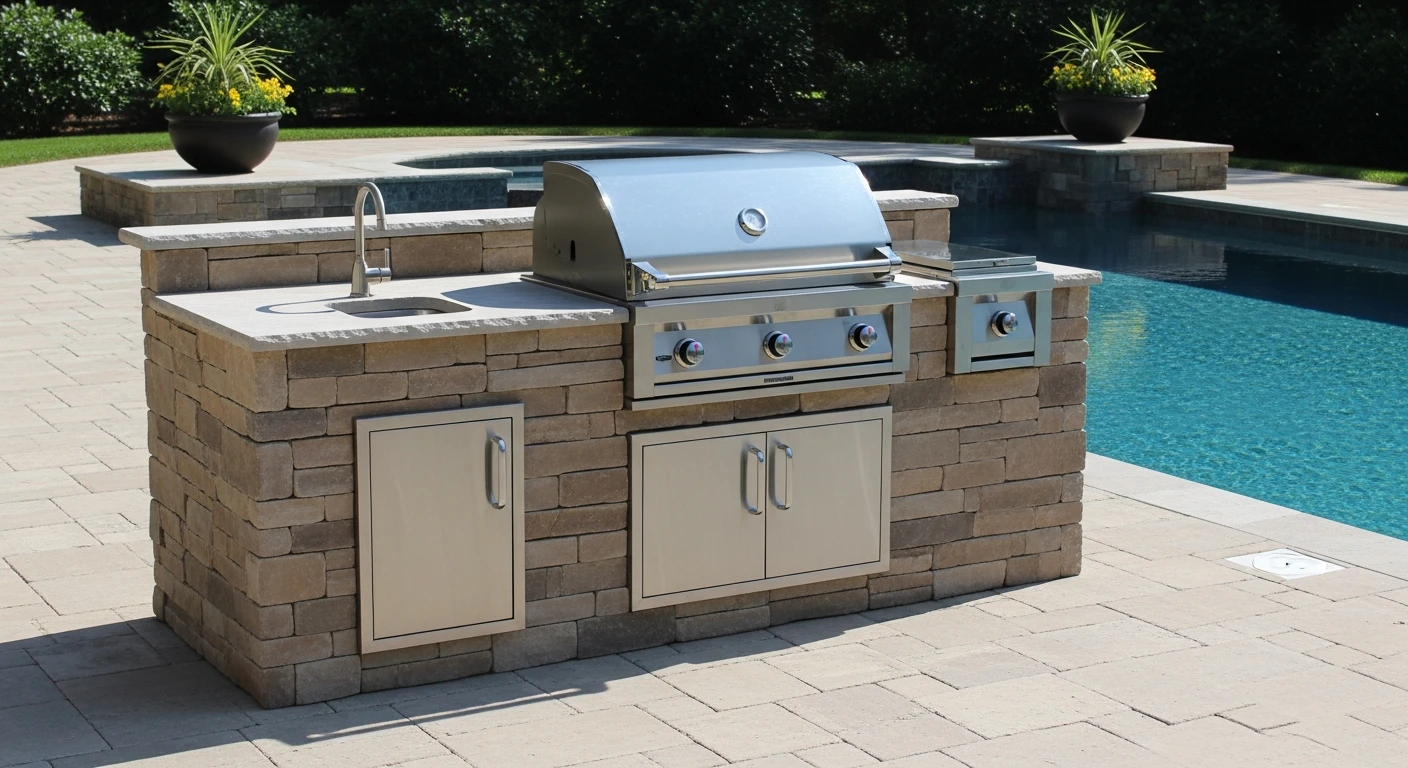
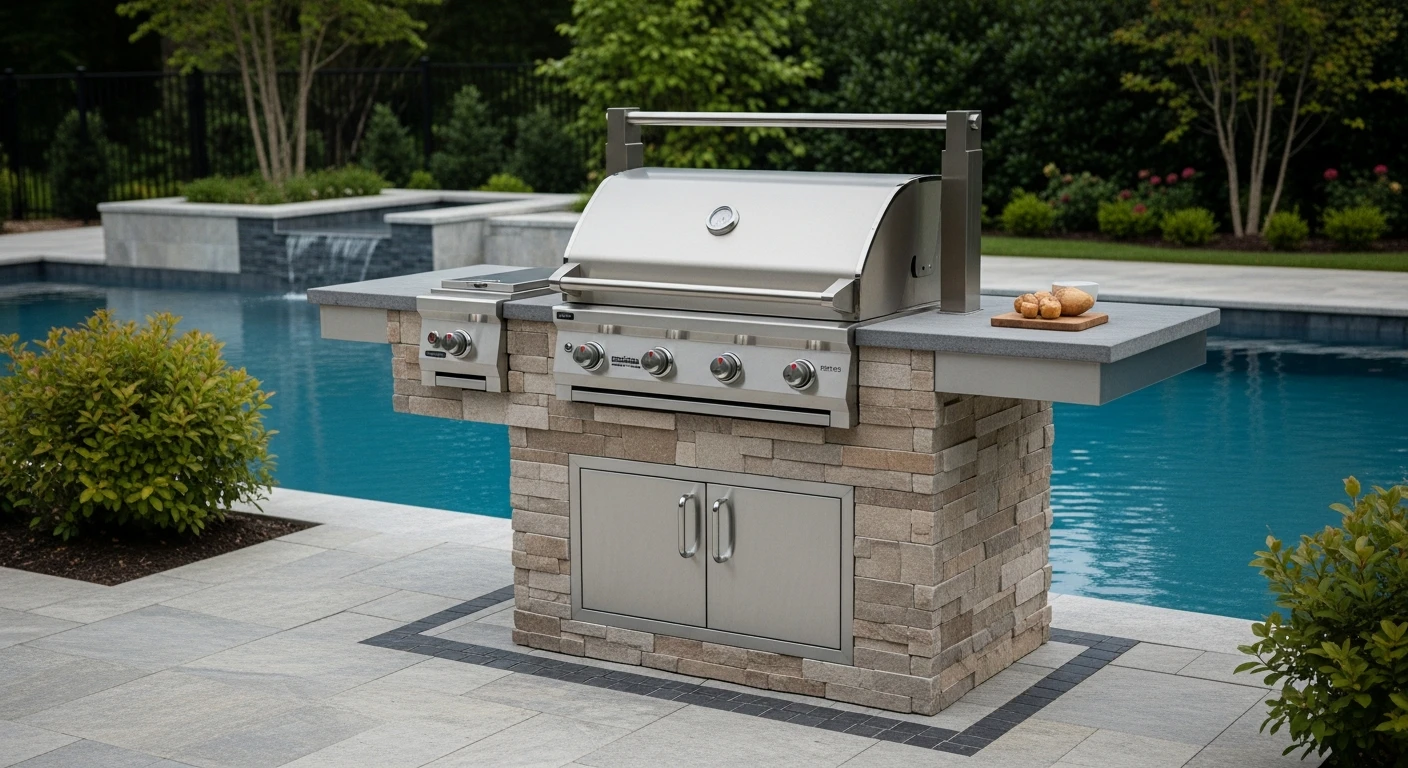
Custom Outdoor Grill Islands in Pinellas County: My Framework for Preventing Premature Corrosion and Structural Failure
As a specialist who has designed and rectified dozens of high-end outdoor kitchens across Pinellas County, I can state with certainty that most failures are not due to the grill or the stonework. The critical point of failure, often within 3-5 years, is the internal structure and fasteners succumbing to our unique coastal environment. I’ve seen beautiful, expensive islands on Snell Isle and Clearwater Beach start to sag and show rust stains because the builder used interior-grade specs. My entire approach is built around creating a "marine-grade chassis" for your outdoor kitchen, ensuring the core withstands the relentless salt spray, humidity, and intense UV exposure, effectively doubling its functional lifespan. This isn't about simply picking a nice granite; it's about a materials-first methodology. The fundamental error I consistently uncover is a misunderstanding of how ambient salinity accelerates galvanic corrosion. A standard galvanized steel frame, perfectly adequate in central Florida, will begin to degrade the moment it's installed on a Tierra Verde lanai. My protocol begins with a site-specific material assessment, treating a home on the Intracoastal differently than one in the historic Kenwood district. The goal is to engineer a structure that performs less like a patio accessory and more like a seafaring vessel.My Salt-Air Corrosion Assessment Protocol
Before a single drawing is made, I perform an analysis that dictates the entire project's material palette. This isn't a simple checklist; it's a diagnostic process I developed after deconstructing failed projects. A client in a Redington Beach condo complex had an island where the countertop cracked. The root cause wasn't the counter; it was the frame beneath it, which had rusted and warped from constant exposure to salt mist, causing the rigid top to flex and fracture. Standard builders miss this sequence of events. My protocol focuses on two primary environmental stressors in Pinellas: ambient salinity levels and direct UV exposure hours. I map these factors to a three-tiered material selection system to prevent such catastrophic failures.Material Selection Hierarchy for Coastal Pinellas County
My system is non-negotiable for longevity. I categorize materials based on their proven resistance in a high-salinity, high-humidity environment.- Tier 1 (Structural Frame): The backbone of the island. The only options I will use are powder-coated, aircraft-grade aluminum or 316L "marine-grade" stainless steel. The "L" designation is critical, indicating low carbon content for superior weld corrosion resistance. I've seen builders use the cheaper 304 stainless, only for it to show pitting and rust within 18 months near the Dunedin Causeway.
- Tier 2 (Hardware & Fasteners): This is a common point of failure. Every single screw, bolt, and bracket must be 316 stainless steel. Using anything less, like zinc-plated or even galvanized fasteners, creates a weak point where corrosion begins and spreads. It's a small detail with a massive impact on structural integrity.
- Tier 3 (Surfaces & Cladding): For countertops, I steer clients away from porous natural stones unless they are willing to commit to a rigorous biannual sealing schedule with a marine-grade, silane-based sealant. My preferred materials are Dekton or other sintered stone products, which are non-porous and have near-zero water absorption. They are virtually immune to staining and the fading effects of the intense Florida sun.
The Vented Frame & Waterproofing Blueprint
Proper assembly is just as critical as material selection. I’ve seen islands built with the right materials fail because of poor construction techniques that trap moisture—a death sentence in our humid climate. My implementation process is built on principles of drainage and ventilation.- Foundation and Site Preparation: We always start with a reinforced concrete footer, ensuring it's pitched correctly for water runoff. For homes in historic Old Northeast St. Pete, this often means carefully working around established landscaping and drainage systems.
- Frame Assembly and Utility Integration: During assembly, I mandate the use of nylon washers between all metal-on-metal connections. This small step acts as a dielectric union, preventing the galvanic corrosion that occurs when even similar metals touch in a salt-heavy environment. All electrical wiring is run through sealed, waterproof conduits.
- Moisture Barrier and Ventilation: Before any cladding is applied, the frame is wrapped with a specialized cement board that has a built-in moisture barrier. Crucially, I design in passive ventilation ports, typically hidden in the toe-kick area. This allows air to circulate within the island's cavity, preventing humid, stagnant air from sitting against the frame and appliances. This single step can increase the life of your grill's internal components by 25%.
- Appliance and Countertop Sealing: Where the grill and other components meet the countertop, I don’t use standard silicone caulk. I use a high-grade polyurethane marine adhesive sealant. It creates a flexible, completely waterproof bond that won't crack under thermal expansion from the grill's heat.
Post-Installation Sealant Curing and Quality Checks
My job isn't done when the last stone is set. The performance of the sealants is highly dependent on the ambient humidity during the curing process. In the Pinellas summer, a sealant that cures in 24 hours elsewhere might take 48-72 hours to achieve full bond strength here. I conduct a post-cure inspection, including a water-immersion test on all seams and joints to ensure a perfect seal. I also provide clients with a specific maintenance schedule—not a generic one, but one based on their home’s exact location and exposure. An island on the open water of Tarpon Springs requires a different cleaning and inspection regimen than one tucked away in a Largo subdivision. Before you approve any design, have you asked your builder to specify the grade of stainless steel for the fasteners and the moisture vapor transmission rate of their proposed sealant?Written by

Tags
custom bbq islands near me
outdoor custom bbq
custom outdoor bbq islands
bespoke outdoor kitchens
custom grill island