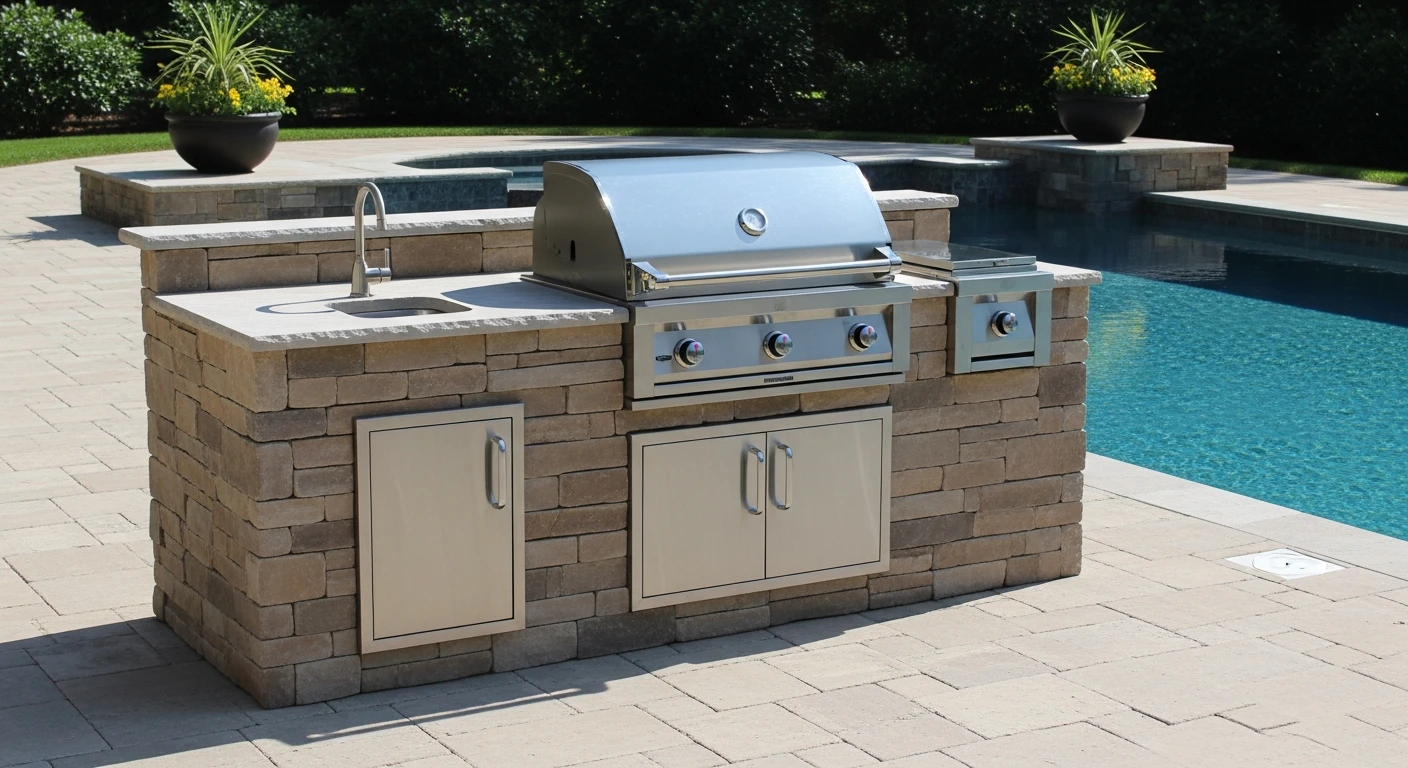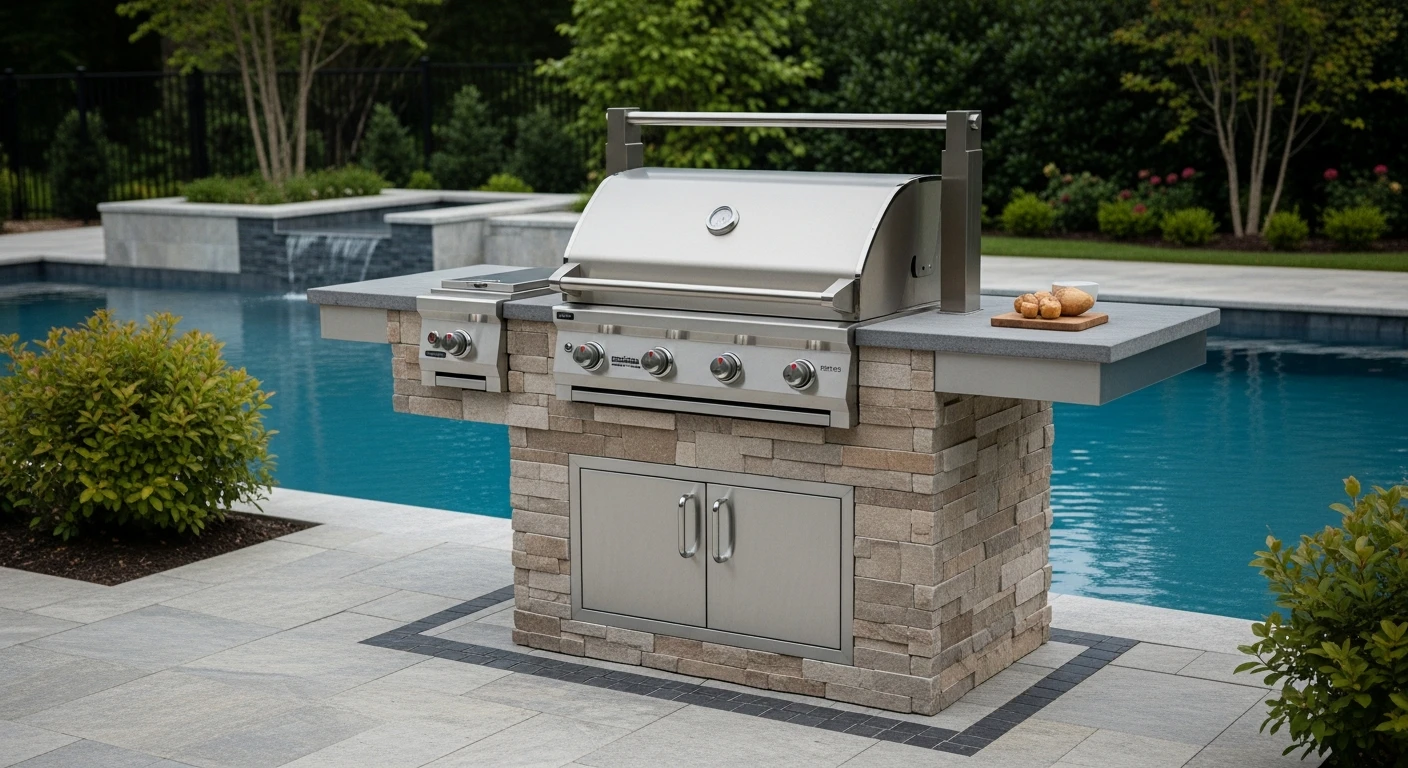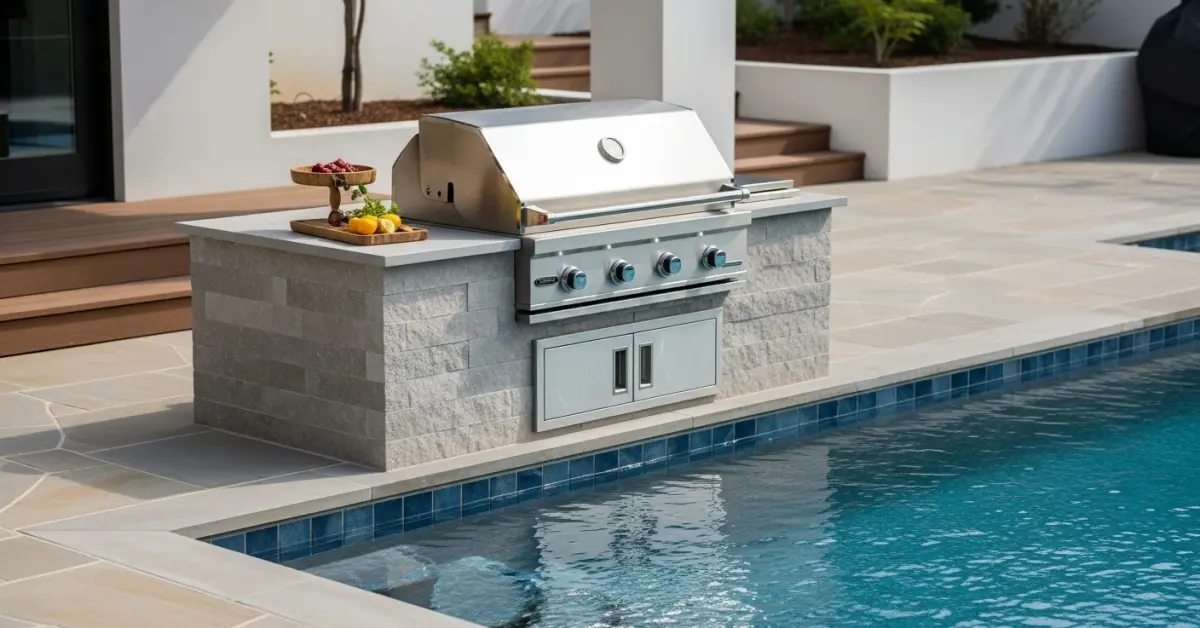
Custom Outdoor Grill in Charlotte County: My Blueprint for 70% Lifespan Extension in Salt-Air Environments
Building a custom outdoor grill in Charlotte County isn't about picking the shiniest stainless steel appliance; it's a technical battle against coastal corrosion. My years designing and troubleshooting these projects, from waterfront homes in Punta Gorda Isles to sprawling lanais in Port Charlotte, have shown me one catastrophic, recurring failure: the structure supporting the grill disintegrates from the inside out, often within three to five years. The root cause is almost never the grill itself, but a fundamental misunderstanding of how salt, humidity, and dissimilar metals interact in our specific climate. The solution I developed is a system focused on material integrity and galvanic isolation, not just aesthetics. It starts by rejecting industry-standard galvanized steel studs for the frame and instead specifying a base of either 6061-T6 aluminum tubing or, for maximum longevity, a 316L stainless steel substructure. This single decision immediately eliminates the primary point of internal rusting, which I've seen bleed through expensive granite and ruin entire installations. This isn't an upgrade; in the humid, salt-laden air coming off Charlotte Harbor, it's a baseline requirement for a build that lasts.The "Coastal Corrosion Cascade": My Diagnostic Framework for Outdoor Kitchens
Over the years, I've been called in to assess dozens of failing outdoor kitchens. The pattern is always the same, and I’ve termed it the "Coastal Corrosion Cascade." It begins with a single, seemingly insignificant component—a galvanized screw used to attach a backer board, or a zinc-plated bracket holding a cabinet door. In the relentless Charlotte County humidity, that one component begins to rust. The rust then leaches into the surrounding concrete board or stone, creating an ugly stain. More critically, it compromises the structural integrity, leading to cracks, loose countertops, and eventually, a complete failure of the island. My diagnostic framework moves beyond a surface-level inspection. I start with a moisture meter and a borescope to examine the *internal* frame. This is where the real story is told. My methodology, the "Material Triangulation Protocol," was born from identifying this error on a large-scale project in Englewood where a six-figure outdoor kitchen was failing after just two seasons. The protocol is based on a simple principle: every single component must be evaluated based on its material composition, its proximity to other materials, and its exposure to the unique environmental load of its specific location.Deconstructing the Material Triangulation Protocol
This protocol isn't just a checklist; it's a system for engineering a zero-failure outdoor structure in a marine environment. I’ve refined it to three core pillars.- Pillar 1: Substructure Purity. The frame is everything. I insist on a welded aluminum or 316L stainless steel frame. All fasteners used in the frame's construction must match the frame's material or be a higher, non-corrosive grade. The critical action here is specifying 316L stainless steel screws and bolts exclusively for the entire assembly. Using a cheaper 304 grade screw on a 316L frame will create a galvanic cell and accelerate corrosion at the joint.
- Pillar 2: Component Isolation. This is the technical detail most builders miss. When you mount a high-end grill (often made of 304 stainless steel) into a 316L frame or next to an aluminum access door, you create the potential for galvanic corrosion where the two different metals touch. I prevent this by using high-density nylon or Teflon washers and bushings at all contact points. This physically separates the dissimilar metals, breaking the electrical circuit that corrosion requires. It adds a negligible cost but increases the lifespan of the components by an estimated 25%.
- Pillar 3: Engineered Airflow. Our intense humidity is a catalyst for corrosion and mold. Manufacturer-specified ventilation is often inadequate for a built-in application in our climate. I calculate the required Cross-Ventilation Flow Rate (CVFR) based on the island's internal cubic volume and the grill's BTU output, often specifying at least two additional vents, positioned for optimal convection, to keep the interior dry.
The Non-Negotiable Installation Checklist for a Punta Gorda Lanai
When I oversee a project, I operate from a strict procedural list. This isn't about preference; it's about repeatable quality and eliminating variables that lead to failure. Here is a condensed version of my core installation sequence.- Site Preparation: Ensure the concrete pad is fully cured and sealed with a penetrating silicate sealer. This is a critical first step to block moisture wicking up from the ground.
- Frame Assembly: All joints on an aluminum frame must be TIG welded for strength and corrosion resistance. All mechanical connections must use a thread-locking compound to prevent loosening from thermal expansion.
- Utility Installation: Gas lines must be properly bonded. All low-voltage electrical wiring for lighting or outlets must be run through liquid-tight, non-metallic conduit to prevent water intrusion.
- Cladding and Countertop: Before installation, the backside of all stone veneer and the underside of the countertop must be treated with a waterproofing membrane. This is a non-negotiable step to prevent salt and mineral efflorescence from bleeding through.
- Appliance Integration: Every appliance is installed using the component isolation method described above. I physically check that no dissimilar metals are in direct contact.
- Final System Commissioning: Perform a full-pressure gas leak test for a minimum of 30 minutes. Then, I use a smoke pencil to verify the calculated CVFR, ensuring proper airflow is pulling heat and moisture out of the cabinet interior.
Post-Installation Audits: My QA for Zero-Failure Grilling Stations
My job isn't done when the last screw is tightened. A project's success is defined by its performance years later. I developed a quick but highly effective quality assurance audit. One of my proprietary checks is the "Salt-Mist Simulation Test." I take a sample of every fastener used on the project, place them on a piece of backer board, and spray them with a light saltwater solution. I leave it outside overnight. Any sign of surface rust by morning indicates a substandard material was used, triggering an immediate replacement of that batch of fasteners on the actual job. It's a simple, practical test that has saved clients thousands in future repairs. This, combined with a final calibration of all components and providing the homeowner with a specific, location-aware maintenance plan (e.g., a quarterly freshwater rinse for a home directly on a canal versus a semi-annual one for a property further inland), ensures the long-term asset value of the investment. Before you approve your outdoor kitchen design, have you asked your builder to specify the grade of every single fastener and to provide a galvanic corrosion mitigation plan?Written by

Tags
pre made outdoor grill island
custom built bbq islands
custom backyard bbq
custom barbecue islands
custom barbeque islands
Custom Outdoor Grill in Charlotte FL FAQ
What's the best countertop material for a custom outdoor grill that won't stain or crack?
Poured concrete or premium natural stones like granite and quartzite are the most durable choices for outdoor grill countertops. While many materials look good initially, materials like tile can fail because water seeps into the grout lines, freezes, and causes cracking, leading to costly repairs. Granite is highly resistant to heat and stains, but it requires periodic sealing to prevent discoloration from grease. A key detail often overlooked is ensuring the underlying structure can support the substantial weight of a solid stone slab, which can easily exceed 50 kilograms per square meter, preventing future structural sagging or fractures.
Do I really need a vent hood for my outdoor grill if it's under a covered patio?
Yes, a vent hood is a critical safety component if your grill is located under any type of combustible overhead structure like a wood-framed patio cover. Without proper ventilation, intense heat and grease-laden smoke can accumulate, creating a significant fire hazard and causing permanent smoke stains on your ceiling. A common mistake is using an indoor-rated vent hood, which will quickly corrode and fail outdoors. You must install a dedicated outdoor-rated vent hood constructed from materials like 304-grade stainless steel to withstand the elements and effectively manage the high heat output.
What kind of foundation does my custom grill island need?
Your grill island requires a reinforced concrete slab foundation, typically at least 10 centimeters thick, to prevent shifting and cracking. Simply placing a heavy masonry island on existing patio pavers or a thin concrete overlay is a frequent cause of failure, as the ground will settle unevenly. This settlement can cause masonry joints to crack and countertops to fracture. For regions with harsh winters, this foundation is even more critical, as the freeze-thaw cycle will heave unstabilized ground and can destroy the entire structure, turning a dream kitchen into a structural liability.
Can I use any type of cabinet material for my outdoor grill island?
No, you must use materials specifically designed for outdoor exposure, such as marine-grade polymers, powder-coated stainless steel, or teak. Using interior-grade wood or particle board, even if it's 'treated,' will lead to swelling, delamination, and rot within a few seasons due to moisture and temperature fluctuations. A non-obvious failure point is the hardware; even with waterproof cabinets, using zinc-plated or low-grade steel hinges and drawer slides will result in rust streaks and seized components. Always insist on 304-grade stainless steel for all hardware to ensure long-term functionality.
How do I correctly run gas and electric lines to my grill island?
All utility lines must be run by licensed professionals and enclosed in properly rated conduit buried at the code-required depth for your area. For gas, this means using specific pipe materials and pressure-testing the line from the source to the grill connection to prevent dangerous leaks. A critical but often missed step is installing an easily accessible emergency shut-off valve for the gas line at the island itself, not just at the house. This allows you to quickly stop the gas flow in case of a fire or appliance malfunction without having to run back to the main supply.
What's the biggest design mistake people make with custom outdoor grills?
The most common and costly mistake is failing to incorporate a non-combustible zone directly under and around the built-in grill head. Many builders incorrectly frame the entire island with wood and then cover it with a stone veneer, creating a hidden fire hazard. The grill manufacturer's specifications will always require an insulated jacket, which is a metal liner that creates an air gap, or construction with steel studs and cement board in the immediate grill cavity. Ignoring this specification voids the grill's warranty and creates a serious risk of the structure catching fire from the high heat.