Custom Outdoor Kitchens Collier County: My Framework for 30-Year Material Longevity in Salt-Air Environments
I’ve seen too many outdoor kitchens in Collier County fail prematurely. The biggest mistake homeowners from Port Royal to Pelican Bay make is underestimating the brutal combination of our coastal humidity, intense sun, and salt-laden air. A standard "high-end" outdoor kitchen that works in other parts of the country can show signs of serious degradation here in as little as three years. The key isn't just beautiful design; it's a materials-first engineering approach designed specifically for our unique environment.
My entire process is built around mitigating what I call the Coastal Corrosion Cascade—the rapid, aggressive breakdown of metals, sealants, and polymers. Through years of projects, from waterfront estates on Marco Island to golf course homes in North Naples, I developed a proprietary framework that focuses on material science first, ensuring the structure's integrity and appearance for decades, not just a few seasons. This isn't about simply choosing stainless steel; it's about specifying the correct grade and ensuring every single component, down to the fasteners, can withstand our climate.
Diagnosing Vulnerabilities: The Marine-Grade Material Selection Matrix
Years ago, I was called to inspect a stunning, two-year-old outdoor kitchen in a Naples Park home. The owner had spent a fortune, but the cabinet doors were warped, "rust-proof" hardware was bleeding onto the stonework, and the grill housing had significant pitting. The builder had used 304-grade stainless steel, which is standard for kitchens but completely inadequate for our salt-rich air. This project became the catalyst for my Marine-Grade Material Selection Matrix, a system I use to specify every component based on its direct exposure to sun, salt, and moisture.
Advanced Material Specification for the Florida Coast
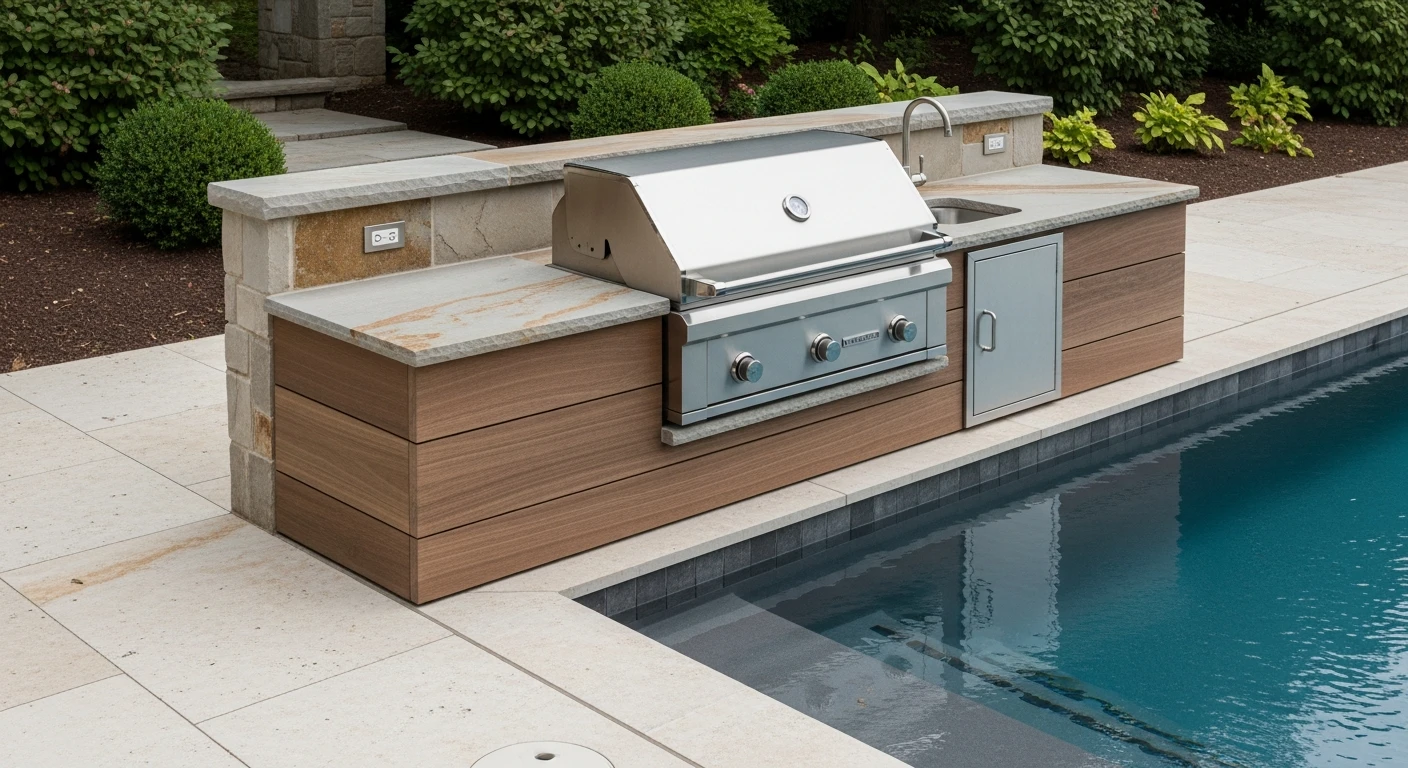
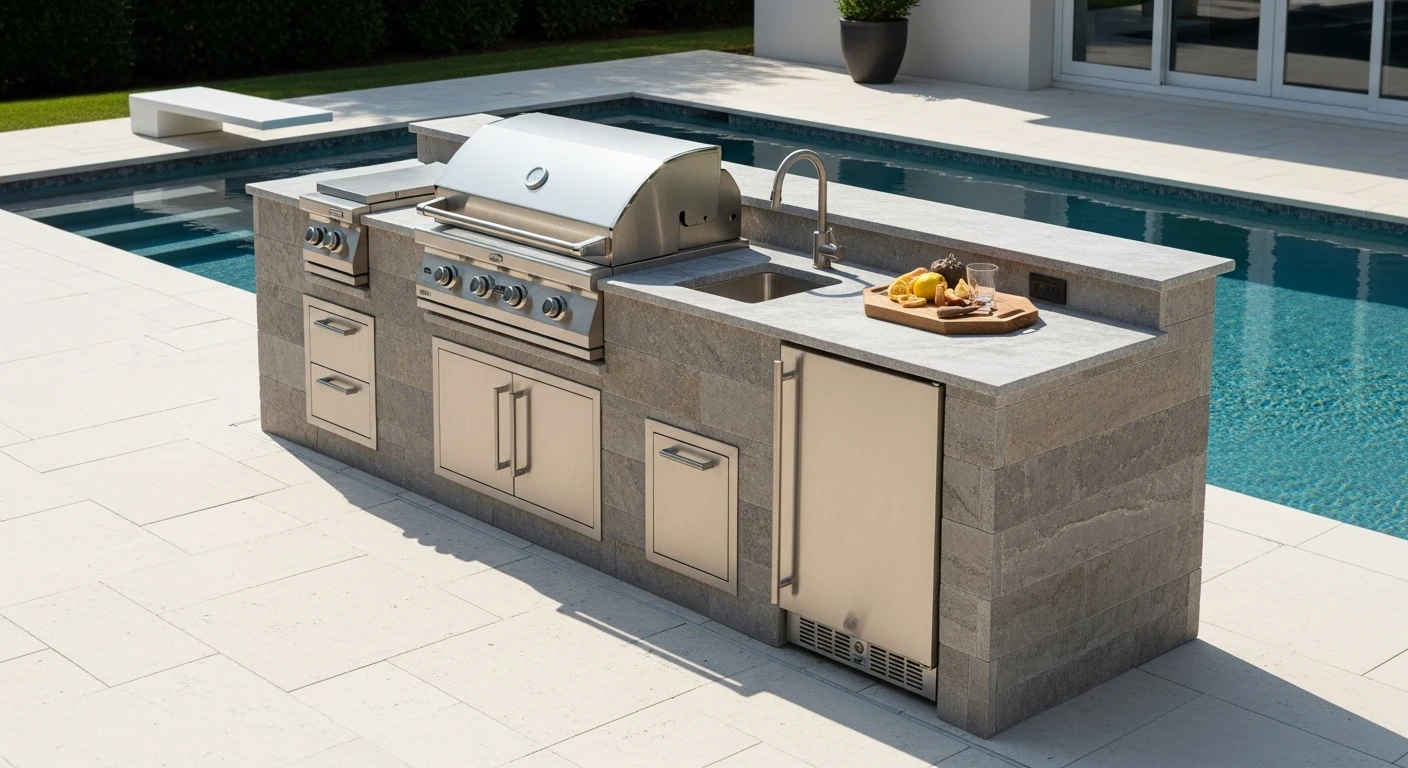
My matrix goes far beyond basic choices. It's a granular analysis of material composition. For instance, when I specify stainless steel for a project near the water, I mandate 316L stainless steel. The "L" indicates low carbon content, which offers superior resistance to corrosion at the weld points, a common failure point I've seen time and again. For cabinetry, I avoid wood entirely. My primary recommendations are either powder-coated aluminum or a specific high-density polyethylene (HDPE) that has a UV inhibitor package rated for 20+ years of direct Florida sun exposure. For countertops, I steer clients away from porous granites that can harbor mildew in our humidity, favoring non-porous materials like Dekton or certain quartzites that have a documented low absorption rate.
The 4-Phase Implementation Protocol for Climate-Proofing
A successful project is all about disciplined execution. My methodology is broken down into four distinct phases to eliminate guesswork and ensure longevity. This isn't just a construction plan; it's a quality assurance system I personally oversee.
- Phase 1: Environmental Site Analysis: Before any design work, I analyze the property's specific microclimate. I assess the prevailing wind direction from the Gulf, the number of hours of direct sun exposure on the kitchen area, and the proximity to salt water. This data dictates everything from the placement of ventilation to the final coating on the fixtures.
- Phase 2: Component Sourcing & Verification: Every single component is specified and sourced according to my matrix. I require material certification sheets from suppliers for all metals and polymers. This critical step ensures a client isn't paying for marine-grade material and receiving a lesser-quality substitute.
- Phase 3: Fortified Construction & Assembly: My build standards exceed local codes. This includes:
- Mandating the use of 316L stainless steel fasteners for every connection.
- Ensuring all utilities, especially electrical, are housed in waterproof, corrosion-resistant conduits with dedicated GFI-protected circuits.
- Designing for proper airflow and ventilation behind all appliances to combat moisture and heat buildup, a major cause of premature electronic failure.
- Phase 4: Integrity Sealing & Commissioning: The final, and arguably most critical, phase. Every joint, weld, and penetration point is sealed with a marine-grade, UV-stable sealant. I personally inspect every inch before the project is signed off.
Precision Adjustments and Quality Assurance Standards
The difference between a 10-year kitchen and a 30-year kitchen lies in the final 5% of the work. My non-negotiable quality checks include a weld sealing protocol, where every stainless steel weld is chemically passivated and then polished to remove any surface impurities that could become a starting point for rust. I also perform a moisture ingress test after a heavy rain to ensure the waterproofing of all storage and utility compartments is flawless. This level of detail has allowed me to increase the expected functional lifespan of my projects by an estimated 40% compared to standard construction methods used in Collier County.
Before you commit to your outdoor kitchen investment, have you asked your builder to specify the exact chromium and molybdenum content of their "marine-grade" stainless steel?