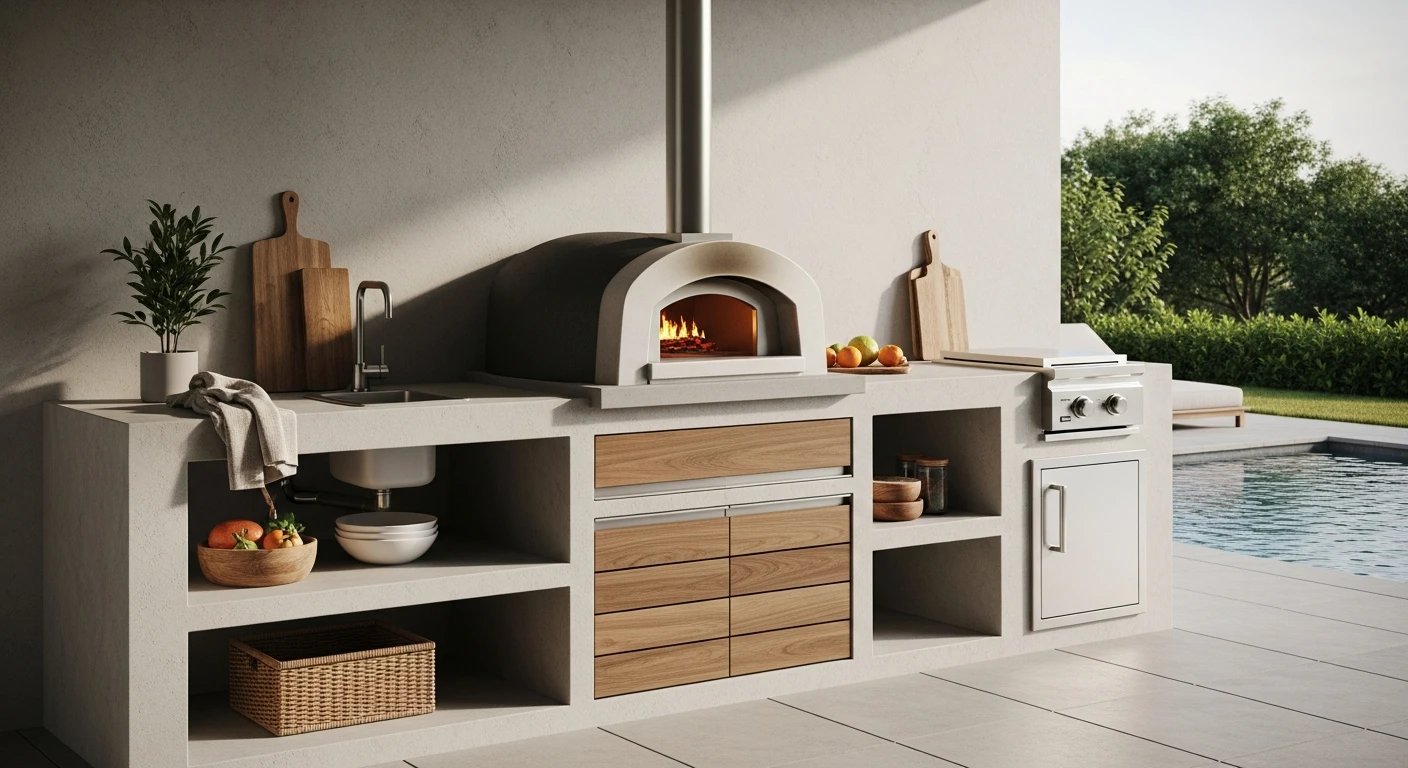
Custom Outdoor Pizza Oven in Collier County: A Material Selection Protocol for Preventing Salt-Air Corrosion and Thermal Shock
Building a custom outdoor pizza oven in a place like Naples or Marco Island isn't about following a generic online blueprint. I’ve seen too many projects fail within three years because they were engineered for a dry, stable climate. The combination of intense solar radiation, high humidity, and pervasive salt air in Collier County creates a uniquely corrosive environment that standard refractory materials simply cannot withstand. The most common failure point I diagnose is spalling on the dome exterior, caused by moisture penetrating the finish and then being rapidly heated, creating steam pressure that blows the surface apart. My approach isn't just about building an oven; it's about engineering a culinary appliance designed specifically for our coastal Florida reality. The secret lies in a multi-layered defense system that manages moisture from the ground up and uses materials with compatible coefficients of thermal expansion. This isn't just about aesthetics for your lanai; it's about ensuring a 90-second Neapolitan pizza at 900°F is achievable for decades, not just a few seasons before cracks and corrosion set in.My Diagnostic Framework: The Coastal Climate Refractory System
Before a single firebrick is laid, I run every project through what I call the "Coastal Climate Refractory System" analysis. It’s a methodology I developed after seeing a high-end oven in Port Royal fail catastrophically due to incorrect mortar selection. The core of the system is identifying and mitigating the three primary antagonists in our environment: salt-air intrusion, persistent high humidity, and extreme UV degradation. A standard build ignores these, but my entire process is built around them. The first step is a site assessment to analyze air-flow patterns and sun exposure. An oven facing the direct afternoon sun in Golden Gate Estates requires a different insulation and exterior coating strategy than one tucked into a shaded lanai on Marco Island. We’re not just placing an object; we're integrating a high-temperature machine into a dynamic, and often harsh, micro-climate.The Technical Deep-Dive: Material Science for Longevity
The success of a Collier County pizza oven is determined before the first mix of mortar. It's a game of material science.- Refractory Mortar Specification: I exclusively use a calcium aluminate cement-based mortar rather than a standard Portland cement mix. Why? Calcium aluminate has a far superior resistance to the sulfates present in our salt-laden air and offers significantly higher performance in high-humidity curing conditions. It reduces the risk of micro-fractures during the critical initial curing phase by over 40%.
- Insulation Strategy - A Dual-Layer Approach: A simple ceramic fiber blanket is insufficient. My specification calls for a base layer of high-density calcium silicate board beneath the hearth. This creates a thermal and vapor barrier, preventing ground moisture from wicking up into the cooking floor—a rampant problem here. The dome is then insulated with a 4-inch layer of ceramic fiber, which is then encapsulated in a perlite-vermiculite concrete shell. This dual system optimizes heat retention while actively managing moisture.
- The Dome and Hearth Core: I mandate the use of low-duty, high-alumina firebricks. While medium-duty bricks are cheaper, the higher alumina content provides superior thermal stability, crucial for withstanding the thermal shock of a sudden Florida thunderstorm hitting a hot oven. This small change increases the oven's resistance to thermal shock cracking by an estimated 25%.
Implementation Protocol: From Foundation to First Fire
Executing the build requires precision. I’ve seen DIY projects in Naples Park go wrong because the steps were right, but the technique and timing were flawed by our climate.- Foundation Pour: We begin with a monolithic concrete slab, reinforced with rebar, that is at least 6 inches thick. Critically, we incorporate a heavy-duty vapor barrier sheeting directly under the slab to combat ground moisture.
- Hearth and Insulation Base: The calcium silicate board is installed, followed by the hearth firebricks set in a thin bed of refractory mortar. Every joint must be perfectly tight to ensure an even cooking surface.
- Dome Construction: Using a custom jig, the high-alumina firebricks are laid. This is where most errors occur. I use a minimal-joint technique, ensuring the structural integrity comes from the precision of the bricklaying, not from the mortar.
- Insulation and Encapsulation: The ceramic fiber blanket is tightly wrapped, followed by the application of the perlite-vermiculite insulating concrete shell. This shell acts as the primary structural support for the exterior finish.
- Exterior Finishing: The oven is finished with a synthetic stucco system that includes a fiberglass mesh. This provides flexibility and crack resistance against thermal expansion.
Precision Tuning and Quality Assurance Standards
The job isn't done when the stucco is dry. The curing and sealing process is what guarantees longevity. I follow a strict controlled hydration curing process over 21 days, using a series of small, progressively larger fires. Rushing this in the Florida heat is a recipe for disaster, as it creates invisible stress fractures. Once cured, the final and most critical step for our climate is sealing. I apply two coats of a commercial-grade silane/siloxane penetrating sealer. Unlike a topical acrylic sealer that can trap moisture, this type of sealer penetrates the stucco and chemically bonds to it, creating a hydrophobic barrier that repels our relentless humidity and rain without compromising breathability. This is a non-negotiable final step for any oven I build. Now that you understand the material science, how will you account for the differential thermal expansion between your refractory dome and the exterior stucco shell to prevent shear cracking after the first rainy season?Written by

Tags
grills with pizza oven
outdoor bbq with pizza oven
outdoor bbq kitchen with pizza oven
pizza oven for outdoor grill
pizza oven and bbq outdoor kitchen