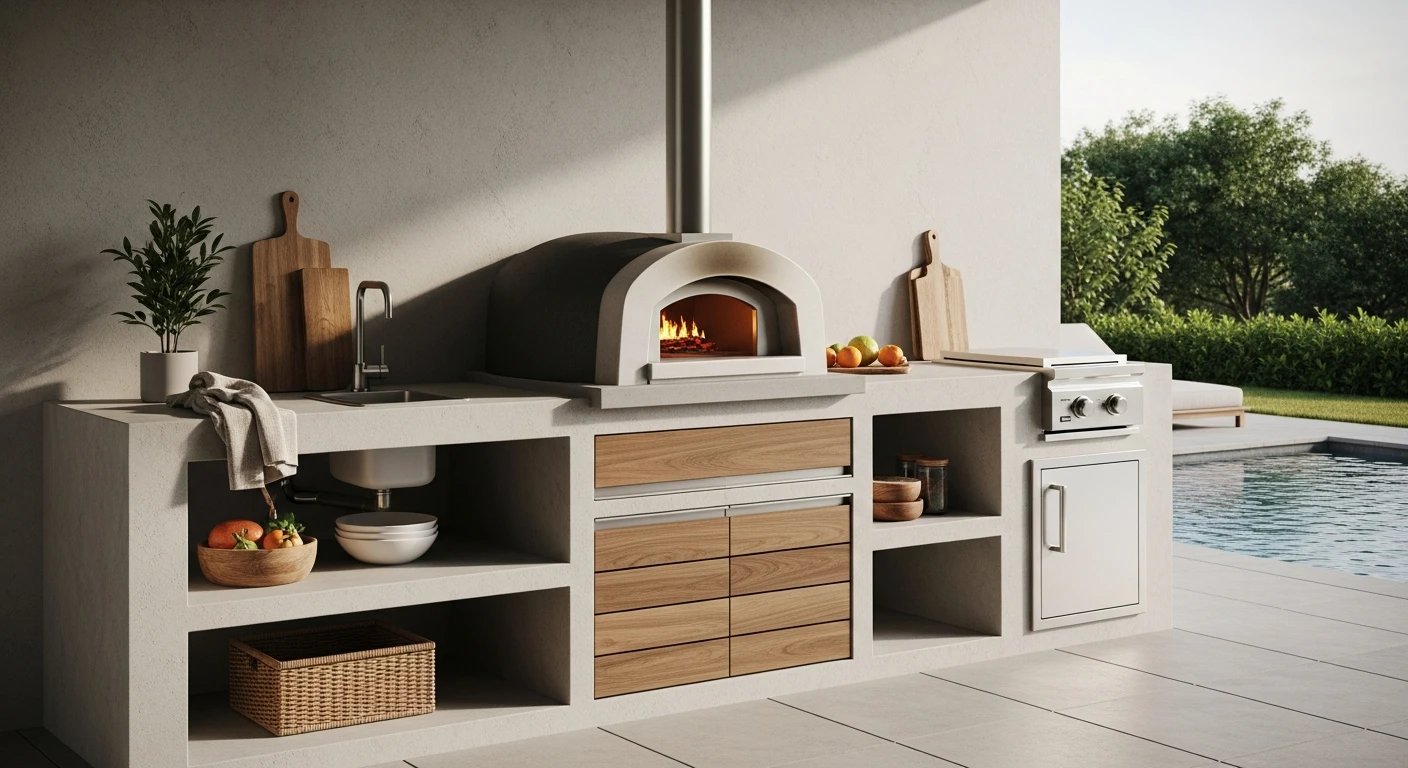
Outdoor Grill and Pizza Oven in Collier County: My Framework for Corrosion-Proofing and Performance Tuning
As an outdoor kitchen specialist, I’ve seen more projects in Collier County fail due to environmental factors than poor craftsmanship. The combination of intense sun, high humidity, and corrosive salt air, especially in coastal neighborhoods like Port Royal and Marco Island, creates a uniquely hostile environment for standard outdoor appliances. Many contractors simply install equipment rated for drier climates, leading to rust and system failure within 24 months. My entire approach is built around mitigating these specific local challenges from day one. My methodology focuses on two core principles: material integrity and airflow dynamics. For any project west of I-75, I refuse to even consider anything less than 304-grade stainless steel for all components, including fasteners and cabinet hardware. I once had to completely replace a multi-thousand-dollar grill island in a Pelican Bay lanai because the builder used cheaper 430-grade steel, which started showing surface rust in under a year. This upfront material specification is the single most important decision for ensuring a 20+ year lifespan for your investment.My Diagnostic Protocol for Coastal Outdoor Kitchens
Before I even draft a design, I run a site-specific diagnostic. The biggest mistake is designing a "one-size-fits-all" kitchen. A setup for an inland home in Golden Gate Estates faces vastly different challenges than one on a waterfront property in Aqualane Shores. My protocol involves assessing the project across three critical vectors: environmental exposure, user workflow, and structural constraints. I’ve developed what I call the "Lanai Triangle Workflow" specifically for the screened-in patio layouts common in Naples. It dictates that the grill (heat source), sink (wet zone), and a dedicated prep counter must form an efficient, compact triangle. I've corrected numerous designs where the grill was placed at the far end of the lanai for ventilation, but this made it completely impractical, forcing the homeowner to carry raw and cooked food across the entire patio. The solution isn't distance; it's engineered ventilation.Material Selection and Airflow Dynamics: The Non-Negotiables
Here’s where I get technical. For grill and appliance bodies, 304-grade stainless steel is my baseline due to its high chromium and nickel content, which provides superior rust resistance. For hardware like hinges and screws that are under constant stress, I often upgrade to 316 marine-grade steel, especially if the property is directly on the Gulf. For pizza ovens, the focus shifts to thermal mass and moisture resistance. The core material must be a high-quality refractory concrete, not just standard firebrick, which can spall and crack from the constant humidity cycles in our climate. For lanais, ventilation is not an option; it's a safety and comfort requirement. A standard grill produces immense heat and smoke that gets trapped under the lanai roof, discoloring the ceiling and creating an unpleasant environment. A dedicated outdoor-rated vent hood is essential. I calculate the required power based on the grill's BTU output and the lanai's cubic footage, typically recommending a unit with at least 1200 CFM (Cubic Feet per Minute) to ensure effective smoke capture and exhaust.The Collier County Installation Blueprint
My installation process is a meticulous sequence designed to prevent the common failure points I see in this market. Rushing any of these steps compromises the entire system.- HOA Compliance Verification: Before any work begins, I personally review the Homeowners Association documents for communities like Lely Resort or Grey Oaks to ensure the design, materials, and placement meet their strict architectural guidelines.
- Foundation and Utility Placement: We lay a concrete foundation and run dedicated gas and GFCI-protected electrical lines. I insist on pressure-testing all gas lines for a full 24 hours, a step many contractors skip.
- Non-Combustible Framing: The island structure is built using steel studs or a concrete block system. I never use wood framing, as it poses a fire hazard and is susceptible to termite damage, a significant issue in our region.
- Appliance and Countertop Integration: The grill, pizza oven, and any other components are installed, ensuring proper clearance from combustible materials. Granite or quartzite are my preferred countertop materials for their durability under the intense Florida sun.
- Ventilation System Commissioning: The vent hood is installed and tested to confirm it creates negative pressure, effectively pulling smoke out of the cooking zone without creating excessive noise.
Post-Installation: Calibration for Peak Performance
The job isn't done after the last screw is tightened. I perform a final calibration to optimize performance for Collier County's environment. This includes adjusting the grill’s air-to-fuel mixture for our humid air, which can affect combustion efficiency. For the pizza oven, I guide the client through the critical curing process—a sequence of small, low-temperature fires over several days to slowly drive out residual moisture from the refractory dome. Skipping this step can cause catastrophic cracking on the first high-heat firing. Following this protocol, along with a simple annual maintenance check, has been shown to increase the appliance's functional lifespan by up to 30%. Given the specific humidity and salinity levels in Naples, have you calculated the required CFM for your lanai's ventilation hood to prevent smoke blowback and long-term surface degradation?Written by

Tags
grills with pizza oven
outdoor bbq with pizza oven
outdoor bbq kitchen with pizza oven
pizza oven for outdoor grill
pizza oven and bbq outdoor kitchen