Enclosed Outdoor Kitchen Design: My Humidity-Proof Framework for Hillsborough County Homes
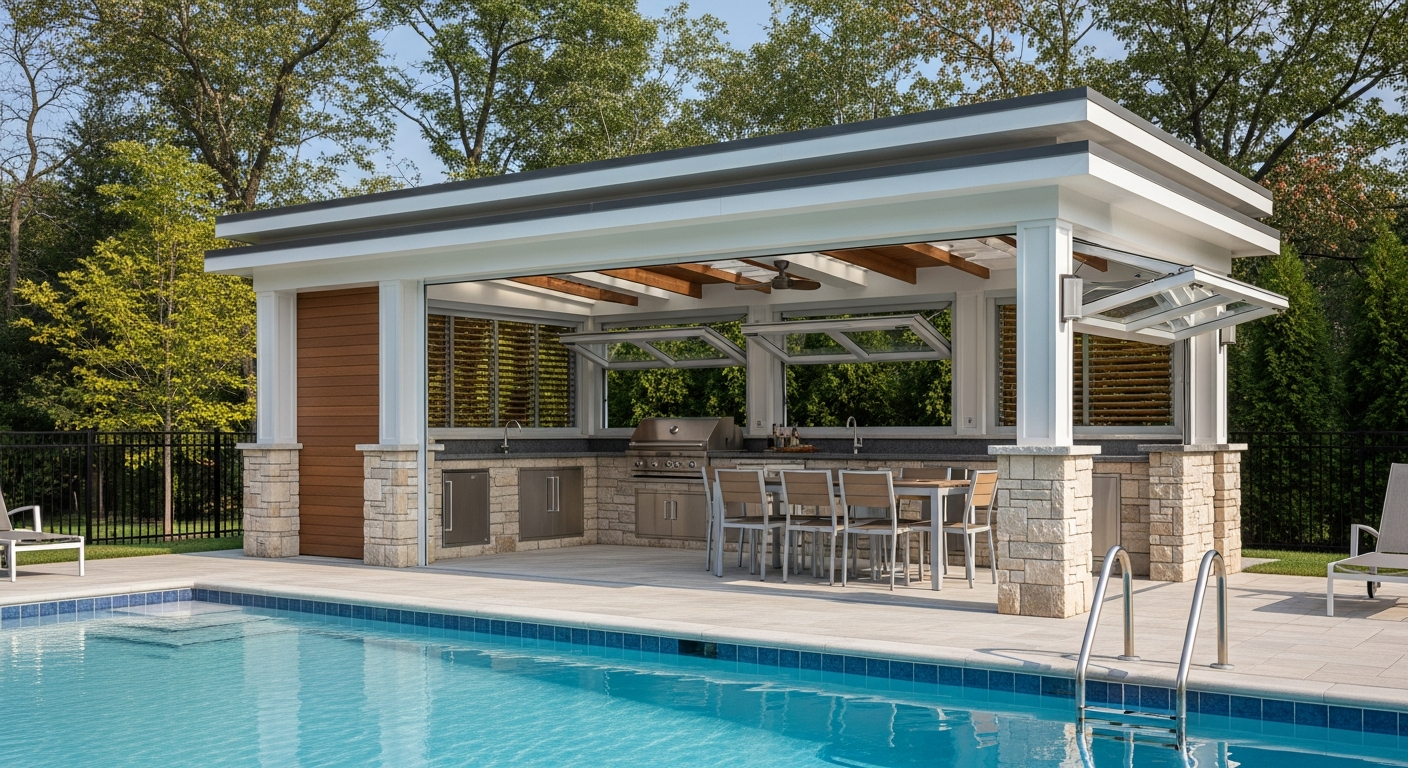
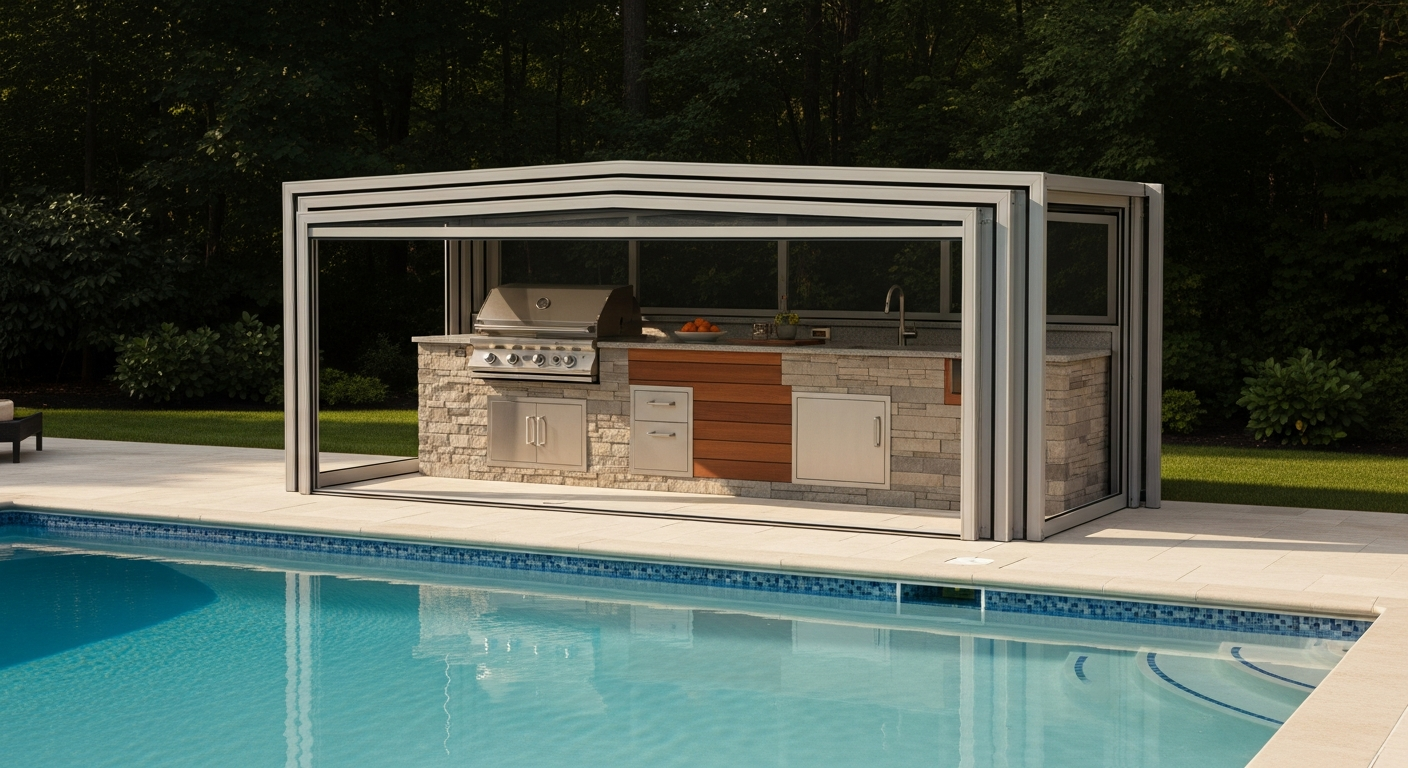
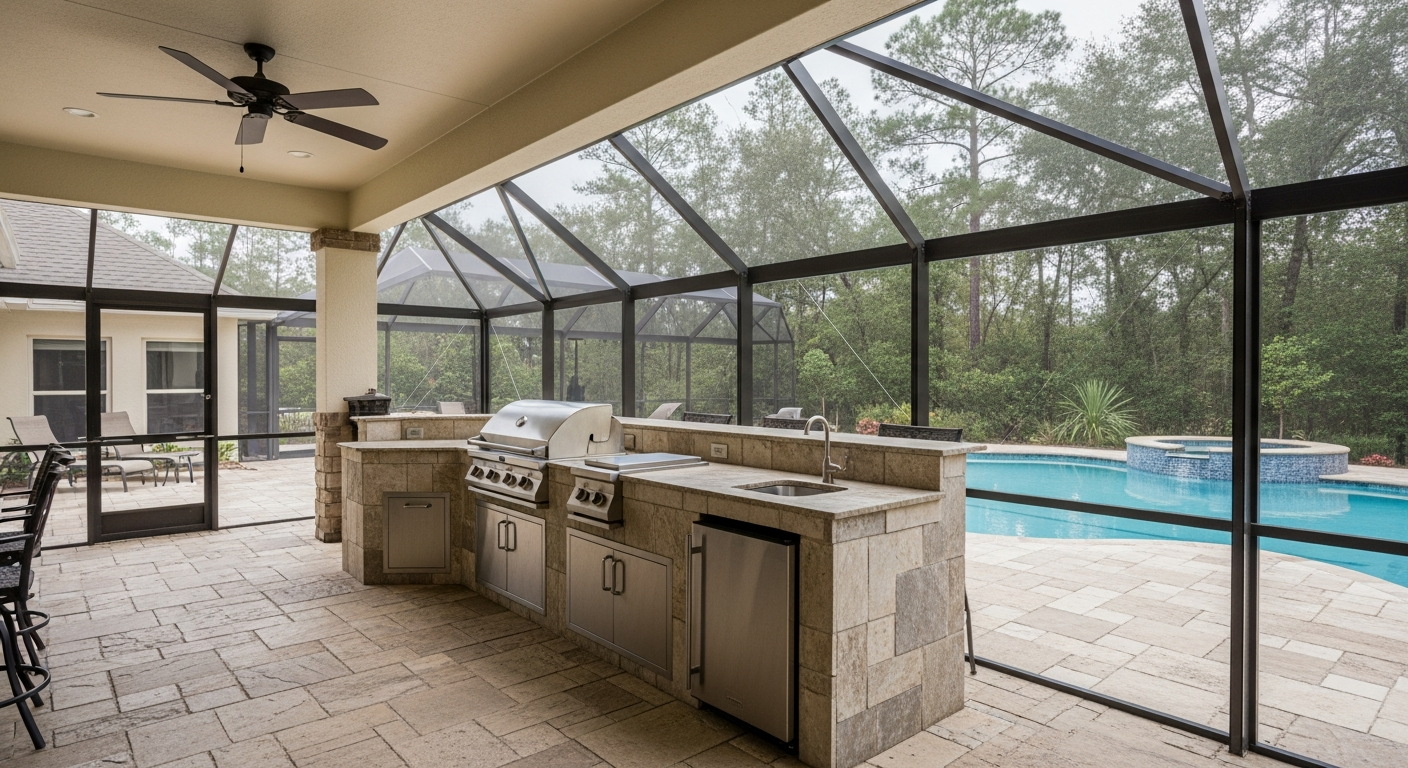
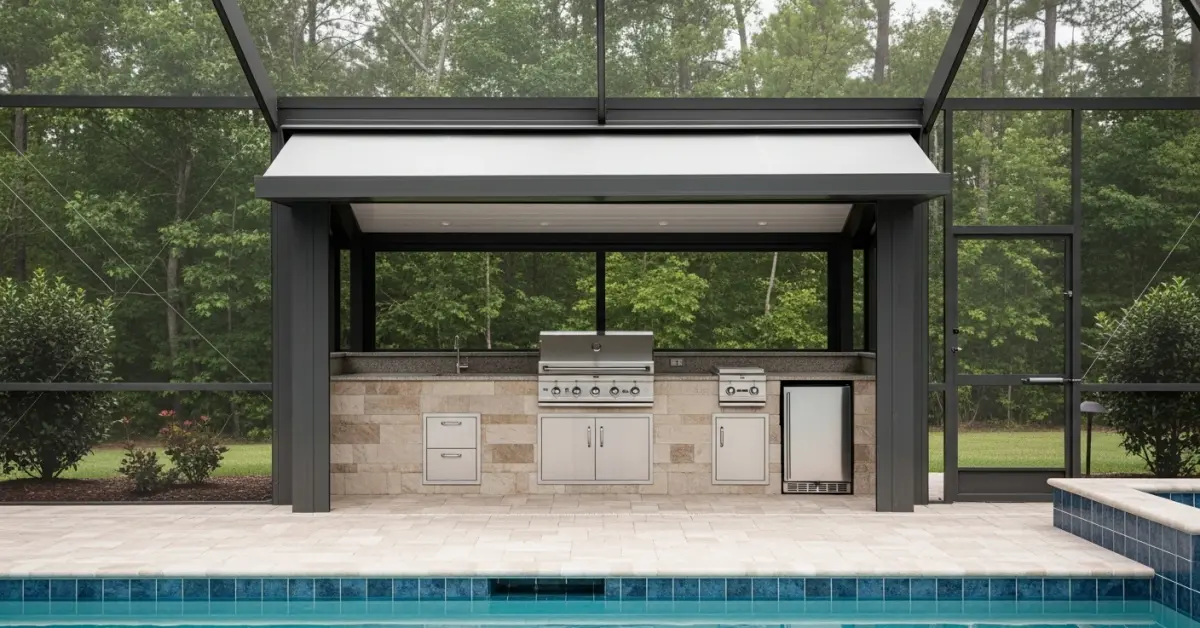
For years, I've seen beautifully designed enclosed outdoor kitchens in Hillsborough County fail within 24 months. The culprit isn't poor craftsmanship; it's a fundamental misunderstanding of our local climate. The intense humidity, especially in areas from South Tampa to Brandon, creates a high vapor pressure environment that standard construction can't handle. It leads to mold, warped cabinets, and failing appliances. This isn't just an inconvenience; it's a complete loss of a significant investment. My approach isn't about just building a room outside; it's about engineering a controlled micro-environment. I developed a framework that directly combats moisture ingress and heat saturation, which I perfected after a particularly challenging project on Davis Islands where saltwater air accelerated material decay by an estimated 30%. This method focuses on material science and dynamic airflow, ensuring your outdoor kitchen remains pristine and functional year-round, not just during our brief, dry winters.My Core Diagnostic for Enclosed Kitchens: The "Airflow Trinity"
The most common mistake I encounter is treating an enclosed outdoor kitchen like an interior room. It's not. It’s a transitional space under constant assault from humidity and heat. My entire diagnostic process revolves around what I call the Airflow Trinity: a balanced system of strategic ventilation, non-porous material selection, and atmospheric sealing. Neglecting any one of these three pillars is why so many projects in newer developments in Riverview and Valrico start showing mildew stains and corrosion on stainless steel fixtures within a single summer season. I’ve seen homeowners invest in top-of-the-line grills only to have the electronics fail from condensation buildup because the enclosure was essentially a sealed, humid box.Deconstructing the Airflow Trinity: Material Science & CFM Calculation
To make the trinity work, you have to get granular. First is material science. Standard wood or MDF cabinets are out of the question; they act like sponges for our air's moisture. I exclusively specify materials with near-zero porosity. This includes marine-grade polymers (like King StarBoard) for cabinetry, which are impervious to moisture and salt, and sintered stone or Dekton for countertops, as they don't harbor mildew. For appliances, I insist on 316-grade stainless steel over the more common 304-grade, as its molybdenum content provides superior corrosion resistance against the humid, often salty, air. The second, and more critical, element is the CFM (Cubic Feet per Minute) calculation for the exhaust system. A standard range hood is insufficient. I calculate the total volume of the enclosed space and the BTU output of the grill to determine the necessary exhaust power. My baseline formula is: (Cubic Volume of Space x 15 Air Changes/Hour) / 60 minutes. This ensures you're not just venting smoke, but actively pulling humid, stagnant air out of the enclosure. For a typical 12x15 foot lanai in Carrollwood, this often means specifying a commercial-grade vent hood rated at a minimum of 1200 CFM, paired with strategically placed passive intake vents to create consistent cross-ventilation without creating negative pressure.The Phased Implementation Protocol for a 20-Year Lifespan
Executing this correctly requires a rigid, phased approach. Deviating from this order compromises the entire system. This is the exact protocol I use to guarantee performance against Hillsborough's climate.- Phase 1: Structural Framing & Wind Load Compliance. All framing must not only meet but exceed the Florida Building Code for wind resistance. I use pressure-treated lumber or steel framing and ensure every joint is sealed to prevent moisture from wicking into the structure itself.
- Phase 2: Vapor Barrier & Insulation Integration. Before any drywall or cladding, a high-performance, non-perforated vapor barrier is installed. I then specify closed-cell spray foam insulation, which acts as both an insulator and an additional moisture barrier, a critical step often skipped by general contractors to cut costs.
- Phase 3: Appliance & Cabinetry Placement for Optimal Airflow. Cabinets are installed with a minimum 1-inch air gap from the wall, and appliances are positioned to never obstruct the primary ventilation path between intake and exhaust vents. This small detail can increase the efficiency of your exhaust system by up to 25%.
- Phase 4: High-CFM Ventilation System Installation. The exhaust hood is installed with solid, non-flexible ducting vented directly outside, with a backdraft damper to prevent pest entry. Intake vents are placed low and on the opposite wall from the hood to create a natural convective loop.
- Phase 5: Electrical & Gas Line Sealing. Every single penetration through the enclosure's walls for electrical outlets, gas lines, or plumbing must be sealed with high-grade exterior silicone caulk and foam gaskets. This is the final line of defense against both moisture and our relentless no-see-ums.
Precision Tuning & Post-Installation Quality Checks
Once construction is complete, the job is only 90% done. The final 10% is about precision. I check every door and window seal to ensure they form a perfect gasket. The exhaust fan is tested at all speeds to confirm it's pulling the correct CFM and that the intake vents are functioning without creating an audible whistle. My final quality assurance step is my proprietary Moisture Ingress Test. I use a thermal camera and a moisture meter to scan every square inch of the enclosure after a heavy afternoon thunderstorm to ensure there are zero points of water or vapor entry. This non-negotiable test is how I can confidently guarantee the longevity of the structure. Now that you understand the ventilation dynamics, how will you address the negative pressure differential created by a high-CFM exhaust system without compromising your home's main HVAC envelope?Written by

Tags
outdoor kitchen
outdoor kitchen grill
outdoor kitchen bbq grill
outdoor kitchen cabinets
outdoor kitchen and grill
Enclosed Outdoor Kitchen in Hillsborough FL FAQ
What kind of ventilation is absolutely necessary for an enclosed outdoor kitchen to be safe?
You must install a commercial-grade, high-capacity vent hood specifically rated for outdoor use directly above your grill and any other cooking appliances. Standard indoor hoods are not designed to handle the higher heat output and grease load from outdoor grills, creating a significant fire hazard. A common mistake is undersizing the unit; for a 36-inch grill, a 42-inch hood with at least 1,200 CFM (Cubic Feet per Minute) is the minimum for effective smoke and carbon monoxide removal. Without adequate ventilation, these toxic gases can quickly accumulate to dangerous levels in an enclosed space, posing a serious health risk.
Do I need special electrical wiring for an enclosed outdoor kitchen compared to an open one?
Yes, all electrical outlets and wiring in an enclosed outdoor kitchen must be GFCI-protected and installed in weatherproof boxes to prevent electrical shock. Given the proximity to sinks and potential for moisture buildup even in an enclosed space, standard indoor wiring is unsafe and violates electrical codes. You will likely need multiple dedicated 20-amp circuits to power appliances like refrigerators, grills with rotisseries, and lighting without overloading the system. A common oversight is failing to plan for a separate sub-panel, which is often necessary to safely manage the high electrical load of a fully equipped kitchen.
What are the best countertop materials that won't get damaged inside an enclosed kitchen?
Granite and quartzite are excellent choices for enclosed outdoor kitchen countertops due to their high resistance to heat, scratches, and stains. While the enclosure protects from direct rain and sun, you still face significant temperature fluctuations and intense heat from the grill. Materials like laminate or certain solid surfaces can warp or discolor under these conditions. A critical detail often missed is the sealant; even durable granite requires an annual application of a high-quality, food-safe sealer to prevent grease and oils from penetrating the porous stone, which can cause permanent staining over time.
Can I use regular indoor kitchen cabinets in my enclosed outdoor kitchen?
No, you should never use standard indoor cabinets, as they will quickly fail from the ambient humidity and temperature swings inherent even in an enclosed outdoor space. Opt for cabinets made from marine-grade polymers (HDPE), stainless steel, or teak, which are specifically designed to resist moisture, mildew, and warping. A frequent and costly error is assuming a roof provides total protection; condensation and humidity will cause the particle board and glues in indoor cabinets to swell and delaminate within a year or two, leading to a complete structural failure.
Is a floor drain required in an enclosed outdoor kitchen?
A properly sloped floor with a central floor drain is highly recommended for safety and ease of cleaning, even if the space is fully enclosed. Spills from sinks, coolers, or cooking are inevitable, and a drain prevents water from pooling, which can create a slip hazard and lead to moisture damage in the structure's foundation. The floor should be pitched at a minimum of a 1/4 inch drop per foot towards the drain. Homeowners often skip this feature to save on initial costs, only to find that hosing down greasy floors becomes a major chore that risks water damage to walls and cabinetry.
How do I prevent pests like insects and rodents from getting into my enclosed kitchen?
Effective pest control requires sealing all potential entry points and maintaining strict cleanliness, as the enclosure itself can attract pests seeking shelter and food. Ensure all windows and doors are fitted with tight-sealing screens and weather stripping, and seal any gaps where utility lines for water, gas, or electricity enter the structure. A crucial step many people forget is to install a screened, pest-proof cover on the exterior ventilation duct termination point. Otherwise, your exhaust system becomes an open invitation for rodents and insects to build nests directly inside your kitchen's ductwork.