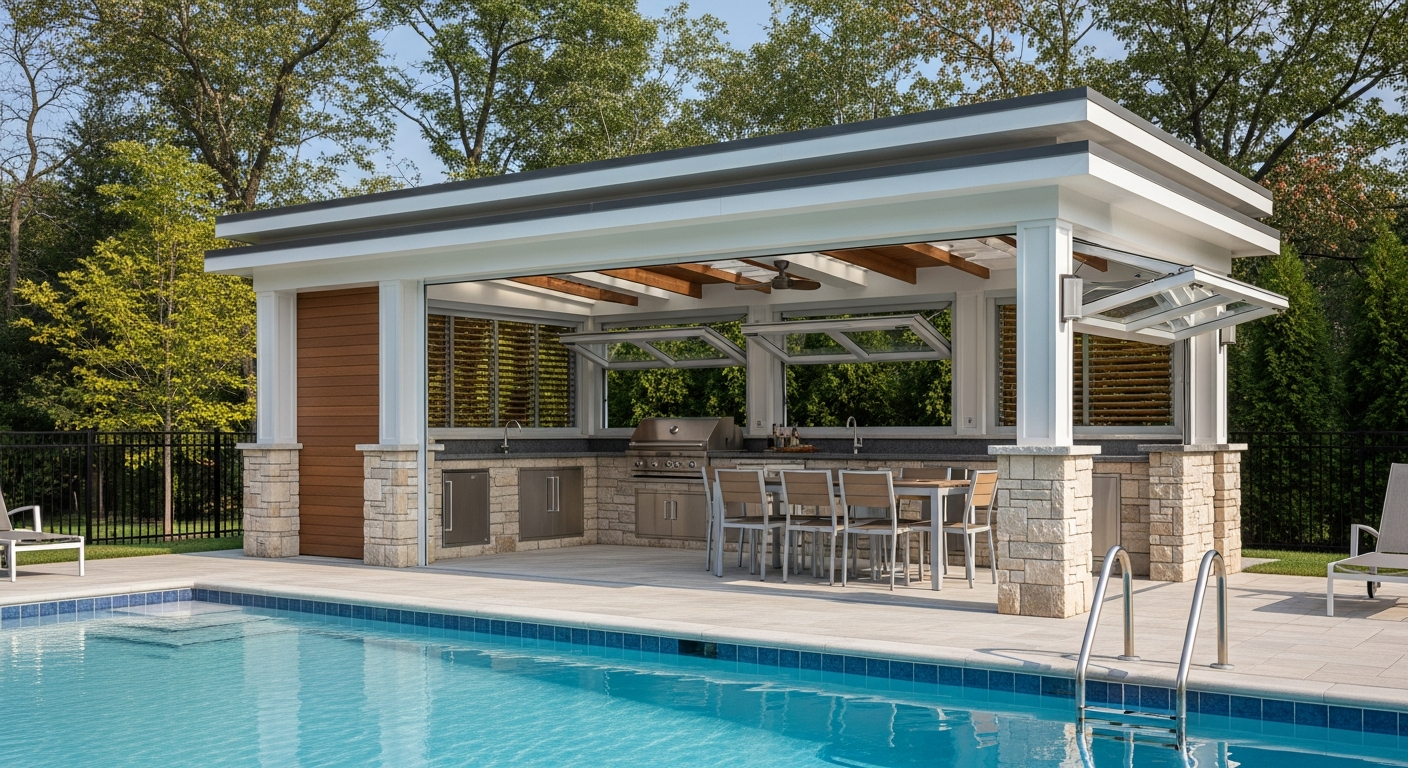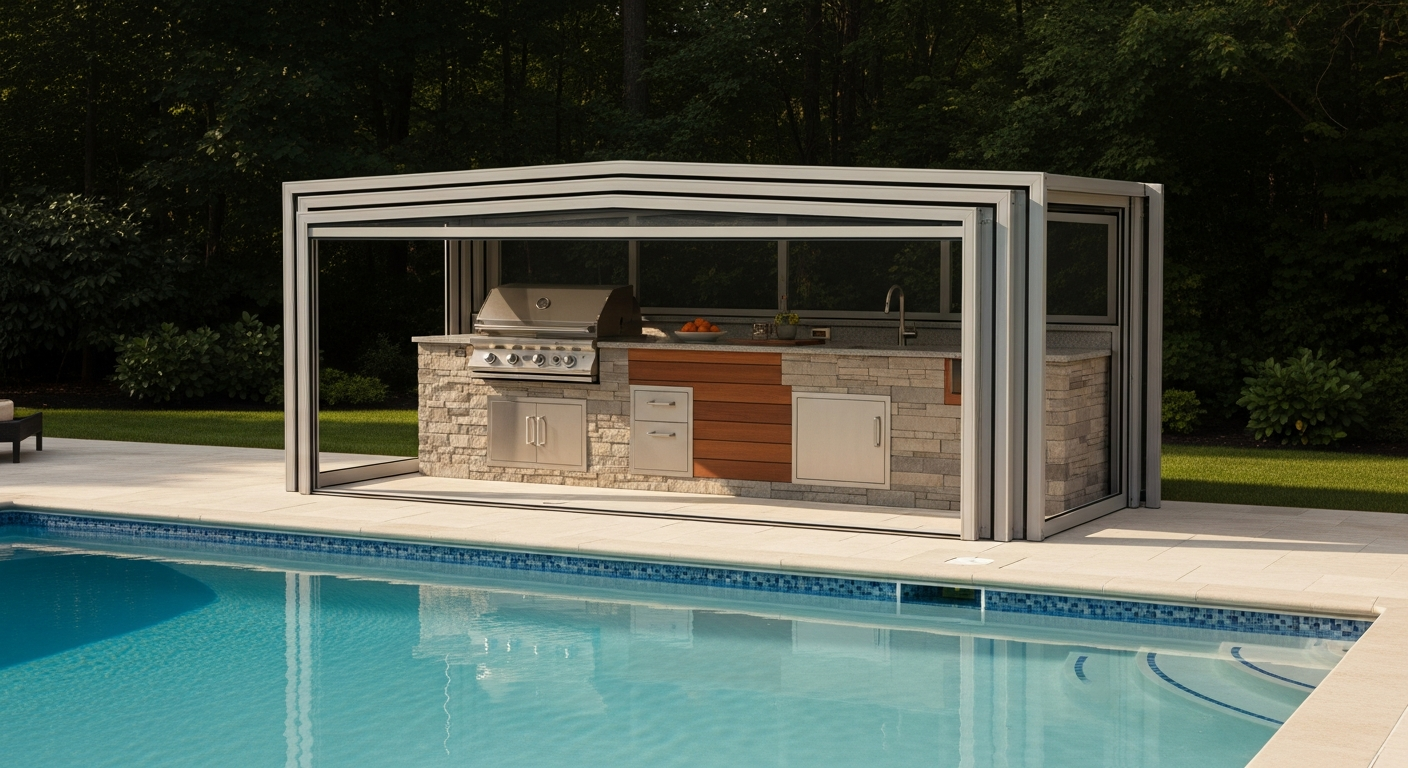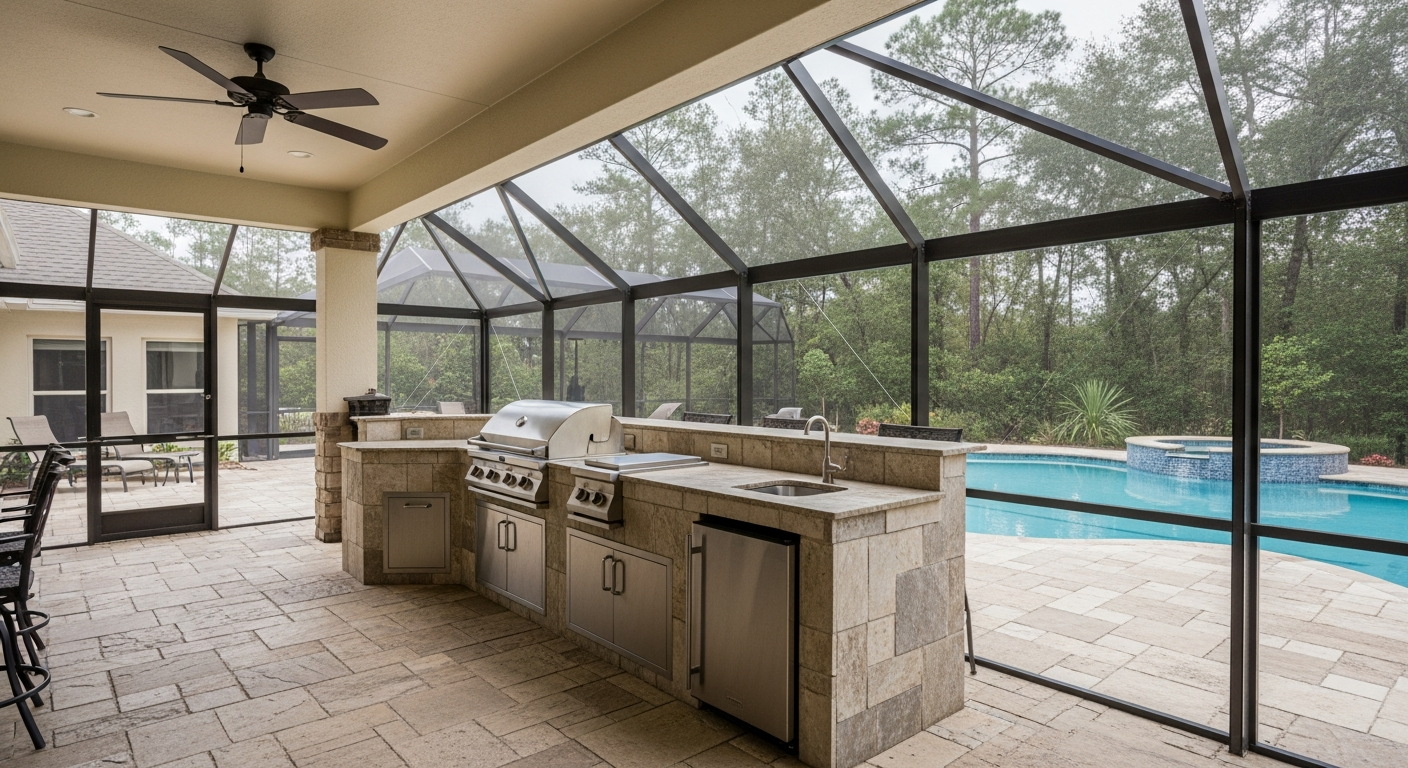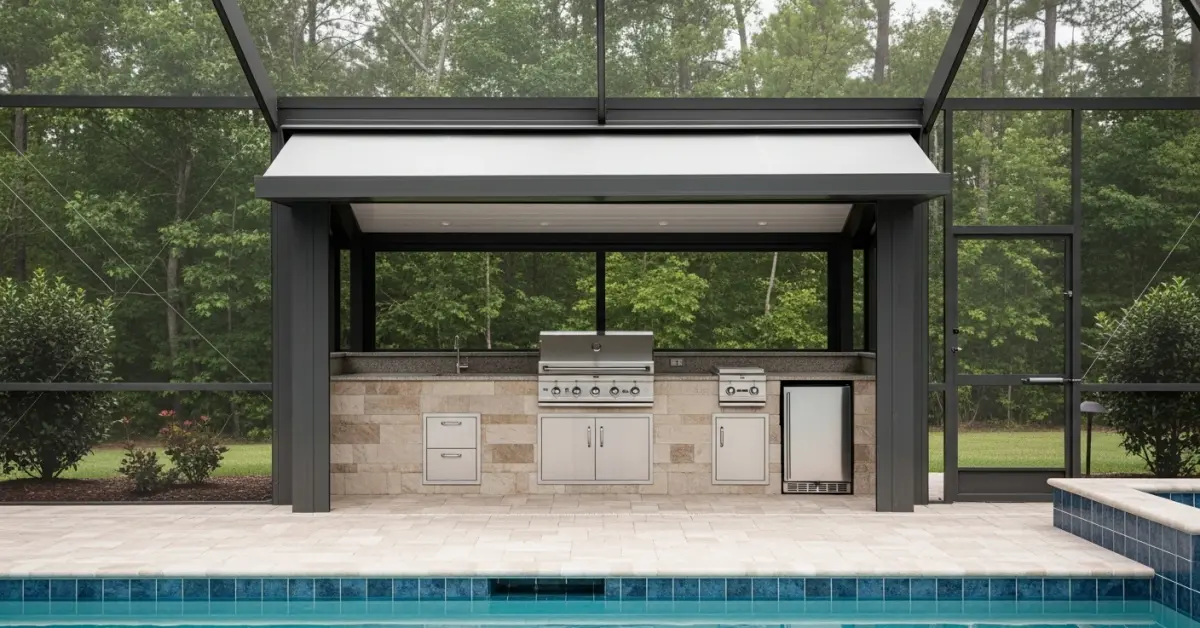
Enclosed Outdoor Kitchen Pasco County: A Framework for 99% Uptime and Zero Material Failure
After designing and troubleshooting dozens of outdoor kitchens across Pasco County, from the newer developments in Trinity to the sprawling lots in Land O' Lakes, I’ve seen one catastrophic and expensive mistake repeated constantly: treating an enclosed outdoor kitchen like an indoor one. The unique combination of intense humidity, high UV index, and salt-tinged air in our region creates a pressure cooker for material degradation. A beautiful project can look worn and fail functionally in under 24 months if the wrong specifications are used. My entire approach is built on a proprietary methodology I call the Climate-Defense Framework. It’s not about just picking "weather-resistant" materials off a shelf; it's about engineering a complete system where the enclosure, ventilation, and materials work in concert to combat the specific environmental challenges we face here in Pasco. This is the only way to ensure your investment is functional and beautiful for years, not just a single season.My Climate-Defense Framework for Pasco County Kitchens
The fundamental flaw I see in most designs is a lack of system integration. An expensive grill is installed under a basic lanai screen with standard quartz countertops. Six months later, the homeowner calls me because the quartz is yellowing, the stainless steel shows rust spots, and the "enclosed" space is unusable on a calm day due to trapped smoke. My framework addresses this by forcing a hard look at three core components before a single dollar is spent on appliances. The goal is to move beyond aesthetics and focus on performance metrics. I track Material Longevity Index (MLI) and Functional Airflow Rate (FAR). A project isn't a success unless it can withstand a Pasco County summer thunderstorm and be ready to use 10 minutes after the rain stops, with no lingering smoke or moisture issues. This is the standard I hold myself to.Deconstructing Material Failure Under Florida's Humidity and UV Index
This is where the details make or break the project. Generic advice fails here. I learned the hard way on an early Wesley Chapel project that "exterior grade" doesn't mean "Pasco County grade."- Stainless Steel Corrosion: The default choice is 304-grade stainless steel. This is a critical error. In our humid, slightly saline air, 304-grade will inevitably develop surface rust and pitting. I mandate the use of 316 marine-grade stainless steel for all metallic components, from cabinet pulls to grill housing. The higher molybdenum content provides a dramatic increase in corrosion resistance, adding at least 50% to the component's lifespan.
- Countertop Integrity: Granite is porous and will absorb grease spatters, leading to permanent stains. Many popular quartz brands, despite their durability indoors, contain resins that can yellow under the relentless UV exposure, even through a screen. My go-to specification is Dekton or another Sintered Stone. It's non-porous, highly scratch-resistant, and completely UV-stable. It's a higher initial cost that prevents a full replacement in year three.
- Cabinetry & Structure: Wood, even treated teak, is a non-starter for me. It will warp. My standard is high-density polyethylene (HDPE) or PVC cabinetry. These marine-grade polymers are inert, meaning they don't absorb moisture, will not delaminate, and provide zero food for mold.
The Implementation Protocol: From Foundation to First Cookout
A successful enclosed kitchen is built on a foundation of proper utility planning and airflow engineering. I’ve been called in to fix projects where the gas line was undersized for the grill's BTU output or where the electrical outlets weren't GFCI-rated, a massive safety oversight. My implementation process is a rigid, phase-based checklist to prevent these very issues.- Utility Mapping: Before any framing, we map dedicated gas lines and electrical circuits. Any appliance with a heating element or compressor, like a refrigerator, gets its own 20-amp dedicated circuit to prevent breaker trips. All outlets must be GFCI-protected and have weatherproof-in-use covers.
- Ventilation First: The vent hood is not an accessory; it is the most critical appliance. I calculate the required Cubic Feet per Minute (CFM) based on the grill's total BTU output and the cubic volume of the enclosed space. A common mistake is using a standard indoor hood, which is underpowered and not rated for high-humidity environments.
- Enclosure Selection: A standard 18/14 mesh screen will not stop Pasco County's infamous no-see-ums. I specify a 20/20 mesh screen as the absolute minimum. For true all-weather use, especially to block our driving summer rains, I recommend integrating clear vinyl or acrylic window panels that can be closed during storms.
- Material Installation & Sealing: Every joint, seam, and connection point is a potential entry for moisture. I use only marine-grade sealants and stainless steel fasteners. Using zinc-coated screws is a rookie mistake that will result in rust streaks running down your beautiful structure within one season.
Precision Tuning Your Airflow and Electrical Systems
Once the core components are in, the system needs to be balanced. This is the fine-tuning stage that separates a passable kitchen from a high-performance one. I focus on creating a negative pressure environment when the grill is on, ensuring all smoke and grease are immediately captured and exhausted. This involves testing the vent hood at various fan speeds and ensuring there's adequate makeup air entering the space. For the electrical system, I perform a full-load test. I run every single appliance simultaneously—grill igniters, lights, refrigerator, side burner, everything—to ensure the circuits can handle the peak demand without issue. This simple test uncovers potential problems before they can ruin your first big cookout. It's a quality control step that I've seen countless builders skip. Your grill has a BTU rating, and your enclosure has a cubic volume. Have you calculated the required vent hood CFM to guarantee a negative pressure environment and prevent smoke rollback on a humid Pasco County evening?Written by

Tags
outdoor kitchen
outdoor kitchen grill
outdoor kitchen bbq grill
outdoor kitchen cabinets
outdoor kitchen and grill
Enclosed Outdoor Kitchen in Pasco FL FAQ
What kind of ventilation is absolutely necessary for an enclosed outdoor kitchen to be safe?
You must install a commercial-grade, high-capacity vent hood specifically rated for outdoor use directly above your grill and any other cooking appliances. Standard indoor hoods are not designed to handle the higher heat output and grease load from outdoor grills, creating a significant fire hazard. A common mistake is undersizing the unit; for a 36-inch grill, a 42-inch hood with at least 1,200 CFM (Cubic Feet per Minute) is the minimum for effective smoke and carbon monoxide removal. Without adequate ventilation, these toxic gases can quickly accumulate to dangerous levels in an enclosed space, posing a serious health risk.
Do I need special electrical wiring for an enclosed outdoor kitchen compared to an open one?
Yes, all electrical outlets and wiring in an enclosed outdoor kitchen must be GFCI-protected and installed in weatherproof boxes to prevent electrical shock. Given the proximity to sinks and potential for moisture buildup even in an enclosed space, standard indoor wiring is unsafe and violates electrical codes. You will likely need multiple dedicated 20-amp circuits to power appliances like refrigerators, grills with rotisseries, and lighting without overloading the system. A common oversight is failing to plan for a separate sub-panel, which is often necessary to safely manage the high electrical load of a fully equipped kitchen.
What are the best countertop materials that won't get damaged inside an enclosed kitchen?
Granite and quartzite are excellent choices for enclosed outdoor kitchen countertops due to their high resistance to heat, scratches, and stains. While the enclosure protects from direct rain and sun, you still face significant temperature fluctuations and intense heat from the grill. Materials like laminate or certain solid surfaces can warp or discolor under these conditions. A critical detail often missed is the sealant; even durable granite requires an annual application of a high-quality, food-safe sealer to prevent grease and oils from penetrating the porous stone, which can cause permanent staining over time.
Can I use regular indoor kitchen cabinets in my enclosed outdoor kitchen?
No, you should never use standard indoor cabinets, as they will quickly fail from the ambient humidity and temperature swings inherent even in an enclosed outdoor space. Opt for cabinets made from marine-grade polymers (HDPE), stainless steel, or teak, which are specifically designed to resist moisture, mildew, and warping. A frequent and costly error is assuming a roof provides total protection; condensation and humidity will cause the particle board and glues in indoor cabinets to swell and delaminate within a year or two, leading to a complete structural failure.
Is a floor drain required in an enclosed outdoor kitchen?
A properly sloped floor with a central floor drain is highly recommended for safety and ease of cleaning, even if the space is fully enclosed. Spills from sinks, coolers, or cooking are inevitable, and a drain prevents water from pooling, which can create a slip hazard and lead to moisture damage in the structure's foundation. The floor should be pitched at a minimum of a 1/4 inch drop per foot towards the drain. Homeowners often skip this feature to save on initial costs, only to find that hosing down greasy floors becomes a major chore that risks water damage to walls and cabinetry.
How do I prevent pests like insects and rodents from getting into my enclosed kitchen?
Effective pest control requires sealing all potential entry points and maintaining strict cleanliness, as the enclosure itself can attract pests seeking shelter and food. Ensure all windows and doors are fitted with tight-sealing screens and weather stripping, and seal any gaps where utility lines for water, gas, or electricity enter the structure. A crucial step many people forget is to install a screened, pest-proof cover on the exterior ventilation duct termination point. Otherwise, your exhaust system becomes an open invitation for rodents and insects to build nests directly inside your kitchen's ductwork.