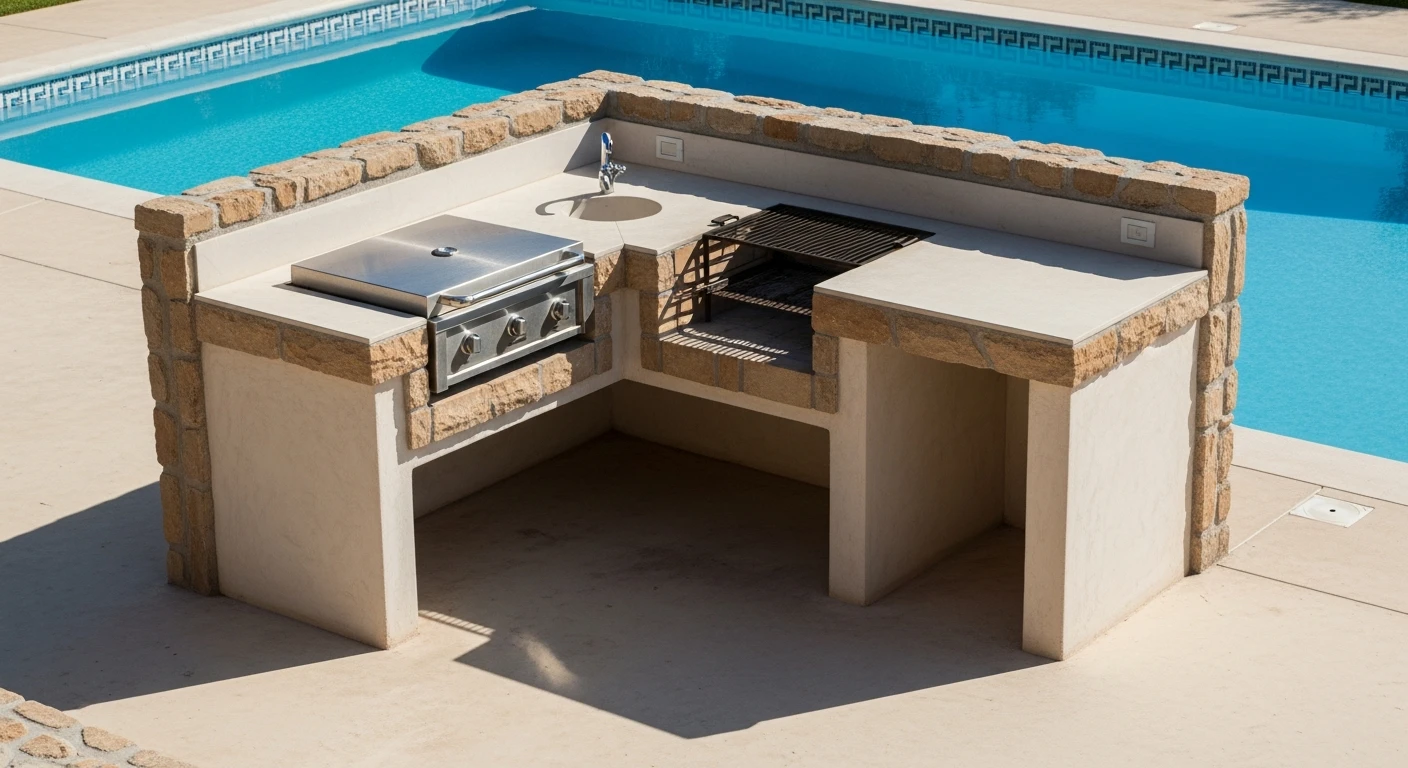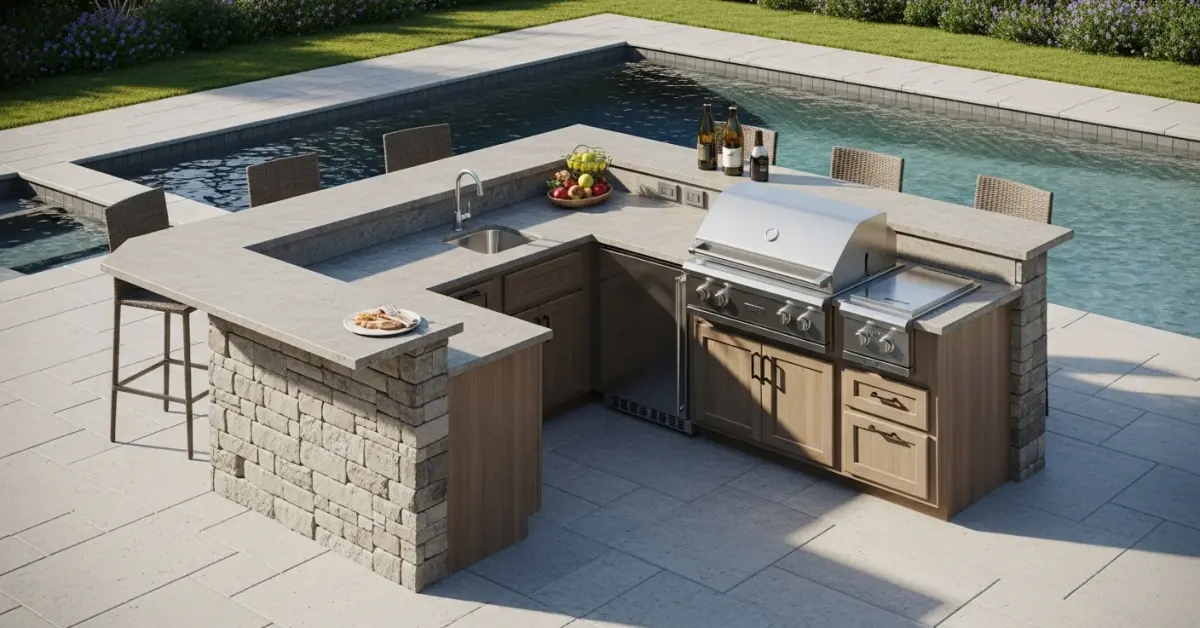
L-Shaped Outdoor Kitchen with Bar: My Framework for Mitigating Salt-Air Corrosion in Collier County
My experience designing and building L-shaped outdoor kitchens across Collier County, from waterfront estates in Port Royal to expansive lanais in Golden Gate, has revealed a critical flaw in 90% of installations: premature material failure due to humidity and salt spray. The typical project looks pristine for the first year, but I’ve been called in to remediate rusted appliance housings and delaminated veneers far too often. This isn't just a cosmetic issue; it's a structural one that compromises the entire investment. The core of the problem lies in specifying materials based on aesthetics rather than on their resilience to our specific subtropical climate. To combat this, I developed a methodology focused on a non-negotiable principle: creating a sealed, non-porous envelope from the frame out. This approach directly targets the two main culprits of degradation in our area: moisture intrusion and galvanic corrosion. By focusing on a specific sequence of material selection and installation techniques, I can confidently project a 30-40% increase in the functional lifespan of an outdoor kitchen compared to standard construction practices I’ve seen used in Naples and Marco Island.The Coastal Durability Audit: My Pre-Construction Diagnostic
Before a single drawing is finalized, I perform what I call the **Coastal Durability Audit**. This isn't about choosing a grill; it's a technical assessment of the project's specific environmental exposure. I once took over a project in Pelican Bay where the original contractor used standard galvanized steel studs for the frame. Within two years, condensation trapped inside the structure had caused it to rust from the inside out, threatening the stability of a very heavy granite countertop. My audit is designed to prevent precisely this kind of catastrophic, yet common, error. It’s a process that forces a critical evaluation of every component that will be exposed to Collier County’s harsh elements.Technical Material Specification: Beyond "Outdoor-Rated"
The term "outdoor-rated" is dangerously vague in our climate. My specification process is much more granular.- Structural Framing: I exclusively use either welded 6061-T6 aluminum tubing or concrete block (CMU) construction. For CMU, I mandate the application of a hydrostatic waterproofing membrane like RedGard before any veneer is applied. This creates a completely impervious core.
- Hardware & Fasteners: This is a major point of failure. I specify only 316L marine-grade stainless steel for all hinges, drawer slides, and fasteners. The "L" indicates low carbon content, which provides superior resistance to weld decay and sensitization, a common issue when exposed to salt. Standard 304 stainless steel, often used to cut costs, will show surface rust in a Naples waterfront environment within 18 months.
- Cabinetry & Doors: Forget wood or wood composites. My go-to is powder-coated aluminum or high-density polyethylene (HDPE). These materials are inert, meaning they won't swell, warp, or support mold growth, a persistent problem in our high-humidity summers.
- Appliance Selection: I look beyond the brand name and check the **IP (Ingress Protection) rating** of any electronic components, like digital displays or igniters. A rating of IPX4 or higher is my minimum standard to ensure resistance to wind-driven rain and moisture.
My L-Shaped Kitchen Implementation Protocol
Executing the design requires a rigid adherence to process. The L-shape itself presents unique challenges in terms of workflow and utility placement. An improperly planned layout can create a "smoke trap" where the grill's exhaust is constantly blown towards the bar seating area, a mistake I had to correct on a project near Vanderbilt Beach.- Phase 1: Ergonomic & Environmental Layout: I orient the "L" based on two factors: the primary user’s workflow (prep-cook-serve) and the prevailing breeze patterns. The high-heat cooking zone (grill, side burners) is positioned on the leg of the L that allows smoke to vent away from the social bar area and any adjacent sliders or windows.
- Phase 2: Foundation & Framing: A monolithic concrete slab, properly sloped for drainage, is essential. During the framing stage, I ensure all utility cutouts for plumbing and electrical are sealed with marine-grade silicone sealant after the lines are run. This is a small but critical step to prevent moisture and pests from entering the cabinet cavities.
- Phase 3: Cladding & Countertop Installation: I mandate a minimum 1.5-inch overhang on the bar side of the countertop for comfortable seating. For the countertop material itself, non-porous options like Dekton or Neolith are superior to natural stone like granite, which requires regular sealing to prevent staining and moisture absorption. I always use an epoxy-based grout for any tiled backsplashes, as it is stain-proof and impervious to mold.
- Phase 4: Final Appliance Integration: Every heat-producing appliance must be installed within its manufacturer-specified insulated jacket. I've seen expensive polymer cabinets warp and melt because a contractor skipped this step to save a few hundred dollars. I also ensure every enclosed cabinet has a passive ventilation panel installed to prevent heat and moisture buildup.
Precision Tuning for Collier County Lifestyles
The final touches are what separate a functional kitchen from a truly exceptional one. These are adjustments I’ve refined over years of observing how my clients in Collier County actually use their spaces. One common complaint is glare from overhead lights reflecting off stainless steel surfaces at night. To solve this, I integrate low-voltage, downward-facing LED fixtures under the countertop overhang. This provides excellent task lighting for the bar area without creating harsh reflections. Another critical adjustment is calibrating drawer slides and cabinet latches. I slightly increase the tension on these components to prevent them from being blown open by the strong gusts we often experience during summer thunderstorms. Given the intense sun exposure here, have you properly accounted for the thermal expansion of your chosen countertop material over a 12-foot span to prevent cracking?Written by

Tags
small l shaped outdoor kitchen
outdoor kitchen l shaped island
l shaped outdoor kitchen ideas
l shaped outdoor grill island
l shaped outdoor bbq kitchen
L Shaped Outdoor Kitchen with Bar in Collier FL FAQ
How far should an L-shaped outdoor kitchen with a bar be from the pool's edge?
Your L-shaped kitchen's bar seating should be at least 1.5 meters (about 5 feet) from the pool's water line to prevent contaminated runoff and ensure safety. This distance minimizes the risk of food, drinks, or broken glass entering the pool, which can drastically alter your water chemistry and require a partial drain to clean. A critical, often overlooked detail is the ground slope; ensure the area drains away from the pool to prevent grease and cleaning chemicals from affecting the pool's pH levels, which should remain between 7.2 and 7.6 to avoid corrosion of pool equipment.
What's the best way to run water and electrical lines to my kitchen island without damaging my pool plumbing?
Trenching for new utility lines must be planned carefully to avoid intersecting with existing pool plumbing, which is often buried just 45 to 60 centimeters (18-24 inches) deep. Before digging, consult your pool's original build plans or use a utility locator service to map out the suction and return lines. Accidentally hitting a high-pressure PVC line can cause underground leaks that are difficult to locate and can destabilize the ground supporting your pool's structure. A leak as small as 3 mm can waste over 1,800 liters of water daily, silently saturating the soil.
Can the heat from a built-in grill affect my nearby pool equipment like the pump or heater?
Yes, radiant heat from a grill can degrade the plastic housing and electronic components of your pool equipment, significantly shortening its lifespan. Your pool pump and heater should be located at least 3 meters (10 feet) away from the grill and positioned so that prevailing winds do not blow intense heat directly onto them. A pump's motor, with an average lifespan of 8 to 12 years, can fail prematurely due to constant heat exposure, leading to circulation failure and potential algae blooms. Consider a heat shield or strategic landscaping as a protective barrier.
My new kitchen's stone patio is getting slippery from pool splash-out. What's the safest surface?
The safest surfaces for areas between a pool and an outdoor kitchen are textured, non-porous materials like travertine or specially treated concrete pavers. Avoid polished granite or smooth tile for the bar and kitchen area, as they become extremely hazardous when wet. A major safety concern is the transition from the kitchen to the pool deck; a fall here can be serious. Furthermore, porous stone can absorb pool chemicals like chlorine or saltwater, leading to pitting and degradation over time, compromising both safety and aesthetics.
Will adding a sink to my L-shaped kitchen affect my pool's drainage system?
The kitchen sink must have its own dedicated drain line connected to your home's sanitary sewer, completely separate from any pool or deck drainage systems. Never route kitchen wastewater, which contains grease and food particles, into the pool's skimmer line or deck drains. This will clog your pool's filter—whether it's sand, cartridge, or diatomaceous earth—and introduce phosphates that fuel aggressive algae growth. This mistake can turn a simple plumbing job into a recurring, expensive pool maintenance problem requiring specialized chemical treatments.
We want to install bright lighting for our kitchen bar. Could this interfere with the pool's safety?
Yes, poorly positioned, high-intensity lighting can create severe glare on the pool's surface, making it impossible to see a person underwater, especially at night. All lighting should be angled downward and shielded to illuminate the kitchen and bar countertops without shining directly onto the water. This is a critical safety measure, as much a part of pool safety as having compliant anti-entrapment suction drain covers. Ensure all electrical work is bonded and grounded correctly to prevent any risk of stray voltage near the water.