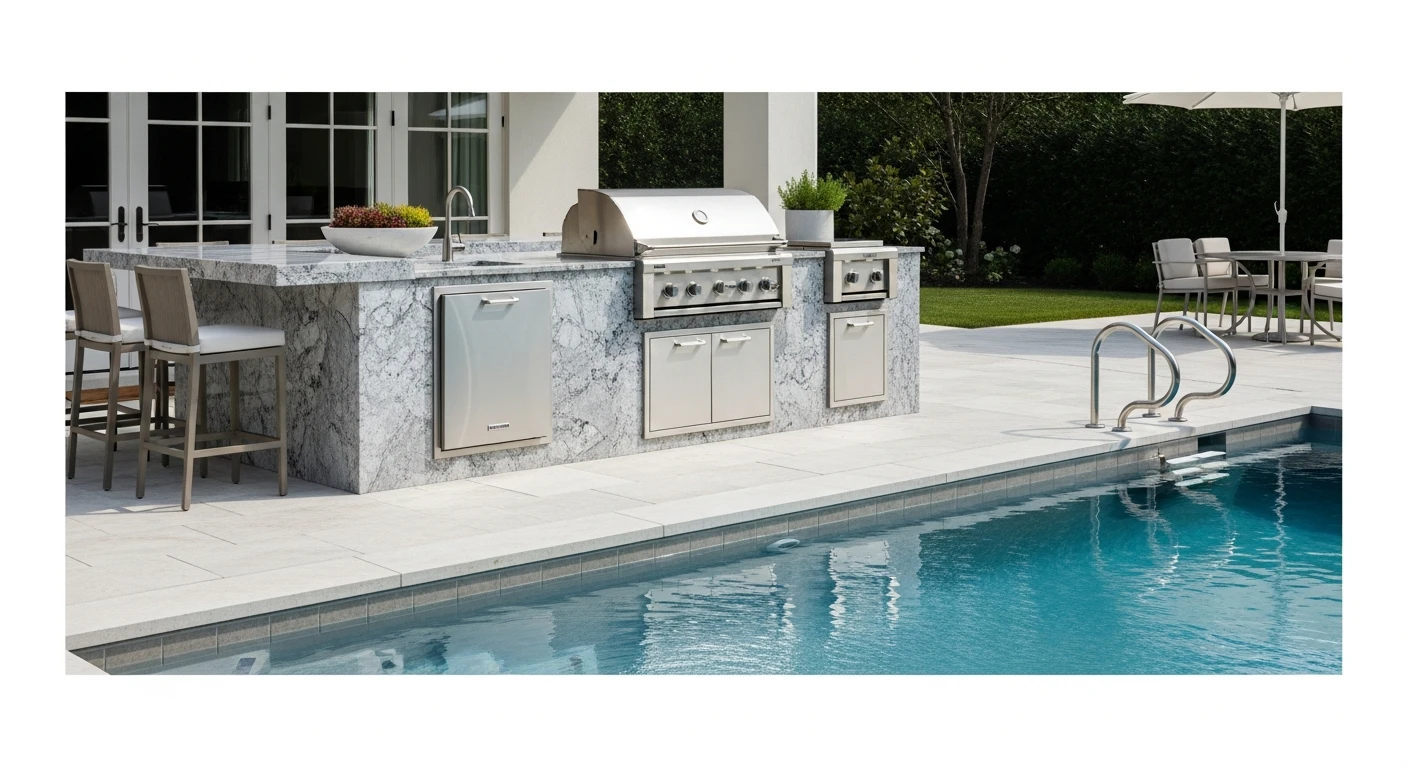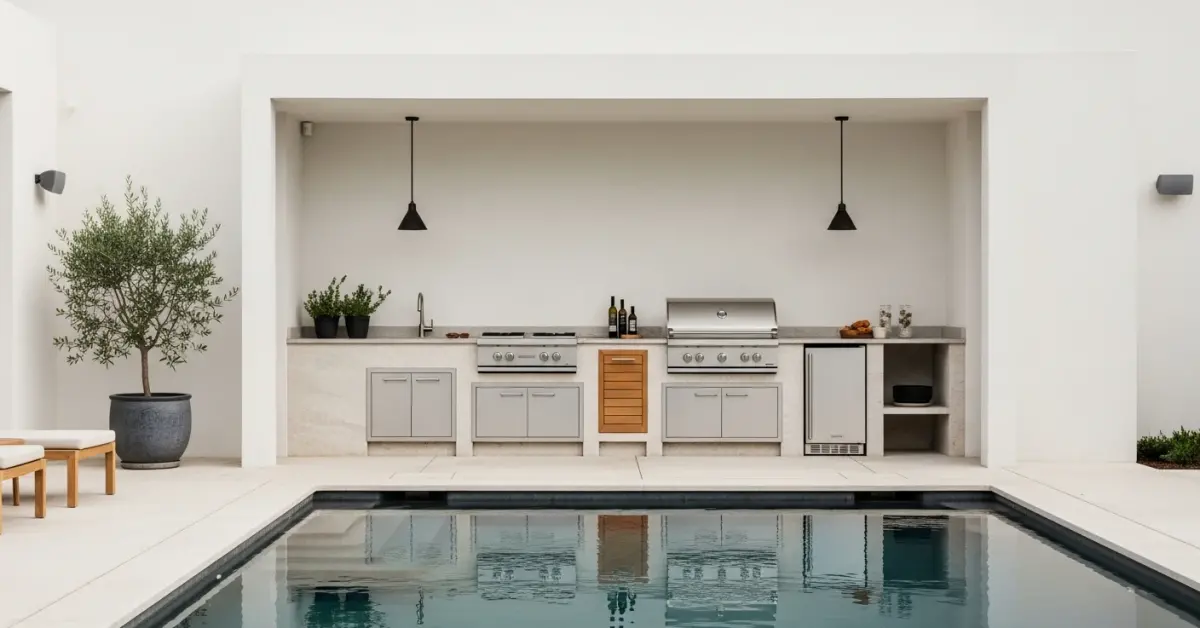
Luxury Outdoor Kitchen in Orange County: My 316L Marine-Grade Protocol for Corrosion Immunity
After designing and consulting on dozens of high-end outdoor kitchen projects from Newport Coast to Laguna Beach, I've pinpointed the single most costly failure point. It isn't the grill or the countertop choice; it's the insidious effect of Orange County's salt-laden marine layer on improperly specified metals. A beautiful, six-figure installation can show pitting and rust stains within 24 months. My entire methodology is built around preventing this degradation, focusing on a specific material science principle that most contractors overlook. This isn't about just choosing "stainless steel"; it's about mandating a specific grade—316L Marine-Grade Steel—for every single metallic component, from cabinet pulls to grill chassis. This protocol is the difference between a 5-year lifespan and a 25-year investment.My Coastal Durability Audit: Beyond the Aesthetics
When I'm brought in to assess a potential project, I don't start with layouts or appliance brands. I start with a site-specific corrosion analysis. The proximity to the coast in places like Corona del Mar dictates a completely different material palette than a project further inland in Irvine. I’ve seen countless projects fail because a contractor applied a one-size-fits-all approach, using standard 304-grade stainless steel which is simply not equipped for the chloride exposure here. My proprietary audit is a non-negotiable first step. It evaluates the project's specific microclimate, including direct salt spray exposure and humidity patterns, to create a bill of materials that guarantees longevity.The Technical Specification Mismatch in OC Homes
The critical error I constantly uncover is the "stainless steel" ambiguity. Most builders and even some designers specify "304-grade stainless" because it's the industry standard and less expensive. What they fail to account for is the chemistry. 304-grade steel lacks molybdenum, an element critical for resisting chloride-induced corrosion. In an environment like Orange County, where the salty air is a daily reality, 304-grade steel will inevitably develop surface rust and pitting. I once remediated a project in a beautiful Laguna Niguel estate where rust from the 304-grade cabinet handles had permanently stained a US$20,000 quartzite countertop. The fix required replacing every metallic element with 316L grade steel, which contains that crucial 2-3% of molybdenum, effectively immunizing it against the coastal air.Implementation Framework: From Slab to Service
Executing a corrosion-proof outdoor kitchen requires military-grade precision from the ground up. I operate on a strict, phase-gated process that leaves no room for error. This isn't just a checklist; it's a sequence of dependent actions where one failure compromises the entire system.- Phase 1: Utility & Drainage Blueprint. Before any concrete is poured, I map the infrastructure. This means calculating the total BTU load for all gas appliances to ensure the gas line is sized correctly—a 1-inch line is often necessary for high-performance grills, a detail frequently missed. We also establish a minimum 1/4-inch per foot slope for the patio slab and integrate sub-slab drainage to prevent water from ever pooling near the cabinetry.
- Phase 2: Material Mandate. Every single metal component is specified and verified upon delivery. This is a zero-tolerance checkpoint. All cabinetry, appliances, fasteners, screws, and hardware must be certified 316L marine-grade stainless steel. I've stopped work on a site in Newport Beach because the contractor tried to substitute 304-grade screws, a seemingly small detail that would have created rust points across the entire installation within a year.
- Phase 3: Countertop & Surface Integration. For Orange County's relentless sun, countertop choice is critical. While natural stone is popular, I often recommend ultra-compact surfaces like Dekton. Its zero-porosity structure means it won't stain from red wine or citrus, and its UV stability prevents fading, a common issue with darker granites in our climate.
- Phase 4: Ventilation System Engineering. With our dry conditions and occasional Santa Ana winds, proper ventilation is a safety-critical system. I specify vent hoods with a minimum of 1200 CFM (Cubic Feet per Minute) and ensure the ducting is engineered to handle crosswinds without compromising performance or creating a fire hazard from grease buildup.
Precision Tuning for the Orange County Climate
The final 10% of the work is what separates a good project from a flawless one. This is where we fine-tune the details for our specific environment. It involves inspecting every weld on the grill and cabinetry for full penetration to eliminate crevices where salt and moisture can accumulate. All stone surfaces are sealed with a UV-resistant, silane-based impregnating sealer, which penetrates deeper and lasts three times longer than cheaper topical sealers. Finally, every electrical component, from outlets to lighting, must have a minimum IP65 rating, certifying it as dust-tight and protected against water jets—a non-negotiable for longevity and safety near the coast. Your designer specified "stainless steel" for your outdoor kitchen, but have you confirmed the specific grade and molybdenum content to withstand your home's exact distance from the Newport coastline?Written by

Tags
high end outdoor kitchen designs
modern luxury outdoor kitchen
high end outdoor grills built in
kitchen bbq grill
outdoor kitchen luxury
Luxury Outdoor Kitchen in Orange FL FAQ
What kind of foundation do I need for a luxury outdoor kitchen, and can I just use my existing patio?
Your outdoor kitchen requires a dedicated, reinforced concrete slab foundation at least 10 cm thick to support the immense weight of stone countertops and heavy appliances. Placing heavy structures directly on an existing paver or thin concrete patio often leads to cracking and an unsafe, unlevel cooking surface within a few seasons. Improper foundation work is a primary cause of structural failure, leading to costly repairs like releveling the entire unit and fixing cracked gas or water lines that were stressed by the shift.
How do I choose between a built-in grill and a standalone one for a high-end setup?
A built-in grill offers a seamless, integrated look and superior stability, but it permanently fixes the layout of your kitchen and makes future upgrades or replacements significantly more complex. Standalone cart grills offer flexibility, but they create gaps in countertops and can feel less permanent. A critical factor people miss is serviceability; a built-in unit may require partial deconstruction of your counter for major repairs, whereas a standalone grill can be easily moved or swapped out, a key consideration for equipment with an average lifespan of 8 to 12 years.
Are stainless steel cabinets really the best option for outdoor weather?
Marine-grade 316 stainless steel is the superior choice for outdoor cabinets due to its enhanced corrosion resistance, especially in coastal or poolside areas with salt and chlorine exposure. Many homeowners opt for the less expensive 304-grade steel to save money, only to find rust spots appearing within a few years. While powder-coated steel offers color options, any scratch that penetrates the coating becomes an immediate entry point for rust, compromising the structure much faster than the raw, corrosion-resistant surface of high-grade stainless steel.
Do I really need a ventilation hood for my outdoor grill?
A ventilation hood is essential if your grill is located under any type of permanent roof, pergola, or covered structure, as required by most local building codes. Without proper ventilation, smoke, grease, and carbon monoxide can accumulate, creating a fire hazard and staining your overhead structure with a thick, grimy film. A common mistake is under-sizing the unit; the hood should be wider than the cooking surface to effectively capture all emissions, especially in windy conditions, preventing long-term discoloration and potential structural damage from grease buildup.
What are the most common points of failure in an outdoor kitchen's plumbing system?
The most frequent plumbing failures occur from freeze-burst damage to water lines that were not properly winterized and drained before the first hard frost. Even a small amount of trapped water can expand and crack pipes, leading to significant leaks and water damage inside the cabinet structure once thawed. Another critical failure point is the drain line for the sink; using improper materials that degrade with UV exposure or installing it without a proper slope can lead to clogs and foul odors, turning your luxury space into a maintenance headache.
Beyond the grill, what appliances are most prone to issues in an outdoor environment?
Outdoor refrigerators and ice makers are the most problematic appliances due to their constant battle with ambient heat and humidity, forcing their compressors to work much harder than indoor models. A common oversight is failing to provide adequate ventilation clearance around these units as specified by the manufacturer, often leading to premature compressor failure. This is a critical detail, as a failing refrigerator can struggle to maintain a food-safe temperature, posing a health risk in addition to the eventual cost of replacing the entire unit.