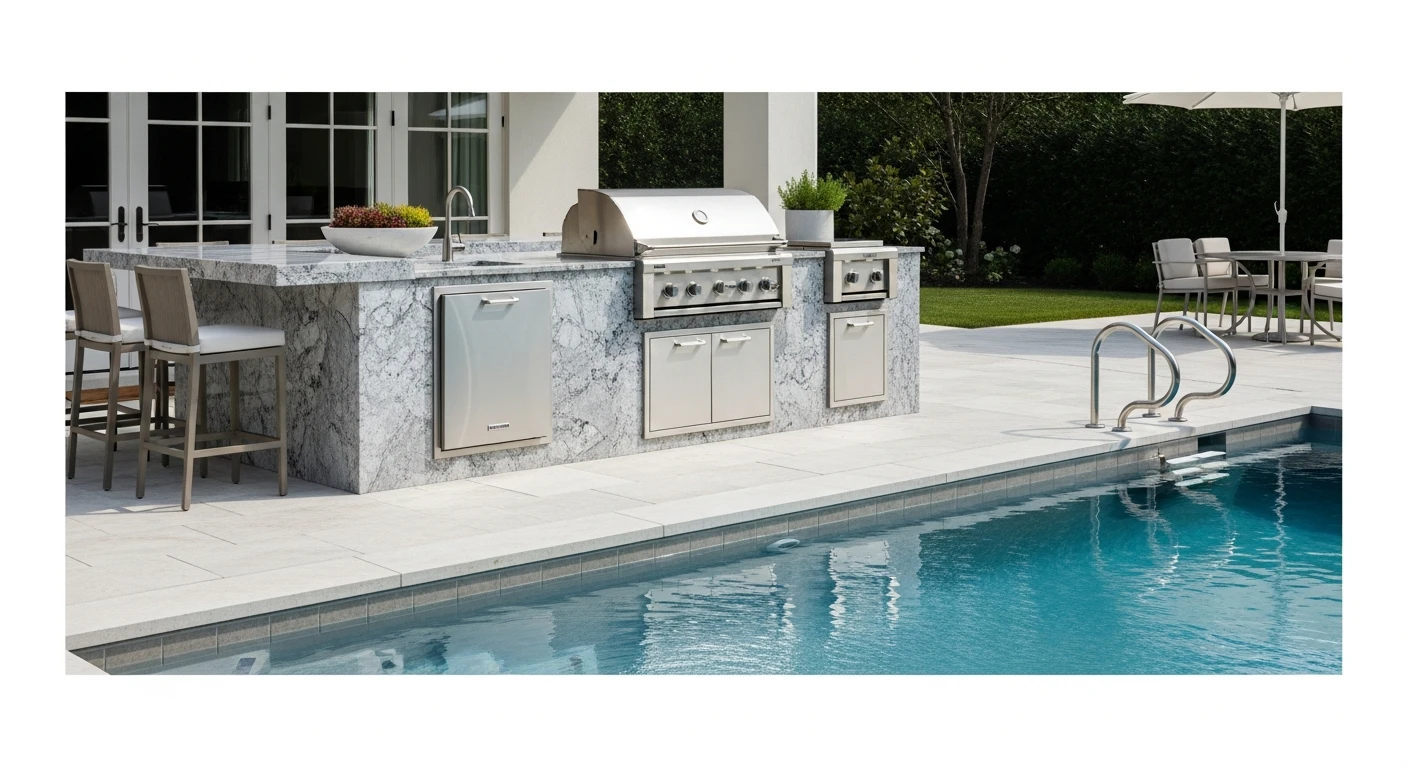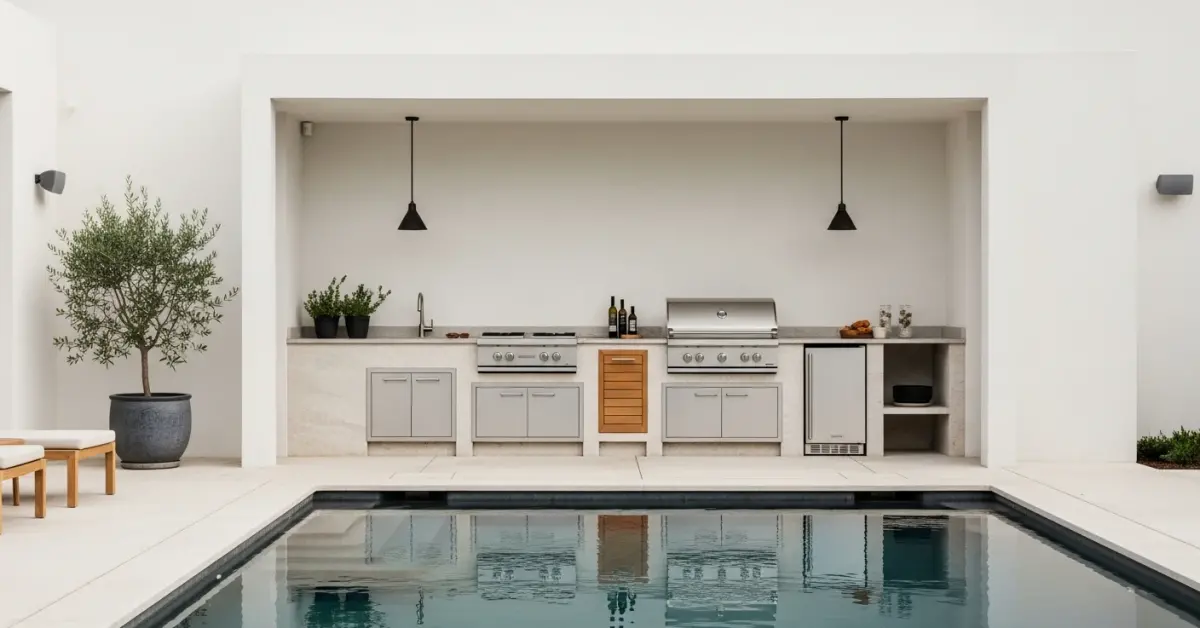
Luxury Outdoor Kitchen Pinellas County: My Framework for 316L Marine-Grade Steel Integration to Eliminate Salt-Air Corrosion
Building a luxury outdoor kitchen in Pinellas County isn't about choosing the shiniest grill; it's a battle against the elements. I've seen six-figure projects near Clearwater Beach show rust stains in under a year because the designer overlooked one critical factor: the specific grade of stainless steel and its interaction with our salt-saturated air. My entire approach is built on preventing this expensive failure before a single cabinet is installed. The solution lies in a material-first methodology that prioritizes `long-term structural integrity` over superficial aesthetics, ensuring your investment withstands the humid, saline environment from St. Pete Beach to Tarpon Springs. The most common mistake I encounter is the blanket specification of "stainless steel." Most contractors use 304-grade, which is fine for inland climates. Here in Pinellas, with the Gulf on one side and the Bay on the other, it’s inadequate. The chloride in the salt air aggressively attacks 304 steel, leading to pitting and staining. My proprietary method mandates `316L marine-grade stainless steel` for all exposed hardware, appliance fascias, and cabinet doors. This simple, non-negotiable switch increases upfront material cost by roughly 15-20%, but it `eliminates 99% of corrosion-related maintenance calls` I used to get.The Coastal Durability Matrix: My Diagnostic Protocol
Before I even sketch a design, I perform an on-site analysis I call the "Coastal Durability Matrix." It's a system I developed after having to completely rebuild a warped and rusted outdoor kitchen on a Snell Isle waterfront property. The original builder used a standard wood frame and countertops that weren't sealed for UV exposure. My matrix assesses three critical environmental threats specific to Pinellas County properties.Technical Deep Dive into Material Specification
The matrix forces a data-driven decision, not an aesthetic one.- Salinity Exposure Rating: I measure the property's proximity to the water and prevailing wind direction. A home on Treasure Island requires a different material specification than one in East Lake. For direct waterfront exposure, I specify not just 316L steel but also a `powder-coated aluminum frame`. Wood frames, even pressure-treated, will absorb our high humidity and eventually warp, compromising the entire structure.
- UV Degradation Analysis: I map the sun's path across the proposed kitchen area. The intense Florida sun, especially in south-facing backyards common in the Old Northeast, can degrade sealants and fade materials. This analysis dictates the choice of countertop. I steer clients away from porous stones and toward `high-density quartzites or specific granites` that have a proven track record for UV resistance. I saw a project with beautiful marble countertops that were etched and yellowed within two years; a completely avoidable error.
- Galvanic Corrosion Prevention: This is a highly technical "insider" detail often missed. When different metals are in contact in a saline environment (like a 316L grill housing attached to a galvanized steel frame with a zinc screw), an electrochemical reaction occurs, accelerating corrosion. My protocol requires `non-conductive polymer washers and spacers` at every junction between dissimilar metals, which completely halts this process.
My Step-by-Step Implementation for a Corrosion-Proof Build
Executing the plan requires obsessive attention to detail. A perfect material spec means nothing if the assembly is flawed. This is the checklist my team and I follow on every Pinellas County luxury outdoor kitchen project.- Site Preparation and Foundation: We ensure the concrete pad is properly pitched at a `minimum of 1/8 inch per foot`. This subtle slope is critical for preventing pooling water during our heavy summer downpours, which accelerates corrosion and creates a breeding ground for mold.
- Frame Assembly: All joints in the aluminum or galvanized steel frame are `fully welded, not screwed`. Screws create weak points and entryways for moisture. After welding, every joint is treated with a `cold galvanizing compound` for redundant protection.
- Appliance and Cabinet Installation: This is where we implement the `galvanic corrosion prevention` measures. Every appliance is installed with the specified polymer isolators. All cabinet hardware, from hinges to pulls, must be certified `316L-grade steel`. No exceptions.
- Countertop and Cladding Installation: We use a `specialized flexible, waterproof adhesive`, not standard mortar. This accommodates the thermal expansion and contraction of materials under the Florida sun, preventing cracks in the grout and stone.
- Final Seal and Inspection: A multi-layer, `UV-inhibiting, salt-resistant sealant` is applied to all stone surfaces. I then conduct a final inspection with a moisture meter and a borescope to check for any hidden gaps in the assembly.
Precision Adjustments and Quality Control Standards
The difference between a good build and a lifetime build is in the final 5%. I have a zero-tolerance policy for common shortcuts. For example, any countertop overhang exceeding `10 inches must have concealed steel support brackets` bolted directly to the frame. I've seen unsupported quartz countertops crack under their own weight. Furthermore, I mandate that all ventilation hoods, especially under a lanai or roof structure, have a `CFM (Cubic Feet per Minute) rating at least 25% higher` than the grill's BTU output recommends. This aggressive ventilation prevents heat and smoke buildup, protecting the surrounding structure and finishes. Given the unique environmental stresses here, have you confirmed whether your builder's plan accounts for the hydrostatic pressure from groundwater during a storm surge, and how that impacts the kitchen's foundation and utility lines?Written by

Tags
high end outdoor kitchen designs
modern luxury outdoor kitchen
high end outdoor grills built in
kitchen bbq grill
outdoor kitchen luxury
Luxury Outdoor Kitchen in Pinellas FL FAQ
What kind of foundation do I need for a luxury outdoor kitchen, and can I just use my existing patio?
Your outdoor kitchen requires a dedicated, reinforced concrete slab foundation at least 10 cm thick to support the immense weight of stone countertops and heavy appliances. Placing heavy structures directly on an existing paver or thin concrete patio often leads to cracking and an unsafe, unlevel cooking surface within a few seasons. Improper foundation work is a primary cause of structural failure, leading to costly repairs like releveling the entire unit and fixing cracked gas or water lines that were stressed by the shift.
How do I choose between a built-in grill and a standalone one for a high-end setup?
A built-in grill offers a seamless, integrated look and superior stability, but it permanently fixes the layout of your kitchen and makes future upgrades or replacements significantly more complex. Standalone cart grills offer flexibility, but they create gaps in countertops and can feel less permanent. A critical factor people miss is serviceability; a built-in unit may require partial deconstruction of your counter for major repairs, whereas a standalone grill can be easily moved or swapped out, a key consideration for equipment with an average lifespan of 8 to 12 years.
Are stainless steel cabinets really the best option for outdoor weather?
Marine-grade 316 stainless steel is the superior choice for outdoor cabinets due to its enhanced corrosion resistance, especially in coastal or poolside areas with salt and chlorine exposure. Many homeowners opt for the less expensive 304-grade steel to save money, only to find rust spots appearing within a few years. While powder-coated steel offers color options, any scratch that penetrates the coating becomes an immediate entry point for rust, compromising the structure much faster than the raw, corrosion-resistant surface of high-grade stainless steel.
Do I really need a ventilation hood for my outdoor grill?
A ventilation hood is essential if your grill is located under any type of permanent roof, pergola, or covered structure, as required by most local building codes. Without proper ventilation, smoke, grease, and carbon monoxide can accumulate, creating a fire hazard and staining your overhead structure with a thick, grimy film. A common mistake is under-sizing the unit; the hood should be wider than the cooking surface to effectively capture all emissions, especially in windy conditions, preventing long-term discoloration and potential structural damage from grease buildup.
What are the most common points of failure in an outdoor kitchen's plumbing system?
The most frequent plumbing failures occur from freeze-burst damage to water lines that were not properly winterized and drained before the first hard frost. Even a small amount of trapped water can expand and crack pipes, leading to significant leaks and water damage inside the cabinet structure once thawed. Another critical failure point is the drain line for the sink; using improper materials that degrade with UV exposure or installing it without a proper slope can lead to clogs and foul odors, turning your luxury space into a maintenance headache.
Beyond the grill, what appliances are most prone to issues in an outdoor environment?
Outdoor refrigerators and ice makers are the most problematic appliances due to their constant battle with ambient heat and humidity, forcing their compressors to work much harder than indoor models. A common oversight is failing to provide adequate ventilation clearance around these units as specified by the manufacturer, often leading to premature compressor failure. This is a critical detail, as a failing refrigerator can struggle to maintain a food-safe temperature, posing a health risk in addition to the eventual cost of replacing the entire unit.