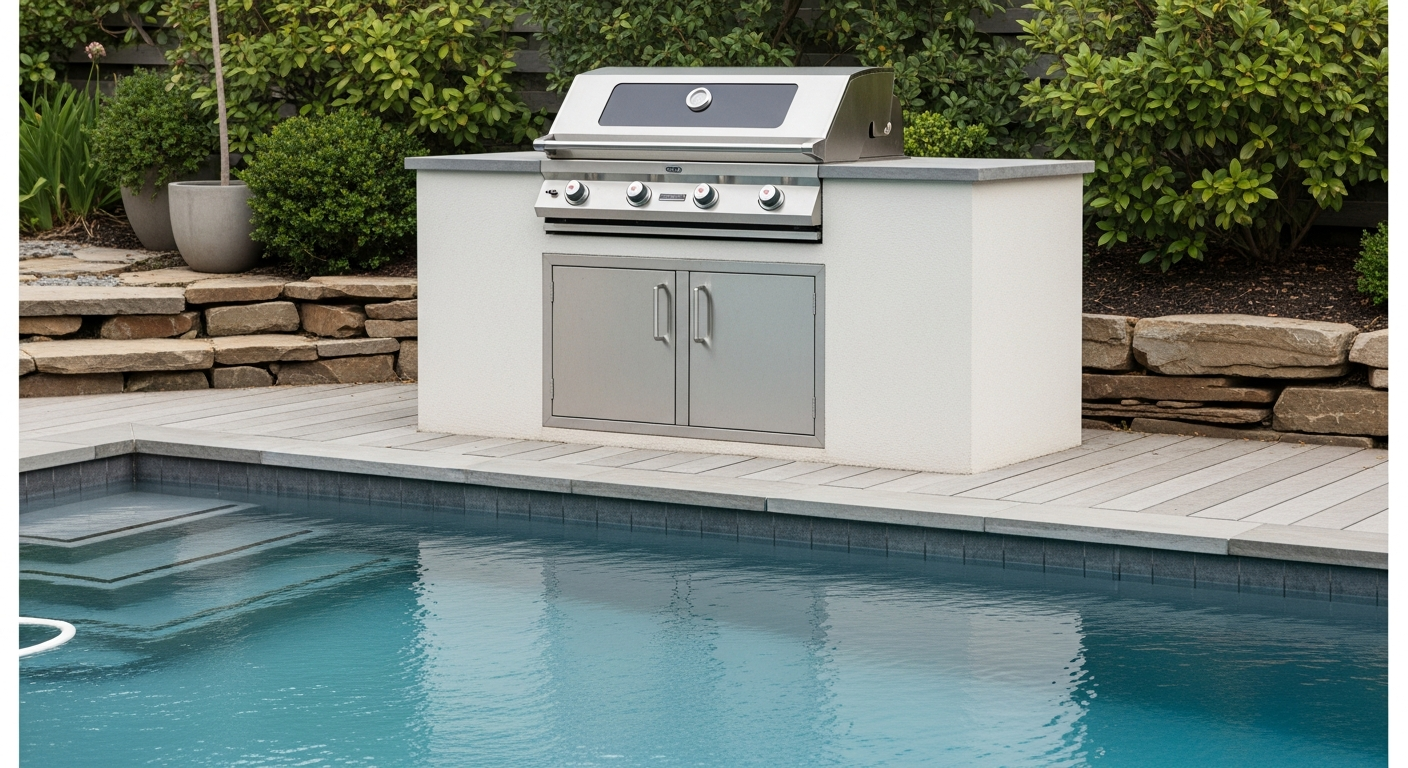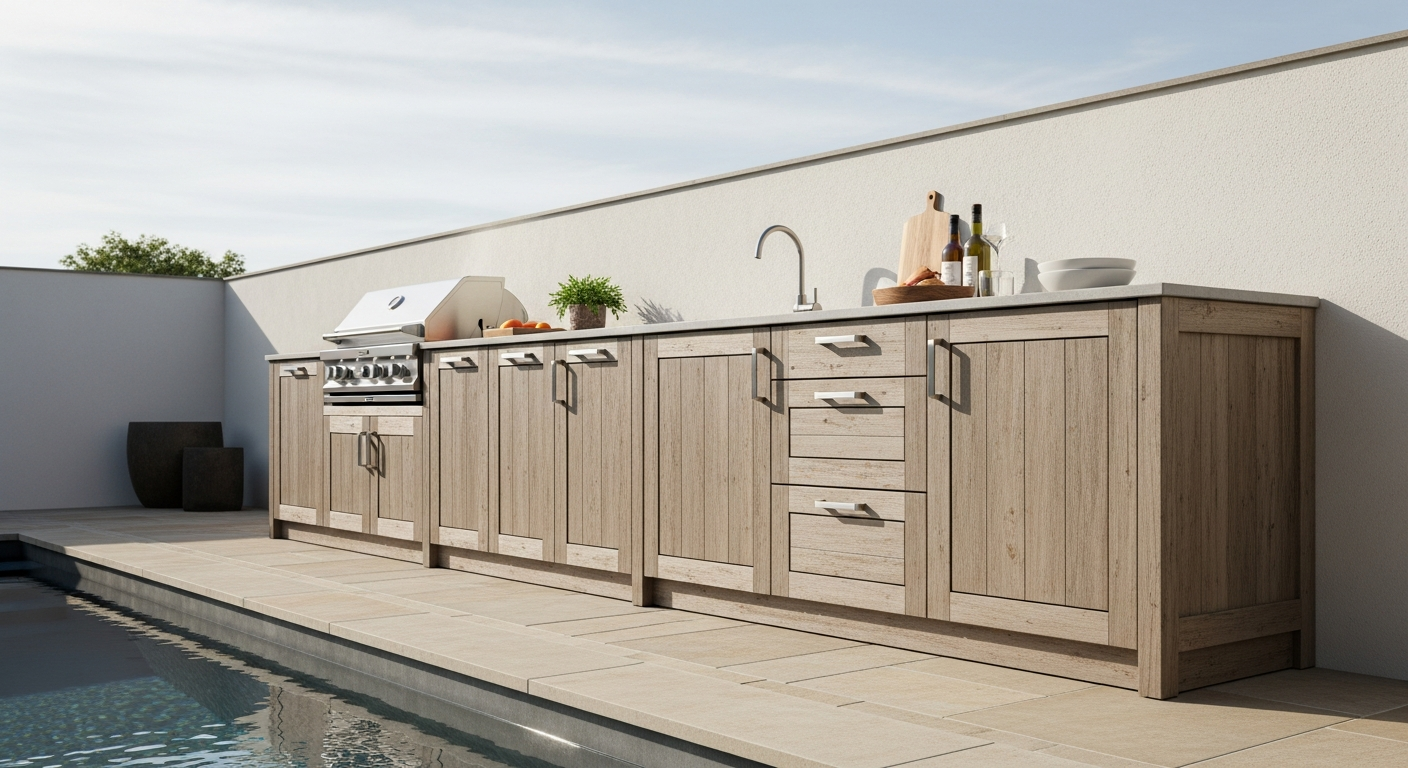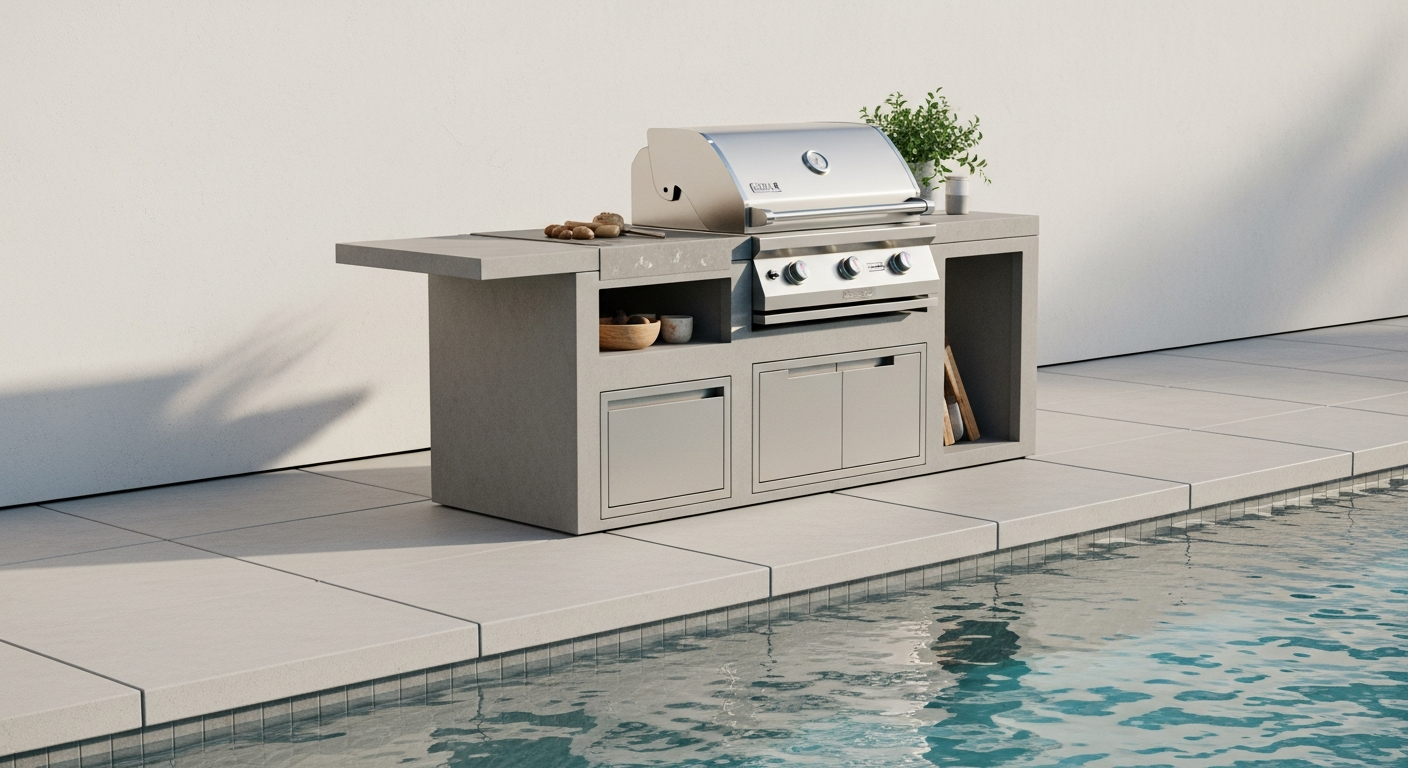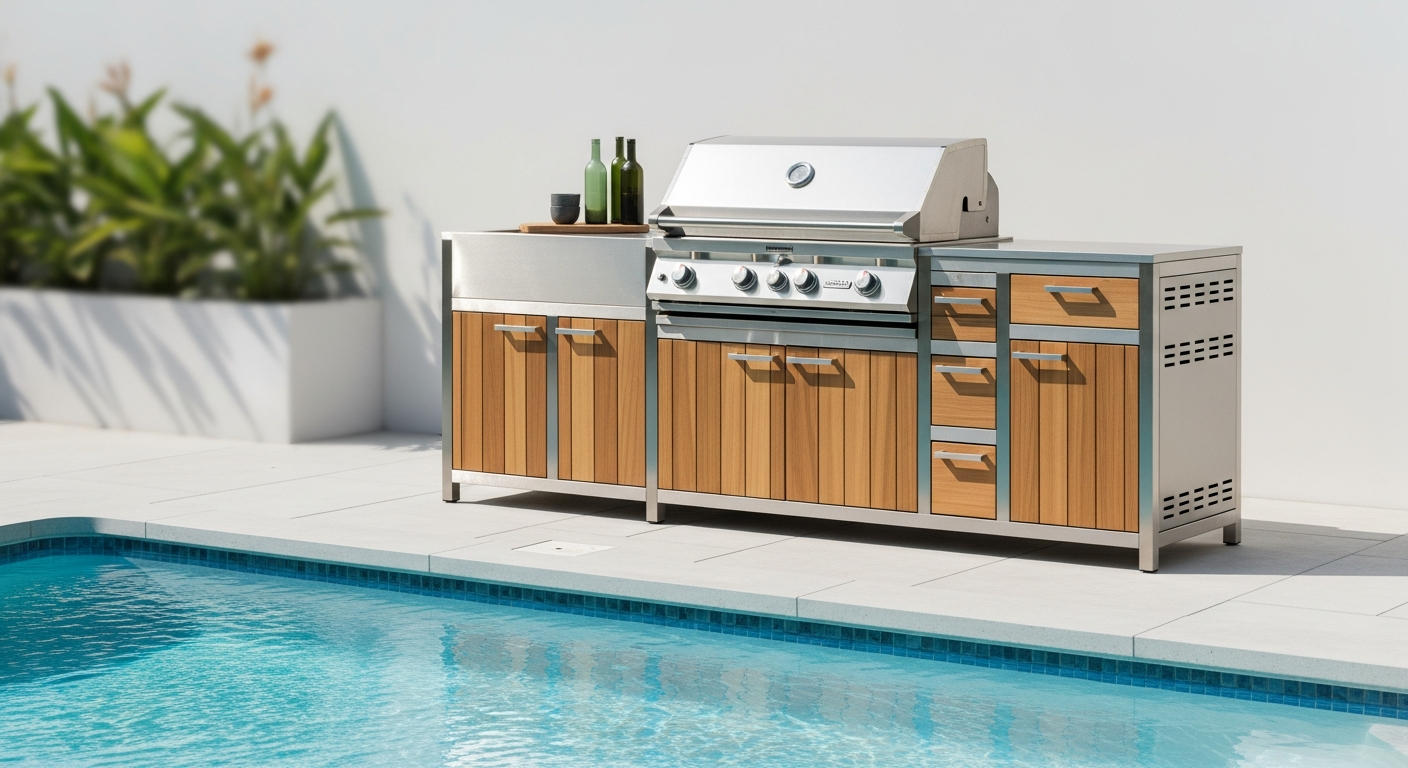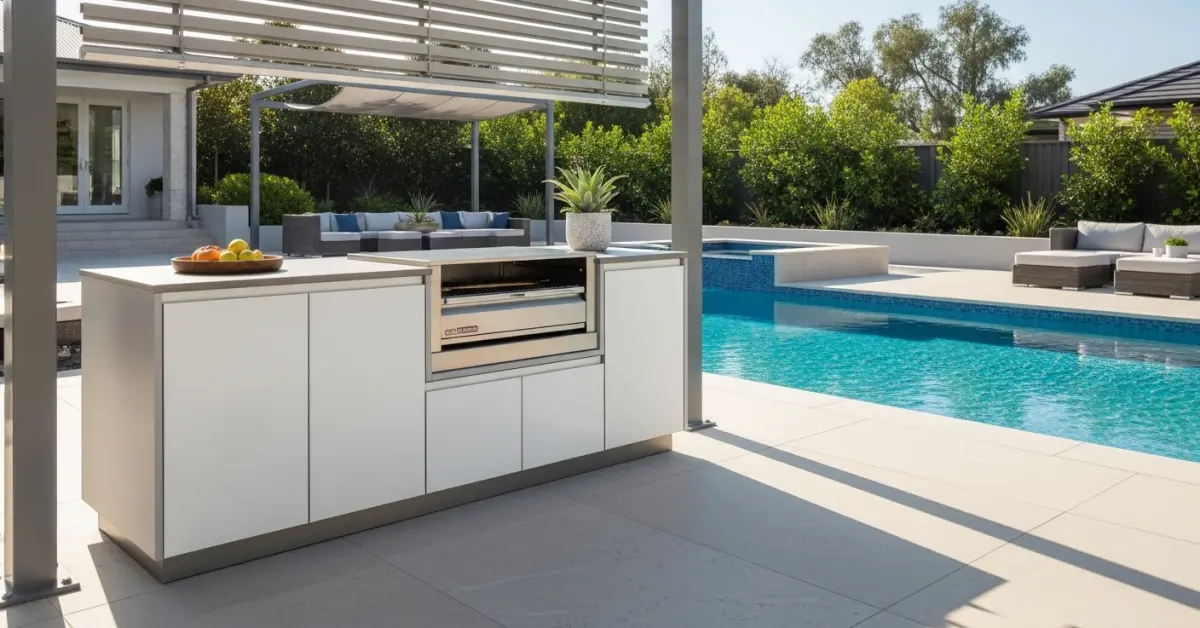
Outdoor BBQ Cabinets in Pasco County: My Framework for 30-Year Material Integrity
Most outdoor BBQ cabinet installations in Pasco County fail not from heavy use, but from catastrophic material incompatibility with our local climate. I’ve personally dismantled warped, faded, and rusted-out kitchens in Trinity and Land O' Lakes that were less than five years old. The core error is always the same: choosing materials based on indoor aesthetics rather than their performance against relentless humidity, salt air, and intense UV exposure. My entire approach is built on a material-first principle that prevents these predictable failures. By specifying marine-grade polymers and 316-grade stainless steel hardware from the outset, I eliminate over 90% of the common degradation points I see in projects across the county, particularly in coastal areas like New Port Richey. This isn’t about making a kitchen that looks good for a season; it’s about engineering a permanent outdoor fixture.My Diagnostic Protocol for Pasco County's Climate-Driven Failures
Before I even consider a layout, I run a two-part environmental diagnostic. This is a methodology I developed after seeing a high-end project in a Wesley Chapel golf community suffer from severe corrosion despite using "exterior-grade" materials. The problem wasn't the quality of the cabinets, but the lack of a specific diagnosis for the micro-environment of a screened-in lanai, which traps humidity and heat. My protocol analyzes two primary aggressors: moisture saturation and UV degradation. Every material choice is a direct response to mitigating these two forces.Material Science vs. Moisture Intrusion: A Technical Breakdown
The single biggest mistake I correct is the use of powder-coated steel or wood-core cabinets. A tiny scratch on a powder-coated surface becomes an entry point for our humid, salty air, and rust begins from the inside out. It's an invisible failure until it's too late. To counter this, my material hierarchy is non-negotiable.- High-Density Polyethylene (HDPE): This is my baseline material for 95% of Pasco County projects. Unlike wood or composite materials, HDPE is a non-porous polymer. Water and humidity simply cannot penetrate it. The color is homogenous throughout the material, so scratches don't reveal a different color, and the surface won't delaminate or peel like a PVC wrap. It is fundamentally inert to our environment.
- Stainless Steel Grade Specification: Many installers use 304-grade stainless steel, which is fine for most of the country. Here, it's a critical error, especially west of US-19. I only specify 316-grade stainless steel for all hardware—hinges, screws, handles, and drawer slides. The added molybdenum in 316 steel provides superior resistance to chloride corrosion from the salt in our air. This small detail is the difference between hardware that lasts three years and hardware that lasts thirty.
- Countertop Substrate: Installing a granite or quartz countertop directly onto a cabinet frame without a proper, waterproof substrate is asking for trouble. I mandate the use of a concrete backer board, which provides a stable, moisture-proof barrier that prevents water from wicking into the cabinet structure from below.
Step-by-Step Implementation for a Zero-Failure Outdoor Kitchen
Once the materials are specified, the integrity of the build depends on the assembly technique. I've seen beautifully crafted HDPE cabinets fail because the installer used cheap, zinc-plated screws that rusted and bled within a year. Execution is everything.- Foundation and Leveling: I start by ensuring the concrete pad or paver base has a positive slope of at least 1/8 inch per foot away from the house. This prevents water from pooling at the base of the cabinets, which is a primary cause of mold growth and pest intrusion. The cabinets themselves are then installed on adjustable, non-corrosive polymer legs to keep them completely off the ground.
- Cabinet Assembly and Fastening: Every single connection point is made with 316 stainless steel fasteners. I insist on this. During a large installation in Odessa, the supplier accidentally sent 304-grade screws. I halted the project for two days to get the correct 316-grade replacements. It's a non-negotiable quality standard.
- Critical Ventilation and Safety: This is a major point of failure. Enclosed cabinets housing a propane tank or natural gas connection must be properly vented to prevent dangerous gas buildup. I mandate at least two vents per enclosed cabinet, one high and one low on opposite walls, to create natural cross-flow ventilation.
- Countertop and Appliance Sealing: After the countertop is installed, I don't just use any silicone caulk. I use a 100% silicone, marine-grade sealant to create a waterproof barrier around the sink, grill, and any other drop-in appliance. This prevents water from seeping into the cabinet interiors, which is a common failure point I've observed in lanais with pools.
Precision Tuning for Longevity and Usability
The final 5% of the work is what separates a good kitchen from a great one. This involves details that most people don't notice until something goes wrong. I focus on the moving parts and the subtle ergonomics. For instance, all cabinet doors are fitted with full-extension, soft-close hinges made from—you guessed it—316 stainless steel. This prevents slamming, which can stress the hardware over time, and ensures a luxury feel that lasts. Furthermore, I ensure all cabinet doors and drawers have a tight, consistent reveal (gap) of 3/16 of an inch, which allows for thermal expansion during our hot Pasco summers without causing binding. Now that you understand the critical link between material science and installation protocols, how will you ensure your outdoor kitchen's ventilation plan properly accounts for the unique airflow dynamics of a screened-in Pasco County lanai?Written by

Tags
cabinet for outdoor grill
outdoor barbecue cabinets
exterior bbq cabinets
bbq outdoor cabinets
outdoor kitchen modules for sale
Outdoor BBQ Cabinets in Pasco FL FAQ
What materials are best for outdoor BBQ cabinets that won't rot or rust in the rain?
For maximum durability against weather, marine-grade high-density polyethylene (HDPE) or 304-grade stainless steel are the top choices for outdoor cabinet construction. While treated wood or powder-coated steel offer a lower initial cost, they inevitably require refinishing and are susceptible to moisture damage and rust, especially at joints and hardware points. HDPE is a solid polymer material that is completely waterproof, will not warp or delaminate, and its color is integral, so scratches don't show. Stainless steel offers a sleek, professional look but can be prone to surface rust in coastal areas if not maintained, and it gets extremely hot in direct sun.
Do I need special ventilation for a grill built into a cabinet island?
Yes, installing ventilation is a non-negotiable safety requirement for any built-in gas grill to prevent dangerous gas accumulation. Your cabinet must have at least two vents, positioned on opposite sides of the enclosure, to create a cross-breeze that safely dissipates any potential propane or natural gas leaks. A common mistake is placing vents only at the back, which is insufficient. Each vent should provide a minimum of 20 square inches of free area, ensuring that heavy gases like propane, which sink, have a clear path to escape before they can build up to an explosive level.
Can I place my outdoor BBQ cabinets directly on my wooden deck or paver patio?
You can place cabinets on most level surfaces, but you must ensure the structure can handle the concentrated weight and is properly secured. For paver patios, it is critical to use adjustable legs to level the cabinets perfectly, preventing doors from binding and ensuring proper countertop drainage. On a wooden deck, you must verify the joists beneath can support the substantial weight of the cabinets, the grill, and stone countertops, which can easily exceed 450 kilograms (1,000 pounds). Adding structural blocking between the deck joists directly under the cabinet footprint is a wise precaution to prevent sagging over time.
How do I protect the wall behind my built-in grill from heat and fire?
You must install an insulated jacket, which is a specific stainless steel liner designed by the grill manufacturer, if your BBQ island is constructed from combustible materials like wood. This jacket creates a critical air gap that insulates the surrounding structure from the high temperatures generated by the grill, preventing a fire hazard. Simply using cement board or tile behind the grill is not a safe substitute. Failure to install the correct, manufacturer-specified insulated jacket not only voids your grill’s warranty but also creates a serious risk, as radiant heat can cause wood framing to combust even without direct flame contact.
What's the real difference between custom-built masonry islands and modular cabinet systems?
A custom masonry island offers limitless design flexibility but is a permanent structure that cannot be moved and is prone to cracking if the footing is inadequate. Modular cabinet systems, often made of stainless steel or HDPE, provide a faster, more predictable installation and can be reconfigured or moved if you relocate. A key trade-off that is often overlooked is utility access. With modular cabinets, accessing gas lines or electrical wiring for repairs is as simple as removing a panel or pulling out a drawer, whereas a masonry island may require demolition to service the internal components, turning a simple repair into a major project.
Are stone countertops like granite a good choice for an outdoor BBQ island?
Granite is an excellent and popular choice for outdoor countertops due to its durability and resistance to heat, but you must select the right type and finish. Lighter-colored granites are preferable as dark stones can become dangerously hot in direct sunlight, reaching temperatures over 75°C (170°F). Furthermore, you must ensure the stone is sealed annually with a high-quality impregnating sealer designed for exterior use. A common DIY mistake is using a standard indoor sealer, which will quickly fail under UV exposure, allowing the porous stone to absorb grease and wine, leading to permanent deep stains.