
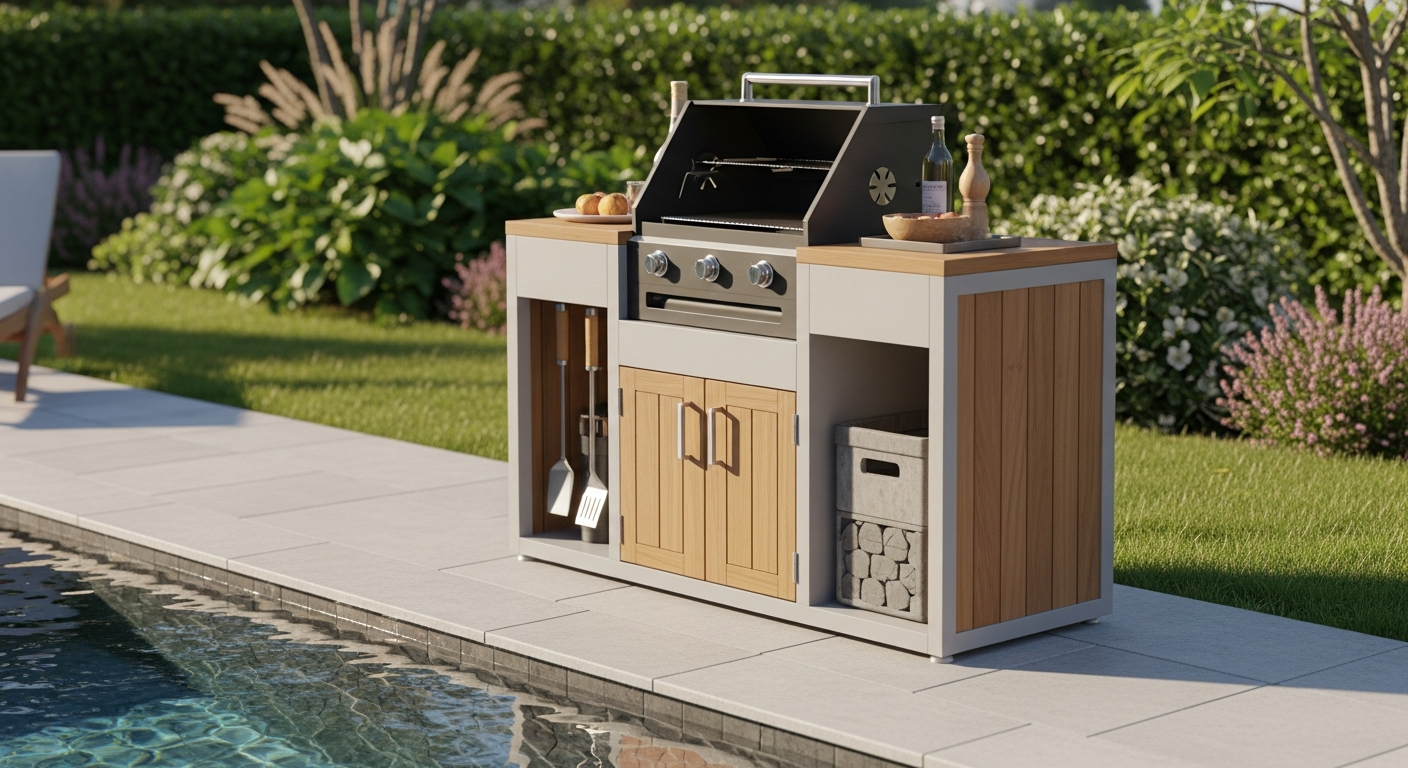
Outdoor BBQ Storage Cabinet: My Protocol for 10-Year Corrosion and UV Resistance in Pinellas County
After replacing dozens of rusted, warped, and faded outdoor cabinets from St. Pete Beach to the neighborhoods of Dunedin, I realized the standard industry advice is fundamentally flawed for our unique coastal environment. The relentless humidity, intense sun, and corrosive salt air in Pinellas County demand more than just a "weather-resistant" label. It requires a specific material science and assembly protocol that most manufacturers and installers simply ignore. My approach isn't about finding a better brand; it's about building a defense system against our specific climate. I've seen expensive, powder-coated steel cabinets fail in under two years on a Clearwater Beach lanai due to a single scratch that allowed salt air to creep underneath the finish. This isn't a product defect; it's an environmental mismatch. My entire methodology is built on preventing these precise, localized failures before they even start.Why 90% of Outdoor Cabinets Degrade in the Pinellas Climate
Over years of service calls, I developed what I call a Component Failure Analysis. It’s not about the cabinet as a whole, but identifying the weakest link. In Pinellas, failure almost always begins with the hardware, the seams, or the material's inability to handle constant moisture without ventilation. A common mistake I see in homes in Largo and Seminole is a beautiful cabinet installed on a paver patio with no elevation, allowing moisture to wick up and corrode the base. People focus on the rain from above, but in Florida, the moisture from below is just as destructive. They treat an outdoor cabinet like a piece of indoor furniture, and the results are predictably disastrous.The Material Science Mismatch: 316L Stainless vs. Marine-Grade Polymers
The most critical decision is the primary material, and this is where I get extremely specific. For properties directly on the Intracoastal or Gulf, I only work with 316L marine-grade stainless steel. The "L" is crucial; it signifies low carbon content, which reduces carbide precipitation during welding, a major cause of corrosion at the seams. More importantly, 316L contains molybdenum, an element that provides superior resistance to chloride-induced corrosion—the exact type caused by our salt air. Standard 304 stainless, while good, lacks sufficient molybdenum and will inevitably show pitting and rust stains. For less exposed areas, like a covered lanai in Oldsmar, a high-density polyethylene (HDPE) or a "marine-grade polymer" is an excellent choice. But my key insight here is to verify its UV inhibitor specifications. A low-quality polymer cabinet will look great for one summer before the intense Florida sun makes it brittle and faded, a problem I've rectified many times.My 5-Step Pinellas-Proofing Installation Process
Correct installation is just as important as material selection. A premium cabinet installed improperly will fail. This is the checklist I use on every single project, which has resulted in a near-zero callback rate for weather-related damage.- Site Elevation and Drainage Mapping: Before anything is placed, I assess the water flow on the patio or deck. The cabinet must be raised on non-corrosive composite or stainless steel feet, creating a minimum one-inch air gap to prevent moisture wicking.
- Marine-Grade Fastener Conversion: I discard the manufacturer-supplied screws. Every single fastener is replaced with 316 stainless steel bolts and nuts. This is a non-negotiable step that prevents the most common failure point: rust streaks originating from cheap hardware.
- Gasket System Enhancement: I apply a bead of marine-grade silicone sealant to all panel seams *during* assembly. This creates a monolithic, waterproof structure, far superior to relying on pressure-fit seals alone.
- Strategic Ventilation Porting: This is my proprietary step. I drill small, concealed ventilation ports at the top and bottom of the cabinet's back panel and cover them with a fine stainless mesh. This creates a passive airflow system that allows trapped humidity to escape, preventing the musty smell and mold growth I find in nearly every sealed cabinet in Pinellas.
- Post-Installation Water Test: I conduct a controlled water test using a hose to simulate our heavy summer downpours, specifically targeting doors and seams to ensure the seal is perfect.
Final Audit: Hinge Tolerances and Seal Compression
The job isn't done after the last screw is tightened. My final quality check involves calibrating the door hinges for a perfect seal. I use a simple but effective "dollar bill test": close the door on a bill and try to pull it out. If it slides out with no resistance, the seal is insufficient. I adjust the hinges until there is slight, even tension around the entire door frame. This precision adjustment guarantees the cabinet is as airtight as possible against wind-driven rain, yet can still breathe through the ventilation ports. This meticulous final step ensures the unit can withstand a tropical storm, not just a light shower. Are the fasteners and hidden structural components of your outdoor kitchen truly specified to resist constant salt air exposure, or are they just the first part of a slow, expensive failure?Written by

Tags
barbecue storage cabinet
outdoor kitchen cabinet storage
outdoor kitchen storage drawers
outdoor kitchen modular cabinets
outdoor pantry storage


