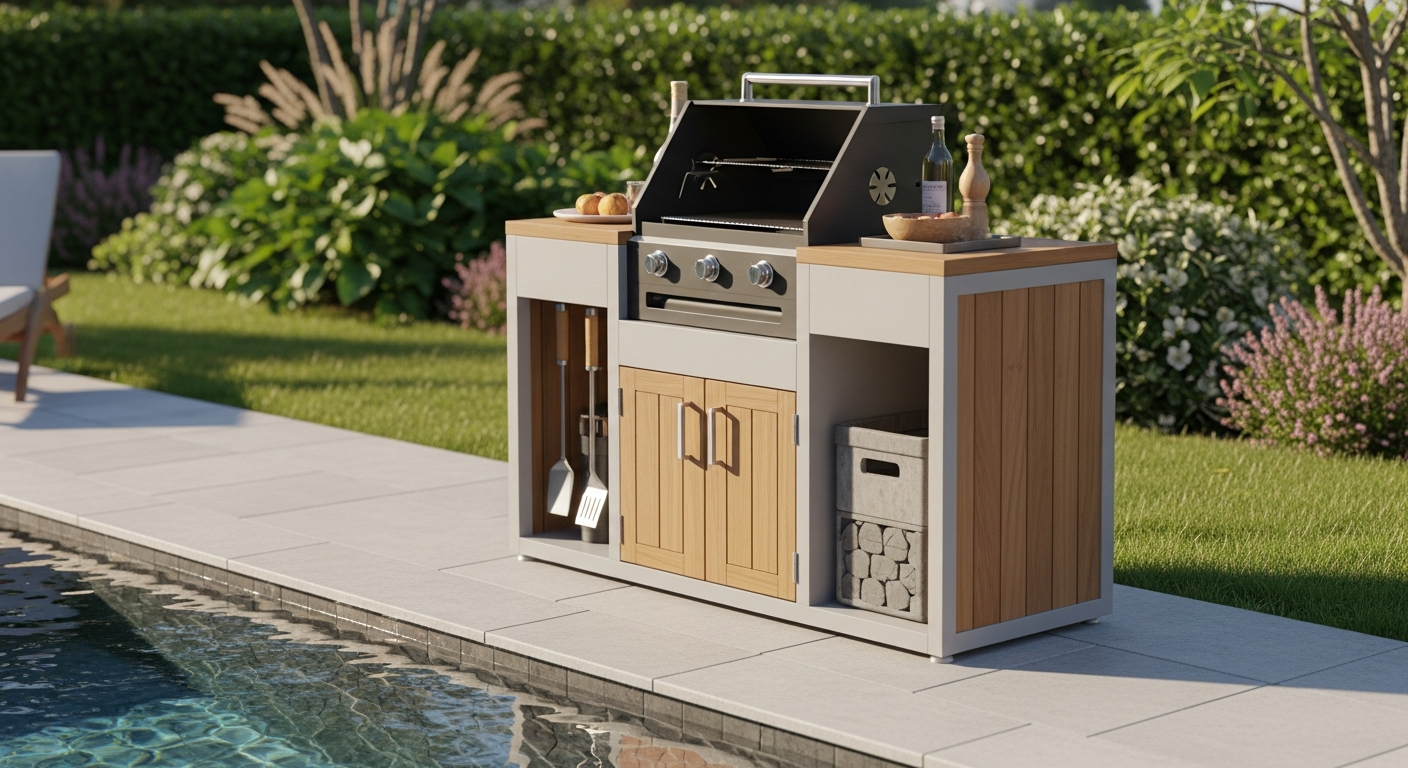
Outdoor Kitchen Cabinet Storage: My Framework for Tripling Cabinet Lifespan in Pinellas County's Climate
As a specialist who has designed and rectified outdoor kitchens from the waterfront homes in Snell Isle to the breezy backyards of Dunedin, I've seen one catastrophic failure more than any other: cabinet degradation. The unique combination of high salinity, intense UV exposure, and oppressive humidity in Pinellas County creates a perfect storm that can warp, rust, and delaminate standard outdoor cabinets in as little as 18 months. My entire approach is built on preventing this specific, localized outcome. The common mistake is focusing solely on the face material. The real points of failure are the unseen components: fasteners, drawer glides, and internal seams. My methodology doesn't just select materials; it engineers a complete, sealed system designed to combat the specific corrosive agents carried on the Gulf breeze. This isn't about aesthetics alone; it's about ensuring a 20-year operational lifespan instead of a 2-year replacement cycle.The Pinellas Problem: Why Standard Outdoor Cabinets Fail in Six Months
I was once called to a project on Clearwater Beach where a homeowner had invested heavily in a beautiful outdoor kitchen. Within one year, the 304-grade stainless steel doors were showing significant tea staining (a precursor to rust), and the polymer-coated wood composite boxes had swollen and delaminated from the constant moisture. The failure wasn't the material's fault; it was a fundamental misunderstanding of the local environment. This experience led me to develop what I call the "Coastal Integrity Framework." My framework is a diagnostic and specification process that rates cabinet systems not just on their core material, but on three critical performance indicators for the Pinellas area: Salinity Intrusion Resistance, UV Degradation Factor, and Hydrostatic Pressure Tolerance. A cabinet might look great, but if its hinges are low-grade steel or its assembly uses moisture-wicking adhesives, it will fail my initial assessment for any property east of US-19.Material Forensics: Deconstructing Cabinet Failure Modes
To truly understand why cabinets fail here, you have to look at them on a microscopic level. It's not just about choosing "stainless steel" or "polymer." The specifics are what determine success or failure. In my material analysis for Pinellas projects, I've found a clear hierarchy:- Stainless Steel: I exclusively specify 316L marine-grade stainless steel. The "L" stands for low carbon, which drastically improves weldability and corrosion resistance. The critical failure point I often identify is galvanic corrosion, where fasteners of a different metal grade react with the cabinet body. All my designs use 316L for the cabinets, hinges, screws, and pulls to create a monolithic, non-reactive unit.
- Marine-Grade Polymer: High-Density Polyethylene (HDPE) is a phenomenal choice for this climate. However, not all HDPE is equal. I insist on brands that use UV inhibitors integrated throughout the material, not just a surface coating that can scratch off. The most common error I see is improper joint sealing, allowing moisture to penetrate the cabinet box during our heavy summer downpours.
- Powder-Coated Aluminum: This can be a viable option, but the enemy is the slightest scratch. Once the coating is compromised, the salt air gets to the aluminum underneath, creating a bubbling effect from oxidation. My protocol requires a minimum 2.5 mil powder coating thickness, which is 30% above the industry standard.
My Pre-Installation Protocol for a Zero-Failure Rate
The cabinet is only as good as its installation. Over the years, I've refined a mandatory pre-installation checklist that has eliminated post-install moisture and corrosion issues. This is a non-negotiable part of my process for any home in Pinellas County. My protocol involves these core steps:- Substrate Moisture Barrier Application: Before any cabinet touches a wall or floor, I mandate the application of a liquid-applied elastomeric membrane to the concrete or block. This prevents moisture from wicking up from the patio slab during our rainy season, a huge problem for homes in areas like Tarpon Springs or near the bayous.
- Hardware Isolation: Every single fastener and hinge is installed with a dielectric nylon washer. This small, inexpensive step is my secret to preventing the galvanic corrosion I mentioned earlier. It isolates the metals and breaks the electrical circuit that accelerates rust.
- Cabinet Base Elevation: I require all cabinet systems to be installed on non-corrosive, adjustable legs, creating a minimum 3-inch air gap from the patio deck. This prevents water from pooling at the base and promotes critical airflow, which is the best defense against mold and mildew in our humid climate.
- Seam & Joint Sealing: The final step before placing countertops is to run a bead of marine-grade polyurethane sealant on all cabinet-to-cabinet seams. This transforms a set of individual boxes into a single, waterproof structure, effectively eliminating water intrusion points.
Post-Installation: The Gasket Compression and Sealant Integrity Test
My job isn't done when the last door is hung. My final quality control step is what I call the "Integrity Test." For any cabinet with a door gasket, I perform a gasket compression test using a feeler gauge to ensure a perfect seal around the entire perimeter. A 0.5mm variance is enough to allow our fine, salt-laden air to infiltrate the cabinet. This meticulous process ensures that the storage you invest in is a true, long-term asset, not a recurring maintenance headache. It's the difference between an outdoor kitchen that thrives in the Pinellas County environment and one that simply survives for a season. Given the intense humidity and salt exposure, have you verified if your cabinet's drawer glides are fully stainless steel or simply zinc-plated steel destined to seize up?Written by

Tags
outdoor kitchen cart with storage
outdoor kitchen storage cabinet
outdoor food storage
outdoor kitchen pantry
outdoor cabinet for grilling supplies