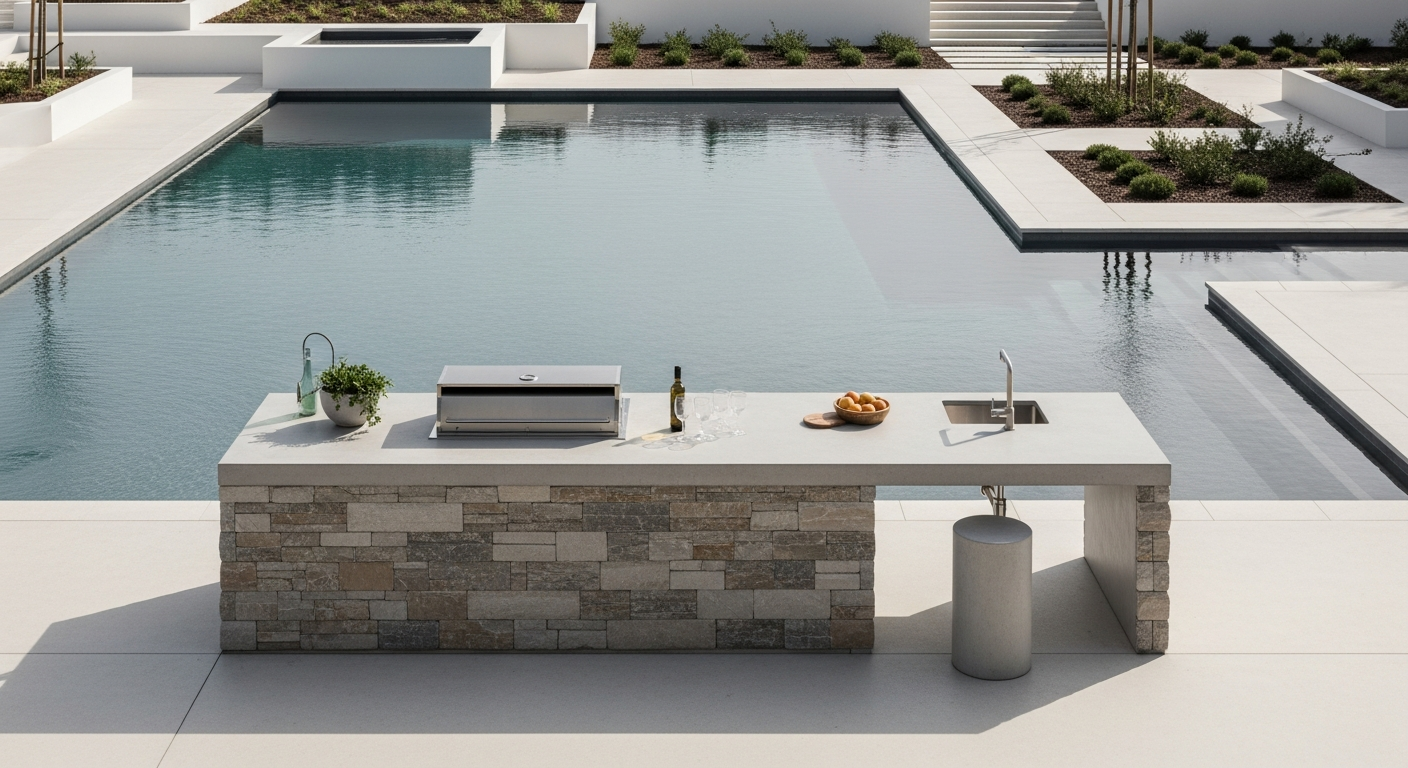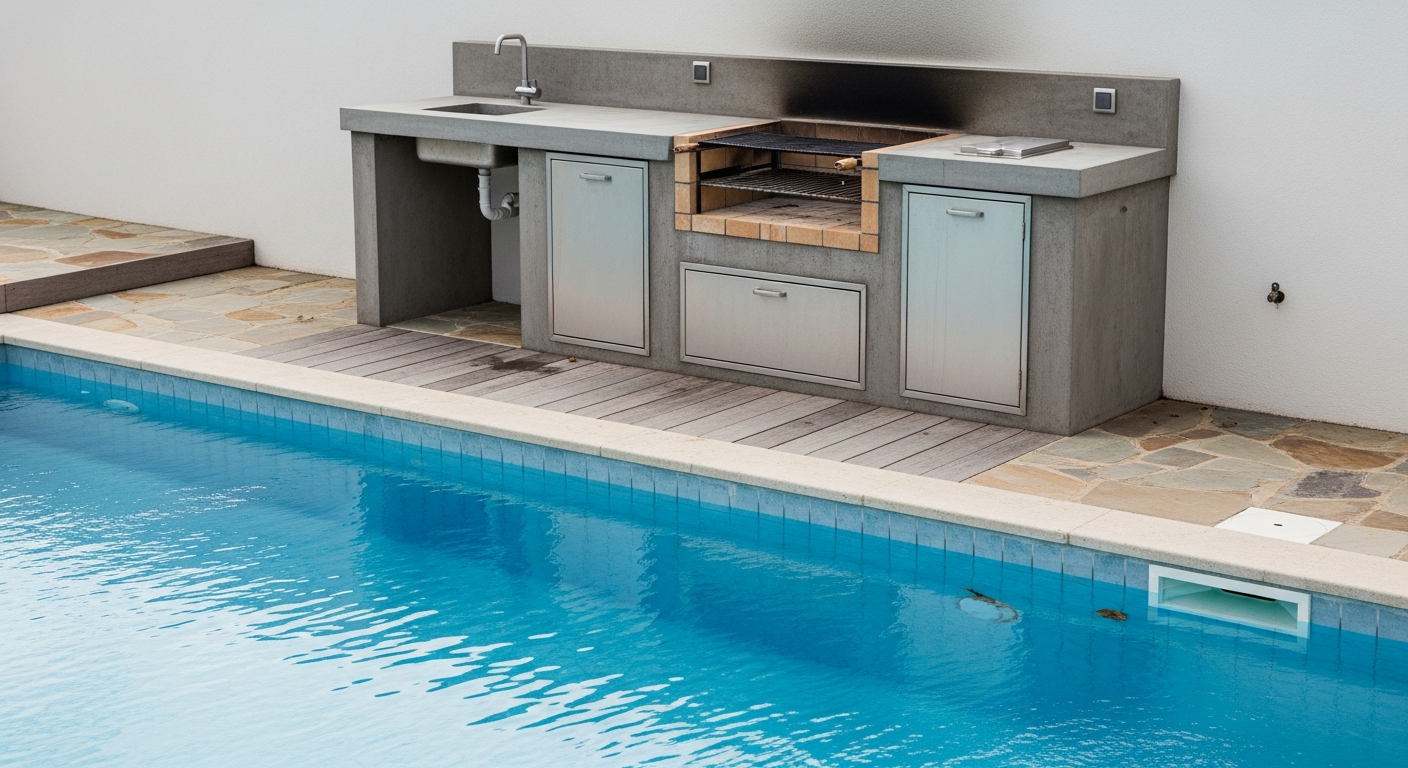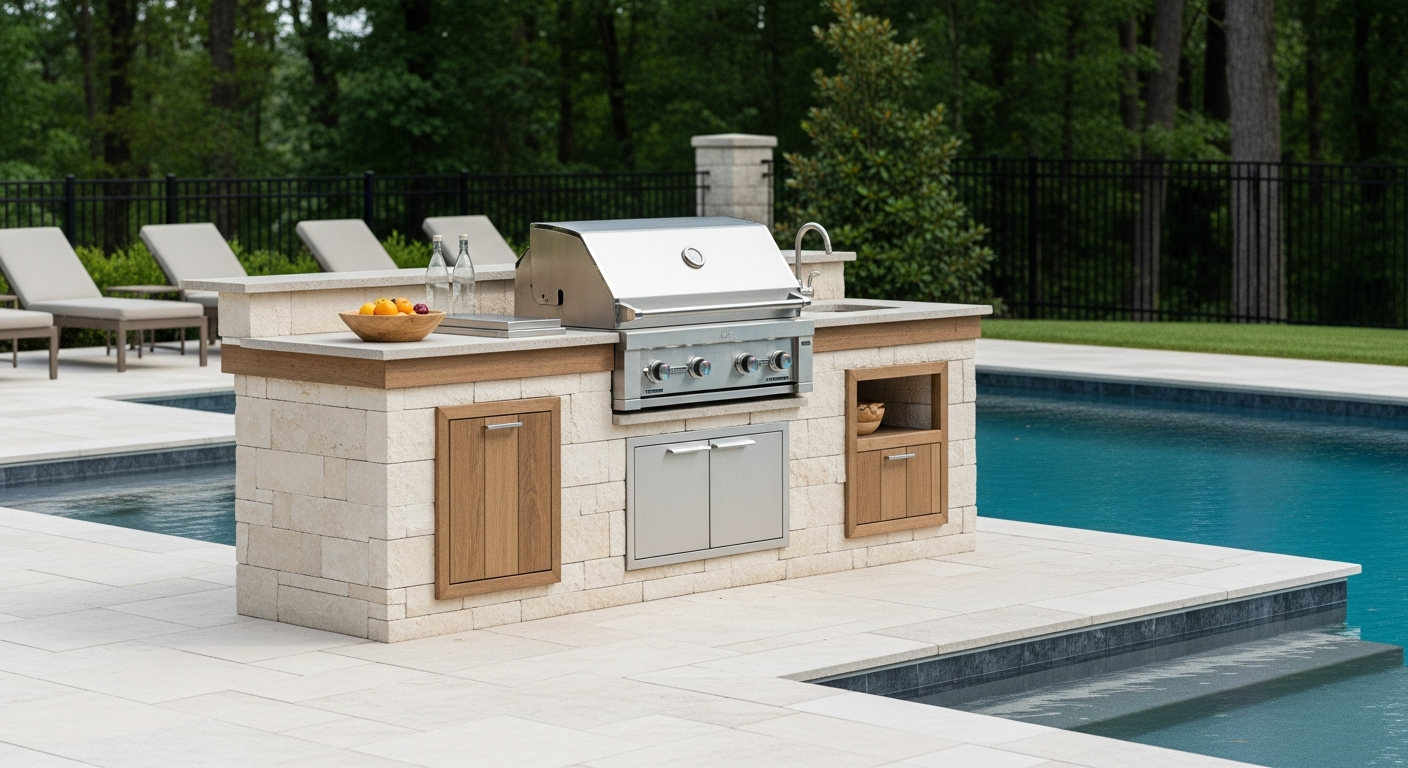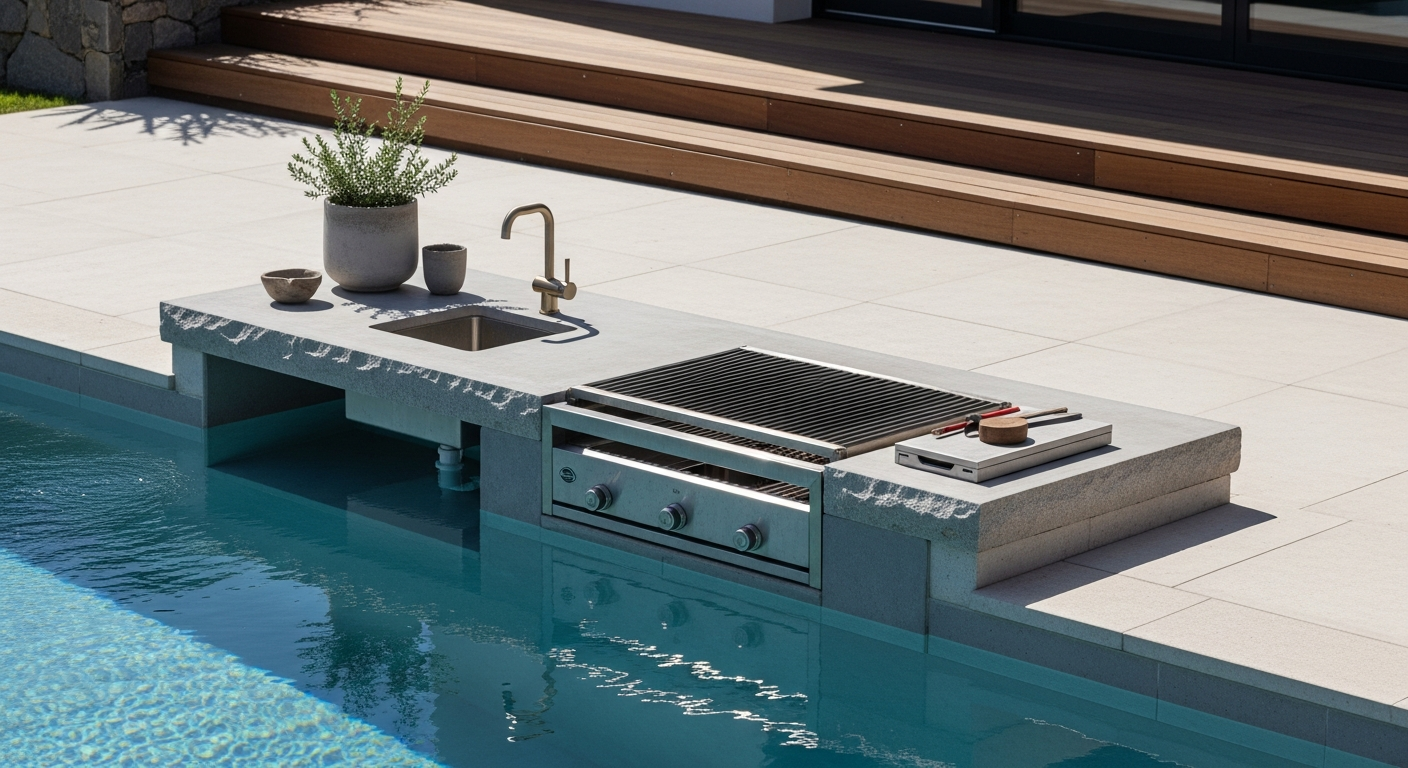
Lee County Outdoor Cooking Island: A Framework for 20-Year Material Longevity in Salt-Air Environments
After designing and overseeing dozens of outdoor kitchen projects from Cape Coral to Bonita Springs, I can state one fact with certainty: most failures are not due to poor craftsmanship, but to a fundamental misunderstanding of Lee County’s subtropical, salt-laden environment. The standard approach simply doesn't work here. A beautiful island that would last a decade in another state can show significant degradation—rust, cracks, and electrical failures—in as little as two years. My entire process is built on a materials-first protocol I developed after a project on Fort Myers Beach failed prematurely. The client had chosen beautiful appliances, but the builder used standard 304-grade stainless steel. Within 18 months, tea staining and rust pitting were rampant due to the constant salt spray. That costly mistake led to my proprietary methodology, designed specifically to deliver a 20+ year operational lifespan for outdoor cooking structures in our unique coastal climate.My Diagnostic Method: The Coastal Corrosion Defense (CCD) Framework
Before any design sketches are made, I perform a site analysis based on my Coastal Corrosion Defense (CCD) Framework. It’s not just about aesthetics; it’s about preemptively engineering against the three primary aggressors in Lee County: high humidity, UV radiation, and salt-air induced galvanic corrosion. I've seen far too many stunning lanais ruined by an outdoor kitchen that wasn't built for the specific micro-environment of its location, whether it's the direct waterfront exposure in a Cape Coral canal home or the trapped humidity of an inland Estero property.A Technical Deep-Dive into the CCD Principles
My framework is based on three non-negotiable pillars. First is Material Specification. I mandate the use of 316 marine-grade stainless steel for all metallic components, from grill housings to cabinet handles. This low-carbon version contains molybdenum, which provides a dramatic increase in corrosion resistance, a critical factor against our salty air. For countertops, I steer clients away from porous stones that require constant sealing and instead specify sintered stone or high-density porcelain, which are non-porous and have a near-zero water absorption rate. For the structure itself, the choice is between a welded aluminum frame (never steel) or concrete block, both sealed with a hydrophobic membrane before cladding is applied. Second is Structural and Electrical Integrity. All fasteners must be stainless steel to prevent them from becoming the first point of failure. All electrical runs must use weatherproof junction boxes and in-use "bubble" covers for GFCI outlets. I once had to troubleshoot a system on Sanibel Island where intermittent GFI trips were caused by overnight condensation building up inside a standard "flat" outlet cover. It's a small detail that makes a massive operational difference. Third is Environmental Dynamics, primarily ventilation and drainage. For islands installed under a lanai roof, I calculate the required Cubic Feet per Minute (CFM) for the vent hood based on the grill’s BTU output and the enclosed volume of the space. A common error is under-sizing the hood, which leads to smoke and grease buildup on the lanai ceiling. Proper drainage also means ensuring a subtle 1/8-inch per foot slope on countertops to prevent standing water.The CCD Framework in Action: A 5-Step Build Protocol
Executing a project to these standards requires a rigid, sequential process. Deviating from this order is how mistakes happen and long-term durability is compromised. I personally oversee each stage to ensure my specifications are met precisely.- Step 1: Site Assessment & Footing - I begin by analyzing the specific site's exposure to sun and prevailing winds. We then pour a reinforced concrete footing, isolated from the main patio slab with an expansion joint to prevent cracking from thermal expansion—a must-have in the Florida heat.
- Step 2: Frame & Utility Rough-In - The frame is constructed using either concrete block or 6061-grade aluminum studs. During this phase, all plumbing and electrical conduits are run, ensuring they are properly secured and waterproofed at every entry and exit point.
- Step 3: Cladding & Venting Installation - The cement board or other substrate is attached to the frame using corrosion-resistant fasteners. The vent hood and any necessary ducting are installed and sealed. This must be done before countertops to ensure a perfect fit and seal.
- Step 4: Countertop and Appliance Placement - The countertop is installed using a specialized outdoor-rated adhesive that can handle temperature fluctuations. I then personally supervise the installation of each appliance, performing a leak test on gas lines and a ground-fault test on all electrical circuits before they are permanently connected.
- Step 5: Final Sealing and System Commissioning - The final step is applying a UV-blocking, salt-resistant sealant to all grout lines and stone surfaces. I then run all appliances through a full operational cycle to ensure everything from the grill igniter to the refrigerator thermostat is functioning to manufacturer specifications.
Post-Installation Audits: My Zero-Failure Checklist
My job isn't finished when the last tool is put away. I have a quality control checklist that focuses on the small details that guarantee longevity. I check every single screw and bolt to ensure the correct material was used, preventing dissimilar metals from touching and causing galvanic corrosion—a frequent and amateur mistake. I also perform a "water test," flooding the countertop surface to verify my drainage pitch analysis is correct and that no water pools near appliances or outlets. This rigorous final audit is my personal guarantee against the most common points of failure I've witnessed in Lee County. Given that an improper build can corrode and fail within just a few seasons, have you confirmed that your contractor's material list specifies not just "stainless steel," but the exact marine-grade alloy required for every single component?Written by

Tags
patio kitchen island
grill islands for sale
l shaped grill island
outdoor kitchen grill island
outdoor island