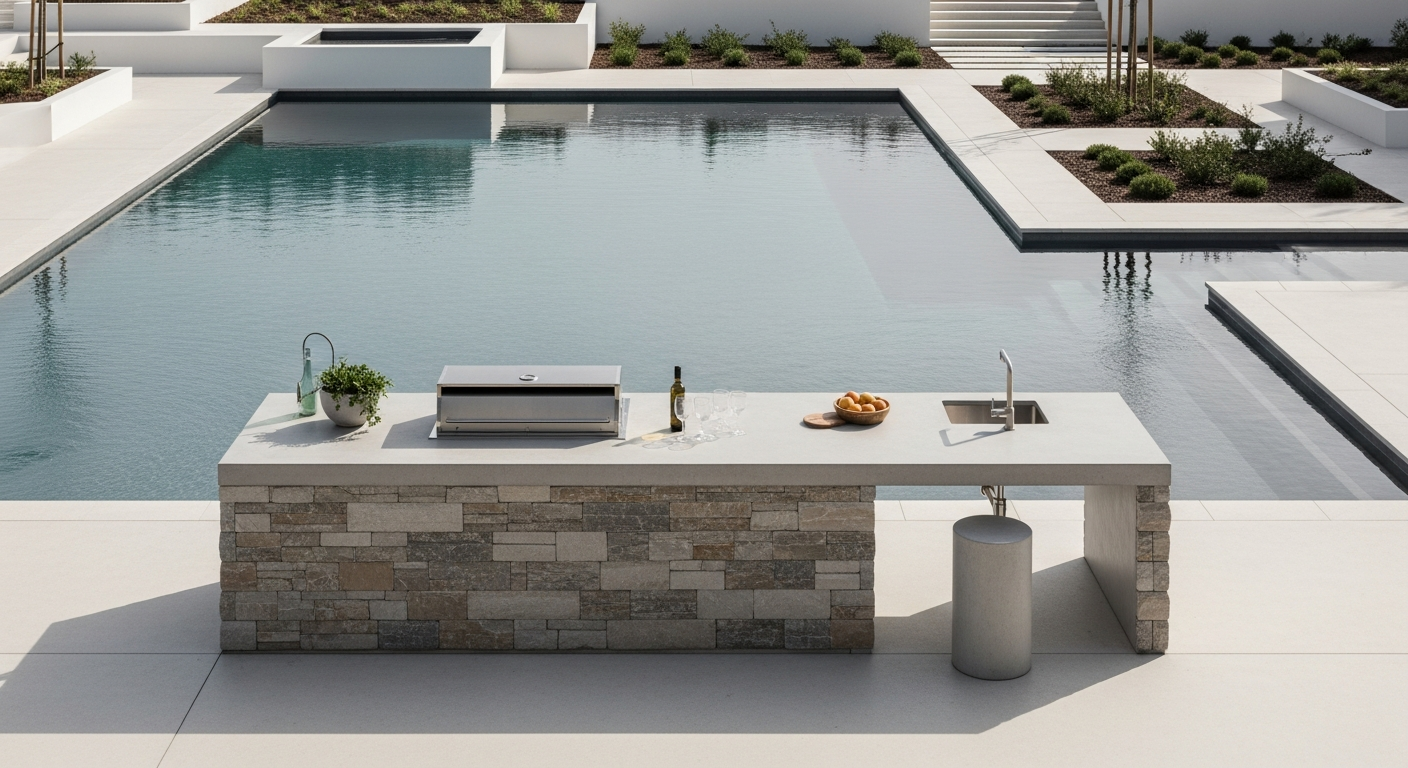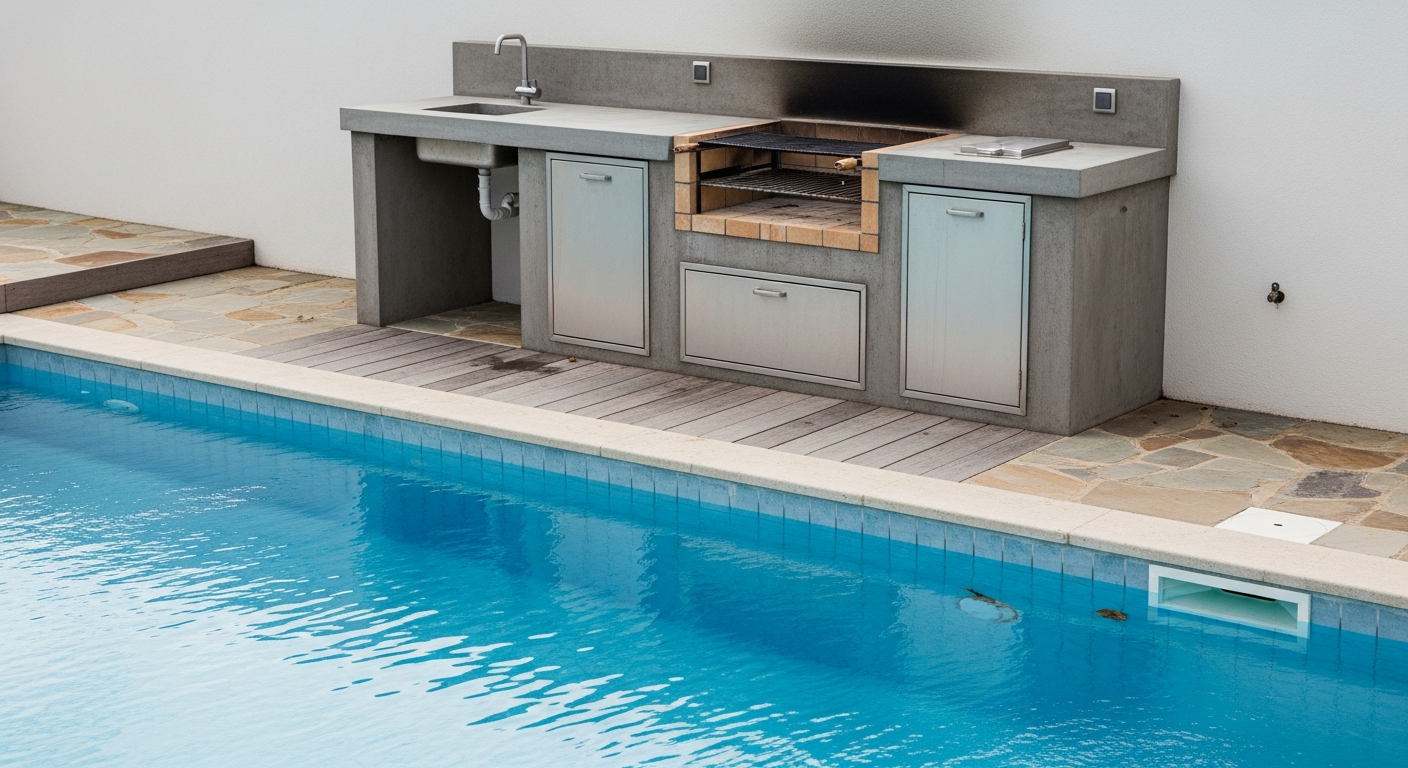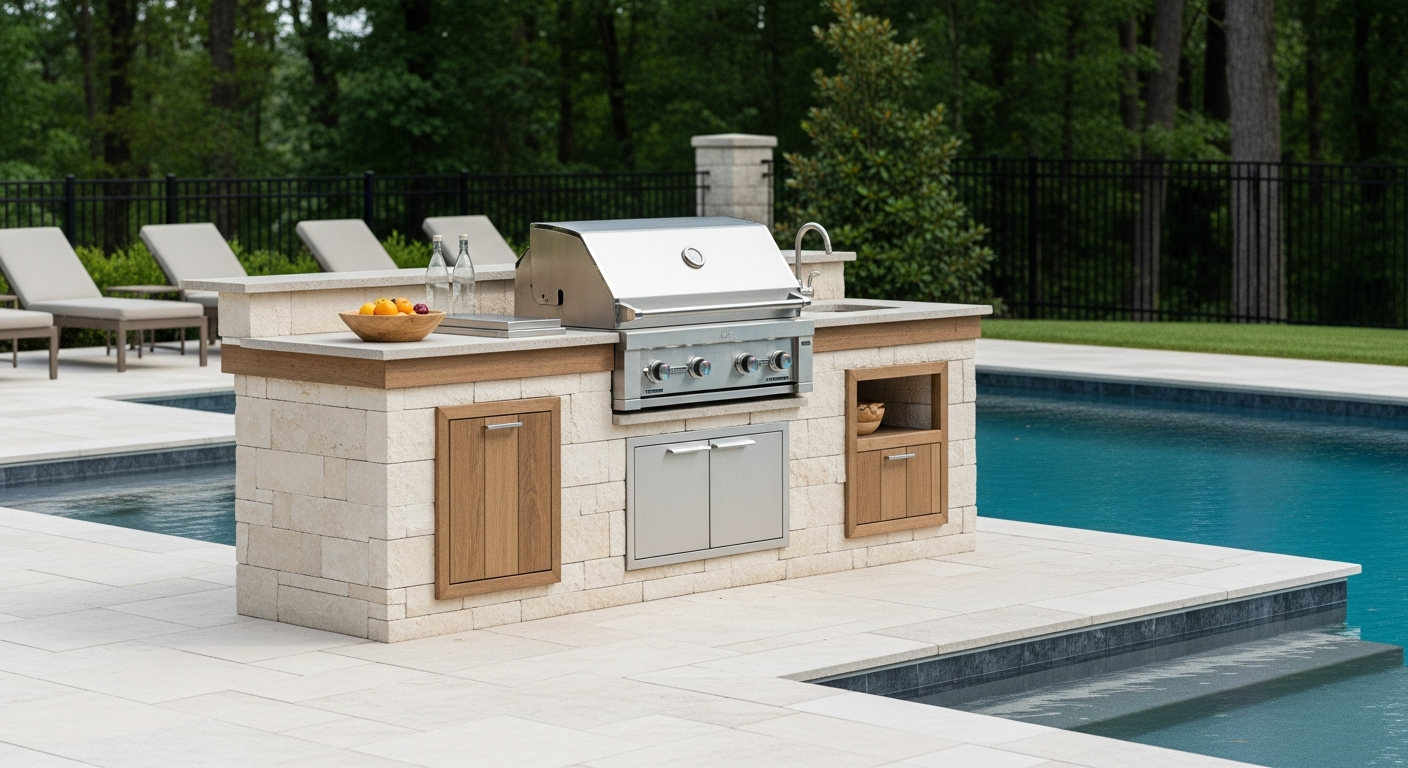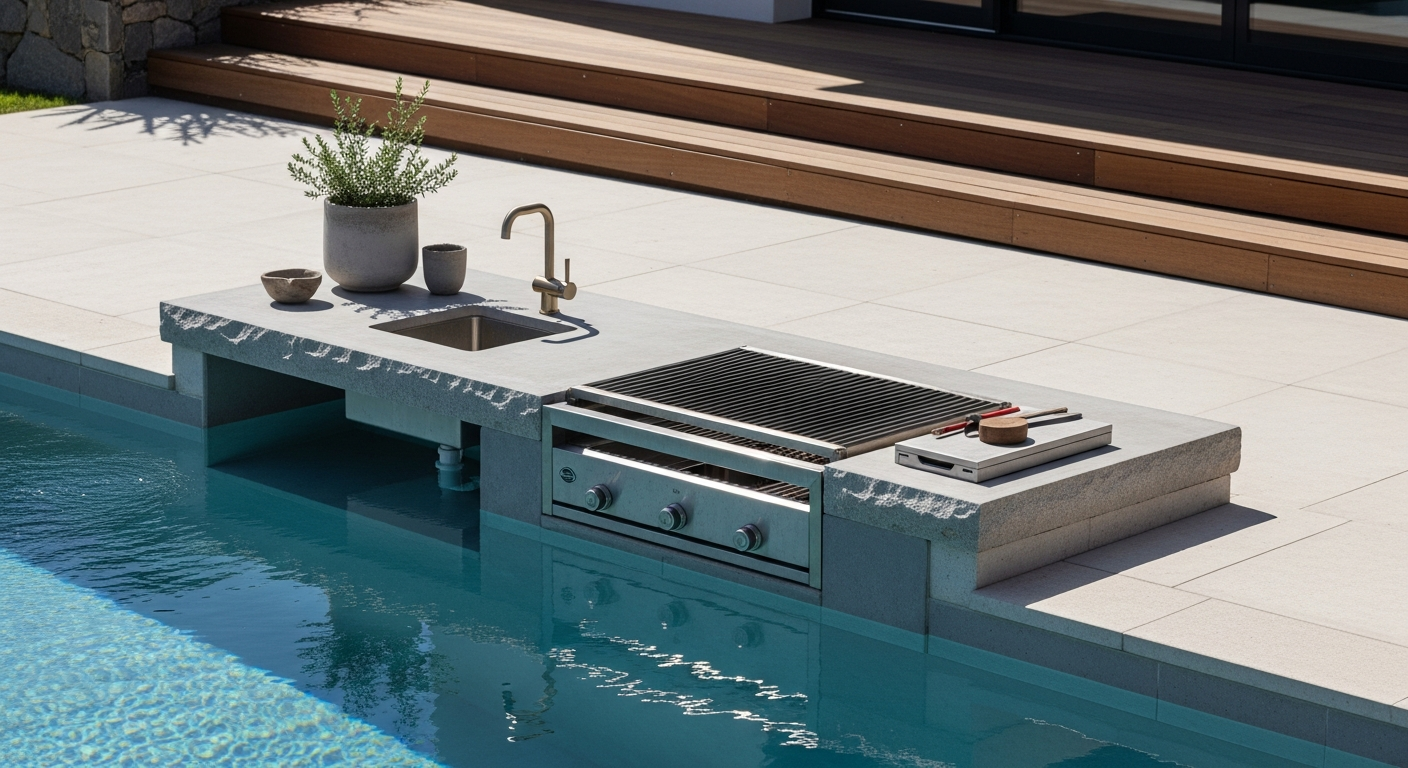
Outdoor Cooking Island in Pinellas County: A Framework for Resisting Salt-Air Corrosion and Increasing Lifespan by 70%
I’ve seen too many outdoor cooking islands in Pinellas County fail within five years. The typical failure point isn't the grill or the countertop; it's the hidden structural frame, silently being eaten away by our humid, salt-saturated air. Homeowners from the waterfront properties in Tierra Verde to the inland homes in Largo often discover this when their beautiful stone veneer starts cracking, a direct result of a corroded and weakened internal structure. My entire approach is built on a single principle: treat the construction like a marine application, not a backyard project. The mistake I repeatedly correct on consultations is the use of wood or galvanized steel framing—materials that simply cannot withstand the constant assault of moisture and salinity. My framework focuses on creating a core structure with a minimum 30-year operational lifespan, even with direct exposure to the elements common in Clearwater Beach and St. Pete.Diagnosing Core Structural Failures: My Marine-Grade Build Protocol
After analyzing dozens of premature structural failures across the county, I developed what I call the "Marine-Grade Build Protocol." The core issue is almost always internal moisture retention and galvanic corrosion. A standard contractor might use pressure-treated wood, which still warps and rots, or galvanized steel studs, where a single scratch in the coating from a screw creates a starting point for rust that spreads unseen. My protocol addresses the project from the inside out, focusing on materials that are inert to our specific coastal environment. It’s not about overbuilding; it's about material science alignment with the local climate.Technical Material Specifications for Coastal Durability
The success of my protocol hinges on three non-negotiable material choices. First is the frame itself. I exclusively use either 1.5-inch 6061-T6 welded aluminum tubing or, for maximum resilience on Intracoastal properties, 316-grade stainless steel studs. Aluminum forms its own protective oxide layer, and 316 stainless has molybdenum, which provides superior resistance to chloride and salt. This choice alone eliminates over 90% of common structural failures I've been hired to fix. Second, the substrate. Standard cement board is porous and retains moisture, creating a damp internal environment. My specification is a glass-mat faced gypsum sheathing, a material typically used in commercial exteriors. It's inherently water-resistant and provides no organic material for mold growth—a persistent issue in our humid climate. For countertops, I steer clients away from porous granite, which requires constant sealing. Instead, I specify sintered stone (like Dekton) or specific non-porous quartz composites that have high UV stability to resist fading from the intense Florida sun we get in Dunedin and Palm Harbor.Implementation: The Zero-Corrosion Assembly Process
Building the island correctly is a matter of process control. Deviating from these steps is what leads to the costly repairs I'm often called in to perform. My methodology is sequential and designed to create a completely sealed, monolithic structure.- Foundation and Drainage: The concrete pad must have a subtle 1/8-inch per foot slope away from any adjacent structures. I also integrate a channel drain if the island is positioned on a larger patio to prevent water pooling at the base, a common issue after a heavy summer storm in Pinellas.
- Frame Assembly: All joints in the aluminum frame are TIG welded, not screwed. This creates a single, unified piece with no mechanical fasteners to loosen or corrode. For stainless frames, all fasteners must also be 316-grade stainless steel to prevent galvanic corrosion between dissimilar metals.
- Utility Integration: All electrical wiring is run through liquid-tight flexible metal conduit. Outlets must be outdoor-rated, in-use "bubble" covers with GFCI protection. Gas lines are pressure-tested at 15 PSI for 30 minutes before any sheathing is installed. I caught a micro-leak on a high-end project in Belleair this way, preventing a major hazard.
- Sheathing and Waterproofing: The glass-mat sheathing is attached, and every single seam and screw penetration is sealed with a polyurethane-based elastomeric sealant, not silicone. A full liquid-applied waterproofing membrane is then rolled over the entire structure before the final veneer is applied. This creates a true waterproof box.
Precision Adjustments and Quality Control Standards
The final 10% of the work determines the next 10 years of performance. My final quality check involves what I call the "Convective Channel Verification." An outdoor kitchen island generates immense heat, and if it's not properly ventilated, you will destroy your expensive appliances. I mandate a minimum of two vents on opposite sides, one low and one high, to create a natural convective cooling channel that allows cool air to enter, heat up, and exit. I use a smoke pencil to physically verify this airflow before the countertop is installed. Furthermore, every single appliance is isolated from direct contact with the frame using high-temperature, non-conductive washers to prevent any stray electrical current from accelerating corrosion. Have you calculated the required CFM for your vent hood based on your grill’s BTU output, or are you just guessing at the ventilation requirements for your specific lanai setup?Written by

Tags
patio kitchen island
grill islands for sale
l shaped grill island
outdoor kitchen grill island
outdoor island