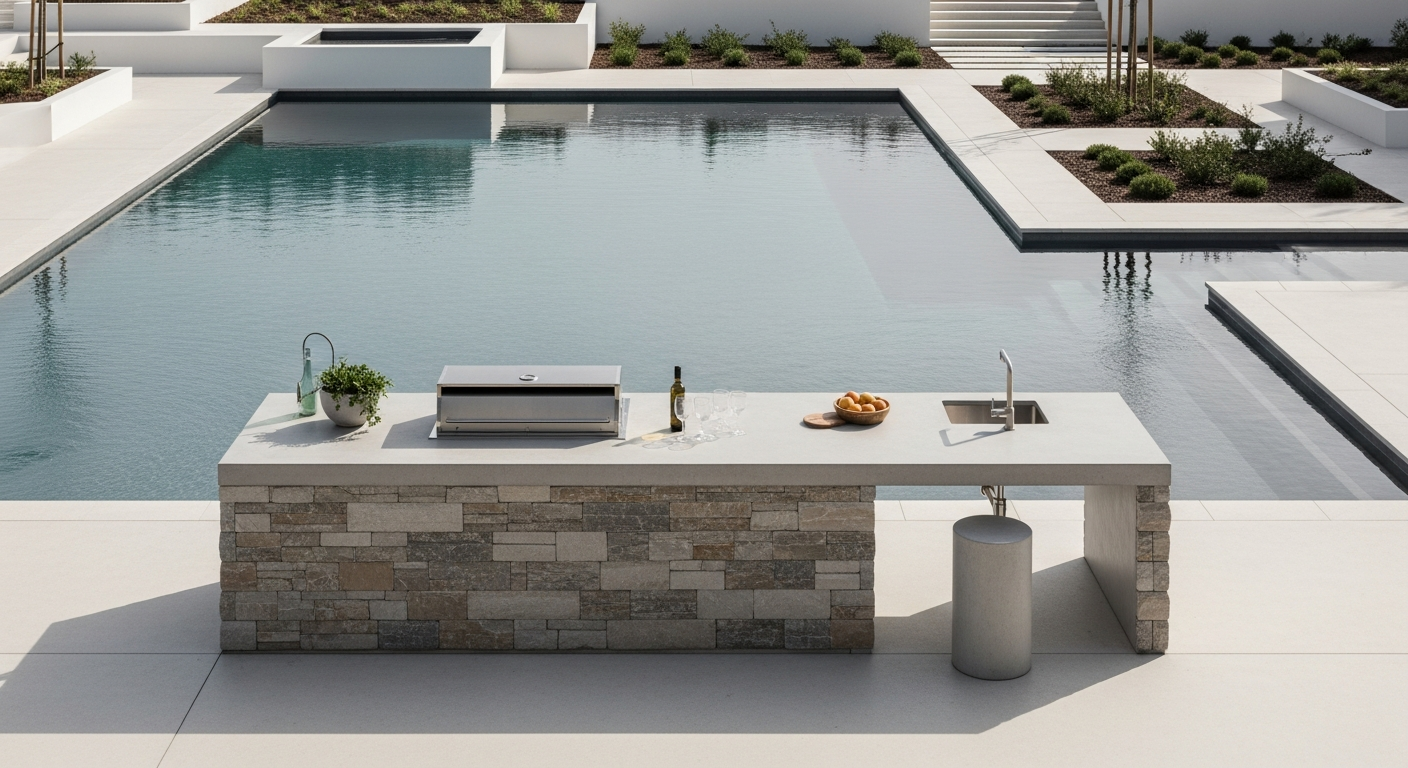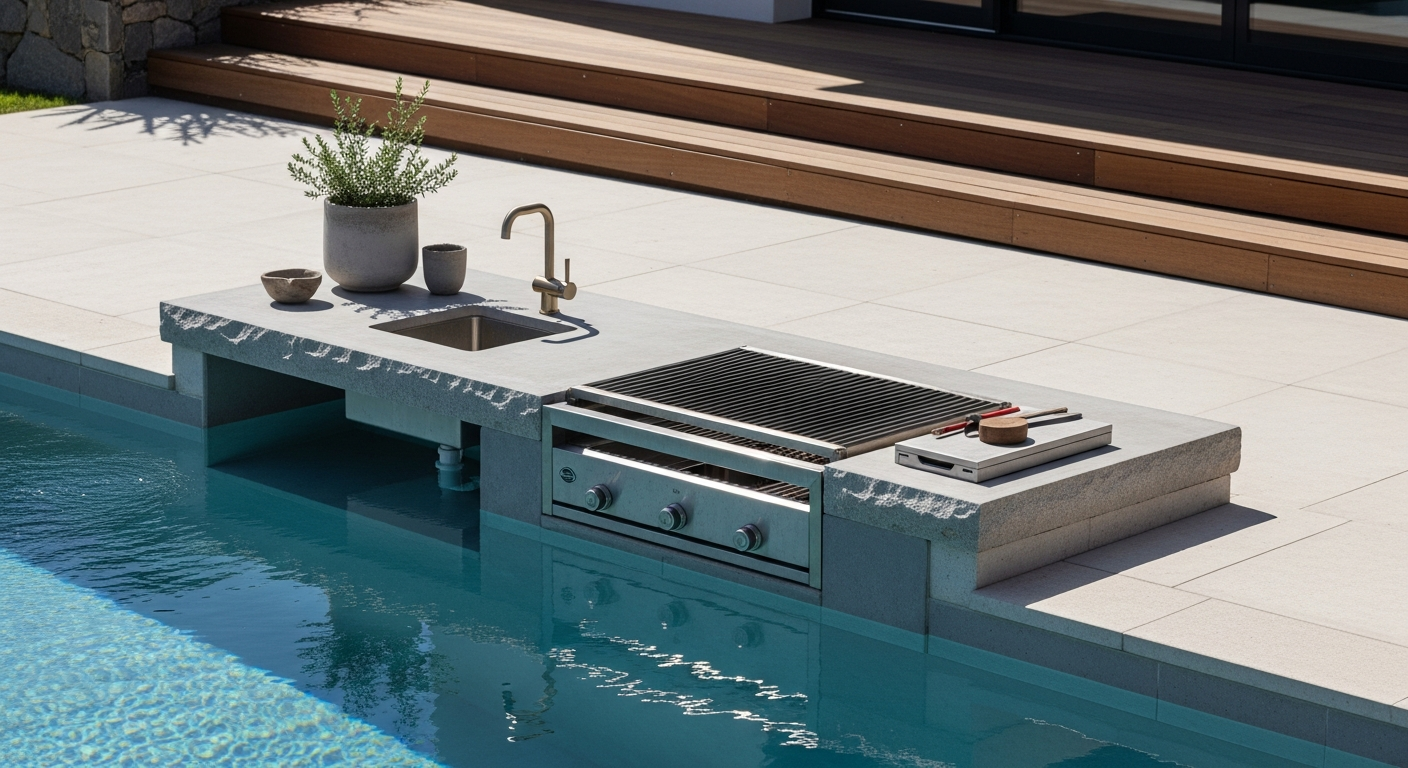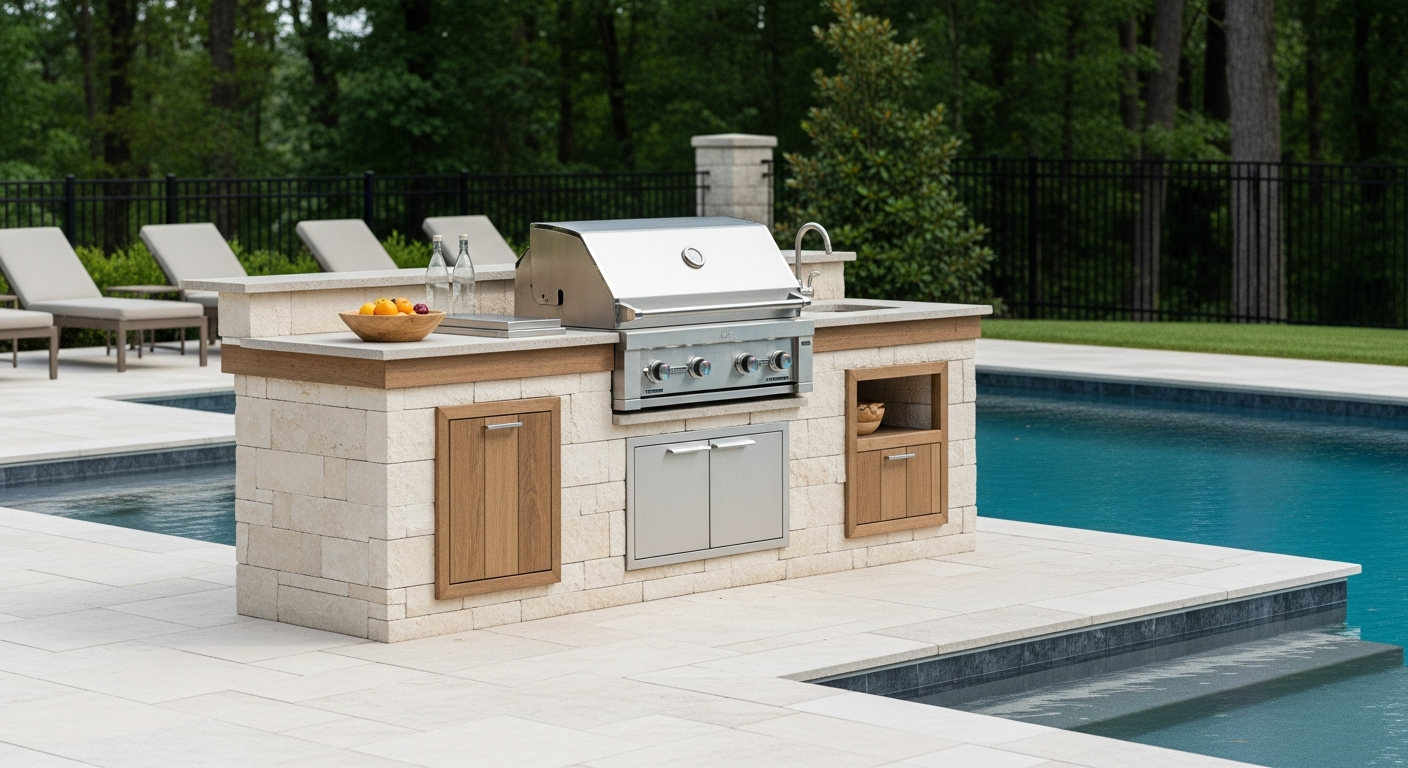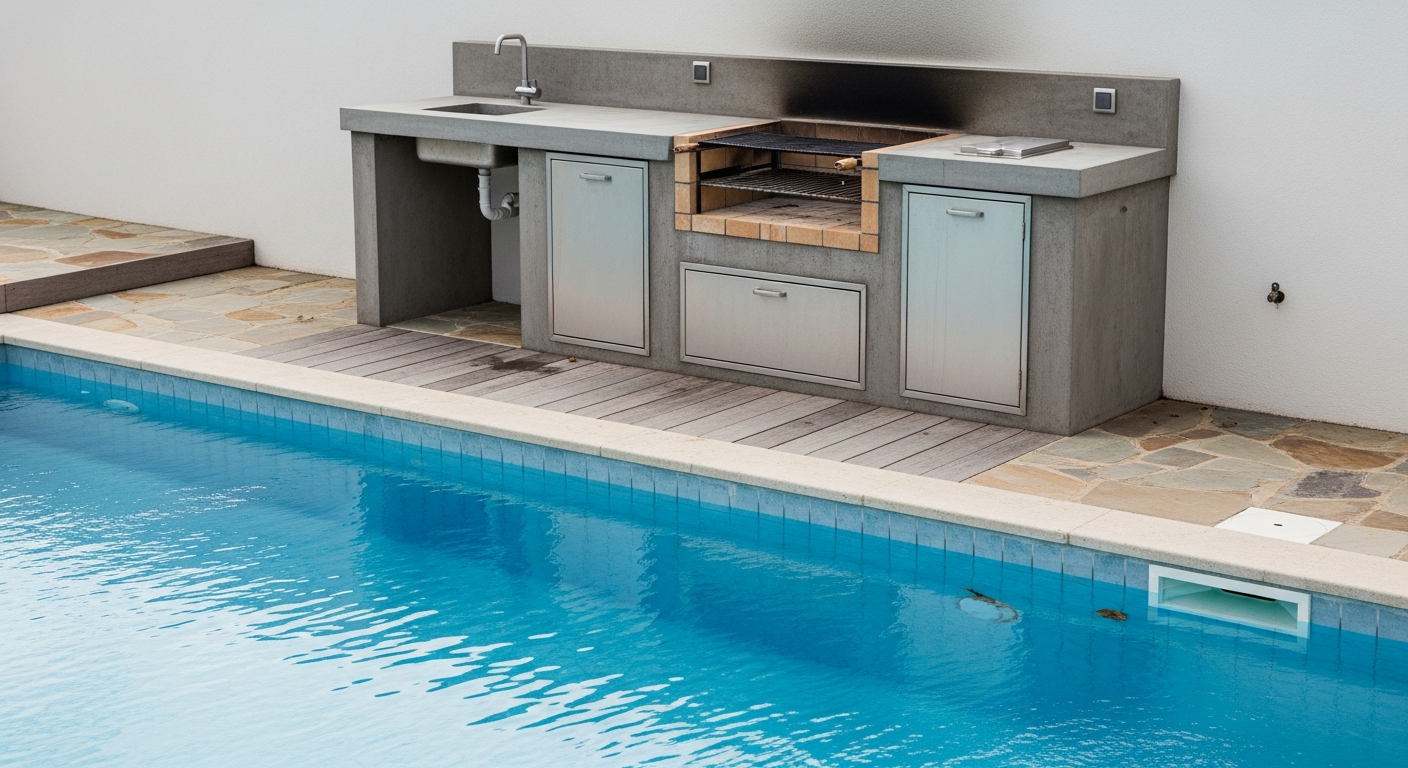
Outdoor Grill Island Pinellas County: My Framework for Resisting Salt-Air Degradation and Humidity Warping
After designing and troubleshooting over 50 custom outdoor kitchens from the waterfront homes of Snell Isle to the patio homes in Dunedin, I can tell you the single biggest point of failure isn't the grill itself—it's the structural frame. I’ve been called to "fix" 3-year-old islands in Clearwater Beach that were literally crumbling from the inside out. The cause was almost always the same: a builder used standard galvanized steel studs, which are no match for the relentless, corrosive salt air we have here in Pinellas County. They rust internally, expand, and crack the exterior cladding.
My entire approach is built around a principle I call "Coastal Material Integrity," which prioritizes a project's 20-year viability over its initial aesthetic. This means rejecting common building materials that work fine inland but are destined for catastrophic failure on our coast. It's about engineering a structure that actively fights against humidity, salt, and intense UV exposure, ensuring your investment doesn't become a pile of rubble.
The Coastal Degradation Assessment: My Pre-Build Protocol
Before a single piece of material is ordered, I perform a site-specific analysis. An outdoor kitchen for a home on Indian Rocks Beach, constantly getting hit with salt spray, has a fundamentally different set of material requirements than one in a more sheltered East Lake neighborhood. My protocol focuses on quantifying the two primary threats: salt-air corrosion and UV-induced material fatigue. Most builders use a one-size-fits-all kit, and that’s a critical error. My methodology involves mapping the property's specific exposure to these elements to create a bespoke material list.
Material Science Breakdown: 316 Stainless vs. Marine-Grade Aluminum
This is where the real engineering happens. The choice of framing and fasteners is non-negotiable for longevity in Pinellas County.
- Structural Frame: I exclusively use either 316-grade stainless steel tubing or 6061-T6 marine-grade aluminum. Standard steel studs or even lower-grade 304 stainless will eventually show pitting and fail at the welds. The molybdenum content in 316 stainless steel gives it superior resistance to chloride corrosion—the exact type caused by our salt air.
- Countertops: While granite is popular, many porous varieties will stain and absorb moisture. I frequently specify sintered stone (like Dekton) for projects with high sun exposure, as it is completely non-porous and UV-stable, meaning the color won't fade after two years under the intense Florida sun. It also has a near-zero thermal expansion rate, preventing cracks.
- Fasteners and Hardware: This is a detail I've seen sink entire projects. Using zinc-coated screws is a rookie mistake. Every single screw, hinge, and drawer slide must be 316 stainless steel. Anything less will become a rust point, bleeding onto your stone and compromising the connection.
The Pinellas-Proof Assembly Sequence
Proper assembly is just as critical as material selection. Executing the build in the correct sequence prevents moisture intrusion and ensures structural stability, especially considering our potential for tropical storm-force winds. This is my field-tested checklist for my teams.
- Foundation First: The island must be built on a monolithic concrete slab with rebar reinforcement, not just placed on existing pavers. Our sandy soil can shift, and pavers will settle unevenly, stressing the frame.
- Frame Assembly and Isolation: The aluminum or stainless frame must be welded, not just screwed together, for maximum rigidity. I also insist on using polymer isolation washers between the frame and any fasteners attaching appliances to prevent galvanic corrosion.
- Utility and Ventilation Planning: All gas and electrical lines are run through Schedule 80 PVC conduit. I design in passive cross-ventilation with screened vents at both the top and bottom of the cabinet structure. I once saw a unit where trapped humidity rusted out a $4,000 grill from the bottom up in four years.
- Cladding and Countertop Seal: The backer board and cladding are installed with a drainage plane in mind. Crucially, where the countertop meets the base, we use a high-performance, marine-grade flexible sealant, not rigid grout. This allows for microscopic expansion and contraction without cracking.
Post-Installation Commissioning: The 5-Point Durability Audit
The job isn't done when the last stone is set. I perform a final audit to stress-test the build and ensure it meets my standards for coastal resilience. This is my personal quality control checkpoint before handover.
- Water Ingress Test: A controlled spray test to ensure all appliance seals and joints are perfectly waterproof.
- Ventilation Flow Check: I use a smoke pencil to verify that air is drafting correctly through the ventilation ports to prevent moisture and gas buildup.
- Appliance Flange Security: I check that all built-in components are securely fastened and isolated from the primary frame.
- Drainage Verification: Confirming that the countertop and surrounding area shed water away from the island's base.
- Final Sealant Inspection: A meticulous check of all sealant lines for full adhesion and tooling quality.
Now that you understand the material science, how will you account for the differential thermal expansion rates between your sintered stone countertop and your welded aluminum frame to prevent stress fractures after the first Dunedin summer?