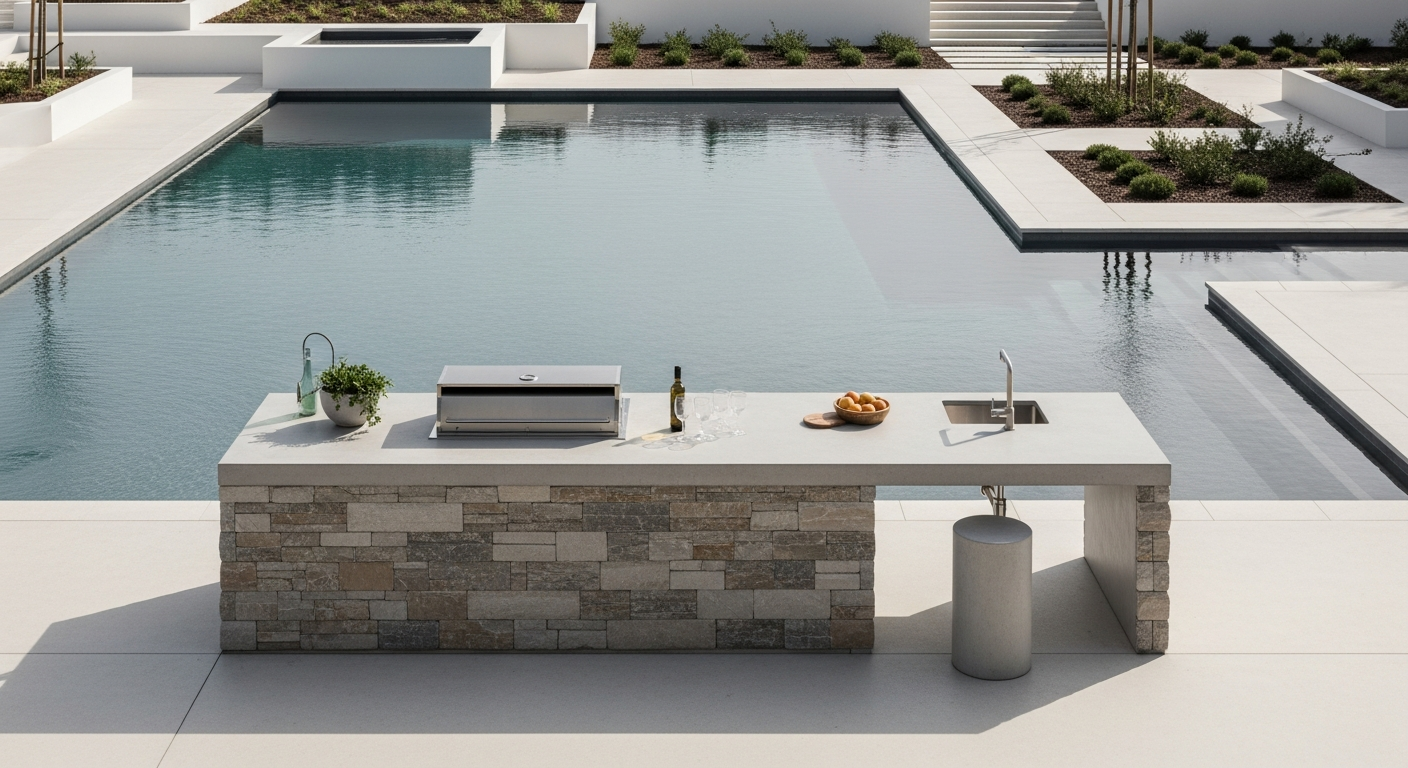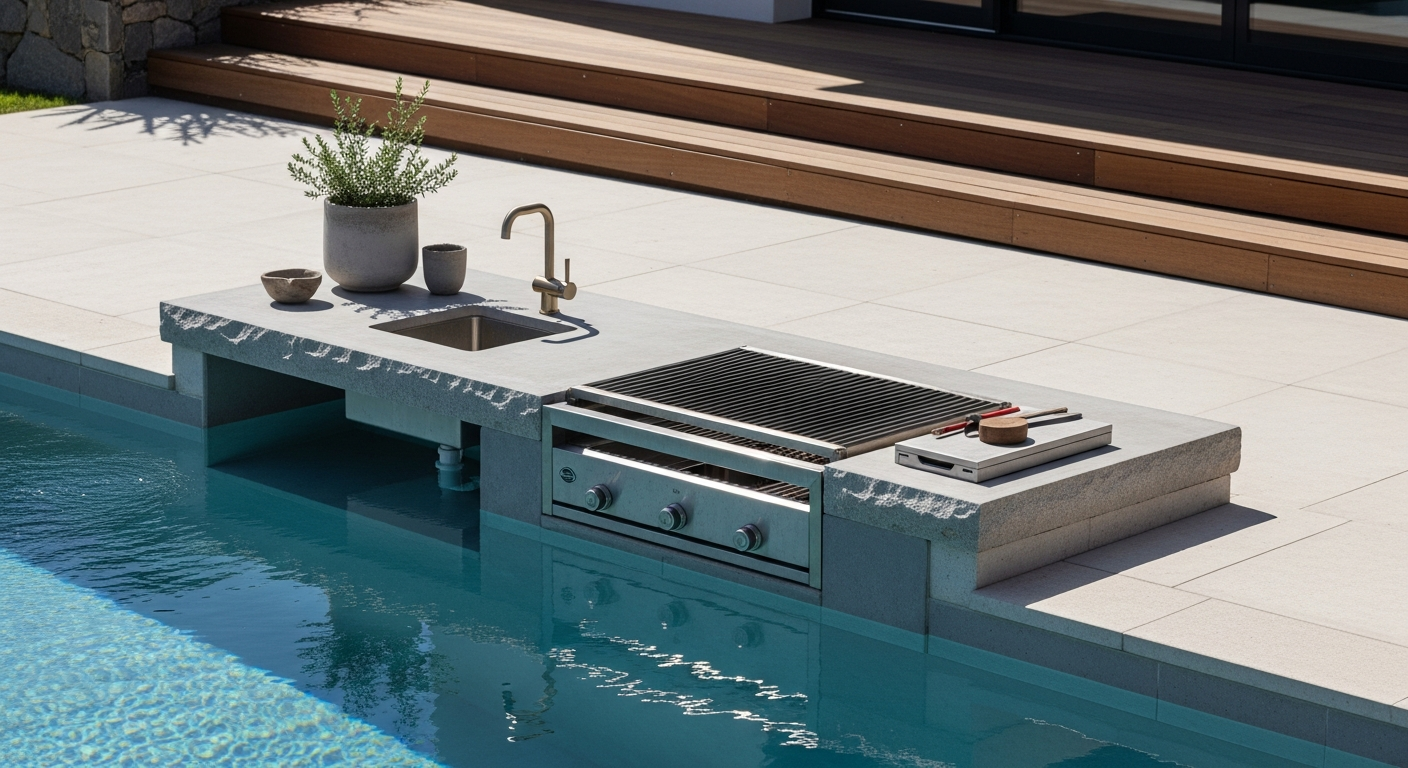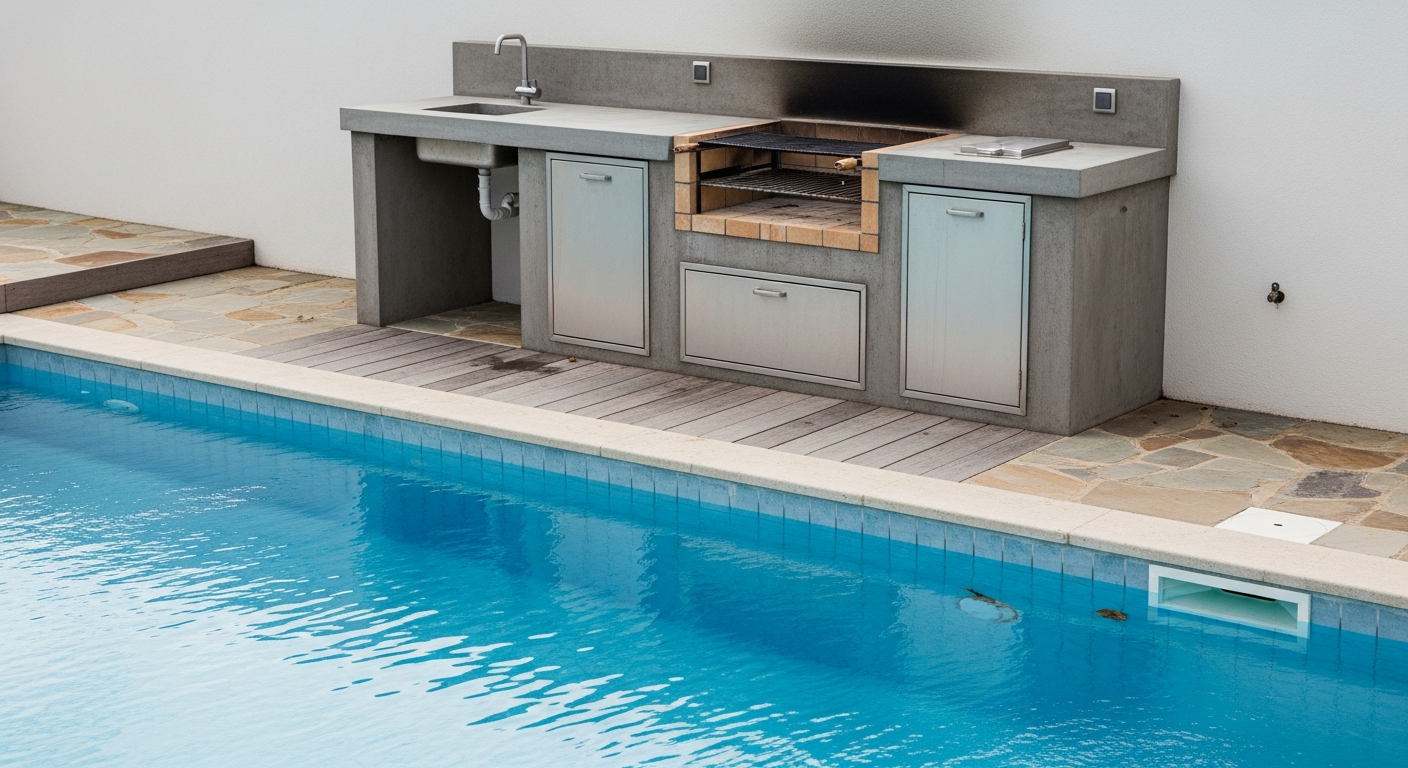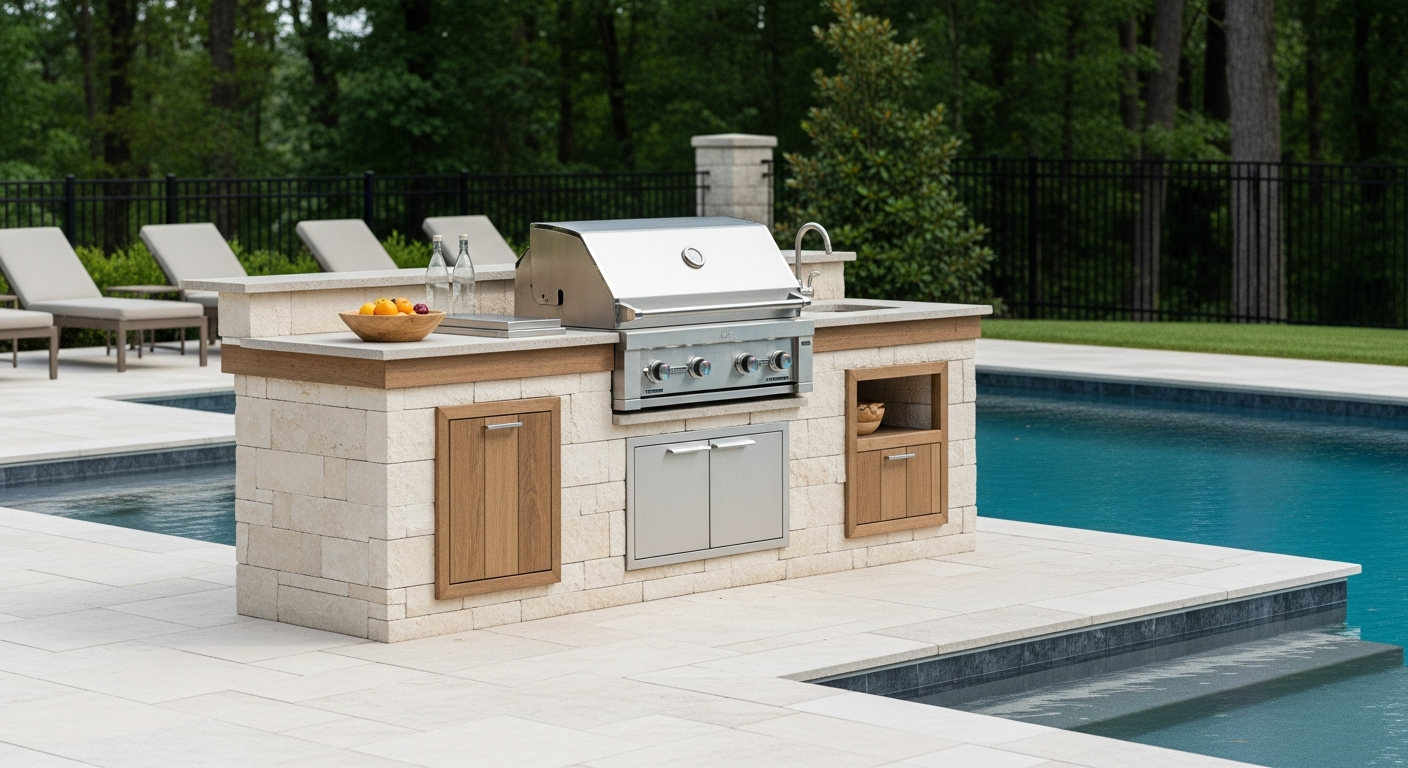
Outdoor Kitchen Islands for Sale in Pinellas County: My Blueprint for a 30-Year Salt-Air-Proof Installation
Finding an outdoor kitchen island for sale in Pinellas County is the easy part. The real challenge, which I've seen trip up countless homeowners from Clearwater to St. Pete Beach, is investing in a unit that won't corrode into a pile of rust within three years. The subtropical, salt-laden air here is brutally unforgiving, and standard off-the-shelf solutions simply don't have the material science to withstand it. My entire approach is built on a principle I call "Coastal Material Specification." It’s not about finding the prettiest island; it's about engineering a permanent outdoor fixture that treats humidity and salt spray as core design constraints, not afterthoughts. I’ve been called in to replace far too many "powder-coated steel" frames that have completely disintegrated behind beautiful stone facades, a costly failure that is entirely avoidable with the right initial diagnosis.My Diagnostic Framework: The Coastal Durability Audit
Before I even consider a design, I perform what I call a Coastal Durability Audit. This isn't a simple measurement of the patio. For a project on Treasure Island, for example, the ambient salinity is significantly higher than in a more inland property in Largo. This audit dictates the minimum material grade for every single component, from the frame to the fasteners. A common mistake is a beautiful granite countertop placed on a galvanized steel frame; the top will last forever, but the structure beneath it will fail, I guarantee it. My methodology focuses on the unseen 90% of the build.Technical Deep Dive: Frame, Cladding, and Fastener Specification
The structural integrity is everything. My non-negotiable starting point is the frame material.- Structural Frame: I exclusively use welded 304-grade stainless steel tubing for most Pinellas installations. For properties directly on the water or the Intracoastal, I mandate an upgrade to 316-grade "marine" stainless steel. The higher molybdenum content offers a 40% increase in corrosion resistance, a critical KPI for waterfront longevity.
- Cladding & Backer Board: Plywood or standard cement board will absorb moisture and fail. I only use 100% waterproof foam or concrete-based backer boards. For cladding, non-porous materials are key. Sintered stone (like Dekton) or high-density marine-grade polymers are superior to porous natural stone, which can harbor mildew in our humid climate.
- Countertops: Quartz is a popular indoor choice, but many resins used in quartz are not UV-stable, leading to yellowing under the intense Florida sun. I guide clients toward sintered stone or specific grades of granite that have been tested for UV resistance.
Implementation Protocol: A Step-by-Step for Zero-Failure Builds
Executing the build requires precision. A single weak point can compromise the entire island. Here is my core implementation checklist for every Pinellas County outdoor kitchen project.- Site Preparation: Ensure the concrete pad is properly cured and sealed. I never build on top of pavers without a solid concrete footing underneath, as settling can crack the structure.
- Frame Assembly: All joints must be TIG welded, not screwed. Screws create penetration points for moisture. Every weld is then passivated and polished to restore the chromium oxide layer, which is the true barrier against rust.
- Utility Integration: All electrical outlets must be in-use, weatherproof-rated GFCI outlets. Gas lines should be flexible, high-grade stainless steel, not standard copper which can corrode over time from salt exposure.
- Appliance Installation: I mandate a minimum 1-inch air gap between the grill liner and the combustible structure, a spec many builders ignore. This prevents heat damage and is a critical safety measure.
- Fastener Check: Every single screw, bolt, and hinge used for doors, drawers, and appliance mounting must be 316-grade stainless steel. This is a small detail that prevents the most common failure point: bleeding rust stains.
Precision Adjustments and Quality Standards
The final 5% of the job is what ensures a 30-year lifespan. This is where I check the fine details. Countertops must be installed with a subtle, almost imperceptible 1/8-inch slope per foot to ensure water runoff and prevent pooling. All seams and joints, especially where the countertop meets the backsplash, are sealed with a marine-grade silicone sealant, not a standard acrylic caulk that will shrink and crack in the sun. This final sealing pass is what makes the island a monolithic, water-impenetrable unit. So, when you look at that beautiful outdoor kitchen island for sale, are you asking about the grade of steel in the drawer slides or just the brand of the grill?Written by

Tags
outdoor kitchen island with seating
kitchen outdoor island
prefab outdoor grill island
outdoor kitchen islands prefabricated
outdoor kitchen concepts