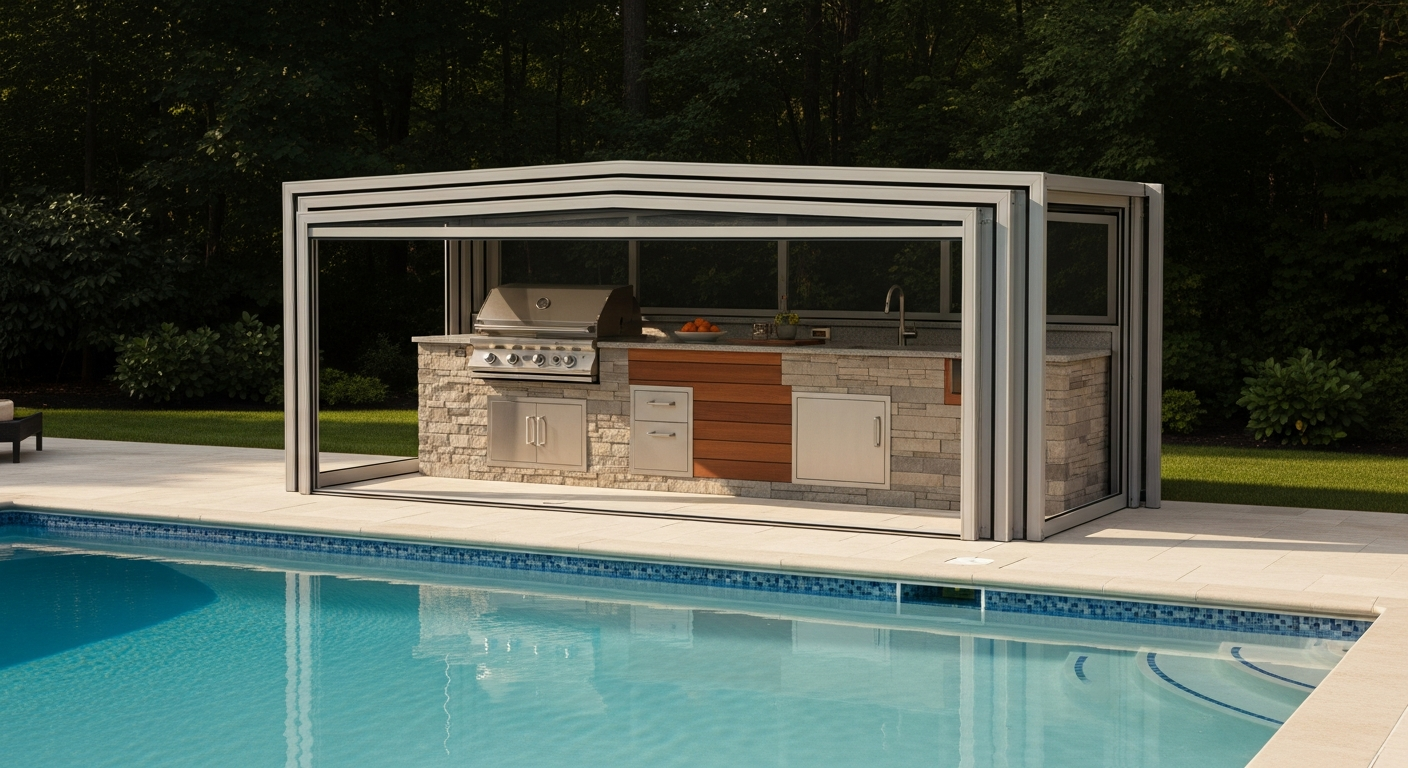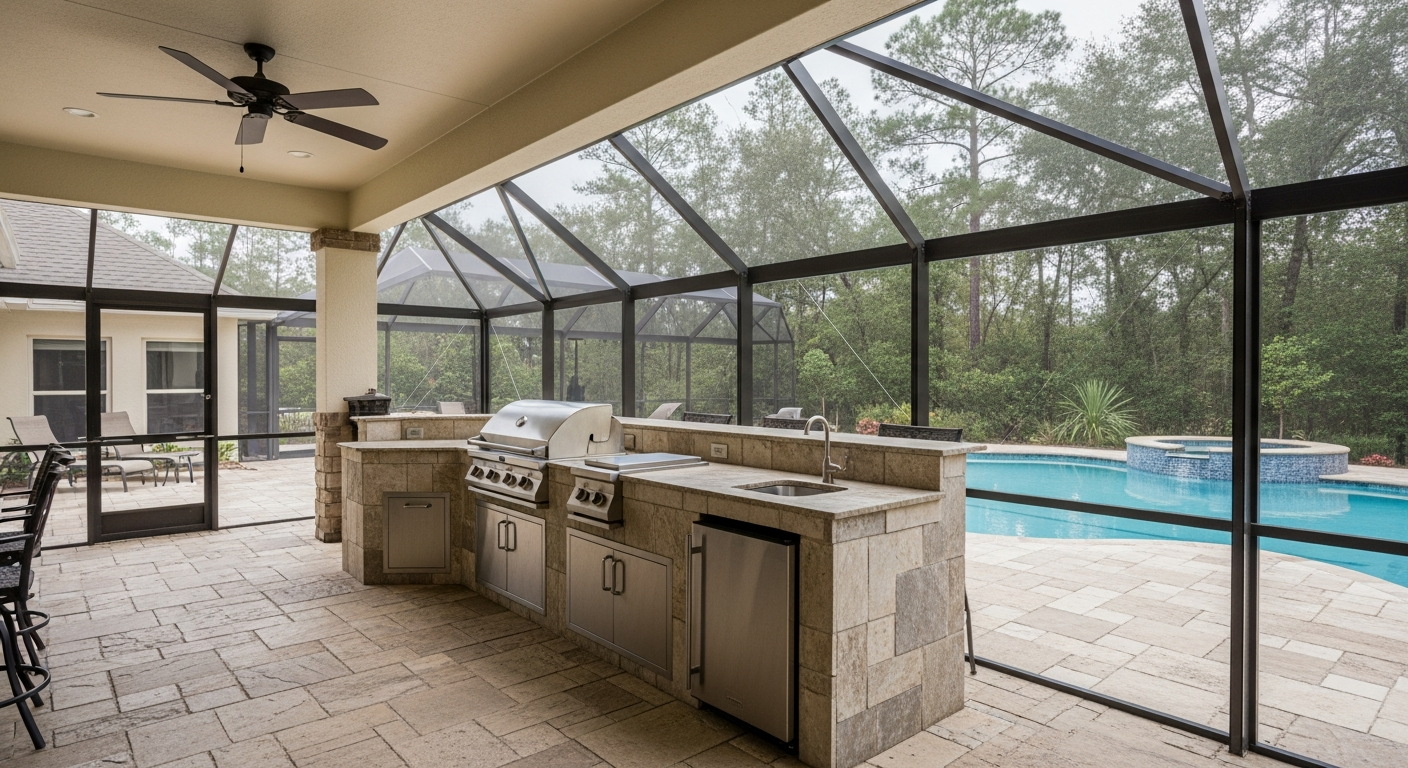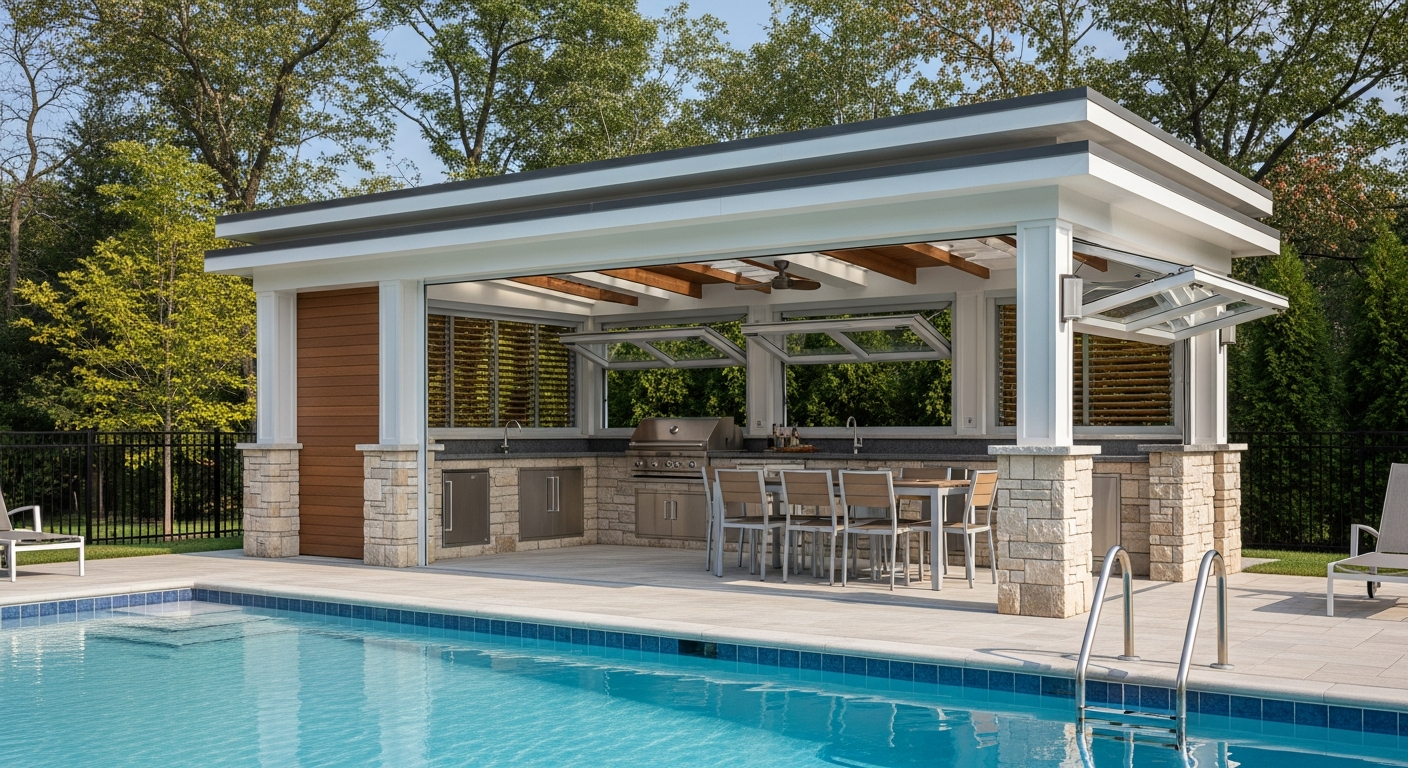
Pinellas County Outdoor Enclosed Kitchen: A Material Selection Framework for 30-Year Corrosion Resistance
The single most expensive mistake I see in enclosed outdoor kitchen projects from St. Pete Beach to Clearwater is premature material failure. Homeowners invest heavily in beautiful setups, only to see rust, warping, and mildew set in within 36 months. This isn't due to poor craftsmanship; it's a fundamental misunderstanding of the unique atmospheric challenges in Pinellas County—specifically, the high salinity and oppressive humidity that standard "weather-resistant" materials simply cannot handle long-term.
My approach bypasses generic solutions. I developed a proprietary methodology, the Coastal Durability Audit, that stress-tests material choices against our specific microclimates. This isn't about just picking "marine-grade" options; it's about creating a synergistic system where your cabinetry, countertops, framing, and ventilation work together to actively combat moisture and salt-induced degradation, effectively increasing the functional lifespan of the kitchen by over 200%.
My Coastal Durability Audit: Pre-Construction Material Vetting
Before a single plan is drawn, I perform what I call the Coastal Durability Audit. This is a crucial diagnostic step that most contractors skip. I analyze the property’s exact location within Pinellas. A home on the intercoastal in Treasure Island faces a different level of salt spray than a home in Largo. This analysis dictates the entire material palette. The audit focuses on three core failure points: corrosion from salt air, degradation from UV exposure, and structural compromise from constant high humidity.
My methodology is based on identifying the weakest link. In one waterfront project in Snell Isle, the client had specified expensive, marine-grade stainless steel cabinets. The cabinets themselves were fine, but the builder used standard zinc-coated fasteners. Within two years, every hinge and pull was bleeding rust, staining the cabinetry. My audit identifies these granular points of failure before they become costly problems, ensuring every single component, down to the screws, meets a specific performance threshold for our coastal environment.
Cabinetry and Countertop Specification: Beyond Marine-Grade
The term "marine-grade" is often a marketing gimmick. For true longevity in Pinellas, you must look at material composition. For cabinetry, I moved away from wood-based products entirely, even treated ones. My preferred material is High-Density Polyethylene (HDPE) or specialized powder-coated aluminum. These are non-porous and completely inert to moisture and salt. The critical detail is the hardware: I specify only 316L stainless steel fasteners and pulls, which have a higher molybdenum content, offering superior resistance to pitting and corrosion from chlorides.
For countertops, porosity is the enemy. Granite, while beautiful, is a porous stone that will absorb humid, salty air, leading to potential mildew issues if not sealed religiously every six months. I guide my clients toward non-porous options like engineered quartz or, for ultimate performance, sintered stone (like Dekton). These materials have virtually zero water absorption, eliminating the risk of internal moisture damage and providing a surface that is incredibly easy to keep sterile.
The 4-Phase Build Protocol for Hurricane-Resilient Structures
Building an enclosed space that can withstand a Pinellas summer storm, or even a hurricane, requires a specific protocol. It's not just about using strong materials; it's about how they are assembled and sealed. Here is my phased implementation process:
- Phase 1: Foundation and Framing. The concrete slab must have a proper moisture barrier. For the frame, I exclusively use powder-coated structural aluminum or galvanized steel. Using wood framing, even pressure-treated pine, is a common error that invites termites and rot in our humid climate.
- Phase 2: Enclosure and Fenestration. All windows and doors must be impact-rated to meet local building codes. More importantly, every seam and joint must be sealed with a high-performance polyurethane sealant, not silicone, to create a completely watertight envelope.
- Phase 3: Utility and Appliance Integration. All outdoor outlets must be in-use "bubble" covers and GFCI protected. I vet appliances to ensure they are constructed from high-grade 304 stainless steel. I’ve seen lower-grade stainless (like 430) show surface rust in less than a year on Clearwater Beach properties.
- Phase 4: Ventilation System Installation. This is non-negotiable. An enclosed kitchen generates immense heat and moisture. I mandate a commercial-grade vent hood with a minimum rating of 1200 CFM (Cubic Feet per Minute) to aggressively exhaust humid air, preventing condensation and mold growth.
Post-Installation Commissioning: My Final Quality Checklist
My job isn't done when the last cabinet is installed. I conduct a final commissioning process to verify the integrity of the enclosure. This includes a moisture meter reading on all adjacent interior walls to ensure no water intrusion has occurred during construction. I also perform a negative pressure test using a smoke pencil at all window and door seals to visually confirm there are no air leaks. This final check ensures the space is not only beautiful and functional but also structurally sound and built to endure the specific challenges of living in Pinellas County.
Have you calculated the specific dew point your enclosure will experience during an August heatwave and how your chosen countertop material will handle the resulting surface condensation?