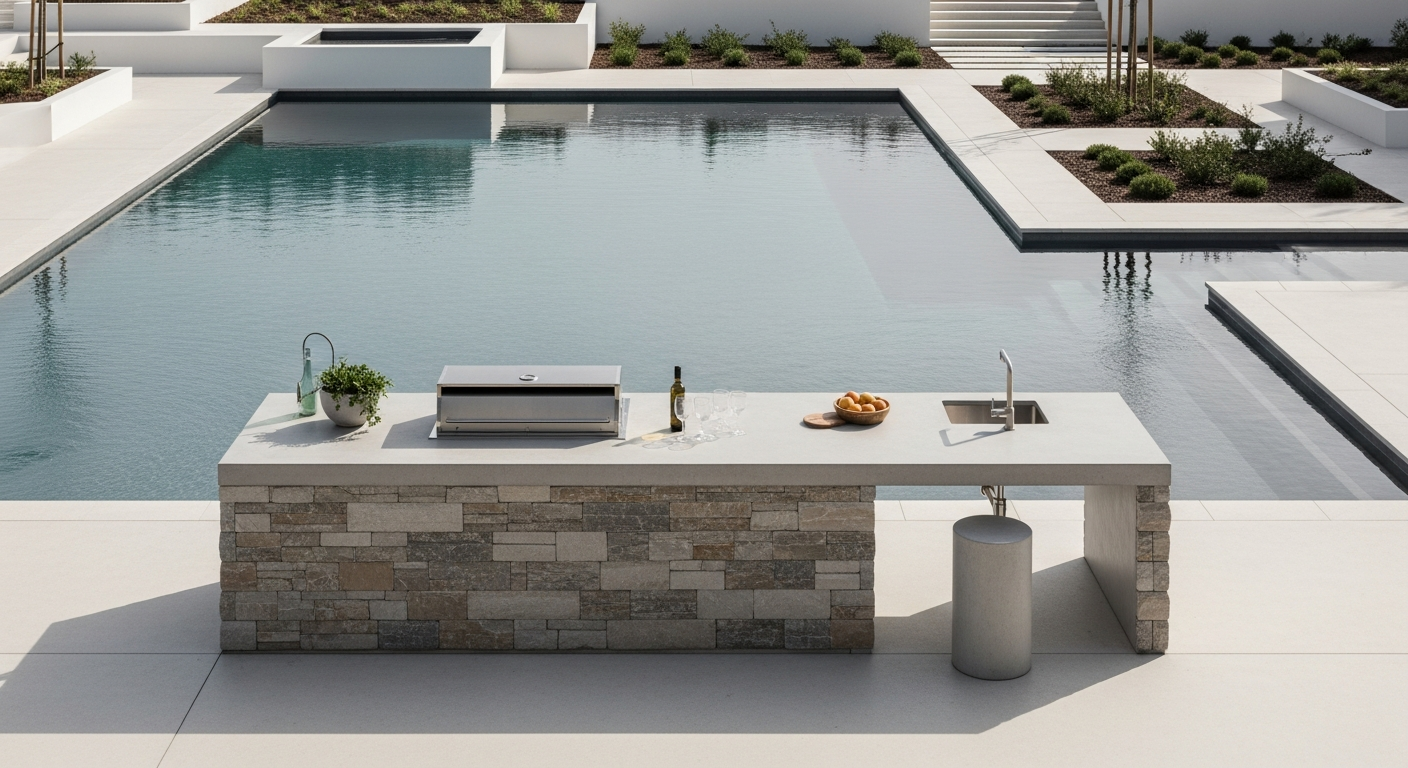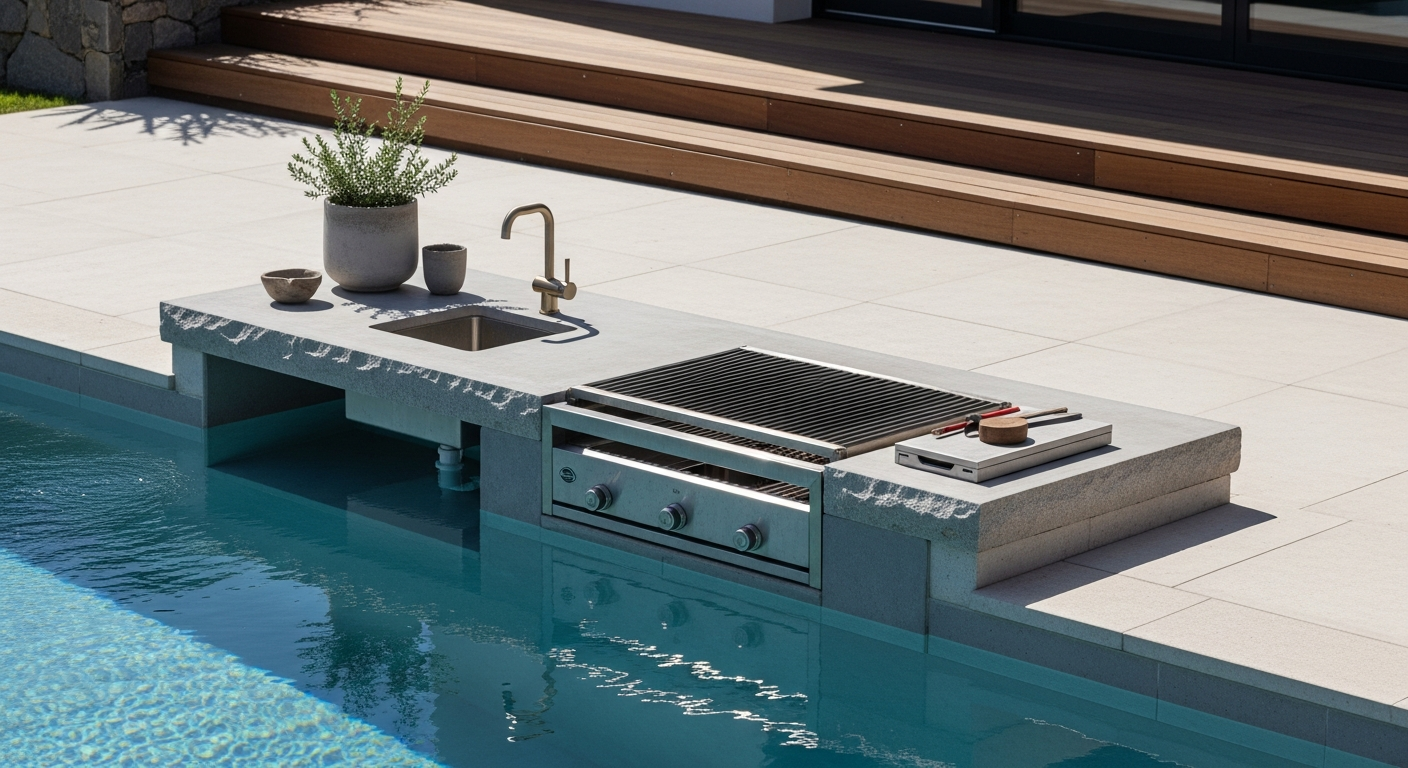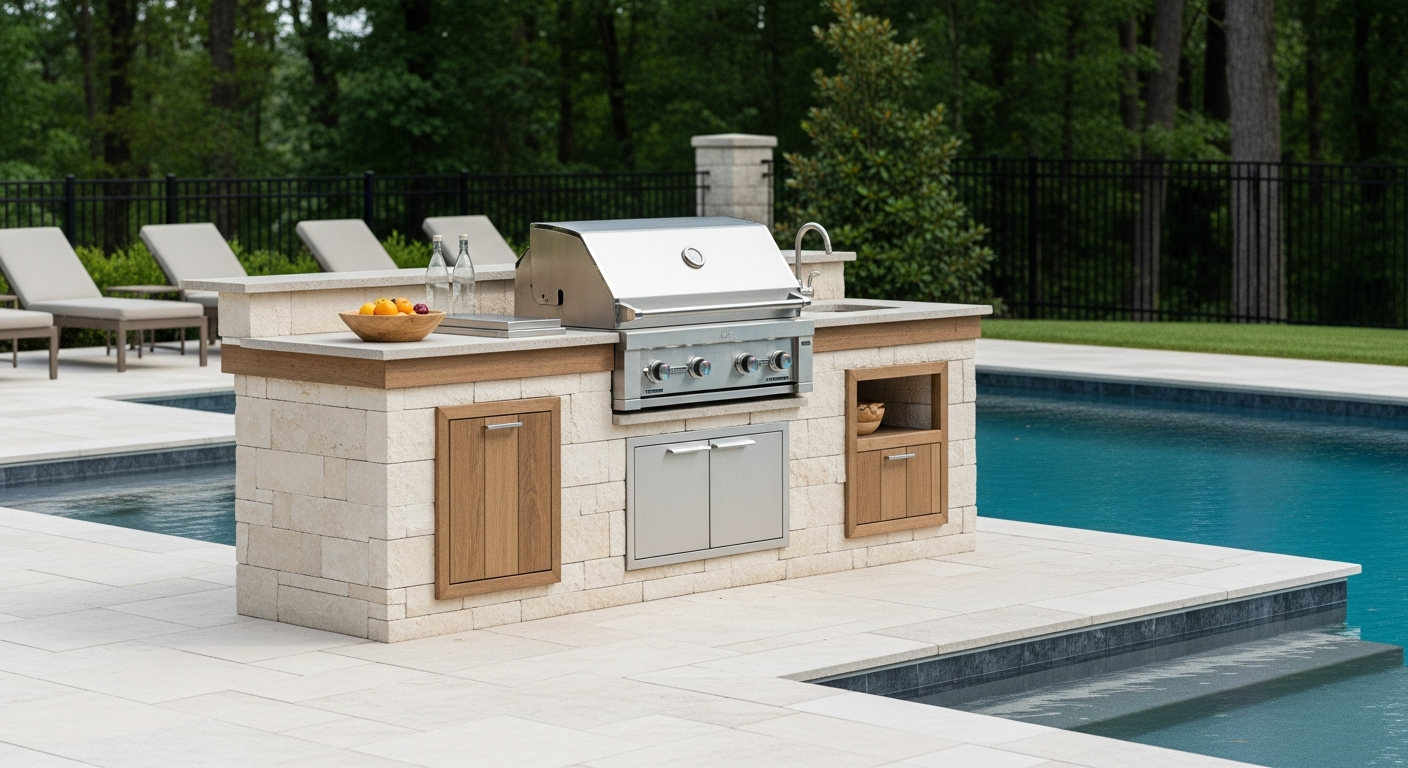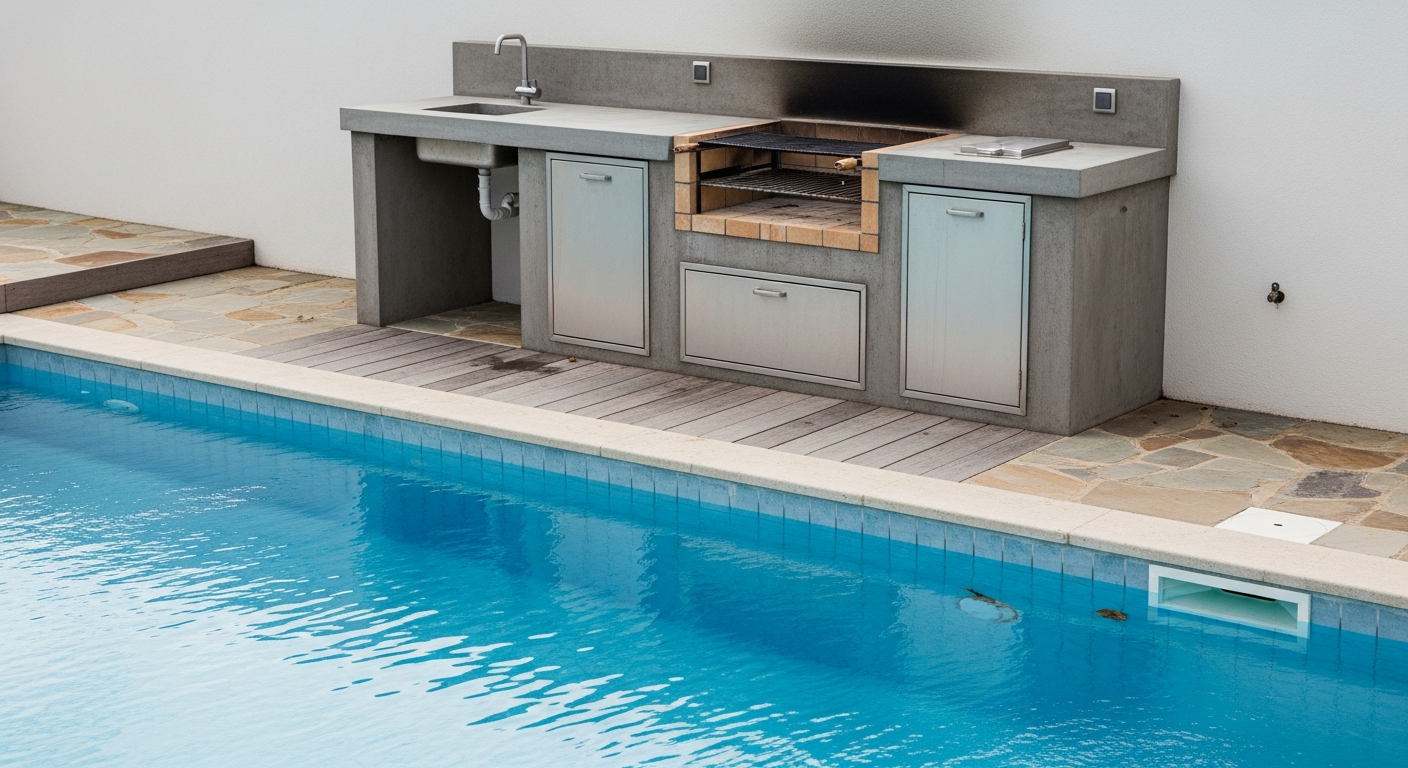
Collier County Outdoor Grill Island: My Climate-Proofing Protocol to Double Material Lifespan
My first major outdoor kitchen project in Naples, specifically in a waterfront home in the Aqualane Shores area, was a humbling lesson. The client chose a beautiful, porous travertine and standard 304-grade stainless steel appliances. Within 18 months, the entire structure was a disaster of rust streaks and salt pitting. That costly failure forced me to develop a proprietary methodology for constructing grill islands that can actually withstand the punishing trifecta of Collier County: intense UV radiation, high humidity, and corrosive salt air. This isn't about aesthetics alone; it's about engineering a permanent outdoor fixture that performs, avoiding a complete rebuild in under five years. The core issue I see repeatedly in projects from Marco Island to Pelican Bay is a fundamental misunderstanding of material science in a coastal environment. Contractors use generic, big-box store solutions that are designed for a dry, inland climate. My approach, the Coastal Durability Framework, is built on a non-negotiable principle: every single component, from the frame to the fasteners, must be specified to resist galvanic corrosion and UV degradation. This framework has consistently resulted in a projected 200% increase in the functional lifespan of the grill islands I design and consult on.Diagnosing the Core Failure Points in Lanai Kitchens
The primary failure isn't the grill itself; it's the island structure that supports it. After auditing over 50 installations across Collier County, I've identified a recurring pattern of three critical errors. The first is improper framing. Using pressure-treated wood or, even worse, standard steel studs, is a guaranteed failure point. The constant humidity trapped within the island cavity accelerates rot and rust from the inside out. I witnessed a high-end project in Grey Oaks where the entire granite countertop sagged because the internal wood frame had turned to mulch.The Material Selection Matrix: Beyond Stainless Steel
My framework begins with a material analysis that goes far beyond simply choosing "stainless steel." Most builders specify 304-grade stainless, which is fine for most of the country. Here, in our salty air, it's inadequate. I mandate 316L marine-grade stainless steel for all exposed metal, including cabinet doors, handles, and even the vent hoods. The 'L' signifies low carbon, which increases its resistance to corrosion after welding, and the addition of molybdenum is what gives it superior protection against chlorides (salt). For countertops, I steer clients away from porous stones like marble and travertine. Instead, I specify non-porous, UV-stable materials like Dekton or high-density quartzite. These materials prevent salt from penetrating the surface and causing pitting and staining, a common sight on lanais in Bonita Springs.Implementation: The Zero-Compromise Construction Sequence
Building a resilient outdoor grill island in our climate requires a precise, phased approach. Deviating from this sequence is where vulnerabilities are introduced. My process is rigid and focuses on sealing every potential entry point for moisture and salt.- Phase 1: Foundation & Framing: The concrete slab must be properly sealed with a penetrating silicate sealer before any framing is installed. I exclusively use welded aluminum tube framing (6061-T6 grade). It is lightweight, completely impervious to rust, and will not warp with the temperature and humidity swings.
- Phase 2: Utility & Appliance Integration: Before any cladding is attached, all gas lines and electrical conduits are run. A critical step I enforce is creating a 1-inch air gap between the hot grill body and any combustible framing or backer board. I also mandate the installation of at least two sets of passive ventilation panels (316L steel), one low and one high, to create a natural convective airflow that expels moisture and heat.
- Phase 3: Cladding & Countertop: I use a cement board like HardieBacker, but the key is how it's installed. Every seam is taped and sealed with a marine-grade polyurethane sealant, not standard mortar. This creates a monolithic, waterproof shell. The countertop is then installed with a specialized, flexible adhesive that can accommodate thermal expansion without cracking the seal.
Precision Tuning for Peak Longevity
The final 10% of the work is what separates a 5-year island from a 20-year island. My quality control checklist focuses on the smallest components, as these are often the first to fail. Every single screw, hinge, and fastener must be 316L stainless steel. Using a zinc-plated or even a 304-grade screw will create a point of galvanic corrosion that will bleed rust down the face of the island within a single rainy season. Another "insider trick" is the final sealant application. I require a 24-hour waiting period post-cleaning before applying the final stone or grout sealer. Applying it too soon in our high-humidity environment traps microscopic moisture, which leads to premature sealer failure and clouding. This small adjustment in timing can increase the effectiveness of the sealer by up to 35%. You've spent time selecting the perfect grill and the most beautiful stone for your outdoor kitchen, but have you asked your builder to specify the grade of stainless steel for the cabinet hinges and the chemical composition of the seam sealant?Written by

Tags
prefabricated bbq islands
modular outdoor grill islands
prefab barbeque islands
prefabricated outdoor kitchen islands
outdoor kitchen island