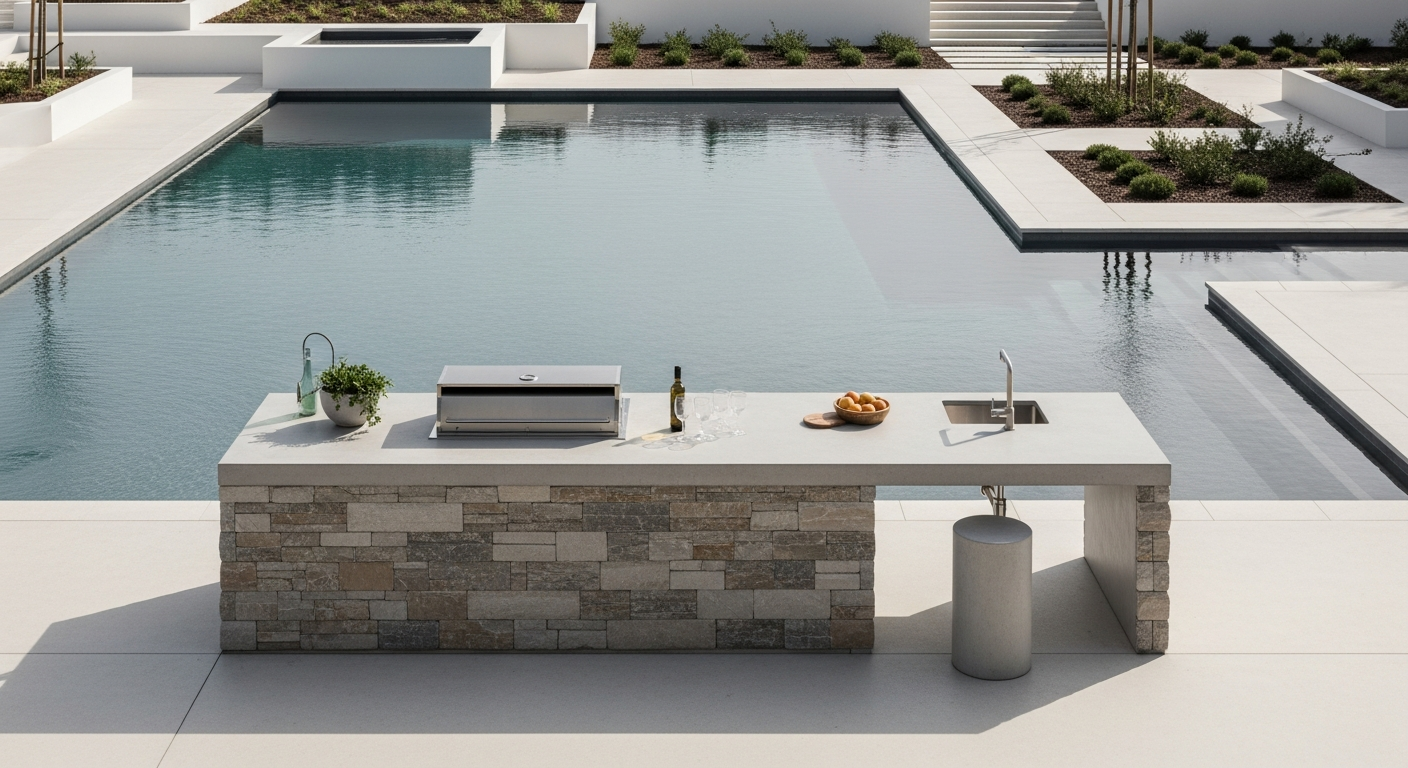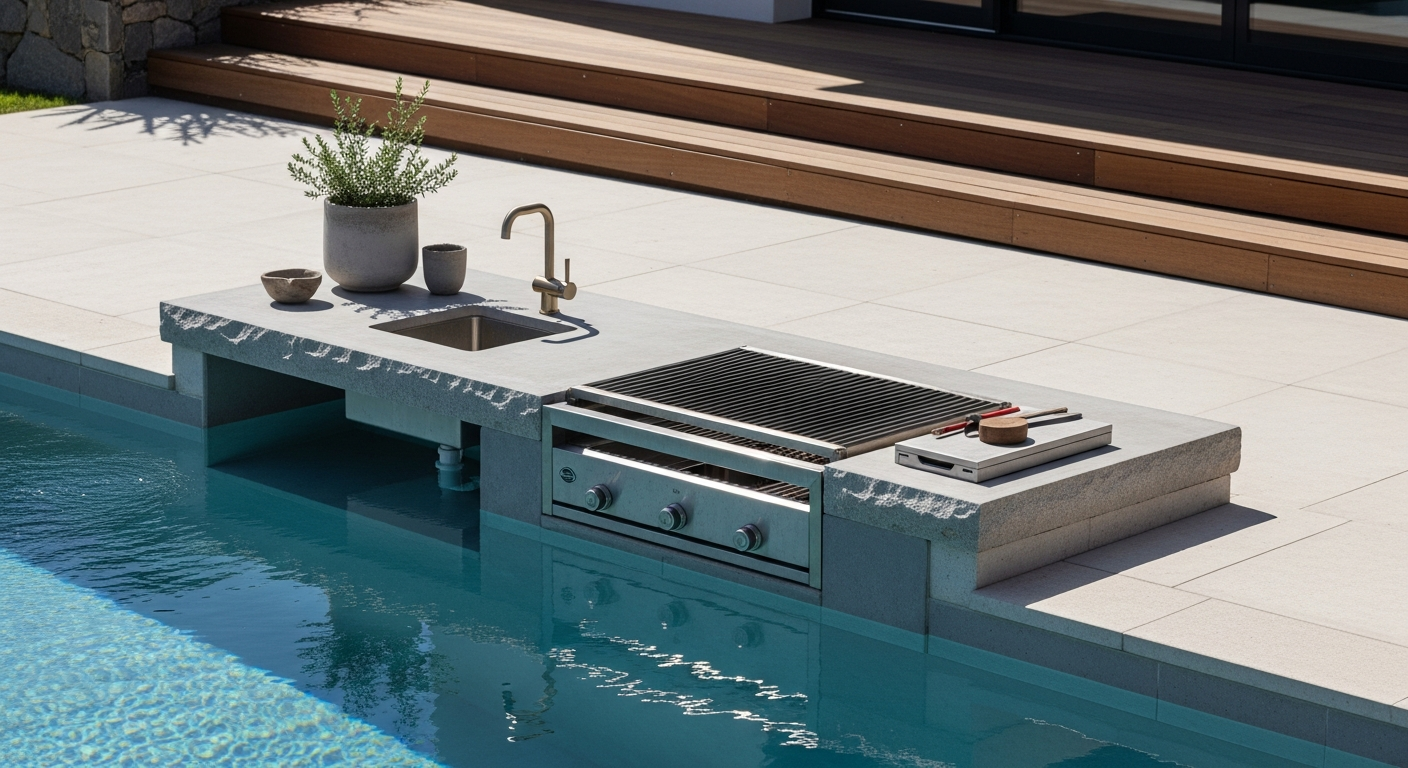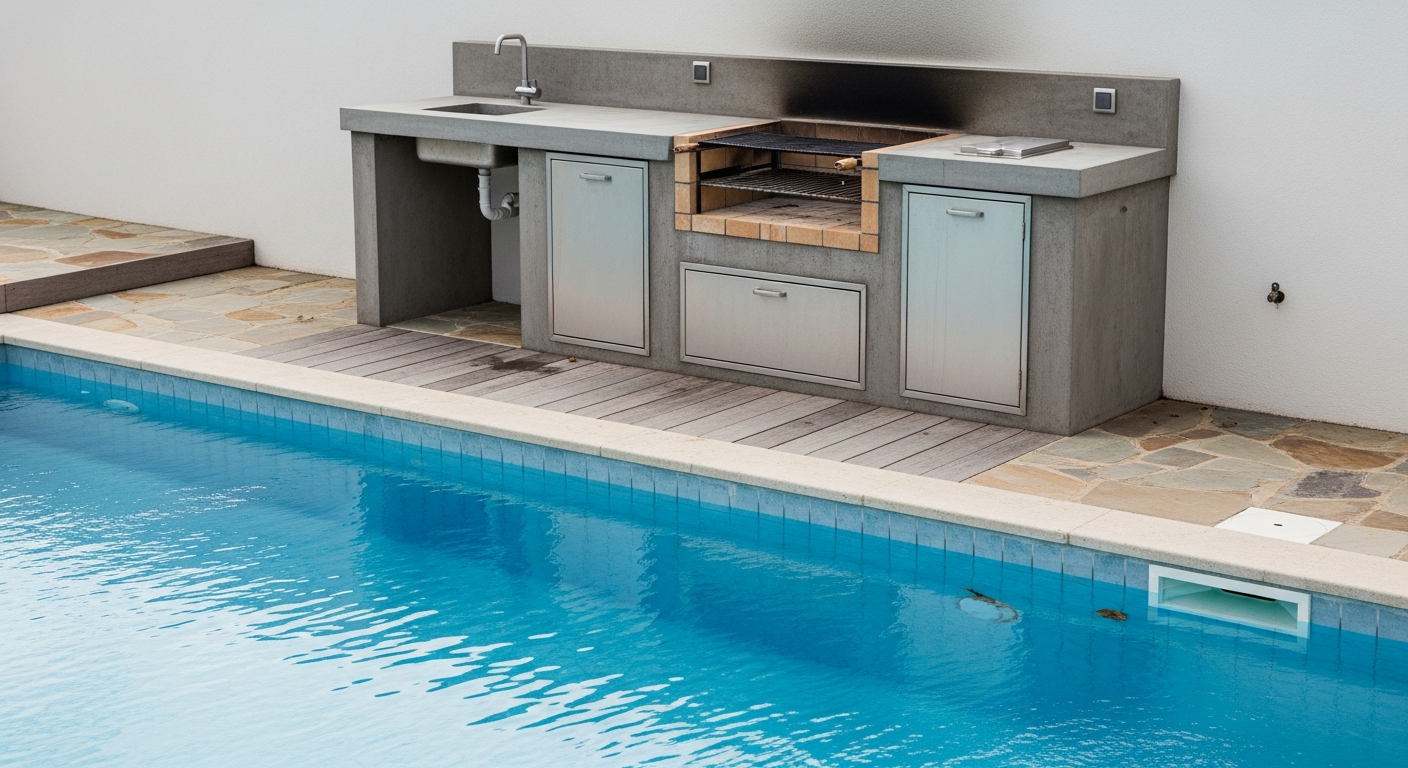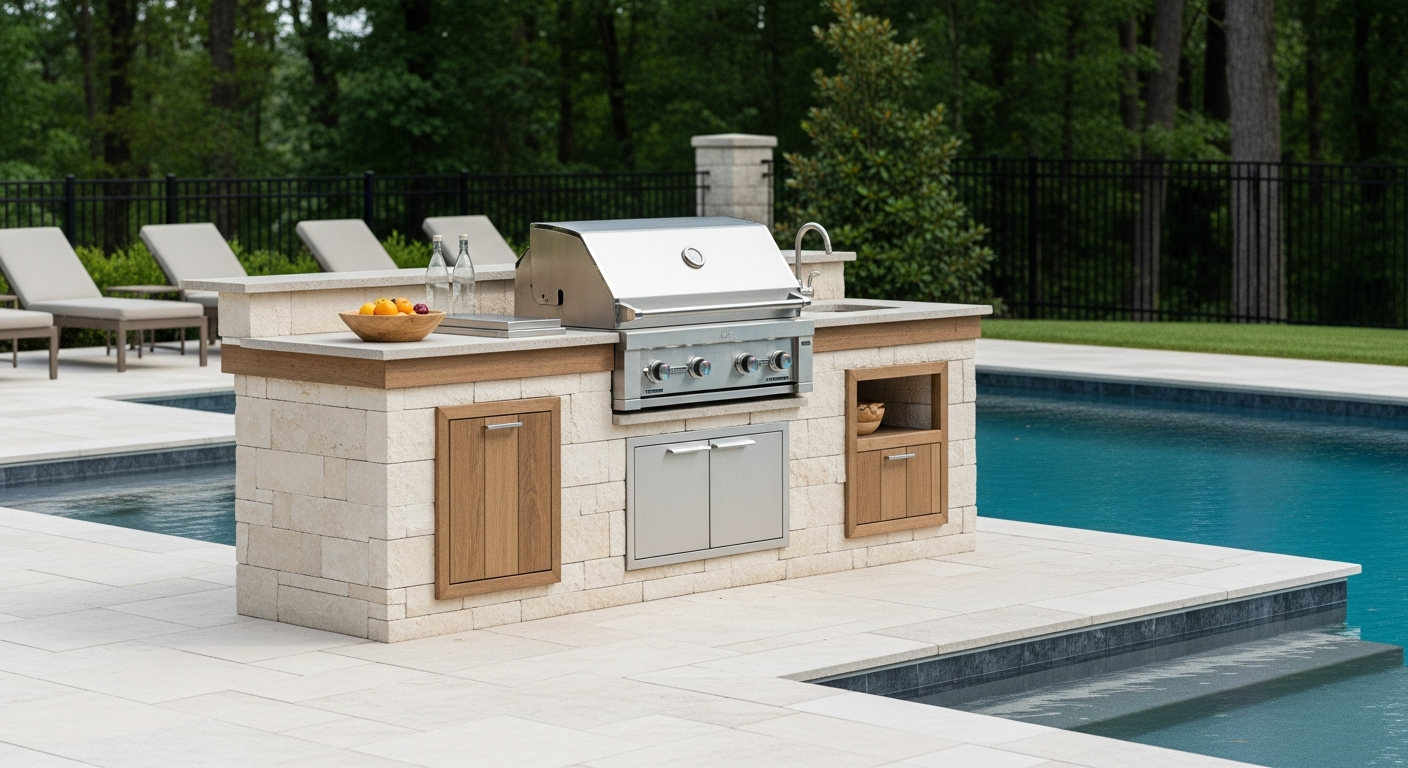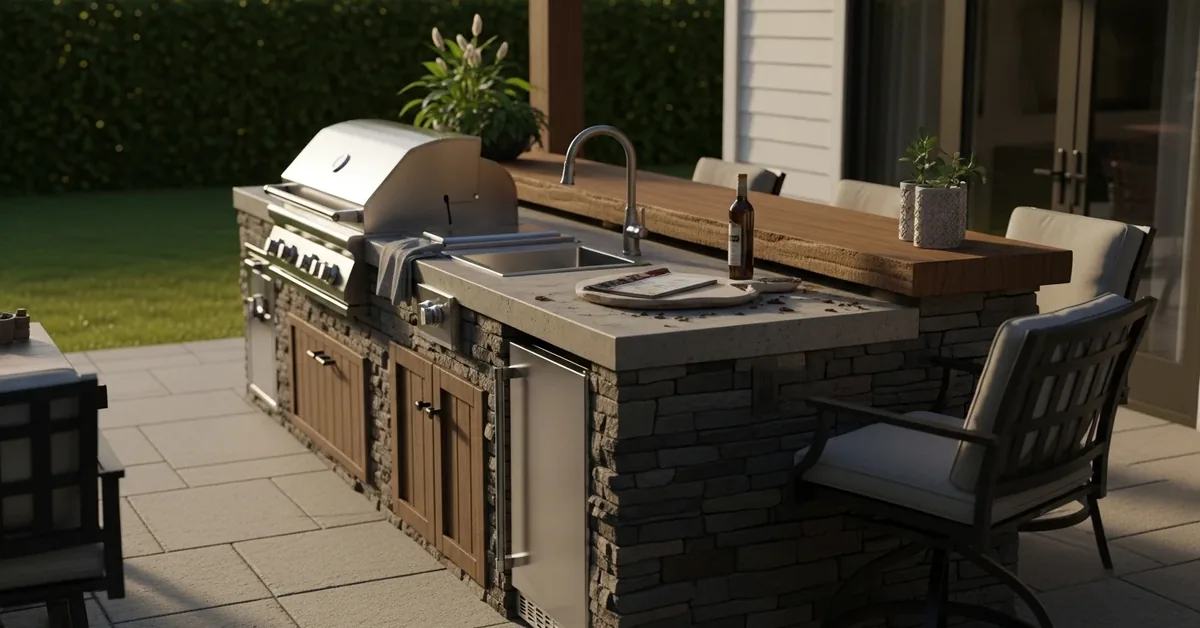
Outdoor Kitchen Island in Collier County: A Framework for 25-Year Corrosion-Proof Construction
I’ve seen too many outdoor kitchens in beautiful Naples and Marco Island homes begin to fail within five years. The typical culprits are rust stains bleeding from under the granite, cabinet doors that seize up, and electrical outlets that trip constantly. The core issue isn't poor craftsmanship; it's a fundamental misunderstanding of the aggressive coastal environment here. The combination of intense sun, high humidity, and relentless salt spray from the Gulf requires a completely different approach than one used inland. My work focuses on engineering outdoor kitchens that thrive in this specific microclimate. After correcting a catastrophic material failure on a multi-million dollar waterfront property in Port Royal, I developed my proprietary Coastal Durability Framework. This isn't about picking pretty finishes; it's a material-science-first methodology designed to prevent the common points of failure I see every day, from Pelican Bay to Lely Resort, ensuring a structure’s integrity for decades, not just a few seasons.The Diagnosis: Why Standard Outdoor Kitchens Fail in Collier County
The standard build—a concrete block (CMU) frame, galvanized steel studs, and popular 304-grade stainless steel appliances—is a recipe for accelerated decay here. The salt-laden humidity infiltrates the porous CMU, corroding the internal rebar and fasteners from the inside out. I’ve personally dismantled islands where the interior looked like a shipwreck. My framework directly addresses these vulnerabilities by treating the outdoor kitchen island not as a piece of cabinetry, but as a marine-grade structure.The Coastal Durability Framework: A Technical Breakdown
My methodology is built on three non-negotiable pillars that counter Collier County’s specific environmental challenges.- Structural Core Integrity: The foundation must be inert and impermeable. I moved away from standard CMU blocks entirely. My specification mandates a welded frame of either marine-grade 6061 aluminum or, for top-tier projects, 316L stainless steel tubing. This completely eliminates the risk of internal rust expansion, which is the primary cause of cracked stucco and delaminated stone veneer I've seen in the area. The frame is then clad with a cement board specifically rated for high-moisture environments, with every seam sealed with a marine-grade polyurethane sealant.
- Material Isolation Protocol: A critical error I see is mixing different metal grades without considering galvanic corrosion. Installing a 304-grade grill into a 316L stainless cabinet without proper isolation creates a battery effect in the salt air, causing the less noble metal to sacrifice itself and corrode rapidly. My protocol requires nylon or high-density polyethylene (HDPE) washers and bushings on all fastener points and creating a deliberate air gap or using dielectric gaskets between dissimilar appliances and the frame. This single step can add a decade to the life of the components.
- Engineered Ventilation and Drainage: An outdoor island is a box that traps moisture and, potentially, explosive gases. Florida building codes have requirements, but they are a baseline. For the intense downpours we get, I engineer a minimum 1/4-inch per foot slope on all horizontal interior surfaces and install passive floor drains. For ventilation, I mandate a cross-ventilation schema with at least 30 square inches of venting on opposing sides of any gas appliance cavity to prevent dangerous gas accumulation, a risk magnified by our dense, humid air.
Implementation: The Zero-Failure Assembly Process
Building an island to last in Collier County is a sequence of deliberate actions. Overlooking a single step compromises the entire system. Here is my core implementation checklist.- Foundation and Utilities: The island must be built on a proper monolithic concrete slab, not directly on pavers which can shift and settle. All electrical wiring must be marine-grade tinned copper wire run through waterproof conduit, with every connection point sealed with a heat-shrink wrap containing an adhesive liner. All outlets must be GFCI-protected and housed in "in-use" weatherproof covers.
- Frame Assembly: All frame joints must be TIG welded for maximum strength and corrosion resistance. Every fastener used in the assembly, from the cement board screws to the door hinges, must be head-stamped 316 stainless steel. Using cheaper 304 or coated steel fasteners is the most common point of failure I've had to remediate on other builders' projects.
- Countertop and Cladding Selection: I advise clients against porous materials like travertine or concrete countertops, which will stain and spall in our climate. My top recommendations are sintered stone (like Dekton or Neolith) due to its zero-porosity and extreme UV resistance, or a high-density, resin-sealed granite. The countertop must overhang the island base by at least 1.5 inches to create a drip edge, preventing water from constantly running down the face of the cabinets.
Precision Tuning for Maximum Longevity
Once the core is built, the details determine its true lifespan. These are the final checks that separate a good build from a structure that will look new in 15 years.- The Sealant Standard: The visible surfaces are the first line of defense. I specify a biannual application of a silane/siloxane penetrating sealer for any natural stone. Unlike acrylic topcoats that yellow and peel under the Florida sun, this type of sealer penetrates the stone's pores to repel water from within, drastically reducing moisture absorption and potential algae growth.
- Appliance Integration Check: Before final placement, I test fit every appliance to ensure the material isolation gaskets are properly seated and that there is adequate clearance for heat dissipation. For high-powered side burners, this may require integrating a stainless steel insulated jacket to protect the surrounding structure from heat transfer, a step often skipped to cut costs.
- Cabinet and Drawer Gasketing: To keep the interiors dry and free of pests, I recommend cabinets with integrated EPDM rubber gaskets. This creates a weather-tight seal, protecting contents from driving rain and reducing the ambient humidity that can lead to mold inside the island structure. It’s a small feature that makes a huge difference in day-to-day usability.
Written by

Tags
prefabricated bbq islands
modular outdoor grill islands
prefab barbeque islands
prefabricated outdoor kitchen islands
outdoor kitchen island
Outdoor Kitchen Island in Collier FL FAQ
What countertop material won't stain or crack in the sun and rain?
Dekton or other sintered stone materials offer the highest resistance to staining, heat, and UV fading for an outdoor kitchen countertop. Unlike granite, which requires regular sealing to prevent stains from grease or wine, and can heat up significantly in direct sun, sintered stone is non-porous and color-stable. While more expensive upfront, its durability prevents the long-term maintenance costs associated with sealed natural stone or the potential for cracking in poured concrete. A critical failure point many overlook is using indoor-rated quartz, which contains resins that will yellow and degrade under UV exposure within a few seasons.
Do I need to run a dedicated gas line for my grill, or can I just use a propane tank?
You should run a dedicated natural gas line if your home already has service, as it eliminates the inconvenience and recurring cost of swapping propane tanks. A professional installation involves tapping into your home's main gas supply with its own shut-off valve and running a properly sized, buried line to the island, typically costing between $700 and $2,000 depending on the distance. Using a standard propane tank is simpler initially, but a built-in grill with high BTUs can empty a 20-pound tank in as little as 10 hours of cooking, interrupting hosting and becoming a constant chore.
Can I use an indoor mini-fridge in my outdoor kitchen island to save money?
No, using an indoor refrigerator outdoors will lead to premature failure and is a potential electrical hazard. Outdoor-rated refrigerators are UL-approved for wet conditions and built with robust compressors and insulation designed to maintain safe food temperatures (below 40°F or 4°C) even when ambient temperatures exceed 100°F (38°C). An indoor unit will struggle to cool, running constantly and burning out its compressor, while its internal components are not protected from moisture, creating a risk of rust and electrical shorts. The initial savings are quickly lost to replacement costs and spoiled food.
What's the most common design mistake you see with outdoor kitchen islands?
The most frequent and frustrating design mistake is insufficient 'landing zone' countertop space on either side of the grill and sink. Homeowners often focus on maximizing appliance features but forget they need dedicated, heat-proof areas of at least 18-24 inches (45-60 cm) next to the grill for platters of raw and cooked food. Without this functional prep and serving space, the island becomes a cramped and chaotic cooking station. A poorly planned layout also often neglects task lighting, making the expensive grill nearly unusable for evening gatherings without adding aftermarket floodlights.
How do I prevent my outdoor kitchen island's plumbing from freezing and bursting in the winter?
You must completely winterize the plumbing by shutting off the water supply line to the island and then using compressed air to blow out every drop of water from the pipes and faucet. Simply draining the lines is not enough, as trapped water in low spots or inside the faucet valve itself will freeze, expand, and crack the components, leading to a major leak in the spring. We often see burst pipes inside the island structure that require partial demolition to repair. Installing drainable shut-off valves at the lowest points during construction makes this annual process significantly easier and more reliable.
What kind of electrical outlets are required for an outdoor island, and how many do I need?
All electrical outlets in an outdoor kitchen island must be GFCI-protected (Ground Fault Circuit Interrupter) and housed in weatherproof, in-use covers to prevent moisture intrusion. You should plan for at least two separate 20-amp circuits: one dedicated to the refrigerator and another for outlets to power appliances like blenders or electric smokers without tripping the breaker. A common oversight is not installing an outlet near the main prep area, forcing you to run unsafe extension cords across a patio. Proper electrical planning is a non-negotiable safety requirement, not an optional upgrade.