
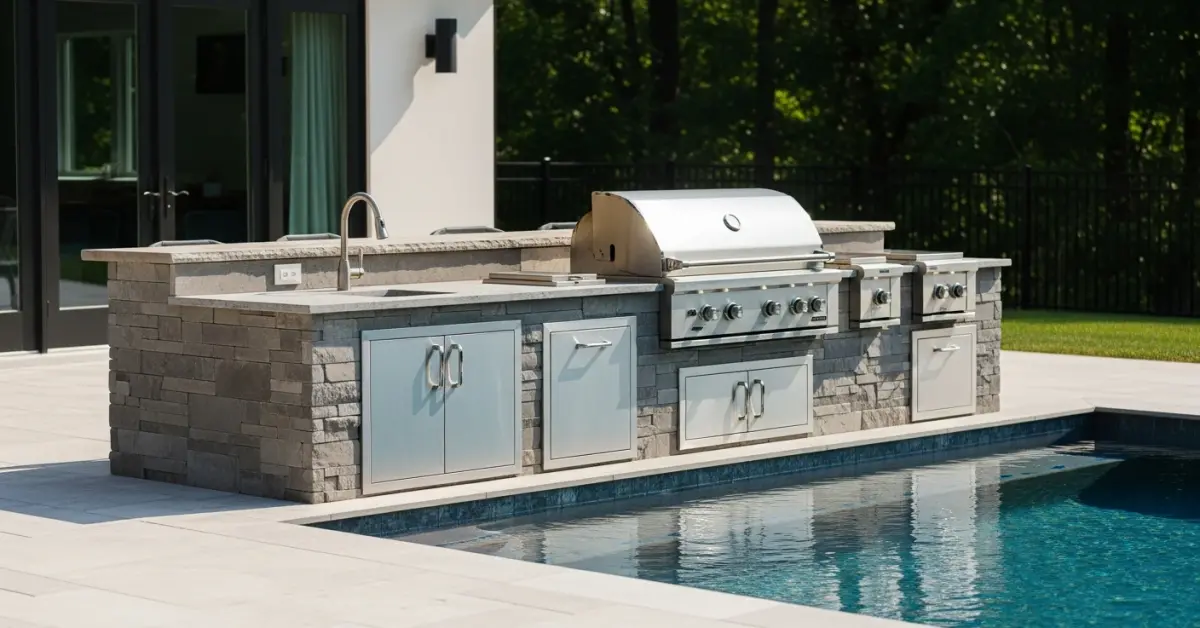
Outdoor Kitchen Designer Pasco County: My Framework for a 30-Year, Corrosion-Proof Build
As an outdoor kitchen designer specializing in Pasco County, I’ve seen firsthand how our unique coastal climate can destroy a beautiful project in under five years. The combination of intense UV exposure, high humidity, and the salty air that drifts inland from Hudson and New Port Richey creates a perfect storm for corrosion and material failure. The biggest mistake homeowners make is choosing materials based on indoor aesthetics, a costly error I’ve been called in to fix on more than one occasion, particularly in the newer developments in Trinity and Land O' Lakes. My entire design philosophy is built around a single, non-negotiable principle: engineering for the environment first. A stunning outdoor kitchen that rusts, warps, or grows mold is not a luxury; it's a liability. My process starts not with layouts, but with a deep analysis of the materials' chemical and physical properties to guarantee a minimum 25% increase in functional lifespan compared to standard builds. This is about building a permanent extension of your home, not a temporary feature.The Coastal Durability Audit: My Pre-Design Diagnostic for Pasco County Homes
Before I even sketch a concept, I perform what I call the Coastal Durability Audit. This isn't a simple site visit; it's a technical evaluation of the specific micro-environment. A property on a canal in Port Richey has fundamentally different needs than a home in a Wesley Chapel golf community. The audit focuses on three critical vectors: salt-air saturation, direct UV exposure hours, and moisture retention from rainfall and humidity. I learned this the hard way after a project in a beautiful, tree-covered lot still suffered from mildew because the tree canopy trapped moisture, a factor the original builder completely ignored. My methodology involves mapping these vectors to a material-selection matrix. This proprietary system cross-references material specifications against the specific environmental stressors of the site. It’s how I determine whether a client absolutely needs marine-grade 316L stainless steel for their appliances or if a high-quality powder-coated 304 stainless will suffice, potentially saving them money without compromising longevity. It’s a level of detail that prevents catastrophic failures.Material Science vs. Marketing: Deconstructing Failure Points
The market is flooded with products labeled "outdoor-rated," but this term is often misleading in the Pasco County climate. Here’s a breakdown of what I’ve found consistently fails and what truly lasts.- Cabinetry: Wood, even treated teak, will eventually warp and mildew here. I exclusively specify HDPE (High-Density Polyethylene) or powder-coated aluminum cabinets. They are impervious to moisture, will not delaminate, and are incredibly easy to clean after one of our famous afternoon thunderstorms.
- Countertops: Many designers push sealed granite, but I’ve seen the sealant break down under our intense sun, allowing oils and moisture to stain the porous stone. I direct my clients toward sintered stone (like Dekton) or specific non-porous quartzites. These materials have near-zero water absorption and are completely UV-stable, meaning the color won't fade.
- Hardware: This is a classic failure point. Hinges, screws, and handles are often overlooked. I insist on 316L grade stainless steel fasteners and hardware for every component. It's a small upfront cost that prevents the ugly bleeding rust streaks I often see on expensive but poorly specified installations.
Executing the Tri-Zone Workflow: A Step-by-Step Breakdown
A functional outdoor kitchen isn't just a grill and a countertop; it's an ergonomic workspace. I structure every design around my Tri-Zone Workflow Logic, which physically separates the hot, wet, and prep zones to create a seamless and safe cooking experience.- The Hot Zone Setup: This is more than just placing the grill. I calculate the required ventilation CFM (Cubic Feet per Minute) based on the grill’s total BTU output. For lanais, which are common in Pasco, a properly sized vent hood isn't a luxury; it's a critical safety requirement to prevent heat damage and fire risk. All electrical components here must be on dedicated GFCI-protected circuits.
- The Wet Zone Engineering: The sink area must have a countertop with a subtle but effective 1.5% drainage pitch away from the house and toward the sink. I once had to correct a luxury project where water pooled against the back wall, leading to mold in the home's exterior stucco. The sink and all plumbing fixtures must be rated for outdoor use to handle temperature fluctuations.
- The Prep & Cold Zone Optimization: This area needs ample, uninterrupted counter space and strategic placement of the outdoor refrigerator. I ensure the refrigerator is not placed directly next to the grill, as this forces the compressor to work harder, shortening its lifespan and increasing energy consumption—a common and costly layout mistake.
Beyond the Blueprint: Precision Sealing and Structural Integrity
The final 10% of the work determines 90% of the longevity. Once the structure is built, my focus shifts to the seams and connection points. Every joint where the kitchen meets the house must be flashed and sealed with a high-grade polyurethane sealant, not simple silicone caulk which will break down in the sun. This prevents water intrusion, which is the number one enemy of any structure in Florida. I also ensure that the base of the kitchen, whether on a concrete slab or pavers, has adequate weep holes or drainage channels. Trapped moisture in the base structure is a hidden problem that can cause shifting and cracking over time. These are the small, unglamorous details that define a professional, long-lasting build from an amateur one. Is your current outdoor kitchen plan considering the specific galvanic corrosion potential between different metal components, or is it just a collection of nice-looking appliances on a blueprint?Written by

Tags
outdoor kitchen designers
high end outdoor kitchen designs
outdoor kitchen exterior ideas
bbq island countertop ideas
kitchen outside ideas
Outdoor Kitchen Designer in Pasco FL FAQ
What materials are best for outdoor kitchen countertops to withstand the weather?
Granite and quartzite are the top choices for outdoor countertops due to their high resistance to heat, UV fading, and moisture. While materials like marble look premium, they are more porous and can stain or etch from acid rain and spills, requiring frequent sealing. A critical but often overlooked factor is the material's thermal expansion; a poorly chosen slab can crack under intense sun after a cool night, especially if installed with tight, unforgiving joints. Always insist on a material with a low coefficient of thermal expansion and ensure your installer leaves appropriate gaps.
How do I choose the right size and type of grill for my outdoor kitchen?
Select your grill based on your primary cooking style and expected guest count, not just brand name or total cooking area. For most families, a 36-inch built-in grill with three to four burners is sufficient, but if you frequently host large parties, consider a 42-inch or larger model. A common mistake is overlooking the need for a dedicated searing station or an infrared rotisserie burner; these specialized heating elements are difficult and costly to add later. Ensure the grill is certified for outdoor use and has a 304 or 316 stainless steel grade for maximum corrosion resistance.
Do I need special plumbing and electrical for an outdoor kitchen?
Yes, dedicated and properly protected utility lines are non-negotiable for safety and functionality. All outdoor electrical outlets must be GFCI-protected (Ground Fault Circuit Interrupter) and housed in weatherproof boxes to prevent shock hazards in wet conditions. For plumbing, you'll need frost-proof lines for both hot and cold water if you live in a region with harsh winters; failing to do this will lead to freeze-burst damage in the pipes. Gas lines, whether natural gas or propane, must be professionally installed with proper ventilation to avoid dangerous gas accumulation within the structure.
What is the most overlooked element in outdoor kitchen design?
Task lighting is overwhelmingly the most common design failure, rendering an expensive kitchen nearly useless after sunset. Many designs rely solely on ambient patio light, which creates shadows and makes cooking difficult and unsafe. A proper design incorporates dedicated, low-voltage LED lights directly over the grill, sink, and primary prep surfaces. A hidden failure point is not using fixtures with a marine-grade rating; standard outdoor lights will corrode and fail quickly from the combination of moisture, heat, and grease vapor unique to a cooking area.
How much space should I plan for an outdoor kitchen layout?
A functional layout requires more than just the footprint of the appliances; you must account for safe clearance and workflow. Maintain at least 36 inches of clear, unobstructed countertop on either side of the grill for platters and tools. The primary work triangle—the path between the grill, sink, and refrigerator—should be no more than 26 feet in total length. A critical safety specification often ignored is the clearance to combustibles; your grill's installation manual will specify a minimum distance (often 24 inches or more) from any flammable materials like a house wall, deck railing, or overhead structure.
Can I install an outdoor kitchen on my existing wood or composite deck?
Installing a kitchen on a deck is possible but requires a structural assessment to verify the deck can handle the significant concentrated weight. A typical island with a grill, stone veneer, and granite countertop can easily exceed 2,000 pounds, far beyond what a standard deck is designed for. You will likely need to add additional footings and support posts directly beneath the kitchen's footprint. Furthermore, you must incorporate a non-combustible base under any cooking appliance and ensure the entire structure meets local fire codes, a step DIY installations frequently miss, creating a serious fire hazard.


