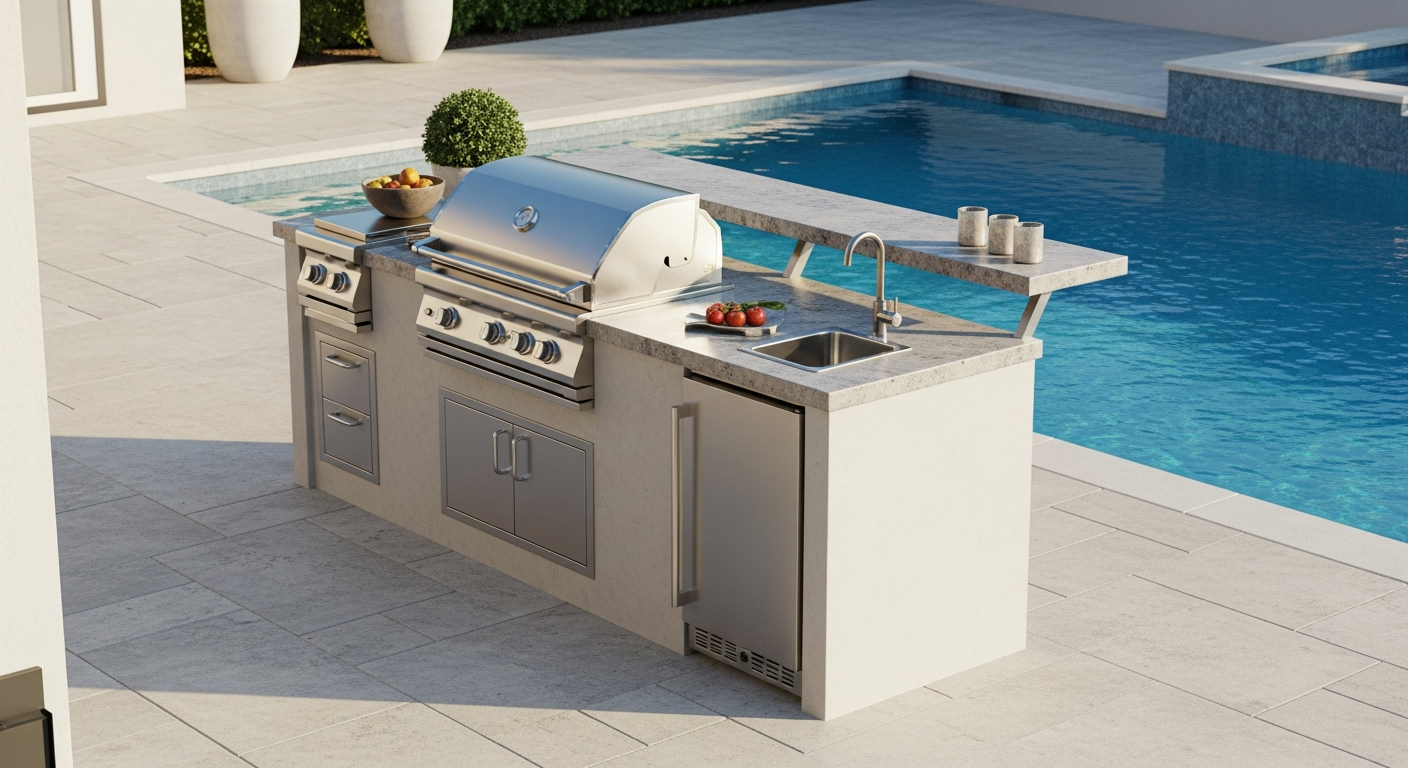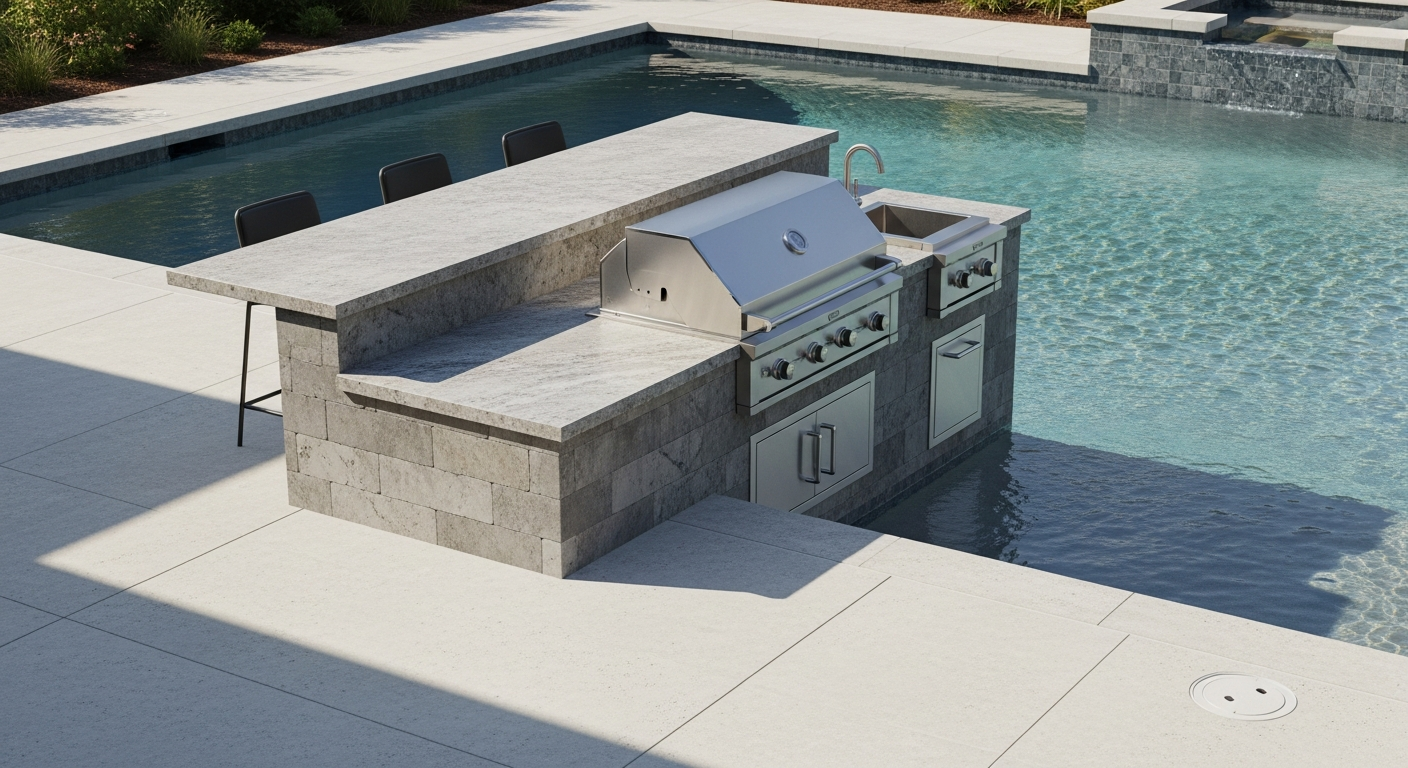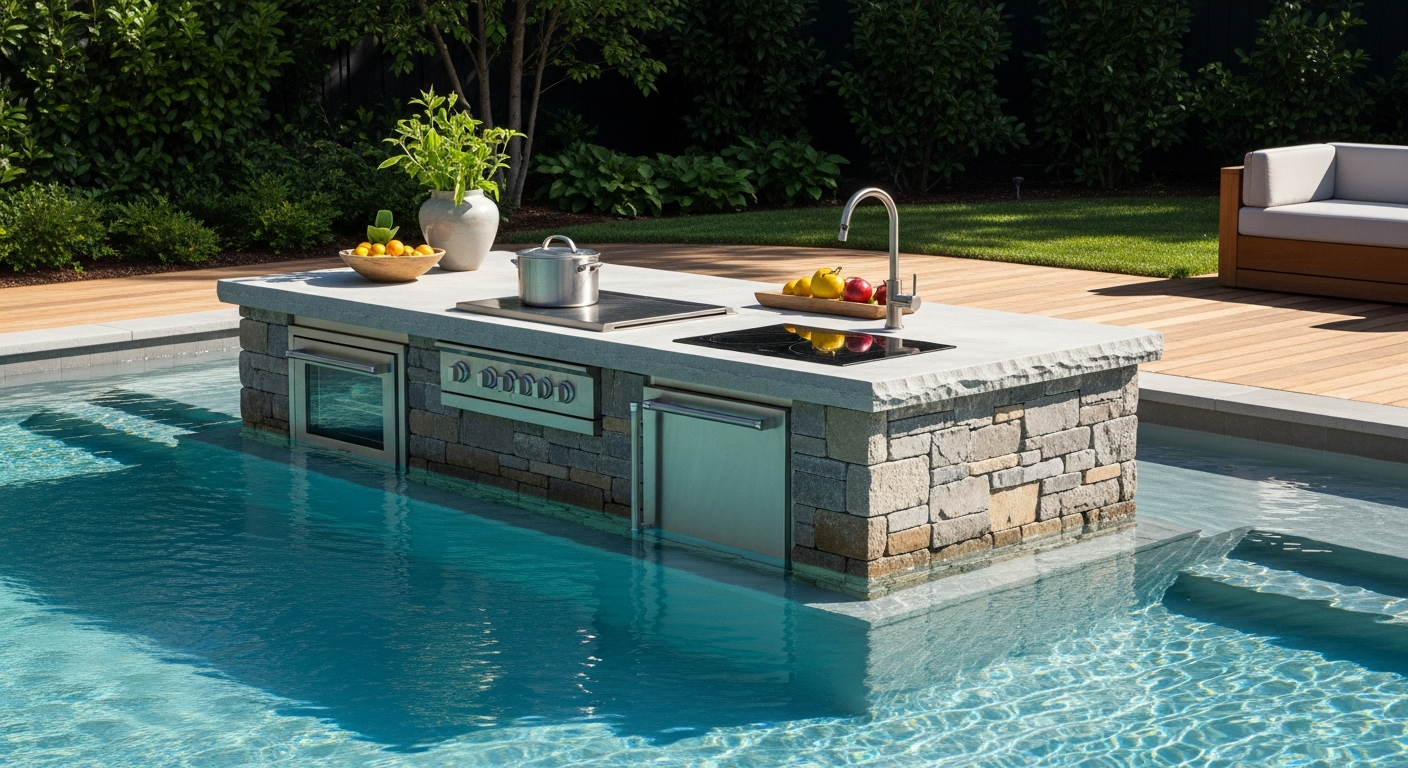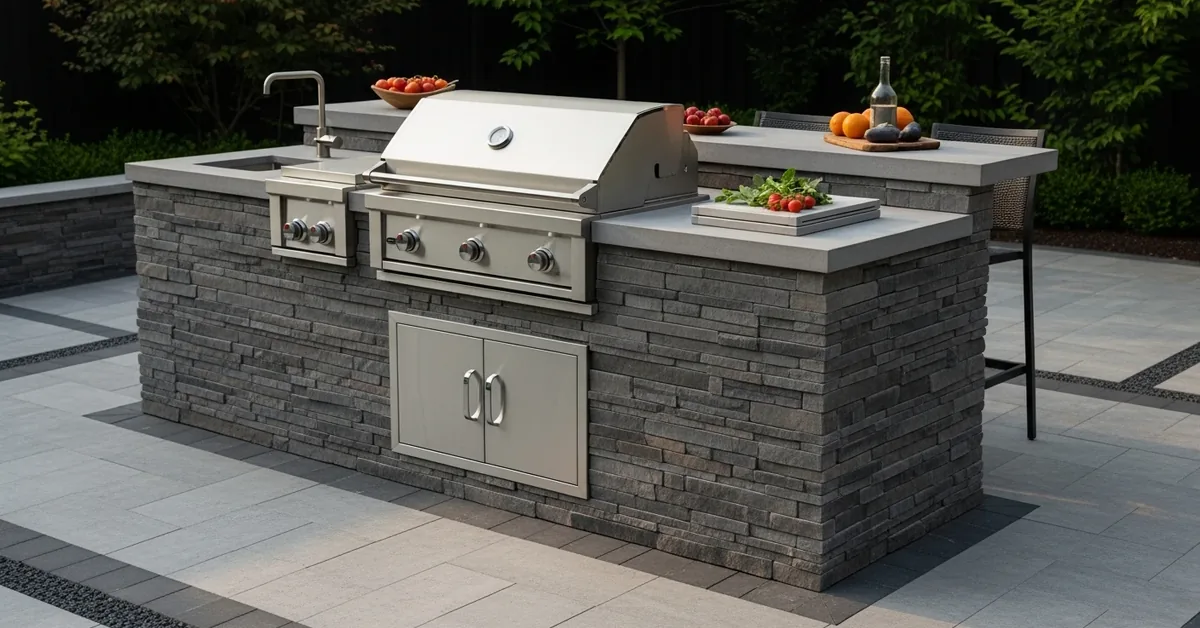
Outdoor Kitchen Grill Island: My Pinellas County Framework for a 30-Year Lifespan Against Salt Air
Building an outdoor kitchen grill island in Pinellas County isn't about choosing the prettiest stone; it's a battle against an invisible, corrosive enemy: salt air. I’ve seen projects from St. Pete Beach to Tarpon Springs fail in under five years, not from poor craftsmanship, but from a fundamental misunderstanding of our coastal environment. The primary failure point I consistently identify is **material degradation due to galvanic corrosion and humidity saturation**, a problem that standard construction methods simply don't address. My entire approach is built on a "materials-first" principle designed to preemptively combat the specific atmospheric challenges of living on a peninsula surrounded by saltwater. This isn’t just about making it look good on day one; it's about engineering a structure that performs flawlessly on day 5,000. Forget the generic advice; the secret lies in specifying materials and assembly techniques that are typically reserved for marine applications.The Salt-Air Corrosion Audit: A Pre-Build Diagnostic I Developed
Before a single drawing is made, I perform what I call the **Salt-Air Corrosion Audit**. It's a site-specific analysis that dictates the entire material palette and construction methodology. A home on the intercoastal in Treasure Island has a vastly different set of environmental stressors than a home in the more sheltered neighborhoods of Largo. This audit is not a simple suggestion; it's a non-negotiable first step that has saved my clients from premature rust, spalling, and electrical failures. I pinpoint the exact exposure level to salt spray and intense UV radiation, which directly informs the project's technical specifications.Material Specification: Beyond "Weather-Resistant" Marketing
After the audit, I move to material specification. The term "weather-resistant" is a marketing gimmick in the Pinellas climate. My specifications are absolute and based on years of observing what fails and what endures. The common mistake is using 304-grade stainless steel for components, which I've seen develop pitting and rust within 24 months in Clearwater Beach. My baseline is non-negotiable: **316-grade marine stainless steel** for all metallic components, including fasteners, access doors, and the grill chassis itself. For countertops, I steer clients away from porous natural stones like granite, which can harbor moisture and lead to efflorescence. Instead, I specify sintered stone or high-density porcelain, which have near-zero porosity and superior **UV resistance** against the relentless Florida sun.The Core Assembly Protocol for a Hurricane-Rated Island
The structural integrity of the island is just as critical as its surface materials. A poorly constructed frame can flex, cracking the facade and allowing moisture intrusion—the death knell for any outdoor kitchen. My assembly protocol focuses on creating a monolithic, rigid structure engineered to withstand hurricane-force wind loads and thermal expansion.- Structural Frame: I exclusively use **1.5-inch welded aluminum tubing** for the frame. Unlike steel studs that rust or concrete blocks (CMU) that can spall and retain moisture, a welded aluminum frame is lightweight, incredibly strong, and completely impervious to corrosion.
- Substrate Board: The frame is sheathed in a **1/2-inch cement board** specifically rated for outdoor use. All seams are meticulously taped and coated with a liquid-applied waterproofing membrane before any finish material is applied. This creates a fully sealed internal box.
- Venting & Gas Lines: This is a critical safety step I've seen botched on high-end projects. Every gas appliance cavity must have a minimum of **two vents** (one high, one low) for cross-ventilation, sized according to the grill's BTU output. I insist on using flexible, corrosion-resistant stainless steel gas lines, not black iron pipe.
- Anchoring: The island's base plate must be anchored directly to the concrete slab using **stainless steel wedge anchors**. This is not just for stability but a key requirement to meet local wind-load codes.
Precision Sealing and Component Integration
The final 10% of the work determines 90% of the island's longevity. This is where I focus on absolute perfection in sealing and integration. Every penetration for electrical, gas, or water is sealed with a high-grade polyurethane marine sealant. Electrical outlets must be **in-use weatherproof-rated GFCI** receptacles housed in corrosion-proof boxes. The final step is to apply a penetrating **hydrophobic sealer** to any stone or grout, not a film-forming sealer which can trap moisture. This final treatment ensures water beads off the surface instead of absorbing into it, preventing long-term water damage and staining. This level of detail is what separates a standard island from a 30-year asset. Given our humid environment, have you properly calculated the dew point inside your sealed grill cabinet to prevent condensation from corroding the electronic ignition components?Written by

Tags
outdoor grill with fridge
modern outdoor grill
bbq grill kitchen
outdoor kitchen grill
outdoor kitchen bbq grill
Outdoor Kitchen Grill Island in Pinellas FL FAQ
What's the best material for my grill island countertop to withstand weather and cooking stains?
Granite or quartzite are the top choices for outdoor countertops due to their high resistance to heat, stains, and ultraviolet light degradation. While popular indoors, materials like quartz are a poor choice for outdoor use because the resins that bind the stone will yellow and break down under direct sun exposure. For a truly durable surface, a 3-centimeter thick slab of a dense natural stone like granite is ideal, as it will not crack during freeze-thaw cycles. Always ask for a sealant designed for outdoor applications to be applied, which helps prevent oil from a stray burger from becoming a permanent mark.
Does my grill island need to be vented, even if it's outside?
Yes, any grill installed in a combustible structure like a typical island must have proper ventilation to prevent heat and gas buildup. Your grill's manual will specify the minimum ventilation required, often calling for at least two vents, each with a minimum of 20 square inches of free area, placed on opposite sides for cross-flow. The critical, non-obvious risk is not just fire but a gas explosion; a small propane leak can fill the unvented cabinet, creating a bomb that can be ignited by the grill's own starter. This is a non-negotiable safety feature, not an aesthetic option.
Can I place my grill island directly on my wooden deck or patio pavers?
Placing the island on pavers is standard, but a wooden deck requires careful consideration of the structure's weight and fire safety. A typical grill island can weigh over 1,000 pounds, potentially exceeding the deck's load capacity without additional support blocking beneath. More importantly, you must use a non-combustible base like concrete backer board directly under the island frame to create a thermal break. Simply setting a metal frame on wood is a fire hazard, as radiant heat can slowly char and eventually ignite the decking over time, even without direct flame contact.
Do I need to run dedicated electrical and gas lines to my grill island?
Yes, for any built-in grill and accessories like refrigerators or lighting, you will need dedicated utility lines installed by licensed professionals. A natural gas line must be properly sized for the grill's BTU rating and buried at the code-required depth, typically 18 inches, to prevent accidental rupture. For electrical, a ground-fault circuit interrupter (GFCI) protected circuit is mandatory for all outdoor outlets to prevent shock hazards in wet conditions. Using a simple extension cord or a portable propane tank inside the cabinet are dangerous, temporary solutions that create fire and tripping risks.
What's the real difference between a drop-in grill and a freestanding one for an island?
A drop-in grill is specifically designed to be supported by the countertop, requiring a precise cutout and an insulating jacket for installation in combustible structures. A freestanding grill cannot simply have its cart removed and be placed into an island; it lacks the proper support flanges and, crucially, the required ventilation and heat shielding for a built-in application. Attempting to use a freestanding unit this way voids its warranty and creates a serious fire hazard, as the control panel and gas lines are not designed to be enclosed within a hot, unvented cabinet.
How do I prevent my stainless steel grill and doors from rusting outside?
True rust prevention depends on the grade of the stainless steel and regular cleaning, as not all stainless is created equal. Insist on components made from 304-grade stainless steel, which has a higher nickel and chromium content for superior corrosion resistance compared to the cheaper 430-grade. The non-obvious problem is that surface contaminants, like iron particles from nearby construction or steel wool, can cause even high-grade stainless to show rust spots. Clean your stainless components regularly with a dedicated stainless steel cleaner and a soft cloth, always wiping with the grain, to remove these deposits before they cause pitting.